
Review · LAZIO
Rome: Treasure Hunt for Kids and Families Trevi and Pantheon
Rome rewards curious eyes. This family treasure hunt turns famous sights into a game, guiding you from the Spanish Steps area toward the Trevi Fountain, Pantheon, and Piazza Navona while children search for clues and answer questions. I like the way it gives a clear purpose to a city walk, and I especially like that adults get history and small architectural details along with the fun. The main drawback is that it is not suitable for wheelchair users or people with mobility impairments, and the $105 price per person is a serious commitment for a family.
I also like the strong guide-led format. Guides such as Bruno, Tomas, Maria, Alessandra, and Francesco have been praised for keeping children involved without leaving adults behind. One clever task had a seven-year-old look for carved honey bees on a column, turning an ordinary street detail into a small Roman discovery.
Key points at a glance
- A walking game through central Rome: You explore the Spanish Steps, Trevi Fountain, Pantheon, and Piazza Navona while searching for hints.
- Designed for children and adults together: Quizzes, trivia, and observation tasks give younger visitors a job while the guide explains the city.
- A guide makes the difference: The experience depends heavily on the person leading it, with Maria, Tomas, Alessandra, Bruno, and Francesco all praised for their energy and personal attention.
- The Pantheon is a major highlight: One family found the interior the best part of the tour, while another appreciated having skip-the-line Pantheon tickets arranged.
- Two hours, sometimes longer in practice: The stated duration is two hours, though one family described spending about two and a half hours with the guide.
- Plan for walking and crowds: The route uses historic-center streets and is not suitable for people with mobility impairments or wheelchair users.
Why a treasure hunt works well in Rome
Rome can be hard for children. The monuments are impressive, but a steady stream of dates, emperors, popes, and architectural terms can lose a seven-year-old before lunch. A treasure hunt changes the rhythm. Instead of asking your child to admire another fountain, the guide gives them something to find.
That small shift matters. Kids look closely at columns, carvings, statues, and building details. You still hear the story behind the place, but your child is not expected to sit quietly through a traditional lecture. The activities include quizzes and trivia, with clues placed around the major sights.
I like this format for a family’s first day in Rome. It gives you a useful orientation to the historic center and introduces several landmarks without asking you to spend hours inside one museum. It also lets the guide adjust the balance between facts and play. The best feedback came from families whose children stayed involved even when tired, and one parent said the adults enjoyed the experience too.
The activity is not only for very young children. One person in a group without children found the stories and unusual details worthwhile, although the playful side naturally makes more sense when children are present. For families, the game is the point, not a decoration added to a standard city tour.
More Family and Kids Games in Italy
- Rome: 2.5-Hour Family Vatican Highlight Scavenger Hunt
★ 4.6 · 51 reviews - Private Family Scavenger Hunt & Art Lab Tour – Rome Landmarks
★ 5.0 · 30 reviews - Private Family Scavenger Hunt & Art Lab Tour– Rome Landmarks
★ 5.0 · 7 reviews
Meeting at Piazza Mignanelli and finding your bearings
The meeting point is by the Column of the Immaculate Conception in Piazza Mignanelli. This is a useful starting place because it puts you near the Spanish Steps and the heart of Rome’s historic center.
Before you set off, make sure everyone knows the guide’s name and confirm the meeting location carefully. Central Rome has many plazas, fountains, and columns, so a family trying to gather in a busy area can lose time quickly. The provided meeting point is specific, and you should use the Column of the Immaculate Conception as your visual marker.
The tour is conducted in English with a live guide. That is important for this kind of activity. A printed scavenger sheet cannot respond to a child’s questions, change the pace, or point out an unexpected detail. Your guide can explain a carving, offer a hint, or turn a tired moment into another quick challenge.
The route is on foot. Comfortable shoes matter, and you should expect the normal obstacles of central Rome: busy streets, uneven pavement, and crowded public spaces. Since the activity is not suitable for wheelchair users or people with mobility impairments, it is worth considering your family’s walking ability before booking.
The Spanish Steps: a lively start for the game
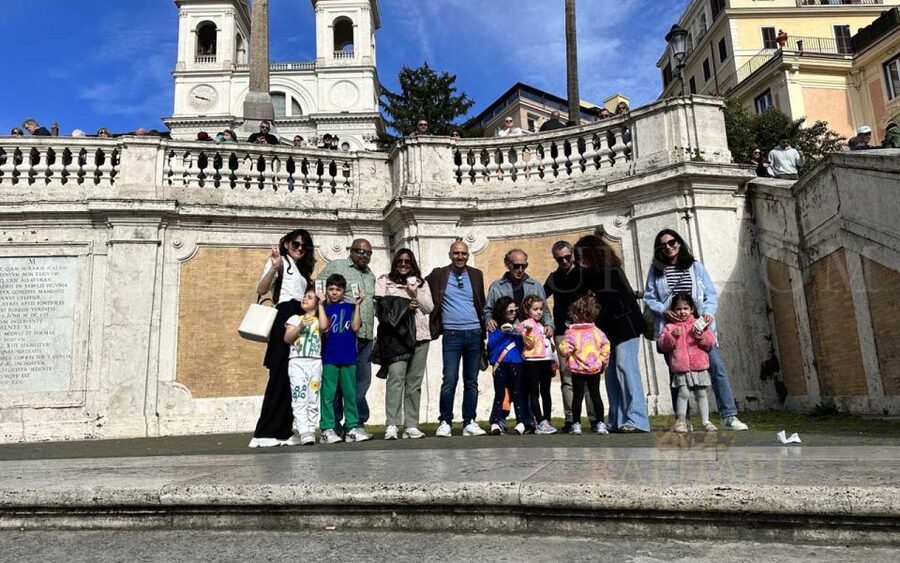
The Spanish Steps area gives the hunt an immediate sense of place. It is one of Rome’s most famous meeting areas, and children can begin spotting clues in a setting that already feels theatrical.
The supplied information does not give a fixed list of tasks at this stop, so you should not expect a rigid worksheet with every answer laid out in advance. Instead, the guide creates activities for the particular family or group. That flexibility is useful when children are different ages. A younger child can search for a visible detail, while an older child may handle a history question or piece of trivia.
The steps themselves also set the pace for the outing. Your group will be walking through the city rather than moving from one formal entrance to another. That keeps the experience active, but it also means you should not treat the two hours as a long sightseeing stop at each monument. The value comes from the combination of famous places, short explanations, and clues along the way.
If your children are already tired from a morning of sightseeing, tell the guide early. The strongest descriptions of this tour involve guides who kept adjusting their approach to maintain attention. That personal touch is one reason this experience can work better than a standard adult-focused walking tour.
Trevi Fountain: famous, crowded, and full of details
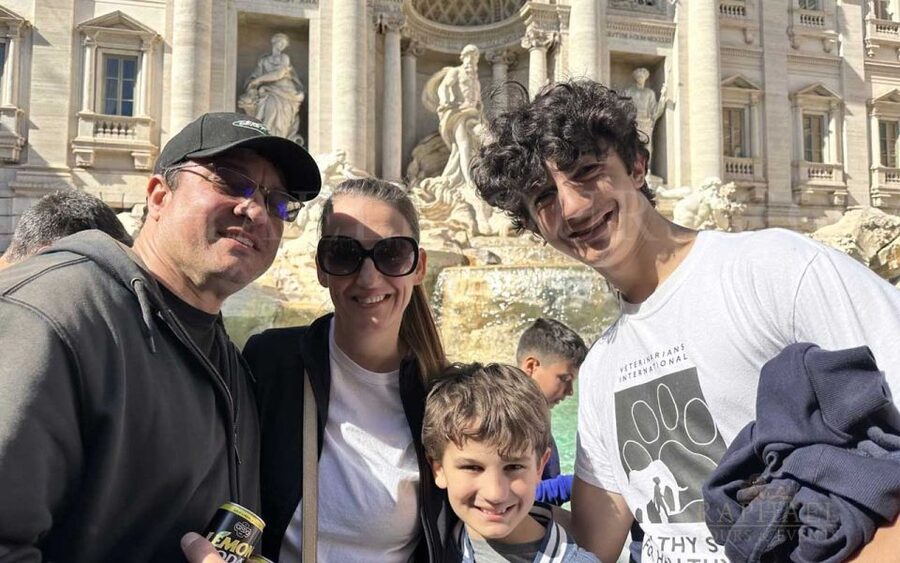
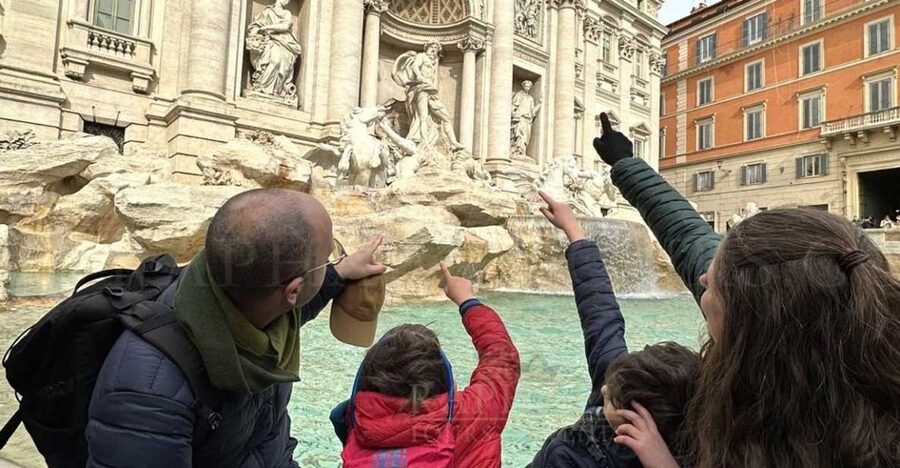
Trevi Fountain is a natural anchor for a family treasure hunt. It is visually dramatic, easy for children to recognize, and packed with details that can support observation questions.
You should expect crowds here. The fountain is a public landmark, not a quiet classroom, so the guide may need to gather everyone close and speak clearly. Keep children near you, especially when the group is looking upward or concentrating on a clue. The setting can be distracting, but that is part of the experience. The guide’s job is to turn the noise and movement into a short, focused activity.
The hunt format encourages you to look beyond the obvious photograph. A child may be asked to identify a figure, shape, or feature that many people walk past. That is a useful habit in Rome. The city is full of grand monuments, but it is often the small carving on a column or the odd symbol above a doorway that becomes the best memory.
Trevi Fountain is also one place where timing matters. A two-hour tour has to keep moving, so you may not have unlimited time for photographs. You should be able to take pictures, but the exact amount depends on the guide and how quickly the group completes its tasks. If you want long, unhurried photography sessions, a separate return visit may be better.
More Treasure Hunts in Italy
- Treasure hunt in Rome, Ghetto and Trastevere
★ 5.0 · 8 reviews - Rome: Spanish Steps, Trevi, & Pantheon Live Treasure Hunt
★ 5.0 · 6 reviews - Rome Treasure Hunt With Leonardo da Vinci
★ 4.0 · 3 reviews - Colosseum and Roman Forum Treasure Hunt Tour for Kids & Families
★ 5.0 · 3 reviews
The Pantheon: the tour’s strongest indoor stop
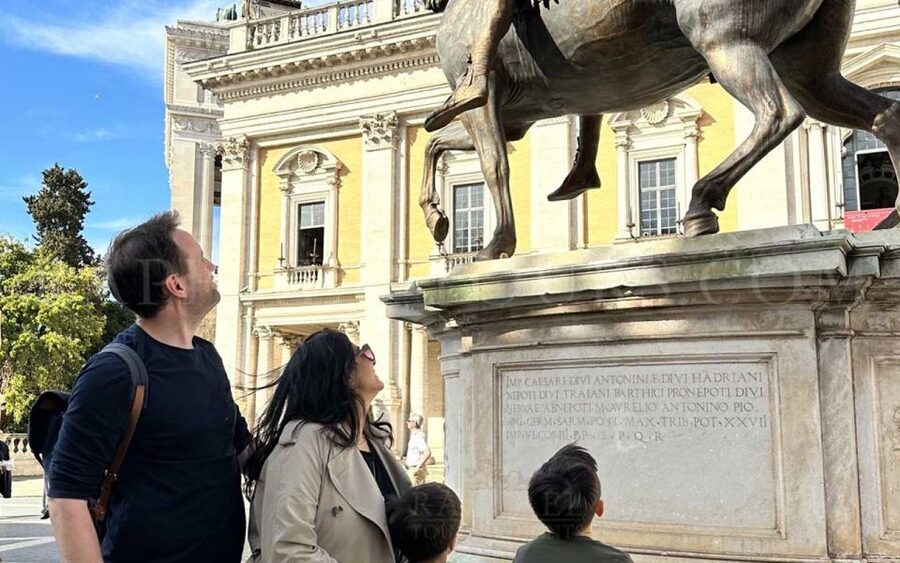
The Pantheon is likely the most rewarding part of the route for adults and older children. Its scale, design, and long story give the guide plenty to explain, while the hunt keeps younger visitors looking for answers.
One guide used the search for carved honey bees as a clue. That is exactly the sort of detail that makes the Pantheon and nearby streets more memorable. Instead of receiving a broad explanation and forgetting it, your child has to inspect the stone and connect the answer to a story.
The Pantheon also gives the tour a change of mood. Trevi Fountain and the Spanish Steps are open-air public spaces, while the Pantheon offers a more focused setting for architecture and history. One family called the Pantheon the best part of the experience. Another appreciated that the guide had already obtained skip-the-line tickets for the Pantheon, which made entry easier on that particular outing.
Do not assume that skip-the-line entry is always included. The stated inclusions list a licensed guide and a prize for the winner, but it does not promise Pantheon admission or priority tickets for every booking. Ask before you go if entering the Pantheon is important to your plans.
The Pantheon stop also shows why a good guide matters. The building can be impressive even without much explanation, but a child-friendly question gives your family a reason to notice how the space works. You are not just looking at an old building. You are solving something together.
Piazza Navona and the quieter details between monuments
Piazza Navona is included among the places you may see during the walk. It adds another major public square to a route already filled with headline sights, but the spaces between the monuments may be just as useful.
The guide can point out less obvious locations, stories, and architectural details as you move through the streets. Francesco was praised for showing things that a family might not notice while walking alone. That is a key benefit here. Rome does not reveal itself only inside ticketed attractions. Its history also appears in street corners, columns, carvings, and building fronts.
A guide-led walk gives you context for those details. You can ask why something is there, who used the space, or how a particular feature connects with Rome’s past. The hunt keeps children active while the adults receive the broader explanation.
There is also a practical limit. The route covers several famous sights in a short time, so this is an introduction rather than a full study of each square. If Piazza Navona is a major priority for you, return later when you can explore at your own speed.
The guide is the heart of the experience
The strongest part of this activity is not a particular monument. It is the guide’s ability to make the game work for your family.
Maria was praised for being engaging and fun. Alessandra held the attention of both children and adults for more than two hours. Tomas combined facts with small challenges, including the honey-bee carving, and even included time for photographs and a café stop. Bruno kept a tired family involved when one child was sick, while Francesco helped the group notice details they would likely have missed alone.
These examples suggest a useful pattern: the guide does not simply recite information. The guide watches the children, asks questions, gives hints, and keeps the walk moving. That is especially valuable in Rome, where a family’s energy can change quickly.
The experience provider is Pink Umbrella Tours. The guide assigned to you may not be one of the names above, so you should book this for the format rather than for a guaranteed individual guide. Still, the repeated praise for several guides is encouraging. The tour has earned a rating of 5 from 14 reviews, with children’s engagement mentioned again and again.
What $105 per person gets you
At $105 per person, this is not a cheap way to see Rome. For a family of four, the price adds up quickly, so you should decide what you are paying for.
You are paying for a licensed English-speaking guide, a planned family activity, and a prize for the winner. More importantly, you are paying for someone to connect the monuments into an experience that children can follow. A standard free walk may take you past the same sights, but it will not necessarily keep a child searching for honey bees, answering trivia, or asking what comes next.
The value is strongest when this is your family’s first introduction to central Rome, or when your children would otherwise resist a history tour. It can also replace the need to build your own route and invent games as you go. The guide takes care of the structure, explanations, and clues.
The price is harder to justify if your children are too young to follow questions, if your family prefers to explore alone, or if you mainly want long photo stops. It is also worth checking exactly what is included before booking, since the listed inclusions mention the guide and prize but do not list entrance tickets.
Timing, walking, and family comfort
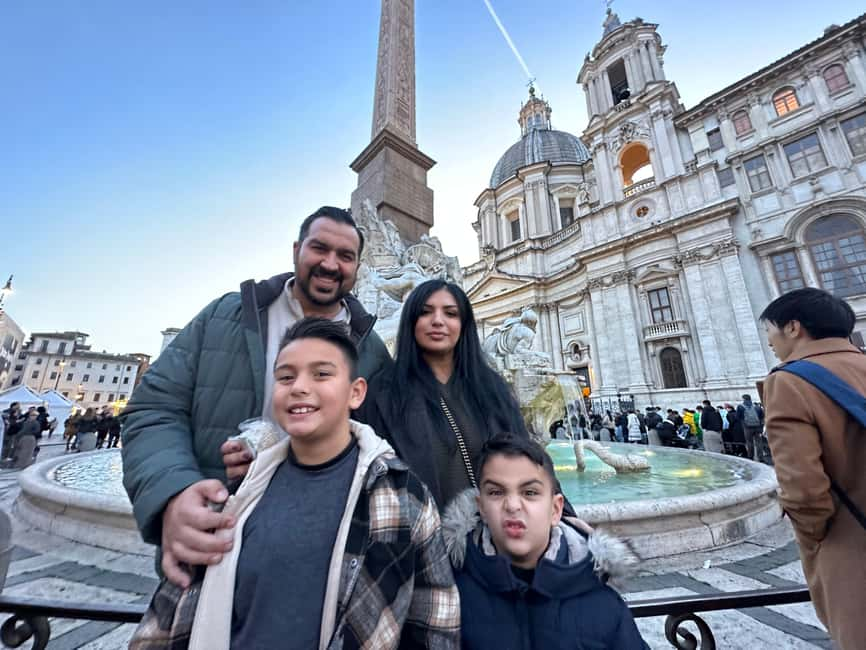
The advertised duration is two hours. One experience lasted about two and a half hours, so the actual timing may run longer depending on the group, questions, and stops. You should avoid booking a tight lunch reservation immediately afterward.
The walk takes place in central Rome and includes several well-known sights. Expect a city walk rather than a bus-based outing. Wear comfortable shoes and bring water, especially if you are visiting in warm weather.
The tour is not suitable for people with mobility impairments or wheelchair users. That restriction should be taken seriously. Historic-center streets can be difficult, and the activity requires moving between public squares and monuments.
The family format can help with energy, but it does not remove the physical demands of walking. If your children tire quickly, schedule the tour early in your Rome stay, when everyone is fresher, or early in the day. One parent found it ideal as a first-day activity because it gave the family a lively introduction to the city.
Free cancellation is available up to 24 hours before the start time for a full refund. You can also reserve now and pay later, which helps if you are still arranging a changing Rome itinerary.
Who should book this treasure hunt?
I would choose this tour for families with school-age children who enjoy puzzles, questions, and active sightseeing. It is particularly useful if you want your children to learn something about Rome without asking them to endure a long adult lecture.
It also suits parents who want a guide with enough flexibility to engage different ages. The best moments come when a guide turns a small detail into a challenge and lets the child discover the answer.
I would think twice if your group wants a slow architectural tour, extensive indoor sightseeing, or a fully accessible route. I would also compare the total price with a private family tour, since $105 per person can be a large expense.
Should you book it?
Book this Rome treasure hunt if you want your children involved from the Spanish Steps to the Trevi Fountain, Pantheon, and Piazza Navona. The guides have shown a strong ability to keep tired children interested, and the mix of clues, trivia, stories, and famous monuments gives the walk a clear purpose.
Skip it if your family dislikes organized activities, needs wheelchair access, or wants to spend a long time at each individual sight. For the right family, though, this is a smart way to make Rome feel less like a list of monuments and more like a city your children can investigate for themselves.
FAQ
Where does the treasure hunt begin?
It begins by the Column of the Immaculate Conception in Piazza Mignanelli.
How long does the activity last?
The stated duration is two hours. One family described spending about two and a half hours with the guide.
Which Rome sights are included?
The experience includes the historic center, the Spanish Steps area, Trevi Fountain, the Pantheon, and Piazza Navona.
Is the tour conducted in English?
Yes. The activity has a live English-speaking guide.
What activities do children do during the tour?
The guide creates quizzes, trivia, hints, clues, and observation activities for the family.
Is a guide included?
Yes. A licensed guide is included.
Is a prize included?
Yes. A prize for the winner is included.
Are Pantheon entrance tickets included?
The listed inclusions do not promise entrance tickets. One family had skip-the-line Pantheon tickets arranged by its guide, so you should confirm this detail before booking.
Is the activity suitable for wheelchair users?
No. It is not suitable for wheelchair users or people with mobility impairments.
Can I cancel for a full refund?
Yes. You can cancel up to 24 hours in advance for a full refund.
Can I reserve now and pay later?
Yes. The booking option allows you to reserve your place and pay later.
More Family and Kids Games in Rome
- Rome: Scavenger Hunt For Kids with Prizes around City Center
★ 5.0 · 3 reviews - Hamburg: Scavenger Hunt Self-Guided Tour for Children
★ 4.5 · 319 reviews - Berlin: Self-Guided Family and School Class Scavenger Hunt
★ 4.6 · 128 reviews - Dresden: Old Town Scavenger Hunt for Children
★ 4.6 · 117 reviews
More Treasure Hunts in Rome
- Trevi Pantheon and Spanish Steps Treasure Hunt for Kids & Families in Rome
★ 5.0 · 2 reviews - Vatican Treasure Hunt with Guided Tour for Families with Kids
★ 5.0 · 2 reviews - Hamburg: Treasure Hunt Game through HafenCity
★ 4.7 · 364 reviews - Málaga: Private Sightseeing Treasure Hunt
★ 4.8 · 297 reviews
Just added around Rome
- Villa Borghese escape game★ 3.0 · 3 reviews
- Vatican Treasure Hunt with Guided Tour for Families with Kids★ 5.0 · 2 reviews
- Rome Treasure Hunt With Leonardo da Vinci★ 4.0 · 3 reviews
- Trevi Pantheon and Spanish Steps Treasure Hunt for Kids & Families in Rome★ 5.0 · 2 reviews
- Treasures of Rome Scavenger Hunt for Friends Team Building & Company Incentive★ 4.5 · 2 reviews
- Treasure hunt in Rome, Ghetto and Trastevere★ 5.0 · 8 reviews
- Colosseum and Roman Forum Treasure Hunt Tour for Kids & Families★ 5.0 · 3 reviews
- Rome: Hidden Treasures of Trastevere Self-Guided Puzzle Quest★ 4.0 · 5 reviews
Family and Kids Games, compared.




Greek Mythology Treasure Hunt for Kids – Athens Private Tour
Read our review →Browse the lists this game appears in