
Review · ROME
Treasure hunt in Rome, Ghetto and Trastevere
Rome rewards close attention. This treasure hunt format turns a walk through the Jewish Ghetto and Trastevere into a team game, with clues, questions, and stories tied to streets and monuments you might otherwise pass without a second look. I especially like the route’s mix of major landmarks and small curiosities, plus the way the evening timing leaves your daytime free.
I also like that the activity works for repeat visitors, residents, solo participants, and families. The main consideration is that this is not a classic guide-led sightseeing tour. You will need to read clues, notice details, and solve puzzles, so anyone wanting a quiet, polished history lecture may prefer a standard walking tour.
Key points at a glance
- A game across two historic neighborhoods: The route links the Jewish Ghetto with Trastevere, crossing the Tiber by way of Isola Tiberina.
- Seven stops with a clear finish: You begin near the Fontana della Terrina and end at the fountain in Piazza di Santa Maria in Trastevere.
- Stories beyond the big monuments: The clues draw attention to fountains, gates, streets, religious sites, and small details that are easy to miss.
- A social format for different groups: Solo participants can join a team, while families with children aged 6 and 9 have taken part successfully.
- Good use of an evening: The experience lasts about 2 hours and 30 minutes, leaving much of the day available for Rome’s major sights.
- Small enough to feel manageable: The group limit is 20 people, and all listed stops have free admission.
A different way to see central Rome
The tour costs about $30.10 per person and lasts roughly two and a half hours. That price is reasonable if you enjoy interactive sightseeing, since you are paying for a prepared route, a themed activity, and guided stories rather than admission to ticketed monuments. Every stop on the route is free to enter, so the value comes from the organization and the game itself.
The route is not built around long interior visits. Instead, you move through public streets and squares, pausing to inspect places such as Teatro di Marcello, the Tempio Maggiore di Roma, and Porta Settimiana. That keeps the pace moving, but it also means the experience is best understood as a walking quest rather than a museum tour.
You receive a mobile ticket, and the activity is offered in English. The maximum group size is 20, which is large enough for team energy but not so large that the route should feel like a parade. The activity has received a top overall rating from eight published participants, with repeated praise for its unusual format, attention to overlooked details, and social side.
More Treasure Hunts in Italy
- Rome: Treasure Hunt for Kids and Families Trevi and Pantheon
★ 5.0 · 14 reviews - Rome: Spanish Steps, Trevi, & Pantheon Live Treasure Hunt
★ 5.0 · 6 reviews - Rome Treasure Hunt With Leonardo da Vinci
★ 4.0 · 3 reviews
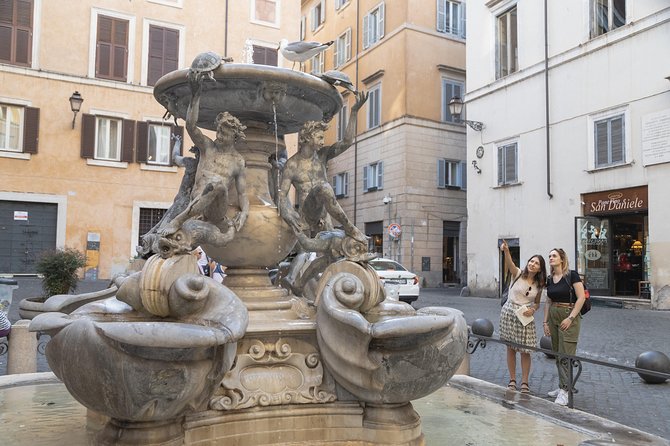
Starting at the Fontana della Terrina
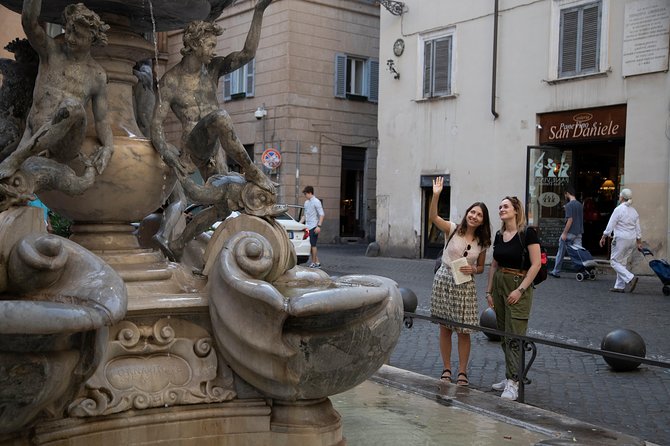
The meeting point is the Fontana della Terrina on Via della Chiesa Nuova. This gives you a practical starting place in central Rome, but check the exact map position before setting out because fountains can be easy to confuse in a city full of them.
From here, the activity leads toward the Jewish Ghetto and then across to Trastevere. The route has a satisfying sense of movement. You are not simply circling one square. You pass from monumental Rome to quieter corners, cross the Tiber, and finish in one of Trastevere’s best-known public spaces.
The game element matters from the first minutes. Instead of listening passively, you are encouraged to look closely, compare observations with your group, and work out answers. That can make familiar Roman sights feel new, especially if you have already seen the Colosseum, Pantheon, and Trevi Fountain.
Teatro di Marcello and the scale of Roman building
The first listed stop is Teatro di Marcello, where you can admire the scale and design of Roman construction. The planned pause is about 10 minutes, enough for an introduction and a clue without turning the stop into a full archaeological lecture.
Teatro di Marcello is a strong opening because it shows how much ancient Rome remains part of the modern city. Its curved structure gives you an immediate sense of Roman engineering, while the surrounding streets remind you that Rome’s layers sit close together.
The attraction here is visual and architectural. If you want a detailed explanation of the theater’s full history, 10 minutes will feel brief. If you enjoy using a landmark as a puzzle setting, the short stop keeps the energy moving.
The Tempio Maggiore and the Jewish Ghetto
The route then reaches the Tempio Maggiore di Roma, the major synagogue of Rome. The stop lasts about 10 minutes and introduces one of the city’s important religious and cultural places.
This is one of the most meaningful parts of the walk because the Jewish Ghetto is not just a collection of attractive lanes. It is a district shaped by centuries of Jewish life in Rome, and the synagogue provides a clear point for understanding that community’s place in the city.
The experience focuses on discovering the site’s story through the quiz rather than announcing every detail in a long talk. Pay attention to the wording of the clues. The format encourages you to connect the building with the neighborhood around it, rather than treating it as an isolated photo stop.
As with the other locations, the listed admission is free. That does not necessarily mean you enter every building, so you should expect an exterior-focused stop unless the organizers provide different instructions on the day.
More Treasure Hunts in Rome:
- Colosseum and Roman Forum Treasure Hunt Tour for Kids & Families
★ 5.0 · 3 reviews - Trevi Pantheon and Spanish Steps Treasure Hunt for Kids & Families in Rome
★ 5.0 · 2 reviews - Vatican Treasure Hunt with Guided Tour for Families with Kids
★ 5.0 · 2 reviews - Hamburg: Treasure Hunt Game through HafenCity
★ 4.7 · 364 reviews
Crossing by Isola Tiberina
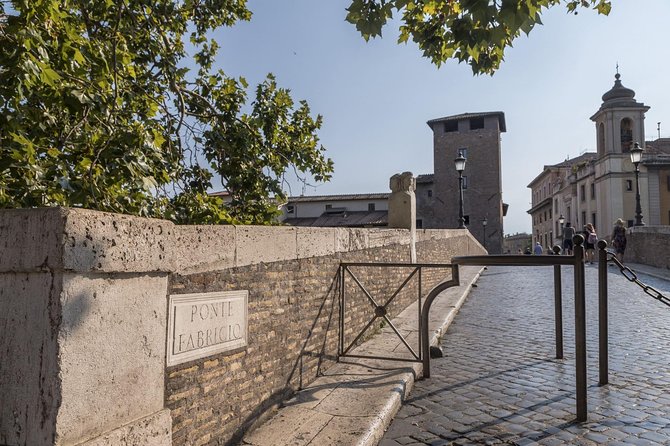
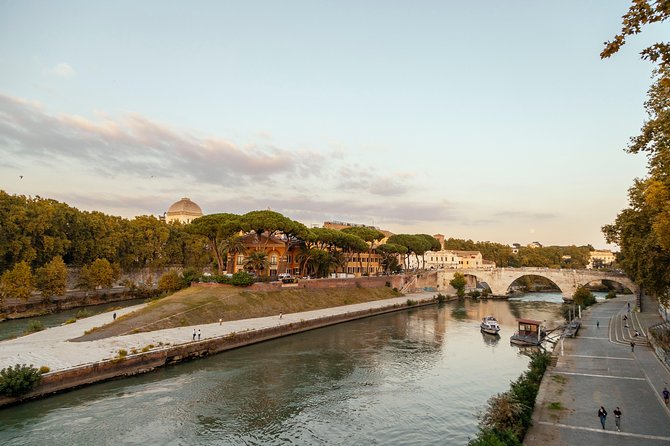
At Isola Tiberina, the route crosses from one part of Rome to another. The planned pause is 15 minutes, though crossing and regrouping may shape how long you spend examining the island itself.
This is an important change of mood. The island gives the quest a natural middle point, linking the Jewish Ghetto with Trastevere. It also gives you a break from dense streets and a chance to notice how the Tiber shapes the city.
The island is especially useful in a game because it provides a clear transition. You have one district behind you and a new set of streets ahead. If your group has been solving clues together, this is a good moment to compare answers before continuing.
Do not expect a long scenic stop with time to sit and linger. The activity has several locations to cover, so the crossing is part of the route rather than a separate river excursion.
Wandering through Trastevere’s lanes
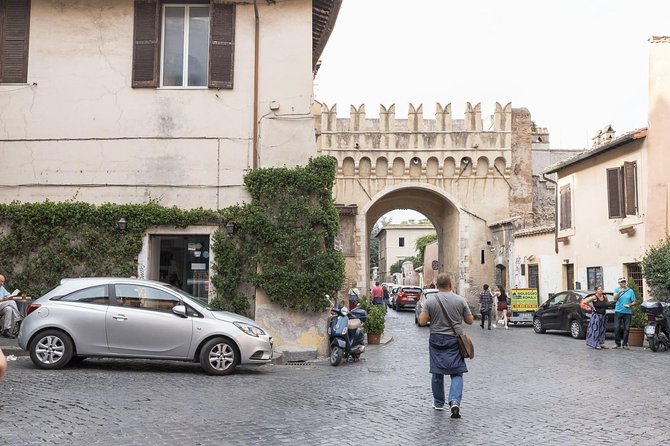
The Trastevere portion is scheduled for about 15 minutes, but the neighborhood gives the route much of its character. You walk through streets and squares associated with one of Rome’s most recognizable historic districts.
The appeal here is the change in texture. Narrow streets, old façades, small public spaces, and everyday movement give you plenty to notice. The treasure hunt asks you to look past the broad postcard view and focus on details that can disappear when you are simply trying to reach the next famous sight.
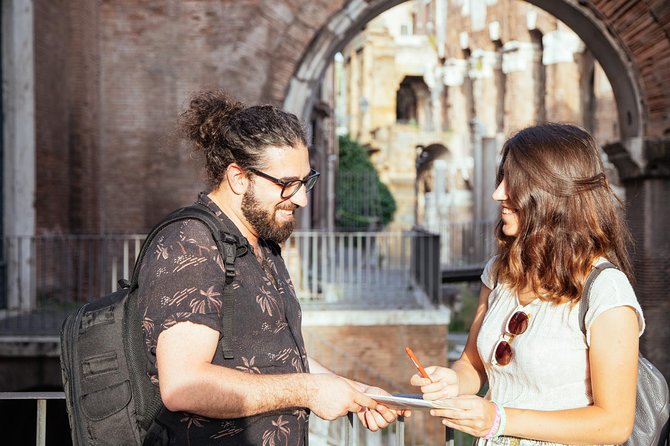
This is where the independent element becomes most useful. One published account describes participants carrying a map, moving on their own, and trying to identify two mysterious lovers while solving the questions. That suggests the activity may give your group room to investigate rather than keeping everyone in one tight line.
For families, this can be more engaging than a long explanation about dates and architectural styles. A family with children aged 6 and 9 found the challenge enjoyable, especially because the game encouraged them to pay attention. Still, young children may need help reading clues or keeping pace over the full two and a half hours.
The Fontana della Botte and Rome’s small curiosities
The next stop is Fontana della Botte, scheduled for about 10 minutes. The fountain is presented as a place connected with local history and a curious story about the city.
This is the kind of stop that explains why the activity works for repeat visitors. You may have walked through central Rome several times and still missed a small fountain or passed it without asking why it is there. The quiz gives such places a purpose.
Do not expect a grand monument on the scale of a major Roman piazza. The value is in the detail. You stop, inspect, listen, and connect the object with the neighborhood around it. That is a useful habit in Rome, where the most rewarding discoveries are often not marked by a long queue.
Porta Settimiana and the route’s older layers
At Porta Settimiana, the group pauses for about 10 minutes. This ancient gate is linked with Rome’s Roman-era defenses and later city development, making it another location where the city’s layers come together.
The gate is a good fit for a clue-based walk because it invites questions. Why was it built? What did it control? How has its role changed as Rome expanded? The organizers use the stop to reveal secrets and stories connected with the gateway.
Again, the time is limited. You will get an introduction and a puzzle, not a full seminar on Roman fortifications. That balance helps the tour cover several places, but you may want to return later if one site catches your interest.
Porta Settimiana also gives the route a useful sense of age. Trastevere is often treated as a lively dining district, yet places like this remind you that its story reaches far beyond restaurants and evening walks.
Finishing at Piazza di Santa Maria in Trastevere
The quest ends at the Fontana di Santa Maria in Trastevere, in Piazza di Santa Maria in Trastevere. The final stop is scheduled for about 15 minutes, and you meet in front of the fountain.
This is a natural ending point. The piazza is easy to recognize, central to the neighborhood, and well suited to a final answer or team result. After following clues through two districts, finishing beside a prominent fountain gives the activity a clear endpoint rather than leaving you somewhere obscure.
The end location is also useful for evening plans. You can continue exploring Trastevere afterward, arrange dinner nearby, or use public transportation to reach another part of Rome. The tour does not include a meal, so plan that separately.
What the game format adds
The strongest feature here is the change in attention. A traditional sightseeing tour often tells you where to look. This one asks you to find the detail yourself, then connect it with a story or question.
That format has several benefits:
- You remember places because you had to solve something there.
- You have a reason to examine ordinary streets and small monuments.
- Solo participants can join a team and meet people during the activity.
- Families can turn a walk into a shared challenge.
- Repeat visitors get a reason to revisit central Rome with fresh eyes.
The social side is important. One solo participant particularly valued being part of a team, while other participants enjoyed taking part with friends or family. The activity is not designed for silent observation. You should be willing to discuss answers, move with a group, and accept that some questions may require a little trial and error.
The challenge is described as neither very hard nor very easy. That middle level should suit most adults, but the experience will feel less rewarding if you dislike quizzes or competitive games. You also need to stay alert to the route and clues rather than simply follow a guide.
Timing, walking, and practical planning
The total duration is approximately 2 hours and 30 minutes. The individual stops are generally 10 to 15 minutes, with walking between them. That makes the pace active without suggesting a race.
Comfortable shoes are a sensible choice. The route passes through historic central districts, and the activity depends on moving between several locations. The information provided does not specify the total distance, so you should not assume it is a short, stationary game.
The experience is described as an evening option, which is useful if you want to spend the day at the Vatican Museums, Colosseum, or another major attraction. The actual start time should be checked when booking, since the available time slot determines how well it fits with dinner and other plans.
Public transportation is nearby, and most people can participate. The group limit is 20. Confirmation is sent at booking, and free cancellation is available up to 24 hours before the start time. If you cancel later, the amount paid is not refunded. The activity also requires a minimum number of participants, and if that minimum is not reached, you are offered another date or experience, or a full refund.
Who should book this Rome treasure hunt?
I would recommend it most strongly to:
- First-time visitors who want a light introduction to the Jewish Ghetto and Trastevere.
- Repeat visitors who have already seen Rome’s major monuments.
- Solo participants who like meeting people through a shared activity.
- Families with children who enjoy clues and simple challenges.
- Residents who want to notice familiar districts differently.
- Couples and friends looking for an evening walk with a clear theme.
I would be more cautious if you want extended time inside religious buildings, archaeological sites, or museums. This route is primarily outdoors, and the listed stops are free public locations. It gives you a broad experience of the districts, not a detailed tour of every landmark.
Should you book it?
Book this experience if you want to play your way through Rome and notice details that a standard walk may skip. The route links the Jewish Ghetto, Isola Tiberina, and Trastevere, while the puzzles give you a reason to watch closely and work with others.
Skip it if you prefer a quiet, formal lecture or need guaranteed long visits at each monument. At about $30.10, the price makes sense for an interactive two-and-a-half-hour activity with a small group and a well-planned route. For families, solo participants, repeat visitors, and anyone who likes a little friendly competition, it offers a lively way to see a familiar part of Rome from a new angle.
FAQ
How long does the Rome treasure hunt last?
The experience lasts approximately 2 hours and 30 minutes.
Where does the treasure hunt begin?
It begins at the Fontana della Terrina on Via della Chiesa Nuova in Rome.
Where does the experience finish?
It ends at the Fontana di Santa Maria in Trastevere, in Piazza di Santa Maria in Trastevere, in front of the fountain.
Is the activity offered in English?
Yes. The experience is offered in English and includes a mobile ticket.
How many people can join the group?
The maximum group size is 20 participants.
Can I cancel for a full refund?
Yes. You can cancel at least 24 hours before the experience start time for a full refund. Changes or cancellations made less than 24 hours before the start time are not accepted for a refund.
Just added around Rome
- Villa Borghese escape game★ 3.0 · 3 reviews
- Rome Treasure Hunt With Leonardo da Vinci★ 4.0 · 3 reviews
- Trevi Pantheon and Spanish Steps Treasure Hunt for Kids & Families in Rome★ 5.0 · 2 reviews
- Vatican Treasure Hunt with Guided Tour for Families with Kids★ 5.0 · 2 reviews
- Treasures of Rome Scavenger Hunt for Friends Team Building & Company Incentive★ 4.5 · 2 reviews
- Colosseum and Roman Forum Treasure Hunt Tour for Kids & Families★ 5.0 · 3 reviews
- Rome: Hidden Treasures of Trastevere Self-Guided Puzzle Quest★ 4.0 · 5 reviews
- Rome Scavenger Hunt and Highlights Self-Guided Tour★ 5.0 · 2 reviews
Treasure Hunts, compared.


Fun, Flexible Treasure Hunt Around Manchester with Cryptic Clues & Hidden Gems
Read our review →
Fun, Flexible Treasure Hunt Around York with Cryptic Clues & Hidden Gems
Read our review →
Fun, Flexible Treasure Hunt Around Bath with Cryptic Clues & Hidden Gems
Read our review →York Treasure Hunt Adventure: The Mystery of The Gunpowder Snitch
Read our review →
Fun, Flexible Treasure Hunt Around Oxford with Cryptic Clues & Hidden Gems
Read our review →Browse the lists this game appears in