
Review · BERLIN (STATE)
Berlin: Self-Guided Family and School Class Scavenger Hunt
Berlin turns history into a game. This self-guided scavenger hunt sends you from Alexanderplatz to Potsdamer Platz, using riddles, clues, and short facts to connect the city’s major sights. You set the pace, take breaks when needed, and open each envelope only when the route tells you to.
I like the way the activity keeps children moving while giving adults useful historical context. I also like the value: $47 covers a group of up to 10, so a family or school class can pay one price instead of buying several guided-tour tickets. The main consideration is that no guide meets you, and the box must arrive by mail before your chosen date.
Key points at a glance
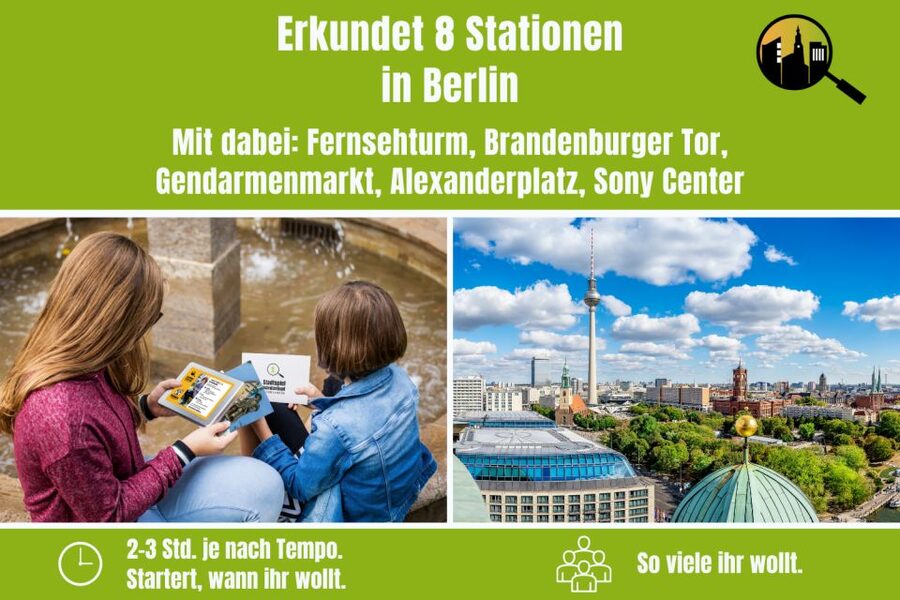
- A 4.5-kilometer route through central Berlin: The walk links Alexanderplatz, Museum Island, Gendarmenmarkt, Brandenburg Gate, and Potsdamer Platz.
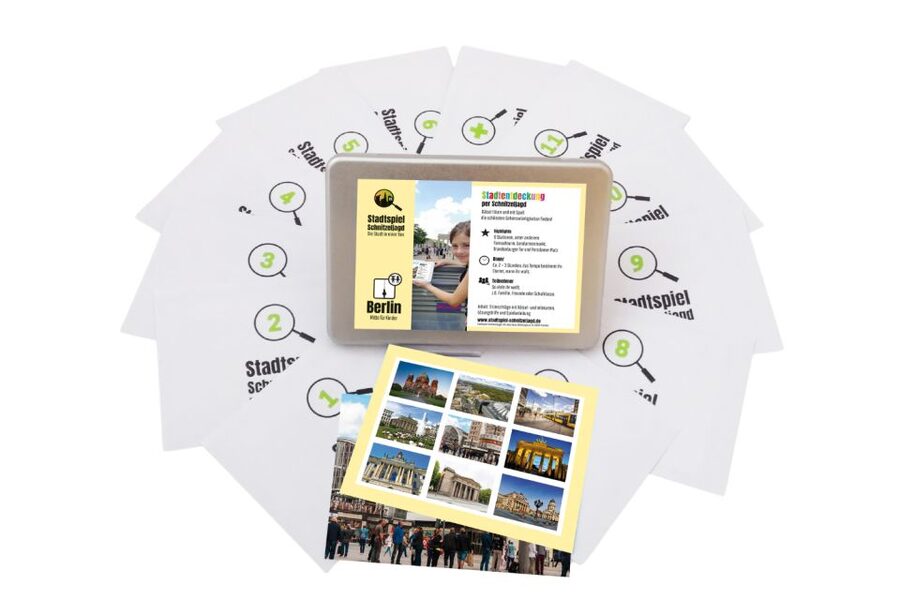
- Nine sealed parts in the game box: You receive eight envelopes with riddles, directions, facts, and child-friendly information, plus an envelope containing the solutions.
- Good for groups of up to 10: At $47 per group, the price makes most sense for families, friends, or school groups using the same box.
- A flexible two-hour format: You can pause for photos, food, museums, or a closer look at Berlin Cathedral before continuing.
- No entry tickets are bundled in: The TV Tower observation deck, museums, food, drinks, and transport cost extra.
- Accessible and easy to follow: The activity is listed as wheelchair accessible, and the route directions are designed to be clear and self-guided.
What kind of Berlin experience is this?
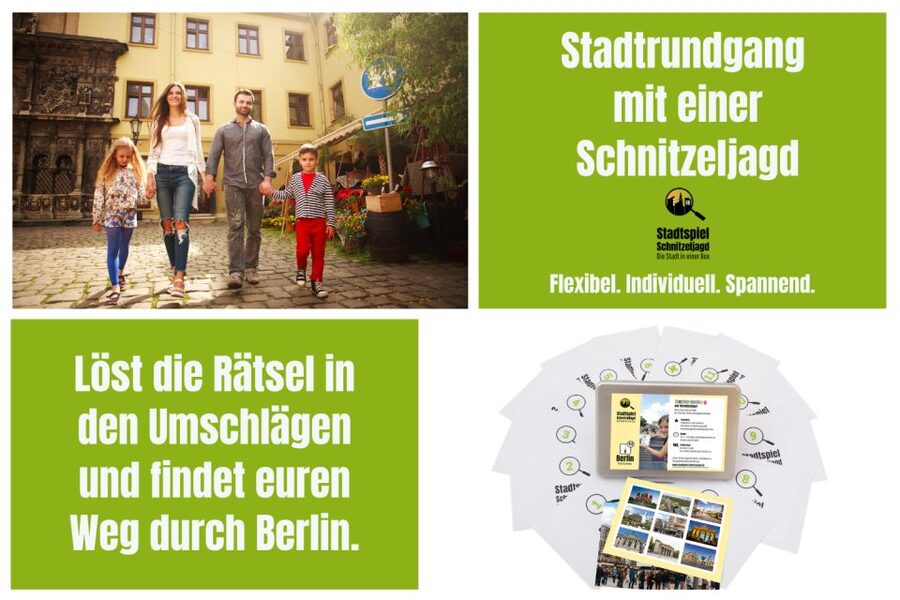
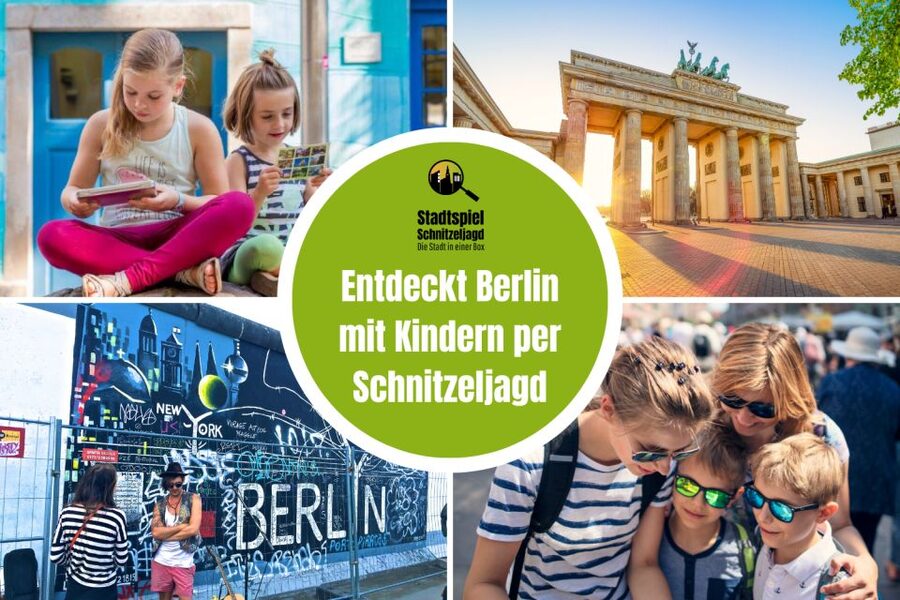
This is not a traditional walking tour with a guide explaining every building. It is a city game built around a fixed route and a series of sealed envelopes. You begin at the World Clock on Alexanderplatz, solve the first puzzle, and use the answer to find the next location.
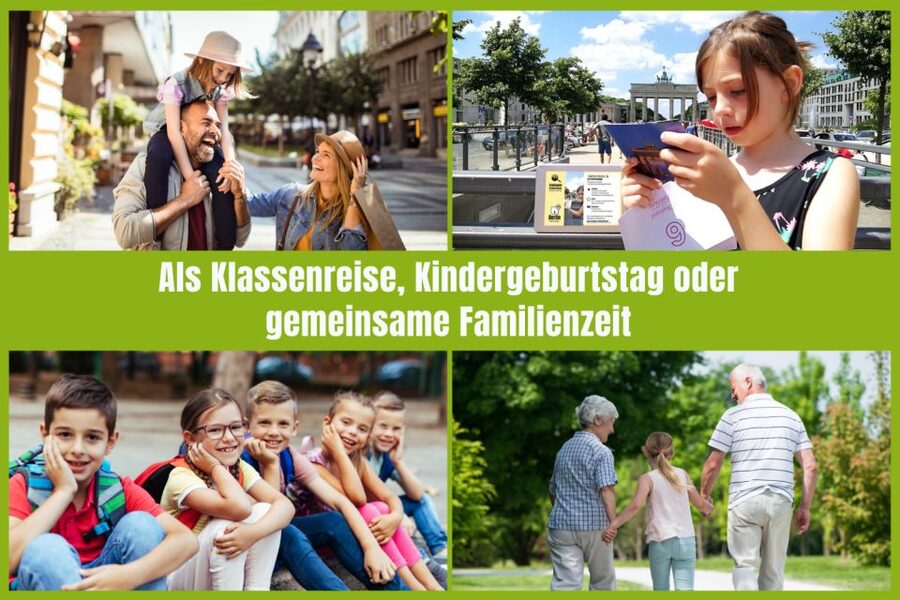
That format works well for families because it gives children a job. Instead of simply following an adult from one monument to another, they look for clues and help decide what comes next. The facts are written for younger readers, but adults can use them to add context and answer questions along the way.
You should expect a compact introduction to central Berlin, not a full study of the city. The route covers famous sights in a relatively short time, but each stop receives only as much attention as your group chooses to give it.
The stated duration is two hours, and the total distance is about 4.5 kilometers. That is a reasonable amount of walking for many families, though younger children may need a break. The good news is that the game can be paused at any time. You are not racing a guide or trying to keep up with another group.
More Scavenger Hunts in Germany
- Escaping and spying on the Berlin Wall Scavenger hunt
★ 4.5 · 128 reviews - Berlin: Scavenger Hunt Self-Guided Tour
★ 4.6 · 79 reviews - Scavenger Hunt through Berlin’s Government District
★ 4.7 · 24 reviews
Starting at Alexanderplatz and the World Clock
The World Clock at Alexanderplatz is a practical starting point. It is easy to recognize, and the square gives your group room to gather, read the first instructions, and sort out the game box.
Alexanderplatz also provides an immediate sense of modern Berlin. The square is broad and urban, with the TV Tower rising nearby. Starting here helps children see that Berlin is not only about old buildings and war memorials. It is also a working city with busy public spaces and striking postwar architecture.
Your first envelopes provide directions as well as puzzles. That matters because a self-guided game can become frustrating if the route is vague. Here, the instructions are meant to lead you from one stop to the next without a guide.
Give yourself a few minutes at the start to explain the rules. Keep the unopened envelopes together, decide who will read the directions, and let children take turns solving clues. That simple setup can prevent one person from doing all the work.
The TV Tower: a landmark with an optional view
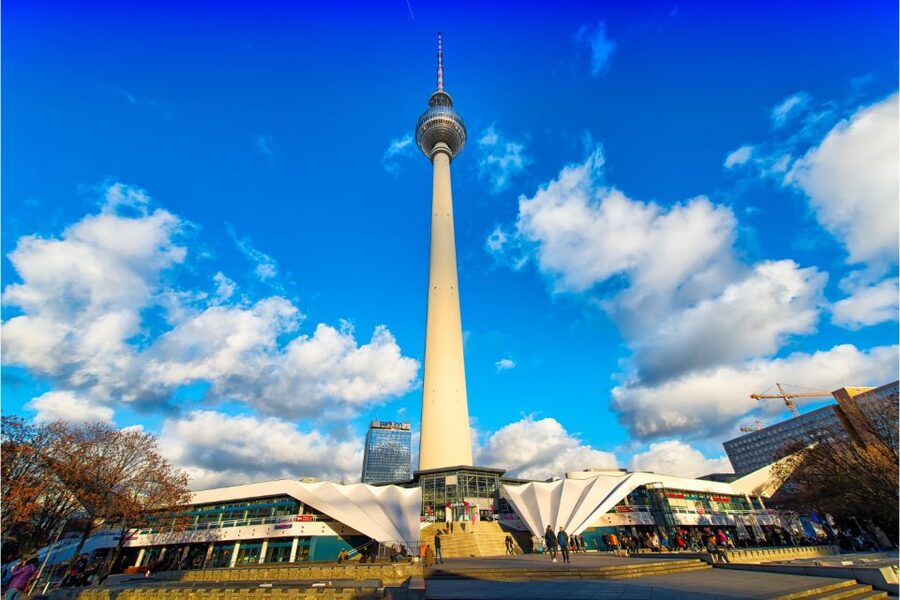
From Alexanderplatz, the route takes you toward Berlin’s famous TV Tower. The tower is one of the easiest landmarks to recognize in the city, and it gives children a clear visual target as they begin the walk.
The observation deck offers a view across Berlin, but admission is not included. If you decide to go up, that will add time and cost to the day, so treat it as an optional extra rather than part of the two-hour game.
This is one of the useful features of the format: you are free to stop. You can take photos, examine the tower from below, or continue with the next clue. A family with limited time can stay on the route, while a school group can use the tower as a short discussion point about Berlin’s skyline and city planning.
The activity does not force you into a timed schedule. That makes it easier to fit around other plans, but it also means you need to watch the clock yourself if you have a museum booking or meal reservation afterward.
Berlin Cathedral and Museum Island
Berlin Cathedral is one of the route’s best pause points. The building is visually impressive, and its location beside Museum Island gives you several ways to extend the outing.
The scavenger hunt includes a puzzle at the cathedral, along with background information about the attraction. This is where the game’s printed material becomes more useful than a simple list of sightseeing stops. You receive enough context to understand what you are looking at, then the children have a task that keeps their attention on the building.
You may want to stop here for photos or take a closer look inside. The game allows that, though any admission fee is separate. You can also consider visiting a museum on Museum Island, such as the Pergamon Museum, but museum entry is not included and a museum visit will make the day longer than the advertised two hours.
For school classes, Museum Island offers a natural follow-up. The envelope facts can help connect the outdoor walk to classroom work, especially because the information covers both the attraction’s past and its present use. For families, the cathedral is simply a good place to slow down before the route continues.
More Self-Guided App Games in Germany
- Berlin Wall: Greatest Escapes Self-Guided Walking Adventure
★ 4.5 · 27 reviews - Berlin Kreuzberg: Scavenger Hunt Self-Guided Tour
★ 4.1 · 19 reviews - Berlin Prenzlauer Berg: Scavenger Hunt Self-Guided Tour
★ 4.6 · 14 reviews - Love and War in Berlin: Self-Guided Story Puzzle Walk
★ 5.0 · 7 reviews
Neue Wache and Humboldt University
The next section brings you through central Berlin toward Neue Wache and Humboldt University. These stops add more serious historical and civic themes to the route.
Neue Wache is a memorial, so it is a quieter stop than Alexanderplatz or the TV Tower. Children may need a little help understanding why the building matters and why the atmosphere changes here. The scavenger hunt’s short background notes give you a starting point for that conversation without turning the outing into a long lecture.
Humboldt University adds another layer to the walk. It helps show how central Berlin combines public squares, memorials, educational institutions, and major landmarks within a fairly compact area.
The route works best when you let children solve the puzzle but keep the historical discussion open. Some clues may be finished quickly, while the information cards can prompt questions that take longer. You do not need to rush from envelope to envelope.
Gendarmenmarkt and the city’s grand center
Gendarmenmarkt is one of the most attractive parts of the route. The square is known for its French Cathedral and German Cathedral, and the surrounding architecture gives the scavenger hunt a strong visual payoff.
This is a good place to pause and take photographs. It is also one of the stops where the route feels less like a children’s game and more like a proper introduction to Berlin’s central districts. Adults who want a little architecture and history will find more to appreciate here.
The square can also serve as a morale checkpoint. By this stage, your group has covered a fair amount of ground. If children are losing interest, use the setting itself as a short break before opening the next envelope.
Because you are on your own, you can decide how much time to spend. That flexibility is a real advantage over a tightly timed guided tour. The tradeoff is that nobody is present to point out small details beyond what is printed in the box.
Brandenburg Gate at Pariser Platz
The route then leads to Pariser Platz and Brandenburg Gate, one of Berlin’s best-known symbols. This is likely to be a highlight for children who have seen pictures of the gate before arriving.
The square provides a clear sense of Berlin’s political and historical center. It is also a useful place to take group photos, though you should expect an open public setting rather than a quiet monument visit.
The puzzle gives the stop a purpose beyond taking a quick picture. Children can look closely at the gate, search for details, and connect the clue with the background information. That makes the visit more active than simply stopping for a photograph.
Brandenburg Gate is also close to other important sights, so you may be tempted to extend the day. You can do so, but remember that the activity itself is built around a two-hour route. If your group wants to explore the area at length, plan extra time rather than trying to fit everything into the game schedule.
Finishing at Potsdamer Platz and Sony Center
The final stretch ends at Potsdamer Platz, with the Sony Center as the closing landmark. This gives the activity a modern finish after a route filled with monuments, memorials, university buildings, and historic squares.
Potsdamer Platz is a useful contrast to Berlin Cathedral, Neue Wache, and Brandenburg Gate. The end of the route shows a newer side of the city and gives children a chance to compare different styles of architecture they have seen during the walk.
Ending at a recognizable public place is practical. Your group can decide what to do next, and you are not left at an obscure corner of the city. You might continue sightseeing, arrange food, or use public transport afterward, though transportation is not included in the price.
The final envelope contains the solutions. Try not to open it too early. Children usually get more satisfaction from working through a difficult clue than from checking the answer immediately.
How the box and clues work
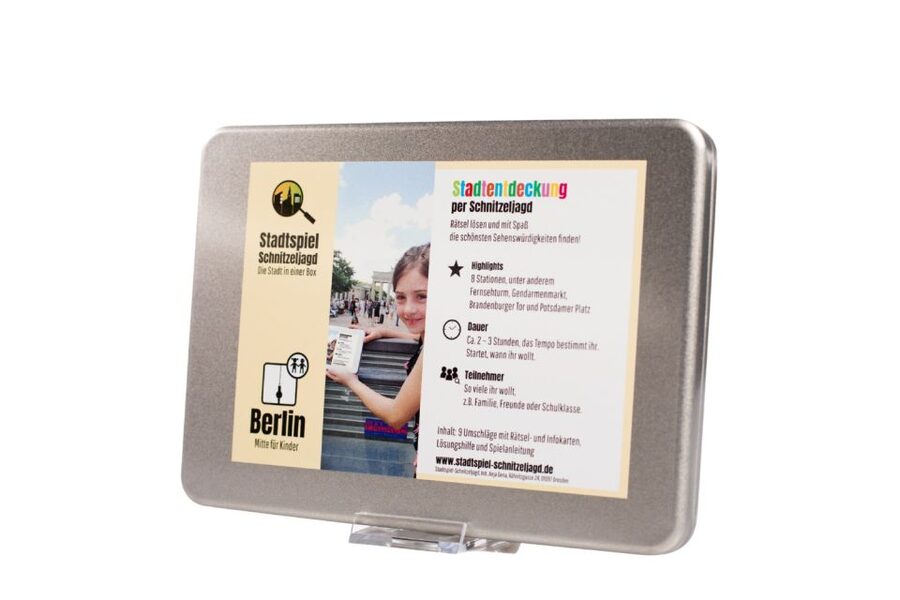
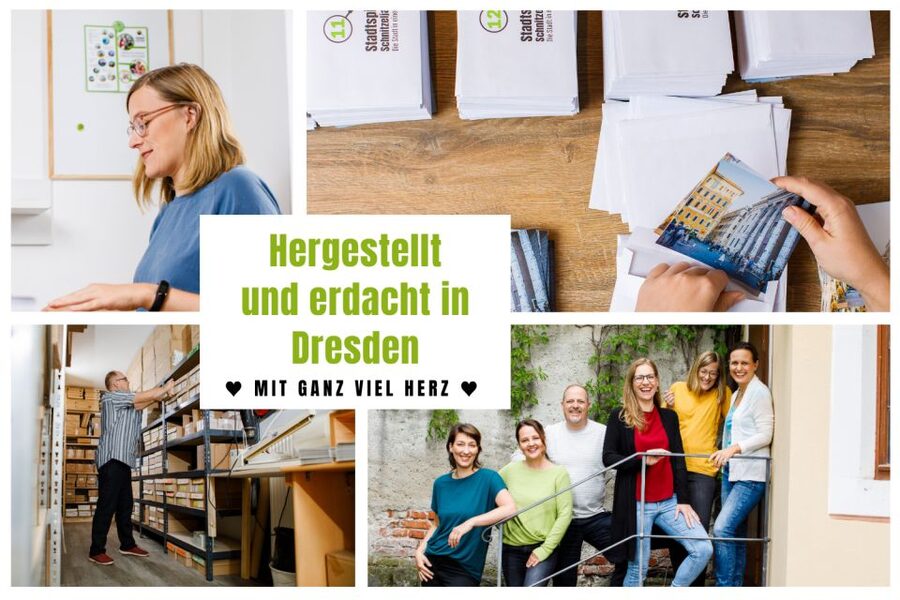
The game box contains eight numbered envelopes with riddles, directions, information, and child-friendly facts, plus a separate envelope with the solutions. The description also refers to nine sealed and numbered envelopes, so you should think of the package as eight activity stages and one solution section.
The sealed format helps control the pace. You open the next envelope only after reaching the correct point, which keeps the route feeling like a sequence of discoveries. It also stops children from seeing every answer at once.
The instructions are described as clear and unambiguous. That is important because the activity depends on your group navigating Berlin without a guide. Still, you should keep the box dry, organized, and easy to access during the walk.
The information can also be reused after the outing. For school classes, the facts provide material for follow-up work in class. For families, they offer useful talking points after the trip, especially if a child wants to know more about one of the buildings or memorials.
Is $47 good value for your group?
At $47 for up to 10 people, the value is strongest when you fill most of the available group size. A family of four pays a modest per-person rate, while a school group can use one box for a small group if the organizer follows the stated limit.
You are paying for the printed game, the route design, the puzzles, the background facts, and shipping. You are not paying for a guide, museum admissions, food, drinks, transport, or the TV Tower observation deck.
That distinction matters. A guided walking tour may provide more spontaneous explanation, while this activity gives you greater control and a lower group price. If your priority is personal storytelling from a local guide, this is not the right format. If you want children to participate actively and avoid a fixed tour schedule, the price is sensible.
Shipping also affects planning. The box is sent by mail, can take up to four working days within Germany, and is shipped at the earliest two weeks before the selected date. Pickup in Berlin is not available. Book with enough time for the box to arrive, and do not assume you can collect it after landing.
Who will enjoy this most?
I would choose this for families with school-age children, school classes, and day-trippers who want to see major Berlin sights without committing to a conventional guided walk.
The activity seems particularly well suited to children who like puzzles and manageable tasks. A family using it with a 10-year-old found the clues solvable and engaging through the end. A school group from a special-needs school also found the tasks manageable, with clear directions and easy-to-understand information.
That does not mean every child will enjoy the same pace. Children who dislike walking, reading clues, or waiting for the group may lose interest. Adults should be ready to keep the group organized and help with directions when needed.
You also need comfortable shoes. The route covers about 4.5 kilometers, and the city setting means you will spend the activity outdoors while moving between stops.
The activity is listed as wheelchair accessible, which makes it a useful option for groups seeking an accessible city game. Since the route is several kilometers long, you should still consider your group’s personal mobility needs and the time required for stops.
Booking details and practical advice
You can cancel up to 24 hours before the activity for a full refund, and you can reserve now and pay later. The date and starting time are flexible because you begin on your own, but availability still needs to be checked when booking.
There is no guide at the starting point. Bring the game box, comfortable shoes, and anything your group needs for a two-hour outdoor walk. Food and drinks are not included, so plan a snack stop if children need regular breaks.
I would also recommend allowing more than two hours if you want to visit the TV Tower, enter Berlin Cathedral, explore Museum Island, or stop for a proper meal. The game gives you permission to pause, but it does not include extra time in its basic estimate.
Should you book this Berlin scavenger hunt?
Book it if you want a structured but flexible city walk that keeps children involved. The route covers many of Berlin’s major central sights, the clues are designed to be manageable, and the group price is appealing when shared among several people.
Skip it if you want a guide who explains every stop in depth or if your group is not comfortable walking 4.5 kilometers. Also plan ahead for delivery, since the box cannot be picked up in Berlin.
For families and school groups, I think the strongest reason to book is simple: Berlin’s monuments become part of an activity rather than a string of adult errands. You get movement, puzzles, useful facts, and the freedom to stop when your group needs a break.
FAQ
Where does the Berlin scavenger hunt start?
It starts at the World Clock on Alexanderplatz in Berlin.
Where does the activity end?
The route ends at Potsdamer Platz, near the famous Sony Center.
How long is the scavenger hunt?
The approximate duration is two hours.
How far do you walk?
The route is approximately 4.5 kilometers.
Is a tour guide included?
No. This is a self-guided activity, and there is no guide at the meeting point.
What is included in the game box?
The box includes eight envelopes with riddles, directions, background information, and child-friendly facts, plus an envelope with the solutions. Shipping is included.
Are tickets to the TV Tower or museums included?
No. Entry fees, including the TV Tower observation deck and museums, are not included.
Can I pause the scavenger hunt?
Yes. You can pause the game at any time to take a break, take photos, visit Berlin Cathedral, explore Museum Island, or see another attraction.
More Self-Guided App Games in Berlin
- First Profiler Berlin: Private Self-guided Outdoor Escape Game
★ 3.5 · 3 reviews - Spy Mission in Berlin: Self-Guided Espionage Puzzle Quest
★ 5.0 · 3 reviews - Hamburg: Scavenger Hunt Self-Guided Tour for Children
★ 4.5 · 319 reviews - Dresden: Old Town Self-Guided Scavenger Hunt Tour
★ 4.5 · 151 reviews
More Scavenger Hunts in Berlin
- Berlin: Scavenger Hunt through Friedrichshain
★ 4.8 · 9 reviews - Berlin Scavenger Hunt and Highlights Self-Guided Tour
★ 4.0 · 7 reviews - Scavenger Hunt from Maranja Adventure Club
★ 5.0 · 6 reviews - Berlin Highlights Self guided scavenger hunt and Walking Tour
★ 4.5 · 4 reviews
Just added around Berlin
- Winter is Coming Live Escape Room in Berlin★ 3.0 · 5 reviews
- Berlin Highlights Self guided scavenger hunt and Walking Tour★ 4.5 · 4 reviews
- Private Tutankhamun’s Tomb Live Escape Room in Berlin★ 3.5 · 11 reviews
- Love and War in Berlin: Self-Guided Story Puzzle Walk★ 5.0 · 7 reviews
- Kreuzberg’s Secret Society: Exploration Game and Tour★ 4.5 · 3 reviews
- First Profiler Berlin: Private Self-guided Outdoor Escape Game★ 3.5 · 3 reviews
- Scavenger Hunt from Maranja Adventure Club★ 5.0 · 6 reviews
- Berlin Scavenger Hunt and Highlights Self-Guided Tour★ 4.0 · 7 reviews
Family and Kids Games, compared.


Greek Mythology Treasure Hunt for Kids – Athens Private Tour
Read our review →
Browse the lists this game appears in