Review · ILE-DE-FRANCE
Paris Louvre : Private Treasure Hunt for Families or groups
The Louvre becomes a detective story. This private two-hour hunt gives families a clear mission: find a poisonous vial hidden among the museum’s masterpieces before its curse causes eternal sleep. I like the included entry tickets and the way the guide turns famous works into clues rather than asking children to stand quietly through a standard museum talk.
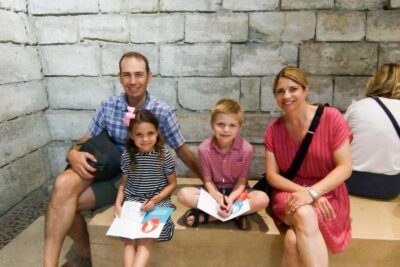
I also like the private format, since the guide can focus on your own group and adjust the pace. Guides Hugo and Lisa earned especially warm praise for keeping children involved, patient, and interested. The main caution is that the activity does not suit every age or every guide style. Children around six to nine seem to get the most from it, while a three-year-old may lose interest and some older children may find the puzzles too hard.
The two-hour experience costs $648 per group of up to five people. That is a serious price, but it includes Louvre admission and a private guide, making it easier to justify for a family that wants a focused visit rather than a long museum slog. The current rating is 3.9 from 14 reviews, with excellent comments about certain guides but also some sharp complaints about ticket handling and the activity’s entertainment value.
Key points before you book
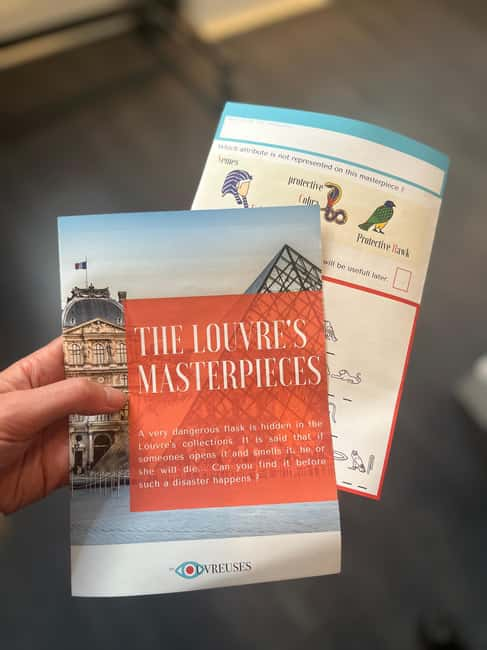
- The story centers on a poisonous vial: Children follow clues through major Louvre artworks to stop a mysterious curse.
- The route includes three famous masterpieces: You visit the Mona Lisa, Venus de Milo, and Winged Victory of Samothrace.
- Private means your family gets the guide’s attention: The group is limited to your party, with a maximum of five people at the listed price.
- Hugo and Lisa received the strongest praise: Both were described as patient, engaging, and good with children.
- The puzzles may be demanding: One family found the hunt less engaging than expected because the clues were too difficult.
- Plan for a small day bag: Large bags and luggage are not allowed inside this activity.
Turning the Louvre into a family mission
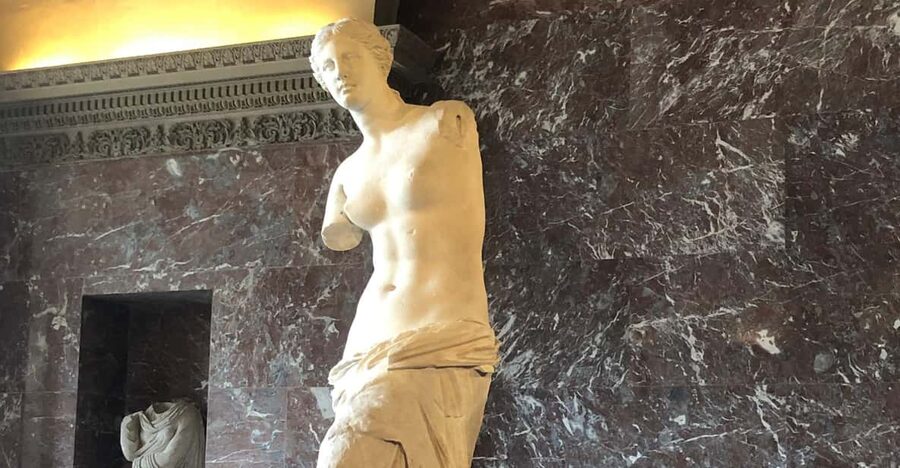
The Louvre can be a tough sell to children. It is enormous, crowded, and filled with works that adults may admire for ten minutes while a young child is already asking for a snack. This hunt gives the visit a reason to keep moving.
Your guide meets you beneath the Louis XIV statue at 8 Place du Carrousel. From there, you enter with the provided Louvre tickets and begin the case of the hidden vial. The story is simple enough to explain quickly: a deadly substance is concealed somewhere among the museum’s treasures, and anyone who inhales it falls into an eternal sleep.
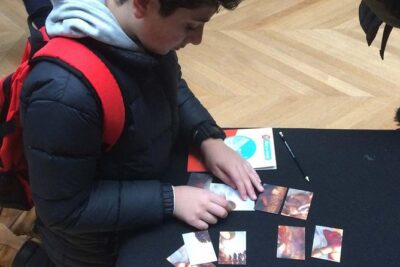
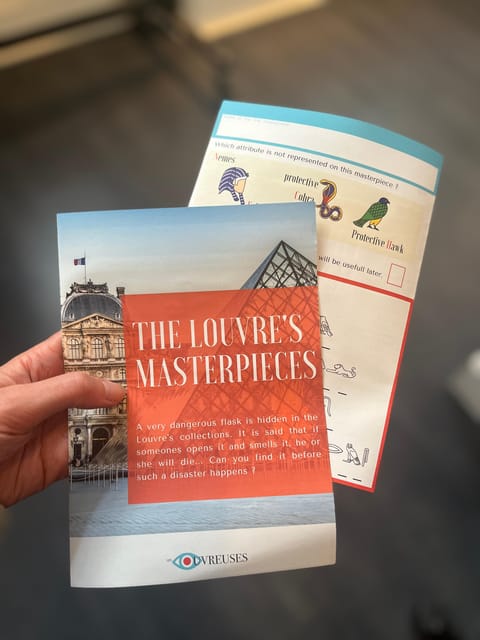
That plot gives each stop a job to do. Instead of merely hearing that a painting or sculpture is famous, your child looks for a clue, solves a riddle, or studies a detail. The booklet helps organize the game, while the guide explains how each artwork connects to the next step.
I like this approach because it respects children’s short attention spans without treating them as passive passengers. You are not just being marched from one famous object to another. You are asked to observe, answer, and make guesses.
Still, the hunt is not magic for every child. A three-year-old may not understand the coded messages or have the patience for the full route. A six-year-old can enjoy it with help, but the group’s enthusiasm will depend heavily on how the guide presents the clues.
More Family and Kids Games in Paris
- Louvre Museum Guided Family Treasure Hunt
★ 5.0 · 78 reviews - Kids/teens escape game in Montmartre
★ 5.0 · 68 reviews - Louvre Museum – Private Family Tour with Da Vinci Treasure Hunt
★ 5.0 · 38 reviews
Meeting under Louis XIV and getting inside
The meeting point is beneath the statue of Louis XIV at 8 Place du Carrousel. That is a useful landmark, but make sure everyone in your group knows the exact spot before you arrive. A major museum entrance can feel confusing, especially if one adult is managing children, tickets, and bags.
The guide provides the museum tickets, and the activity includes skip-the-ticket-line access. That matters at the Louvre, where simply getting through the entrance can use up precious family energy. You still need to arrive at the correct meeting place on time, but you are not expected to buy separate admission tickets at the door.
One important practical point is ticket accuracy. In one serious incident, a group reported that one person had no ticket and could not join, leaving that adult outside for the two-hour visit. That kind of problem is especially frustrating when the booking was for a private group and cost more than $500. Check your confirmation and the number of included tickets before the day of the tour, then contact the provider promptly if anything looks wrong.
Large bags and luggage are not allowed. Bring only what you need for two hours, such as a small bag, water if permitted by museum rules, and anything essential for your child. Food and drinks are not included, so plan refreshments before or after the activity rather than expecting a snack break during the hunt.
The Mona Lisa as the first major clue
The Mona Lisa is one of the natural anchors of any first Louvre visit. Here, it is more than a photo stop. The guide uses the painting as part of the investigation, asking the children to pay attention and connect what they see to the wider case.
That is a useful change of focus. The room around the painting can be crowded, and the viewing moment is often brief. A treasure hunt gives your child something specific to do instead of trying to compete with every camera and raised phone in the room.
You should keep your expectations realistic. This is not a quiet, extended art lesson in front of the painting. The Mona Lisa is a busy stop, and the group may have limited time to look closely. The value comes from using the artwork as an active clue within the story.
A good guide makes a big difference here. Hugo was praised for holding the attention of children aged six and nine, while Lisa was described as especially good with kids and able to help them learn while having fun. Those comments suggest that the guide’s energy and patience matter as much as the objects on the route.
Venus de Milo and a fifteen-minute challenge
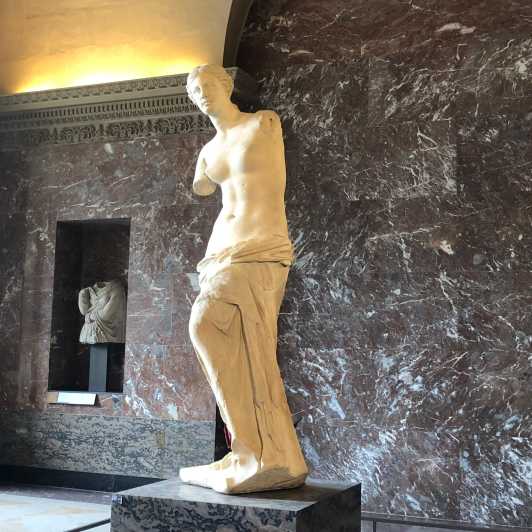
The Venus de Milo receives about 15 minutes of guided attention. That is enough time for a focused activity without asking children to linger too long in one place.
The statue works well for a clue-based visit because children can observe its pose, missing arms, and distinctive shape. The guide can turn those visual details into a challenge, then use the answers to point the group toward the next stage of the case.
I appreciate the set time here. Families often need a clear rhythm in a large museum. Fifteen minutes gives you a defined stop, and the treasure hunt keeps the discussion from becoming a long lecture.
The possible drawback is puzzle difficulty. One family found the scavenger hunt fun but harder and less engaging than expected. If your children are young, you may need to help with the riddles rather than letting them solve every clue alone. That is not necessarily a problem, but it means the adults are part of the game too.
For a family with children around six to nine, that shared problem-solving can be the best part. You can nudge a child toward an answer without simply giving it away. For a younger child, the guide may need to simplify the challenge or let the child participate through observation rather than reading.
More Treasure Hunts in France
- Paris Sweet & Chocolate Family Treasure Hunt
★ 5.0 · 37 reviews - Paris Kids Louvre Treasure Hunt Private Tour
★ 5.0 · 28 reviews - Paris Treasure Hunt – Explore the Seine from Louvre to Eiffel
★ 5.0 · 18 reviews - Treasure Hunt in Paris – From the Panthéon to the Louvre
★ 5.0 · 17 reviews
Winged Victory and the final stretch
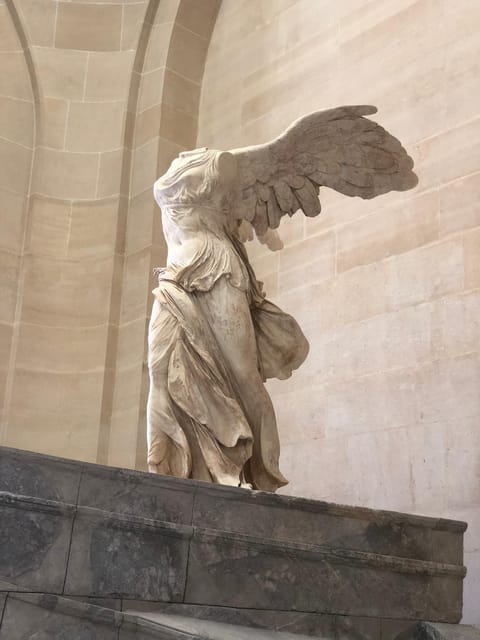
Winged Victory of Samothrace, also called Nike, is another major stop. The sculpture’s position and dramatic form give the treasure hunt a strong visual moment, and it is a natural place for a guide to ask children what they notice.
The activity uses observation games and coded messages to trace the story back to the hidden vial. That structure helps you see the museum as a chain of clues rather than a list of unrelated rooms. Each stop has a purpose, and the children know they are working toward an answer.
The route does not promise a complete tour of the Louvre. In two hours, you are seeing selected highlights rather than attempting the entire museum. That is the right choice for families. Trying to cover everything would leave children tired and adults rushing.
You may still find the museum tiring, especially if your child is very young or the group arrives after a long morning of sightseeing. The private format helps because the guide can keep the experience centered on your group, but it cannot remove the size and crowds of the Louvre itself.
How much value does $648 provide?
The listed price is $648 for a private group of up to five people. If you fill all five places, the cost works out to $129.60 per person before considering currency conversion or any booking fees. That is not a budget museum visit, but it includes Louvre tickets, a private guide, and the booklet.
The value improves when you want personal attention. A private guide can keep your children involved, answer questions from the adults, and adjust the rhythm to your own family. You are also paying for a structured way to see three major works without spending hours planning a child-friendly route yourself.
The price is harder to defend if only two people use the booking, if your children are too young for riddles, or if you mainly want to see the Mona Lisa and leave. In that case, a regular Louvre visit may be more sensible.
I would look at the cost as a family experience rather than simply an admission ticket. If a successful tour keeps your children interested for two hours and helps everyone remember what they saw, it can be worthwhile. But the experience depends strongly on the guide, and the mixed 3.9 rating shows that the result is not guaranteed.
The guide can make or break the hunt

The most consistent positive theme is the guide’s relationship with the children. Hugo was praised for being patient, involved, and kind. Lisa was described as amazing with kids and able to make the museum both enjoyable and educational.
That praise is important because the treasure hunt requires more than knowing where the artworks are. The guide must explain the rules, offer hints without solving everything, and keep the story moving when children get distracted. A guide who reads the clues in a flat way could make the same route feel like homework.
There is also a clear warning about variation. One adult found the activity not very special for a six-year-old and felt that the fun depended heavily on the guide. Another described the guide as fantastic but found the hunt itself less child-focused than expected.
You should book this with the understanding that the format gives you a good framework, not a guarantee that every child will love every clue. Before starting, tell the guide your children’s ages and how comfortable they are with puzzles. That information may help the guide judge how much assistance to give.
The tour is offered in English and French. If you need English, confirm that choice when booking and at the meeting point.
Who will enjoy this Louvre experience?
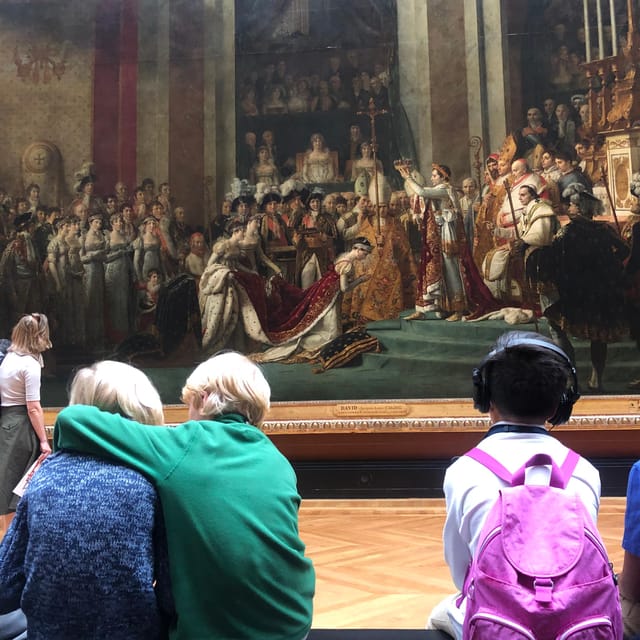
This is best for a private family group with children who enjoy stories, riddles, and finding details in pictures and sculptures. Ages six to nine appear to be a strong match based on the successful family experiences, though younger children may still enjoy parts of the story with adult help.
It can also work for a small group of friends or relatives who want a playful introduction to the Louvre. The maximum of five keeps the listed price easy to calculate and gives the guide a chance to involve each child.
I would be cautious if your group includes a three-year-old who needs frequent breaks or dislikes structured games. One three-year-old did not enjoy the activity, while the nine-year-olds in the same family did. That age gap can make a single pace difficult.
I would also skip it if your main aim is a slow art-focused visit. The treasure hunt is built around movement, clues, and selected masterpieces. It is not designed for long, quiet study of many galleries.
Timing, cancellation, and simple planning advice
The duration is two hours, with starting times available according to the date you choose. That makes it easier to fit around lunch or another Paris activity, but remember that the Louvre is a large site and the meeting point comes before the museum portion begins.
You can cancel up to 24 hours in advance for a full refund. You can also reserve now and pay later, which gives you some flexibility when your Paris schedule is still changing.
I would arrive with enough time to find the Louis XIV statue and gather your group. Keep bags small, verify the ticket count, and make sure children know that the visit is a game with challenges, not a free-play activity. Those simple steps can prevent the most avoidable problems.
Bring enthusiasm, but do not promise that your child will solve every clue alone. The best family experience will probably involve adults helping, children noticing details, and the guide adjusting the difficulty along the way.
Should you book the Louvre treasure hunt?
Book it if you want a private, story-driven introduction to the Louvre and your children are roughly six to nine, especially if they enjoy riddles and detective games. The included tickets, focused route, and strong feedback about guides Hugo and Lisa give the experience real appeal.
Think twice if your children are very young, dislike puzzles, or need a relaxed museum visit. The $648 cost makes the guide quality and ticket accuracy especially important, so verify the booking carefully and tell the provider the exact number of people in your group.
For the right family, this can turn three famous works into a memorable case to solve. For the wrong age group, it may feel like a costly walk through a huge museum with clues that are too hard. Your children’s ages and interest in games should decide this booking more than the fame of the Louvre itself.
FAQ
Where does the Louvre treasure hunt begin?
Meet the guide beneath the Louis XIV statue at 8 Place du Carrousel in Paris.
How long does the experience last?
The treasure hunt lasts two hours.
What artworks are included?
The route includes the Mona Lisa, Venus de Milo, and Winged Victory of Samothrace, also called Nike.
Are Louvre tickets included?
Yes. Louvre Museum entry tickets are included, along with a guide and a booklet.
How many people can join the private group?
The listed price of $648 covers a private group of up to five people.
What languages are available?
The tour is offered in English and French.
Can I cancel the booking?
Yes. You can cancel up to 24 hours in advance for a full refund. You can also reserve now and pay later.
More Treasure Hunts in Paris
- Paris: Treasure Hunt & Walking Tour “Secret Weapon X”
★ 4.8 · 17 reviews - Montmartre Treasure Hunt — Fun and Cultural Investigation
★ 5.0 · 6 reviews - Family Treasure Hunt in Montmartre
★ 4.5 · 6 reviews - Paris Covered Passages Treasure Hunt — Self-guided Game
★ 5.0 · 5 reviews
Just added around Paris
- Treasure Hunt in Paris – From the Panthéon to the Louvre★ 5.0 · 17 reviews
- Paris Covered Passages Treasure Hunt — Self-guided Game★ 5.0 · 5 reviews
- Paris Treasure Hunt to the Auction Rooms★ 5.0 · 2 reviews
- Private Scavenger Hunt in Montmartre★ 5.0 · 2 reviews
- Marais Treasure Hunt & Discovery — Self-guided Paris Game★ 5.0 · 3 reviews
- Paris WWII: Occupation & Liberation Exploration Game and Tour★ 5.0 · 2 reviews
- Montmartre Treasure Hunt — Fun and Cultural Investigation★ 5.0 · 6 reviews
- Paris Scavenger Hunt and Highlights Self-Guided Tour★ 3.5 · 5 reviews
Family and Kids Games, compared.