

Review · LAZIO
Rome: Scavenger Hunt For Kids with Prizes around City Center
Rome becomes a game board. This 2.5-hour family scavenger hunt turns famous sights into clues, puzzles, photo tasks, and team challenges, giving children a reason to look closely instead of simply following adults from one monument to the next. I like the route through the Spanish Steps, Trevi Fountain, and Pantheon, and I like that the activities make Roman history easier for young minds to grasp. The main drawback is that it is a walking activity in busy streets, with no museum entries, meals, or transport included.
The format also earns praise for keeping adults involved. Bruno, one of the guides, was described as especially kind, while another family found the hunt engaging even for a child who usually gets bored quickly. You should know that the activity is described as self-guided, although a private English-speaking guide is included, so it is wise to confirm exactly how much guidance your booking provides.
Key points at a glance
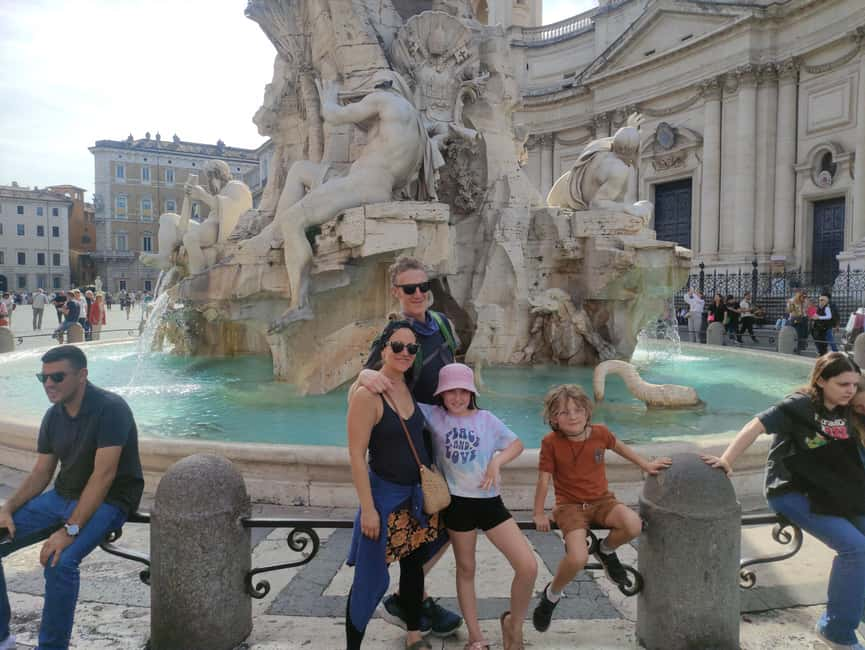
- Start at Piazza Mignanelli: Meet by the Column of the Immaculate Conception, close to the Spanish Steps.
- Three major Roman sights: The route includes the Spanish Steps, Trevi Fountain, and Pantheon.
- Games with a purpose: Children solve riddles, search for symbols, count coins, complete challenges, and take photos.
- A 2.5-hour walking plan: The activity ends back at the starting point, with no transportation between stops.
- Good for mixed ages: Adults can help with puzzles while children take the lead.
- Practical limits: Wear comfortable shoes, bring water and sun protection, and note that the activity is not suitable for wheelchair users.
Why this Rome scavenger hunt works for families
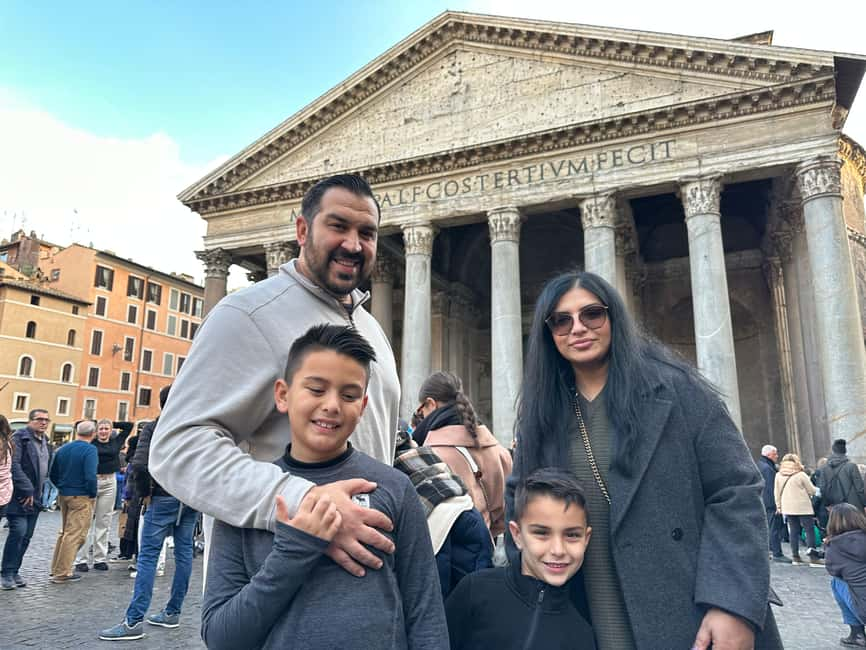
Sightseeing in Rome can be a tough sell to children. Adults see layers of history in every column and fountain. Children may see another long walk, another explanation, and another request to look interested. This hunt changes the job. Instead of asking your child to admire a monument, it gives them something to find, solve, count, or photograph.
I like that the experience uses Rome itself as the play area. The landmarks are not background scenery. They provide the clues and questions. A child might examine the architecture at the Trevi Fountain for carved symbols, work through a riddle linked to the Pantheon, or race to solve an answer near the Spanish Steps.
The format also helps families share the work. One child may spot a detail, another may solve the wordplay, and an adult may help connect the clue with the historical fact. That makes this more than a distraction for children while parents sightsee. It gives the whole family a common task.
The published price is $22 per person. For a 2.5-hour private-guided activity covering three of Rome’s best-known sights, that is a reasonable family price if your children enjoy puzzles and active games. The value is less convincing for teenagers or adults who want a traditional art and history tour, since the focus is on play rather than detailed commentary.
More Family and Kids Games in Italy
- Rome: 2.5-Hour Family Vatican Highlight Scavenger Hunt
★ 4.6 · 51 reviews - Private Family Scavenger Hunt & Art Lab Tour – Rome Landmarks
★ 5.0 · 30 reviews - Rome: Treasure Hunt for Kids and Families Trevi and Pantheon
★ 5.0 · 14 reviews
Starting at the Spanish Steps
Your meeting point is by the Column of the Immaculate Conception in Piazza Mignanelli. This places you near the Spanish Steps, one of Rome’s most recognizable public spaces, and gives the hunt a clear starting marker rather than leaving you to search for a guide in a large piazza.
The Spanish Steps provide a lively opening. Children receive their first clue and begin solving riddles around the historic staircase. The climb itself becomes part of the challenge, with city views adding a reward as they move upward.
This is a smart first stop because it immediately gives children something active to do. You are not starting with a long talk about dates and architectural terms. You are starting with a question and a task.
There is a practical catch. The Spanish Steps area can be crowded, and the route involves stairs. Keep the group together, especially if children become excited and start racing ahead. The advice to begin early is useful here, since quieter conditions make it easier to hear instructions and study clues.
The starting area is also convenient for orienting yourself in central Rome. Since the activity later returns to the same meeting point, you do not need to work out a complicated end-of-tour transfer.
Reading the clues at Trevi Fountain
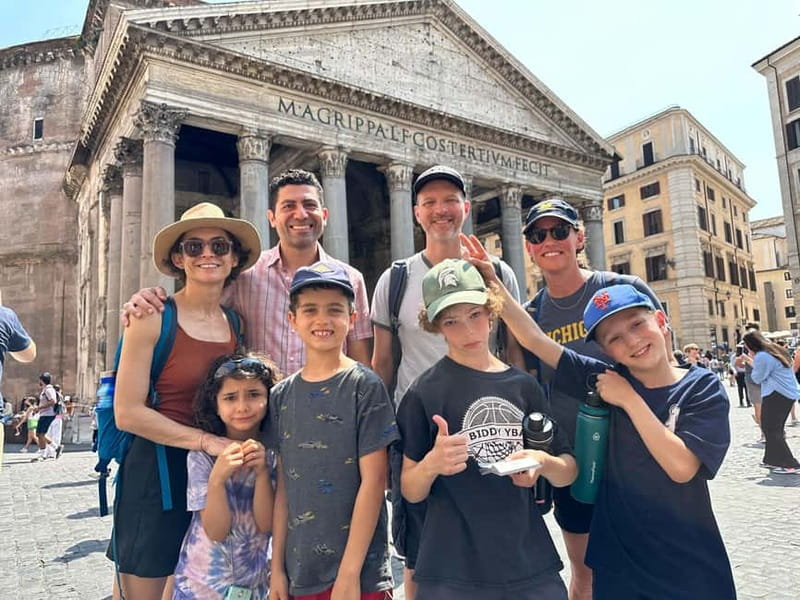
From the Spanish Steps, the hunt continues to Trevi Fountain. This is one of the best locations for a children’s activity because the fountain is visually dramatic even before anyone explains its design.
The challenges here include counting coins thrown into the fountain and looking for symbols carved into the architecture. These tasks encourage careful observation. Children who might overlook decorative details during a standard city walk have a reason to examine the stonework.
The coin-counting game also connects naturally with the fountain’s familiar tradition. It gives children a simple activity while adults can take in the scale and decoration of the site. The result is a shared pause rather than a rushed family photo.
Trevi Fountain is also the point where crowd control matters most. The area can become crowded, and the space around the fountain is not ideal for free running. Treat the hunt as a close-group activity here. Children can still feel like explorers without spreading out.
You should also remember that this is an outdoor experience. Rome’s sun can be strong, and there may be little comfort if you arrive without water, a hat, or sunscreen. The activity provider specifically recommends all three, along with comfortable shoes and a camera.
Solving Pantheon puzzles through architecture
The Pantheon gives the hunt a different kind of challenge. At the fountain, children look for symbols and count coins. At the Pantheon, they piece together riddles linked to the building’s past and architecture.
The Pantheon is especially useful for a family tour because its shape and columns invite questions. Children can connect the clue to what they see in front of them, rather than trying to remember a long explanation. A puzzle about a 2,000-year-old building feels more manageable when it begins with a column, a doorway, or another visible feature.
No entrance fee is included in the activity. That matters because the experience focuses on the outdoor route and does not promise admission to the Pantheon or any other monument or museum. If entering a site is important to your family, budget and plan that separately.
This limitation can also be a benefit. You do not have to manage a long indoor visit during a game designed to keep children moving. The hunt remains focused on streets, piazzas, and exterior details.
I would expect the Pantheon section to suit children who like solving problems more than simply taking pictures. It asks them to combine observation and imagination. Adults can help without taking over, which keeps the activity enjoyable for different ages.
More Scavenger Hunts in Italy
- Angels & Demons Rome Scavenger Hunt: The Illuminati Escape Game
★ 4.5 · 103 reviews - Rome: Scavenger Hunt Self-Guided Tour
★ 4.6 · 15 reviews - Private Family Scavenger Hunt & Art Lab Tour– Rome Landmarks
★ 5.0 · 7 reviews - Treasures of Rome Scavenger Hunt for Friends Team Building & Company Incentive
★ 4.5 · 2 reviews
Discovering piazzas and side streets

The route is not limited to three postcard sights. Between the major stops, you search for clues in Rome’s piazzas and narrow alleyways. These connecting sections matter because they make the city feel like a place to explore, not just a checklist of monuments.
The extra clues and challenges help break up the walking. A child may be tired after the Spanish Steps, but a new puzzle can provide a fresh reason to keep moving. The activities include riddles, photo challenges, hands-on games, and other interactive tasks.
The exact clues and prize details are not specified, so you should not expect a fixed list of every challenge before booking. What is clear is the overall approach: children work as a team and collect a sense of progress as they move through central Rome.
This format is best for families willing to let children take the lead. If an adult solves every riddle immediately, the game loses much of its point. Give children time to look, guess, and make mistakes. The learning happens through the process, not just through getting the correct answer.
The walking route also means this is not a good choice for a family that wants a seated activity or frequent transport. The experience includes no transportation to or from attractions. You walk between the stops and return to the original meeting point.
What the guide adds to the experience
The activity includes a private guide and is offered in English. The feedback is particularly strong on the guide’s attitude and ability to involve children. Bruno is singled out as kind, and another family found the guide engaging enough to hold the attention of a child who usually loses interest quickly.
That detail is important. A children’s scavenger hunt depends heavily on presentation. The same clue can feel exciting or dull depending on how it is introduced. A playful guide can keep the group moving and make adults feel less like referees.
At the same time, the activity information calls the treasure hunt self-guided. That wording deserves attention. It may mean that children work through the clues independently while the guide sets up or supports the experience. Since a private guide is also included, ask for clarification about the guide’s role before you pay if this distinction matters to you.
The strongest use of the guide is likely as a prompt rather than a lecturer. Children get room to solve problems, while the adult in charge can connect each challenge to Rome’s culture, architecture, and past.
Timing, comfort, and crowd advice
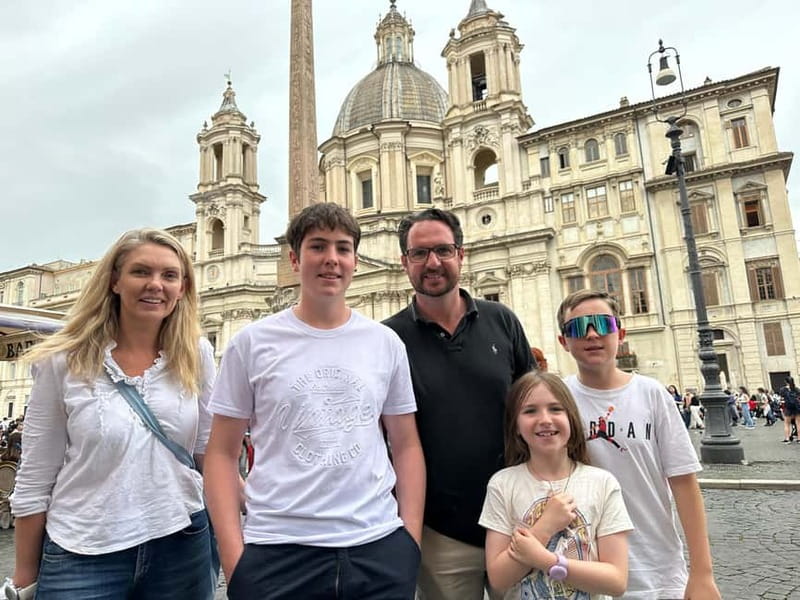
The hunt lasts 2.5 hours. That is long enough to cover the main route without turning the activity into a full-day commitment. It is also a useful length for families who want one structured morning or afternoon and then time for lunch or another sight.
Start times vary, so you need to check availability when booking. An early start is the best choice if your children struggle with heat, crowds, or long walks. It should also make the Spanish Steps and Trevi Fountain easier places for the group to manage.
Wear shoes you can walk in for the full activity. The route includes stairs, paved streets, and stops where you may need to stand while solving a clue. Bring water, sunscreen, a hat, and a camera. These are simple items, but forgetting them can turn a fun hunt into a complaint-filled march.
There are no meals or drinks included. Plan a snack or meal before or after the activity rather than assuming refreshments will appear along the route.
The activity is not suitable for wheelchair users. That restriction is important because the route includes stairs and uneven urban movement. Families with mobility concerns should choose a different format.
Who will enjoy it most
I would choose this hunt for families with children who enjoy riddles, competition, photos, and active exploration. It is particularly useful if your children are old enough to read or understand simple clues but still young enough to enjoy prizes and games.
It can also work well for a mixed-age family. Younger children can search for visual details, older children can solve the riddles, and adults can supply context. The activity’s team structure gives everyone a role.
I would be more cautious if your main goal is an in-depth tour of Roman art or architecture. The activity teaches through games, but it is not presented as a detailed specialist lecture. It also may not suit children who dislike walking or prefer museums and quiet indoor spaces.
The small set of available ratings is very positive, with all three listed evaluations giving five stars. The comments repeatedly praise the fun, the family focus, and the guide’s ability to keep children involved. That pattern supports the idea that the experience succeeds best when your family joins in rather than treating it as childcare.
Is $22 per person good value?

At $22 per person, the price is easy to justify for families who want a structured way to see central Rome. You are paying for a 2.5-hour activity, a private guide, and a route that links three major sights with games and challenges.
The value is strongest when you consider the alternative. A family can walk past the Spanish Steps, Trevi Fountain, and Pantheon for free, but keeping children interested may take much more effort. Here, the price pays for the planning and for a ready-made reason to examine the city.
The cost does not cover monument or museum entrance fees, food, drinks, or transport. That keeps the starting price clear, but you need to add those expenses if you want to visit interiors. The tour itself ends where it begins, which helps keep the day simple.
Free cancellation is available up to 24 hours before the activity for a full refund, and you can reserve now and pay later. These terms are useful when your Rome schedule may change, though you should still check the available start time before finalizing your plans.
Should you book the Rome kids’ scavenger hunt?
Book it if you want your children to see Rome through clues, teamwork, and small discoveries rather than a standard talk. The route covers the Spanish Steps, Trevi Fountain, Pantheon, piazzas, and narrow streets, while the puzzles give children a reason to pay attention.
I would especially recommend it for families with an easily bored child, since the activities keep changing and the guide’s playful approach has been praised. Start early, bring water and sun protection, and confirm how the self-guided format works with the private guide.
Skip it if you need wheelchair access, want extensive indoor sightseeing, or prefer a quiet historical lecture. For the right family, though, $22 buys more than a walk between famous monuments. It buys a shared game that can make Rome feel approachable to children and enjoyable for adults too.
FAQ
Where does the scavenger hunt start?
Meet your guide by the Column of the Immaculate Conception in Piazza Mignanelli.
Where does the activity end?
The activity ends back at the original meeting point.
How long does the scavenger hunt last?
The experience lasts 2.5 hours. Starting times vary, so check availability for the date you want.
What language is the tour offered in?
The live tour guide is available in English.
Are entrance fees, food, or transportation included?
No. Entrance fees to monuments and museums, meals, drinks, and transportation to or from attractions are not included.
Is the activity suitable for wheelchair users?
No. The activity is not suitable for wheelchair users. Comfortable walking shoes are recommended, and you should bring water, a hat, sunscreen, and a camera.
More Family and Kids Games in Rome
- Colosseum and Roman Forum Treasure Hunt Tour for Kids & Families
★ 5.0 · 3 reviews - Vatican Treasure Hunt with Guided Tour for Families with Kids
★ 5.0 · 2 reviews - Trevi Pantheon and Spanish Steps Treasure Hunt for Kids & Families in Rome
★ 5.0 · 2 reviews - Berlin: Self-Guided Family and School Class Scavenger Hunt
★ 4.6 · 128 reviews
More Scavenger Hunts in Rome
- Rome Scavenger Hunt and Highlights Self-Guided Tour
★ 5.0 · 2 reviews - Hamburg: Scavenger Hunt Self-Guided Tour for Children
★ 4.5 · 319 reviews - Amazing Cozumel Race: Small-Group Tour and Scavenger Hunt
★ 5.0 · 291 reviews - 3hr Seaside Scavenger hunt
★ 5.0 · 250 reviews
Just added around Rome
- Villa Borghese escape game★ 3.0 · 3 reviews
- Rome Treasure Hunt With Leonardo da Vinci★ 4.0 · 3 reviews
- Trevi Pantheon and Spanish Steps Treasure Hunt for Kids & Families in Rome★ 5.0 · 2 reviews
- Vatican Treasure Hunt with Guided Tour for Families with Kids★ 5.0 · 2 reviews
- Treasures of Rome Scavenger Hunt for Friends Team Building & Company Incentive★ 4.5 · 2 reviews
- Treasure hunt in Rome, Ghetto and Trastevere★ 5.0 · 8 reviews
- Colosseum and Roman Forum Treasure Hunt Tour for Kids & Families★ 5.0 · 3 reviews
- Rome: Hidden Treasures of Trastevere Self-Guided Puzzle Quest★ 4.0 · 5 reviews
Family and Kids Games, compared.




Greek Mythology Treasure Hunt for Kids – Athens Private Tour
Read our review →Browse the lists this game appears in