
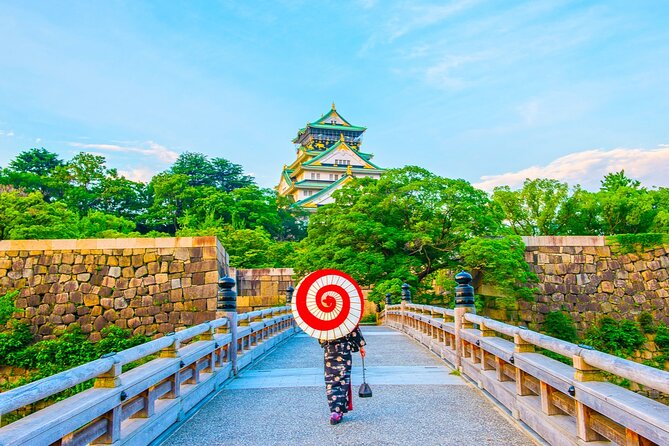
Review · OSAKA
Osaka Food Quest: Self-Guided Culinary & History Adventure
Osaka serves its history with sauce. This self-guided quest turns the Nation’s Kitchen into a puzzle trail, leading you from Ebisu Bridge through Dotonbori, Kuromon Market, Hozenji Temple, and Namba Yasaka Shrine while explaining the city’s food customs and past. I like the freedom to start anytime, and I like that the route works for one person, a couple, or a private family group. The low price is another plus, though you should know that this is not a guided food tour and meals are not included.
The quest uses your smartphone and ten challenges to move you from one point to the next. The advertised playing time is about one hour, but a recent completion took roughly two hours, with a suggestion to allow three if you want to stop for food and look around. I would treat the one-hour figure as puzzle time, not total time in Osaka’s busiest central districts.
Key things to know before you start
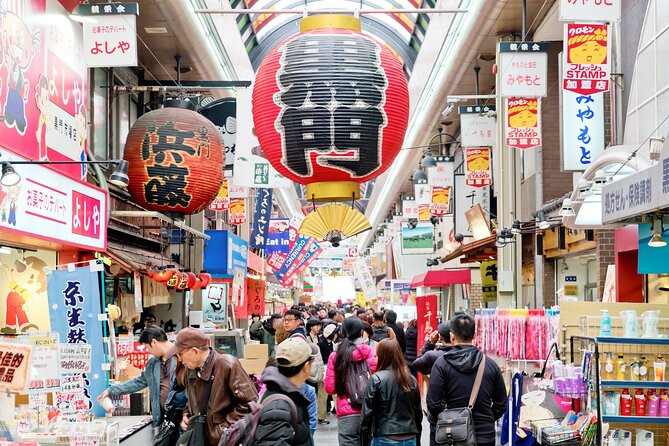
- Ten puzzles connect food and history: You solve location-based challenges while learning about takoyaki, horumon, temples, theater, and Osaka’s market culture.
- The route begins in Dotonbori: Ebisu Bridge provides an easy starting point among major shopping streets, restaurants, and famous Osaka sights.
- You pass from entertainment streets to temples and markets: Hozenji Temple, Kuromon Market, the National Bunraku Theater, and Namba Yasaka Shrine give the walk more range than a simple restaurant hunt.
- Food costs extra: You will spot specialties and receive culinary context, but the price covers the mobile quest, not takoyaki, horumon, or other snacks.
- You control the pace: The activity can be paused and resumed, making it useful for a packed Osaka day or an unsocial hour when you do not want to follow a guide.
- The phone setup matters: One person had serious trouble with a slow app and gave up, while the operator processed a refund. Check your connection and battery before setting out.
What the Osaka Food Quest actually is
Think of this as a private walking game, not a conventional tour. You receive a mobile access code, open the quest on your phone, and solve ten puzzles at places along the route. Each answer sends you onward and provides a short piece of information about Osaka’s food traditions, cultural habits, or local past.
That format is a good match for you if you like having a purpose while walking. Instead of simply wandering through Dotonbori and taking pictures, you look for clues and pay attention to signs, buildings, and public details. The route gives children and couples something to do, while solo visitors can explore without matching a guide’s schedule.
The price is $7.85 per person, which is unusually modest for a private activity. I see the value mainly in the route design and the stories, not in food or personal instruction. If you want a sit-down meal, tastings, or a local guide answering questions, this will feel too light. If you want a cheap, flexible way to organize a walk, the cost is easy to justify.
The experience is listed as about one hour. In practice, allow extra time for solving puzzles, finding the next place, crossing busy streets, and stopping to eat. One completed the game in about two hours while pressed for time, with three hours suggested for a more relaxed outing. That longer window makes sense, especially around Kuromon Market and Dotonbori.
More Self-Guided App Games in the world:
- Hamburg: Scavenger Hunt Self-Guided Tour for Children
★ 4.5 · 319 reviews - Dresden: Old Town Self-Guided Scavenger Hunt Tour
★ 4.5 · 151 reviews - Berlin: Self-Guided Family and School Class Scavenger Hunt
★ 4.6 · 128 reviews
Ebisu Bridge begins the food trail
The starting point is 1 Chome-6 Dotonbori, near Ebisu Bridge. This is a practical place to begin because the bridge links the Shinsaibashi-suji and Ebisubashi-suji shopping districts. You are right in the middle of Osaka’s famous restaurant and shopping zone, so the opening challenge places you in the city’s public center rather than sending you to a remote meeting point.
Ebisu Bridge was first built to provide access to nearby Ebisu Shrine. It also carries a piece of modern Osaka sports folklore: the Hanshin Tigers baseball team is said to suffer from a curse connected with the bridge. The quest asks you to look around, find the answer, and use it to advance.
This first stop should help you understand how the game works. You are not waiting for a guide to gather a group or explain the rules. You inspect your surroundings, enter an answer, and move on. That independence saves time, but it also means you must be comfortable reading directions on a phone.
Takoyaki, horumon, and Osaka’s food identity
The next part points you toward places that explain Osaka’s casual food culture. At the Konamon Museum, you learn about takoyaki, the round batter snacks often described as Osaka’s soul food. The museum is also a place where you can eat, learn about, and make takoyaki, though the quest itself does not include a food session or admission package.
That distinction matters. The stop gives you a reason to notice one of Osaka’s best-known specialties, but you pay separately if you decide to eat or take part in an activity there. I like this arrangement for independent visitors because you can choose how much time and money to spend. Families may want to linger, while a solo visitor on a tight schedule may simply solve the clue and continue.
The route then sends you to Showa Taishu Horumon Dotonbori, a restaurant specializing in beef offal. Horumon is not the first dish every visitor chooses, but it is useful here because it points to a less polished side of Osaka’s food culture. The experience does not promise a reservation or meal. Instead, you learn why the place matters and decide if you want to try it.
I would use these food stops as prompts rather than fixed dining appointments. Osaka rewards spontaneous eating, but the route’s $7.85 price does not cover snacks. Bring extra money if you want the culinary part to be more than a visual tour.
Hozenji Temple adds a quiet pause
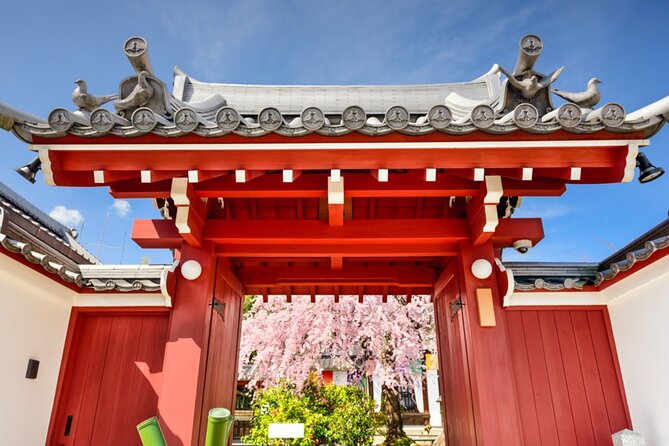
Hozenji Temple changes the mood. Built in 1637, it honors Fudo Myoo, one of five guardians of Buddhism. The temple sits in an area that became an entertainment center during the 1600s, when Namba and Dotonbori drew kabuki and bunraku performances.
This is one of the most useful parts of the quest because it connects food, theater, religion, and urban life. Osaka is not just neon signs and restaurant windows. The temple gives you a small cultural pause and helps explain why this district developed such a strong relationship with performance and pleasure.
The puzzle format may also make you look more closely than you would on a quick restaurant crawl. You have a question to answer, so you are encouraged to inspect the setting rather than rush through it. Still, this remains a self-guided activity. The phone can provide the story, but it cannot respond to a follow-up question about Buddhist practice or local customs.
More Food and Drink Stops in the world:
- London: Food Treasure Hunt and Walking Tour
★ 5.0 · 92 reviews - Fort Worth Stockyards History, Food, and Puzzle Tour
★ 5.0 · 38 reviews - Beer Tasting and Scavenger Hunt in Brussels – About 3 Hours
★ 4.5 · 35 reviews - Lille: Scavenger hunt and beer tasting in Old Lille
★ 4.5 · 23 reviews
Bunraku and the city’s performing arts
The National Bunraku Theater continues the connection between Osaka food culture and traditional entertainment. It opened in 1984 as the Kansai home of bunraku, the Japanese puppet theater associated with the region. The main hall has 753 seats, while the small hall has 159 seats. The main hall is used mainly for bunraku, along with traditional Japanese dance and other drama.
You may not attend a performance during the quest, and no theater ticket is included. The value here is context. The route shows how the same central districts can hold market stalls, restaurants, temples, shopping streets, and serious traditional theater within a relatively compact walk.
For me, this stop makes the experience more than a food-themed scavenger hunt. You are learning how Osaka’s eating districts grew alongside public entertainment. If you already plan to see bunraku, the theater stop gives you a useful orientation. If not, it is still a worthwhile landmark in the puzzle route.
Kuromon Market brings the strongest food connection
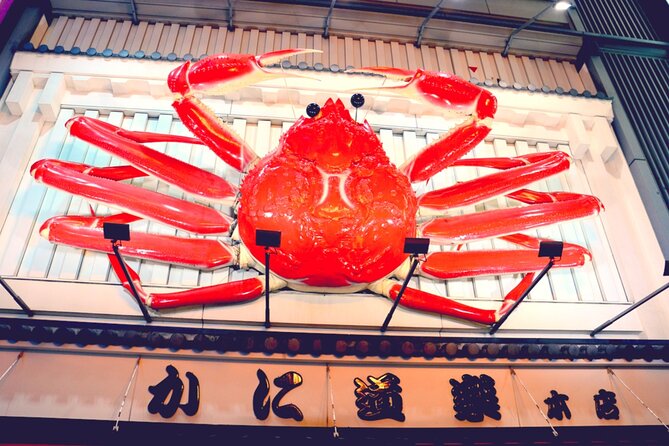
Kuromon Market is likely to be the highlight for anyone who enjoys browsing food stalls. The name means black gate, and the market began as a fish market around 1822. It became an officially approved market in 1902. The name is linked to the black gate of Enmyo Temple, which remained in the area until 1912, the final year of the Meiji Period.
The quest gives you a reason to slow down and look around. You solve another challenge, but you are also in one of Osaka’s best-known food areas. The supplied timing gives about ten minutes for this stop, but I would not treat that as a rule. If you want to buy food, photograph stalls, or compare specialties, you will need longer.
This is also where the advertised one-hour duration can become unrealistic. A quick puzzle stop may take ten minutes. A worthwhile market visit can easily take much longer, especially if you are hungry. The flexible pause-and-resume feature helps, so you can stop the quest, eat, and continue later.
Kuromon Market is not a tasting tour. That is both a limit and a benefit. You select what interests you rather than receiving a set menu, but you also need to make your own choices about vendors and spending.
Namba Yasaka Shrine finishes with a bold landmark
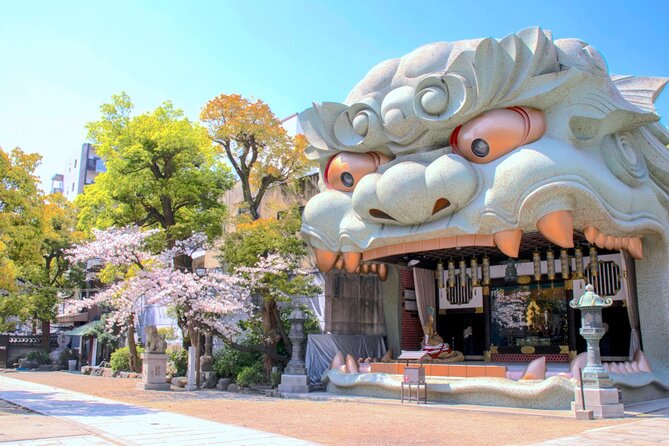
The route ends at Namba Yasaka Shrine, at 2-chome-9-19 Motomachi. The shrine is said to have been commissioned by Emperor Hanzei in honor of his father, Emperor Nintoku. Its original site was in what is now Kawachi Matsubara City, and it moved to the present location after Toyotomi Hideyoshi began building Osaka Castle.
The shrine gives the quest a strong final image and moves the walk beyond the tightest Dotonbori streets. It also reinforces the theme of change: Osaka’s religious sites, markets, entertainment districts, and food culture have all shifted as the city grew.
The end point is not the same as the starting point, so you should consider where you need to go afterward. The route finishes in Naniwa Ward rather than returning you to Ebisu Bridge. The experience provides a destination, not transportation back to your hotel or first station.
Timing, phones, and group size
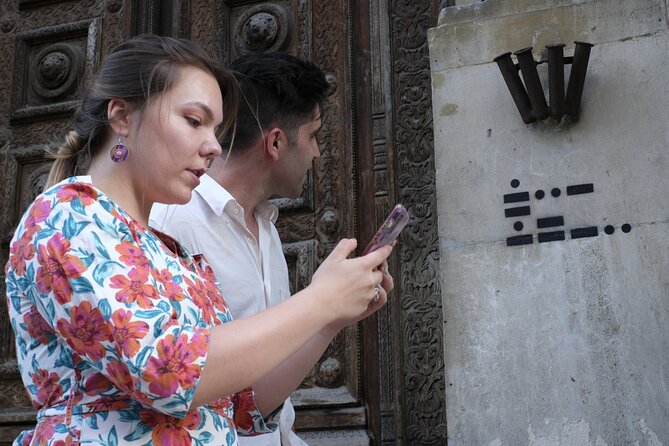
The activity is open every day, listed from midnight to midnight, so you can fit it around meals, shopping, or another Osaka plan. The private format means only your group participates. That is useful if you dislike a fixed walking tour, and group discounts may reduce the cost for larger parties.
The main practical risk is the mobile technology. You need to use your smartphone to access the code, read the story, solve puzzles, and follow the route. One person found the app so slow that the directions became unclear and the activity was abandoned. The operator disputed a claim that the quest itself used 3GB of data, explaining that the quest file is about 2.5MB, and issued a refund.
I would prepare in a simple way: charge your phone, check that your data connection works, and avoid running many other apps at the same time. The experience is not a good choice if you want someone else to handle navigation. It is a much better choice if you like using your phone as a guide and can pause when needed.
Most people can participate, and service animals are allowed. The route is near public transportation, though the information does not provide a detailed station-by-station plan. You should also remember that this is a city walk through crowded commercial areas, temples, markets, and streets, so your actual pace will depend on conditions.
Who will get the most from the $7.85 price
I would recommend the quest to solo visitors with only one free day, couples who enjoy games, and families looking for an activity that is less formal than a guided walk. It is especially useful when your schedule does not match the departure time of other tours.
Food lovers should see it as a primer, not a meal. You will learn about takoyaki, horumon, market history, and the connection between eating and entertainment. You will also have several chances to buy food nearby, but those purchases are your responsibility.
History-minded visitors will appreciate the movement from Edo-period customs and temple culture to modern Osaka. Those who want detailed explanations from a specialist may find the text-based format too brief.
At $7.85, I think the value is good if you use it to organize two or three hours of sightseeing. The price is less attractive if you rush through the clues in one hour and leave without stopping at any food or cultural site. Your best value comes from treating the quest as a flexible framework for a longer walk.
Free cancellation is available if you cancel at least 24 hours before the start time. Changes or cancellations inside that window are not refundable.
Should you book the Osaka Food Quest?
Book it if you want an inexpensive, private way to connect Osaka food with temples, theater, markets, and local stories. I especially like it for a first visit, a solo afternoon, or a family group that needs a little structure without a guide.
Skip it if you want included tastings, a personal guide, or guaranteed smooth navigation on your phone. Give yourself at least two hours, and preferably three if you plan to eat at Kuromon Market or stop at the Dotonbori food spots. Used that way, the quest is a smart little add-on to an Osaka day, with enough history to make the snacks more meaningful.
FAQ
How long does the Osaka Food Quest take?
The approximate duration is one hour, but allow two to three hours if you want to walk at an easy pace, stop for food, and explore the locations.
How many puzzles are included?
The experience includes ten puzzle-based challenges.
Is food included in the price?
No. The $7.85 price includes mobile access to the quest and its story content, but food, drinks, and any separate activities are not included.
Is this a guided tour?
No. It is self-guided and uses a smartphone. A physical tour guide is not included.
Where does the quest start and end?
It starts at 1 Chome-6 Dotonbori near Ebisu Bridge and ends at 2-chome-9-19 Motomachi near Namba Yasaka Shrine.
Can I pause and resume the activity?
Yes. The quest is designed so you can pause and resume whenever you choose.
Can I cancel for a refund?
Yes, if you cancel at least 24 hours before the experience start time. Cancellations made less than 24 hours before the start time are not refunded.
More History Walks in the world
- The Anatomist – Award Winning Historical Escape Room Experience
★ 5.0 · 151 reviews - Private city discovery tour – A Historical Treasure Hunt
★ 5.0 · 146 reviews - Queer Lisbon – A Treasure Hunt in LGBT History
★ 5.0 · 71 reviews - Outdoor Escape Game Dubrovnik – The Spy And The Traitor (History theme)
★ 5.0 · 32 reviews
More Food Hunts and Tastings in the world
- Athens Urban Treasure Hunt w Food Stop
★ 5.0 · 16 reviews - Athens Family Mythology Treasure Hunt and Tour w Food Stop
★ 5.0 · 15 reviews - Mystery Puzzle Food Tour in Golden, CO
★ 4.5 · 15 reviews - Athens: Street Art Treasure Hunt with Food Stop
★ 4.2 · 9 reviews
Just added around the world
- Vienna: Freud, Mozart & Beethoven Exploration Game★ 4.0 · 14 reviews
- e-Scavenger hunt Vienna: Explore the city at your own pace★ 3.5 · 2 reviews
- Mobile puzzle rally tour at the Vienna Central Cemetery★ 4.5 · 3 reviews
- Vienna Scavenger Hunt and Highlights Self Guided Audio Tour★ 4.5 · 13 reviews
- Vienna Highlights Self guided scavenger hunt and Walking Tour★ 4.0 · 5 reviews
- Digital puzzle tour with Marcus Aurelius’ order★ 5.0 · 5 reviews
- True Crime mobile puzzle rally Vienna★ 4.0 · 3 reviews
- The Vienna Augmented Reality Puzzle Rally★ 5.0 · 7 reviews
Self-Guided App Games, compared.






Browse the lists this game appears in