
Review · LISBON
Queer Lisbon – A Treasure Hunt in LGBT History
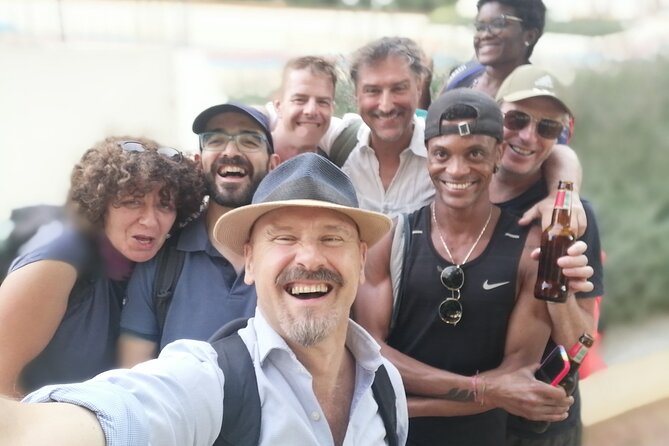
Queer history changes how you see Lisbon. This small-group walking tour connects scandals, nightclubs, legal battles, writers, activists, and everyday queer life across the city. I like its clear focus and the way guide Alex mixes serious history with funny, human stories. The final stop at Late Birds Hotel, with a lounge, garden, pool, and pub quiz, is another thoughtful touch.
The main consideration is the amount of walking. You cover 24 stops in about three and a half hours, and some guests found the route physically demanding by the end. Still, the relaxed pace, rest breaks, and maximum group size of 15 help. At $60.34, the tour offers both a specialized history lesson and a useful Lisbon guide worth 15 Euros on its own.
Key points about Queer Lisbon
- Twenty-four stops connect the city’s past to its present, from the 1950s Botanical Gardens to modern bars and clubs.
- Alex brings a warm, personal style, with lively storytelling and plenty of time for questions.
- The tour is serious as well as fun, covering homophobia, HIV, censorship, dictatorship, legal rights, and queer resistance.
- You finish at Late Birds Hotel, where the group can relax in the bar, garden, or pool area and take part in a pub quiz.
- The walking route is extensive, so wear comfortable shoes and plan for a steady morning on foot.
- The included PDF guide, Alex’s Long List, adds value, with recommendations for LGBTQ Lisbon and free activities.
Why this Lisbon walk feels different
Most city tours point you toward grand churches, tiled facades, famous viewpoints, and royal squares. This one asks a different question: where did queer people meet, perform, protest, hide, flirt, work, and build community?
That change in focus is the tour’s strength. You still see central Lisbon, but the city becomes a set of personal stories rather than a list of monuments. A nightclub can explain social life. A court can explain constitutional rights. A quiet street can recall a scandal that once made headlines.
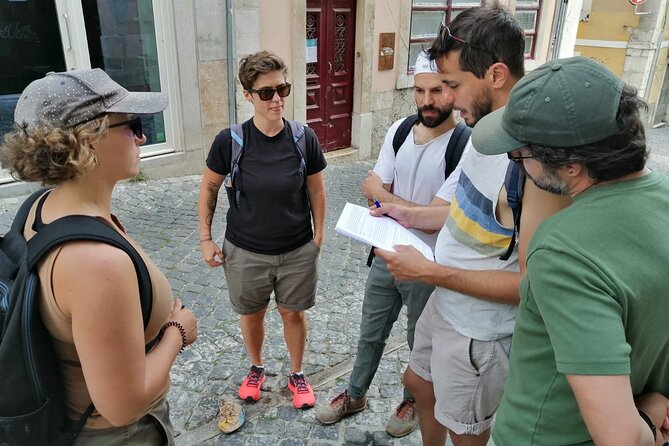
Alex leads the tour in English and brings a friendly, welcoming manner. The strongest part of the experience is the storytelling. The subject matter can be difficult, but it is not presented as a dry lecture. You hear about police harassment, censorship, HIV, and dictatorship, alongside drag, nightlife, romance, humor, and political progress.
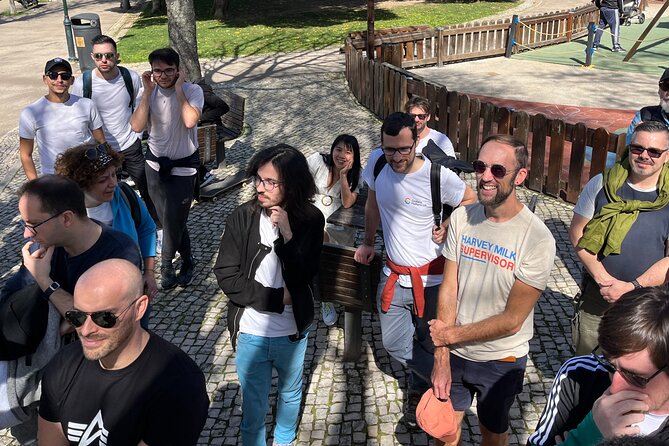
The group size is limited to 15. That matters here. With so many stops, a huge group would make it hard to hear, cross streets, or ask questions. The smaller format also fits the social aim of the experience. You meet people with a shared interest, then continue the conversation at Late Birds Hotel.
More Treasure Hunts in Lisbon:
- Hamburg: Treasure Hunt Game through HafenCity
★ 4.7 · 364 reviews - Málaga: Private Sightseeing Treasure Hunt
★ 4.8 · 297 reviews - Fun, Flexible Treasure Hunt Around Manchester with Cryptic Clues & Hidden Gems
★ 5.0 · 253 reviews
From Principe Real to Lisbon Pride
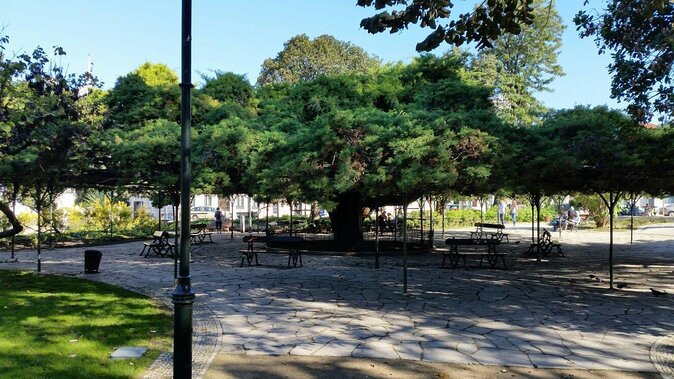
The morning begins at the Principe Real Playground at 10:00 am. The first moments are used for introductions, which helps set a relaxed tone before the historical stories begin.
The Monument to the Victims of Homophobia provides an early reminder that this is not only a nightlife tour. It honors people harmed by prejudice and places Lisbon’s present-day queer scene in the context of an often harsh past. This is a sober stop, but an important one.
Nearby, Principe Real Square is linked to Lisbon Pride and EuroPride 2025. Alex explains why the city’s Pride celebration has its own character and why the arrival of EuroPride matters. If you want to understand how queer politics and public celebration fit into Lisbon today, this section gives you useful context early in the walk.
The route also includes GAT Checkpoint LX, where the discussion turns to HIV and AIDS. You hear about Portugal’s approach to managing the HIV pandemic and receive practical information about health services for queer men and women. This is one of the tour’s most useful modern stops because it connects history with information you may need during a longer stay.
Nightlife stories at Construction and Trumps
The next group of stops looks at queer nightlife. Construction Lisbon Club is described as a long-running dance venue, with stories that also touch on neighboring lesbian venues. The point is not simply to mark places to go dancing. You learn how bars and clubs create spaces for community, identity, and meeting others.
The Botanical Garden brings a sharp change of mood. Here, Alex discusses cruising in Lisbon’s parks during the 1950s, including stories about police attempts to enforce public morality. The material is frank and sometimes funny, but it also shows how much risk queer men once faced in ordinary public places.
At Trumps, the focus shifts to Lisbon’s largest queer nightclub. The club has operated since 1980 and has two floors with different atmospheres. You do not need to visit at night to benefit from this stop. It gives you a practical sense of where Lisbon’s current queer nightlife fits into the city, and Alex can point you toward the sort of evening that may suit your interests.
The route then recalls O Gato Verde, Lisbon’s first lesbian bar. Its former location on Rua de Gustavo de Matos Sequeira represents a part of queer history that can easily be overlooked when nightlife is told mainly through male spaces. That balance is one of the tour’s best features.
Drag, bars, and the many sides of queer Lisbon
Praça das Flores brings the story of Lisbon’s first drag bar. The discussion covers the freedom that followed the 1974 revolution, as well as the later limits placed on drag performers. You also hear about the rise and fall of Lisbon’s first drag queen.
This is a good example of how the tour avoids a simple progress story. Portugal moved from dictatorship toward stronger LGBTQ protections, but progress was uneven. Freedom could expand, then narrow. Performers, writers, and activists still had to deal with public judgment, censorship, or official pressure.
Bar 106 is a smaller stop with a social touch. You can leave a message for friends there, making it a playful pause amid the heavier historical material. Shelter Bar introduces the bear scene, followed later by Bar TR3S Lisboa, where the tour returns to bears, Bear Pride, beach clubs, parties, a sauna, sports sponsorship, and other parts of the community.
Finally Club is another key nightlife stop. It is presented as the city’s oldest drag venue, with different shows at different times. Alex’s advice is practical: know what kind of performance you want and when to go. That sort of detail is more useful than a generic list of bars because it helps you choose a night that fits your mood.
Purex adds another angle, with a dance floor run by women and a playful reference to vagina jewelry. Maria Caxuxa then recalls a woman who challenged social expectations in the 1940s and dismissed intrusive journalists. Together, these stops make clear that queer Lisbon is not one scene. It includes drag, lesbian spaces, bear culture, dance clubs, activism, performance, and individual people who refused to behave as expected.
More History Walks in Lisbon:
- Historical Outdoor Escape Game in Lisbon “The Cryptex of Pombal”
★ 5.0 · 13 reviews - Historical Outdoor Game in Lisbon “The Cryptex of Pombal”
★ 4.7 · 5 reviews - The Anatomist – Award Winning Historical Escape Room Experience
★ 5.0 · 151 reviews - Private city discovery tour – A Historical Treasure Hunt
★ 5.0 · 146 reviews
Courts, manifestos, and the fight for rights
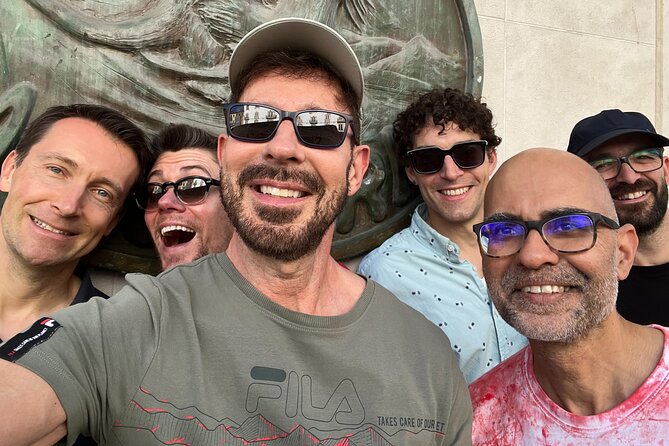
The Constitutional Court stop gives the walking route a political center. Alex explains Portugal’s long movement from dictatorship-era values to constitutional protection for LGBTQ rights.
That legal story helps explain why Lisbon is often seen today as a queer-friendly city. It also prevents the tour from treating tolerance as something that appeared by magic. Rights were challenged, argued over, and defended. A constitutional guarantee matters because it can shape employment, public life, family life, and access to services.
At Rua Luz Soriano, you hear about the first homosexual manifesto and the early attempts to suppress it. The eventual success of the movement shows how public language can change. A manifesto can do more than express anger. It can give people a name for shared demands and help turn private experience into public action.
The stop at Rua do Trombeta follows with a scandal involving the Two Fernandes. The story reaches back to 19th-century Lisbon and links love nests, luxury apartments, and later sauna culture. It is exactly the sort of tale that makes a city walk memorable: personal, surprising, and tied to larger questions about class, privacy, reputation, and desire.
Josephine Baker, queer fiction, and the Inquisition
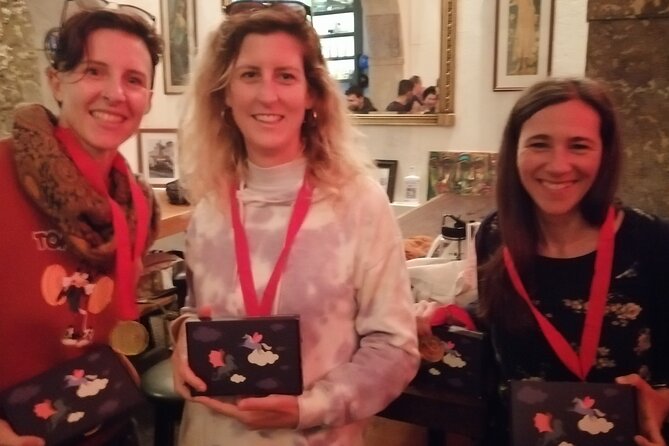
At Teatro da Trindade, the tour tells the story of bisexual performer Josephine Baker. She performed in Lisbon while also using wartime travel for spy work, with secret messages concealed in her clothing. The story is especially effective because it brings together performance, sexuality, danger, and political resistance in one place.
The next stop, at Rua da Misericórdia, looks at women in love with women, queer fiction, censorship, and the people who tried to control what could be published. This section reminds you that written stories can preserve experiences that official records ignore or distort.
Iglesia de Sao Roque receives the longest stop, about 15 minutes. Here, the Portuguese Inquisition opens a window onto queer lives from the 16th, 17th, and 18th centuries. The stories include lesbian nuns, a demonic penis, sex in church, and a trans love story.
The material is unusual, but the purpose is serious. It shows that queer lives did not begin with modern activism or 20th-century nightlife. People found ways to love, resist, deceive authorities, and survive long before they had modern words for their identities. Sao Roque is likely to be one of the most memorable stops because the stories are so old, vivid, and unexpected.
At Hospital St. Louis, the focus turns to Fernando Pessoa. Alex discusses Pessoa’s writing and the way he is now recognized and reclaimed for gay writing. This stop is a reminder that literary history can change as readers ask new questions of familiar authors.
Ending at Late Birds Hotel

The final stop is Late Birds Hotel on Travessa André Valente. The tour finishes in the lounge, bar, garden, or pool area of Lisbon’s largest gay hotel. If the weather is good, you may want to bring a swimming costume.
The ending works because it changes the rhythm of the day. After hours of walking and listening, you have a place to sit, have a drink, meet people from the group, and keep talking. The pub quiz and prizes add a light finish without erasing the serious subjects covered earlier.
You should not expect private transportation between stops. The route is walked through central Lisbon, and the experience calls for moderate physical fitness. Wear shoes you trust, carry water, and allow yourself enough time to pause. One particularly useful detail from the experience is that Alex makes room for rest and questions, even when the weather is poor. On wet days, umbrellas may be provided, but you should still dress for Lisbon’s changing conditions.
What the $60.34 price gets you
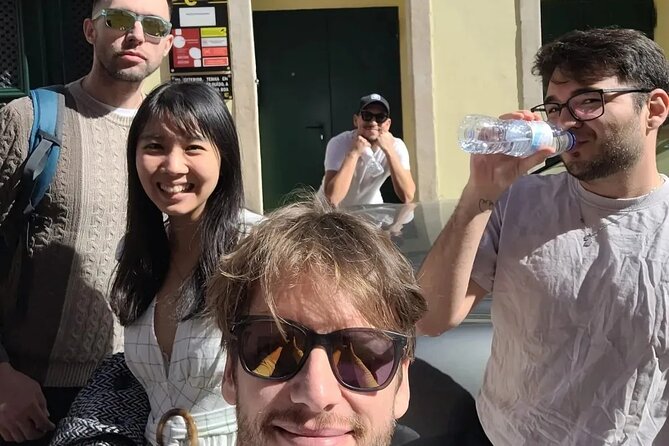
At $60.34 per person, this is not the cheapest way to spend three and a half hours in Lisbon. It is also not a standard sightseeing walk. You are paying for a very specific subject, a small group, Alex’s research and storytelling, and access to a route you would be unlikely to create for yourself.
The included PDF, Alex’s Long List, adds real value. It is normally priced at 15 Euros and offers recommendations for LGBTQ Lisbon, including free activities and places to explore after the tour. If you plan to spend several days in the city, the guide can help turn the tour into a starting point rather than a one-off morning.
The value is strongest for queer visitors, allies, history fans, and anyone who wants to understand Lisbon beyond postcard sights. It is less compelling if you want a general introduction to the city, a museum visit, or a short, low-effort walk.
The tour is available to people aged 16 and older. The legal drinking age is 18, so younger participants can join the historical walk but cannot take part in drinking. Service animals are allowed, and the meeting point is near public transportation.
Free cancellation is available up to 24 hours before the 10:00 am start time. Changes made inside that window are not accepted, and the experience can be canceled if its minimum group size is not met. In that case, you are offered another date or experience, or a full refund.
Who should book Queer Lisbon?
I would choose this tour if you want queer history placed at the center rather than added as a small footnote to a general city walk. It is especially suitable for first-time visitors who want practical nightlife suggestions along with historical context.
You will also get plenty from it if you are an ally, a history student, a fan of social history, or someone interested in how cities protect minority communities. Alex’s warm manner and clear explanations make the material accessible, while the range of subjects keeps it from feeling like a classroom lesson.
I would think twice if you have difficulty walking for several hours, dislike adult themes, or prefer a quiet museum-style experience. Some subjects involve sex, police harassment, HIV, censorship, and persecution. The tone includes humor, but the history is not always light.
Should you book it?
Book Queer Lisbon if you want to see Lisbon through stories of resistance, nightlife, art, law, and love. The tour’s strongest qualities are Alex’s personal delivery, the wide range of people represented, and the natural ending at Late Birds Hotel.
Bring comfortable shoes, allow time for questions, and treat the PDF as part of the value rather than an afterthought. For a focused, social, and genuinely different way to understand the city, $60.34 is a fair price. Skip it only if you want a shorter route or a broad introduction to Lisbon’s famous sights.
FAQ
Where does the Queer Lisbon tour start?
The tour starts at Principe Real Playground, Praça do Príncipe Real, 1250-184 Lisboa, Portugal.
What time does the tour begin?
The start time is 10:00 am.
Where does the tour finish?
It finishes at Late Birds Hotel at Tv. André Valente 25, 1200-236 Lisboa, Portugal.
How long does the tour last?
The experience lasts approximately three hours and 30 minutes.
How much does the tour cost?
The listed price is $60.34 per person.
Is transportation included?
No. Private transportation is not included, and the route is traveled on foot from stop to stop.
What language is the tour offered in?
The tour is offered in English.
How many people can join the tour?
The maximum group size is 15 travelers.
Can I cancel for a refund?
Yes. You can cancel at least 24 hours before the start time for a full refund. Cancellations or changes made less than 24 hours before the start are not refunded or accepted.
Just added around Lisbon
- Lisbon Highlights Self guided scavenger hunt and Walking Tour★ 3.0 · 2 reviews
- e-Scavenger hunt Lisbon: Explore the city at your own pace★ 5.0 · 2 reviews
- Óbidos Scavenger Hunt and Sights Self-Guided Tour★ 5.0 · 7 reviews
- Lisbon Old Town: Exploration Game and Tour★ 3.5 · 2 reviews
- Lisbon Secrets of the Freemasons: Exploration Game and Tour★ 5.0 · 9 reviews
- Historical Outdoor Escape Game in Lisbon “The Cryptex of Pombal”★ 5.0 · 13 reviews
- Mysteries of Alfama: Lisbon Exploration Game and Tour★ 4.0 · 12 reviews
- Lisbon (Belém) Scavenger Hunt and Sights Self-Guided Tour★ 5.0 · 8 reviews
Treasure Hunts, compared.

Fun, Flexible Treasure Hunt Around Manchester with Cryptic Clues & Hidden Gems
Read our review →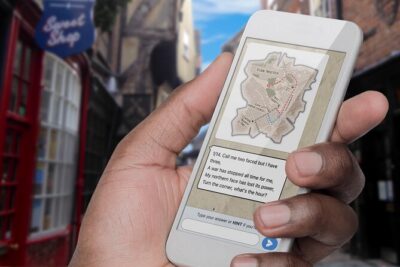
Fun, Flexible Treasure Hunt Around York with Cryptic Clues & Hidden Gems
Read our review →
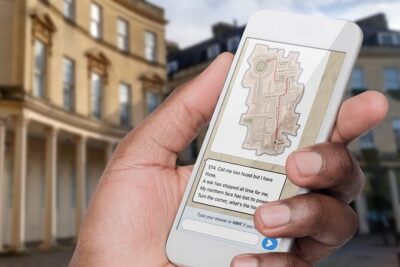
Fun, Flexible Treasure Hunt Around Bath with Cryptic Clues & Hidden Gems
Read our review →York Treasure Hunt Adventure: The Mystery of The Gunpowder Snitch
Read our review →
Fun, Flexible Treasure Hunt Around Oxford with Cryptic Clues & Hidden Gems
Read our review →Browse the lists this game appears in