
Review · AIX-EN-PROVENCE
Historical visit/Treasure Hunt of Aix en Provence
Aix rewards curious walkers. This two-hour tour combines local history and city wandering with a light treasure hunt, giving you more than a quick look at the old center. I especially like the small group limit of 10 people and the guide, Édouard, who brings the city to life with stories, details, and patient answers.
I also like the route itself. It links major fountains, the Mazarin district, Saint-Jean-de-Malte, and Saint-Sauveur Cathedral without asking you to commit to a full-day outing. The main drawback is that several stops are brief, and the Hôtel de Caumont visit does not include admission, so art lovers may want extra time there afterward.
Key points to know before you book
- Édouard’s storytelling is the heart of the tour: His friendly style, local knowledge, and ability to answer questions receive the strongest praise.
- The treasure hunt adds a playful finish: You learn about Aix while keeping an eye out for clues and a final surprise.
- The route covers five important sights: You see the Rotonde fountain, Hôtel de Caumont, Saint-Jean-de-Malte, Quatre-Dauphins fountain, and Saint-Sauveur Cathedral.
- The group is capped at 10 people: That makes it easier to hear the guide and ask questions than on a large city tour.
- The price is $42.10 per person: For two hours with a personal guide, that is reasonable, though the Hôtel de Caumont admission costs extra.
- The tour ends at the cathedral: It is useful as an early introduction to Aix, especially if you have just arrived and want a sense of direction.
Why this Aix-en-Provence walk works so well
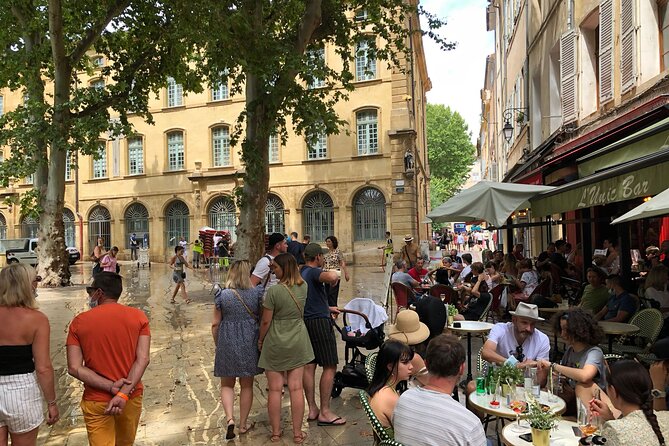
Aix-en-Provence is easy to admire and surprisingly easy to misunderstand. You can stroll beneath plane trees, photograph fountains, and admire handsome façades without grasping how the old city fits together. This tour gives those details a framework.
The route begins at 2 Place du Général de Gaulle at 2:30 pm and finishes at Saint-Sauveur Cathedral. In about two hours, you move from the broad urban space around the Rotonde into the more refined Mazarin district, then toward churches, fountains, and the cathedral quarter.
I like that this is a walking tour with a clear purpose rather than a long list of unrelated stops. The fountain sculptures, aristocratic town houses, religious art, and medieval cathedral all contribute to a picture of Aix as a city shaped by Roman routes, religious institutions, wealthy families, and French artistic taste.
The treasure hunt keeps the pace from becoming too formal. It is not presented as a demanding puzzle competition. Instead, it gives the walk a playful thread and ends with a small surprise. That makes the tour a good fit for families and for adults who enjoy learning without spending two hours listening to a lecture.
More Treasure Hunts in France
- Louvre Guided Treasure Hunt for Families and Kids
★ 4.7 · 92 reviews - Louvre Museum Guided Family Treasure Hunt
★ 5.0 · 78 reviews - “Old Marseille” district tour and treasure hunt
★ 5.0 · 74 reviews
Starting beneath the Rotonde’s three symbolic figures
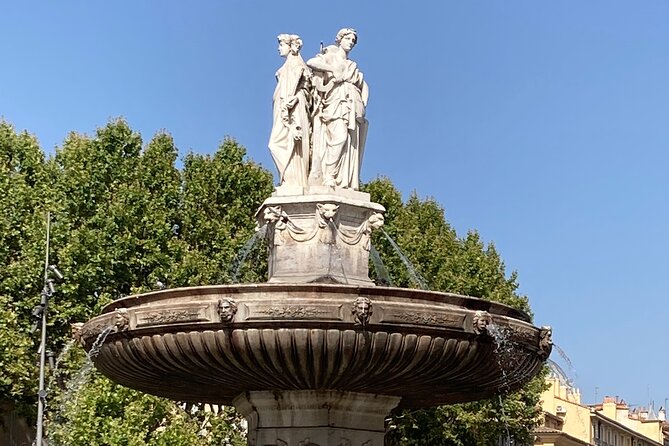
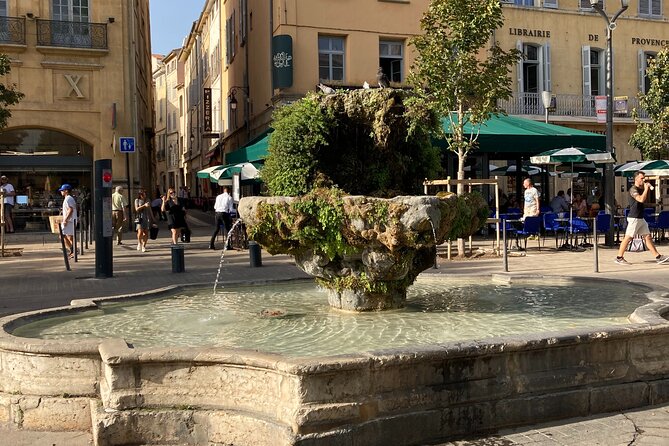
The Fontaine de La Rotonde is a strong meeting point because it is easy to identify and visually impressive. The fountain rises 12 meters and has two basins decorated with lions, dolphins, swans, and children created by Truphème.
Look up at the three large figures on top. They represent Justice, Agriculture, and Fine Arts. Each faces a different direction: Justice toward the Cours, Agriculture toward Marseille, and Fine Arts toward Avignon. Together, they form a kind of directional symbol for the city.
The sculptors were Ramus, Chabaud, and Ferrat. You receive about 10 minutes here, which is enough for an explanation and a close look, but not enough for an extended study of every carving.
I like this opening because it immediately shows how public art can carry civic meaning. You are not simply photographing a fountain. You are beginning with Aix’s ideas about law, farming, culture, and its connections to the surrounding region.
The Rotonde also helps you orient yourself before entering the older streets. If Aix is new to you, that first sense of direction is useful. The one limitation is that the fountain is an outdoor stop, so the quality of the visit depends partly on the weather and the amount of activity around the square.
The Hôtel de Caumont and Aix’s polished Mazarin district
The next stop is the Hôtel de Caumont, located in the Mazarin district. This part of Aix was designed with a more formal, Paris-influenced character, and the building gives you a clear example of that architectural style.
The hotel follows the between courtyard and garden plan. In simple terms, the building is arranged around a carriage entrance and an interior garden rather than presenting only a façade directly onto the street. This type of design had disappeared in Aix by 1680, when local builders favored hotels built directly along the street, often with more decorative baroque details.
The Hôtel de Caumont is important because its scale is unusual for Aix. The carriage gate, façade, and wrought iron stair railing were added to the supplementary inventory of Historic Monuments in 1925. The entire hotel received protection in 1987.
You have about five minutes at this stop. That is enough for the guide to point out the building’s design and explain its place in the district, but it is not a substitute for a full visit to the art center. Admission is not included, so you should plan a separate visit if you want to see the exhibitions and interiors in detail.
This is one of the tour’s clearest value judgments. If you mainly want an introduction to Aix’s streets and buildings, the short stop works well. If you are coming specifically for the Hôtel de Caumont, allow extra time and budget for admission.
Saint-Jean-de-Malte brings art into the walk
The Church of Saint-Jean-de-Malte changes the mood of the route. After the open space of the Rotonde and the formal architecture of the Mazarin district, you move into a religious setting where paintings and stained glass take center stage.
The church’s best-known artwork is Delacroix’s Crucifixion. It attracts the most attention inside, and the guide can help you understand why this painting matters within the church’s collection.
Several stained-glass windows add color to the interior. One dating from 1854 focuses on the Baptism of Christ. You have approximately 15 minutes here, giving you more time than at the Hôtel de Caumont.
I like this stop because it prevents the tour from becoming architecture-only. You get a chance to look at actual works of art rather than hearing about façades and civic monuments from the street. Admission is free, another useful point when you are weighing the $42.10 price.
The visit may feel short if you want to study Delacroix closely. Still, a guide-led introduction can help you notice details that are easy to miss when you walk into a church without context.
Same place, a different puzzle:
- Saw2 vs Squid Game – Escape Game Montpellier
★ 5.0 · 752 reviews - Prison Break – Escape game in Montpellier
★ 5.0 · 583 reviews - School of Magic – Escape game Montpellier
★ 4.5 · 536 reviews - Mission Possible – Escape game Montpellier
★ 5.0 · 437 reviews
The Quatre-Dauphins fountain and the changing symbol above it
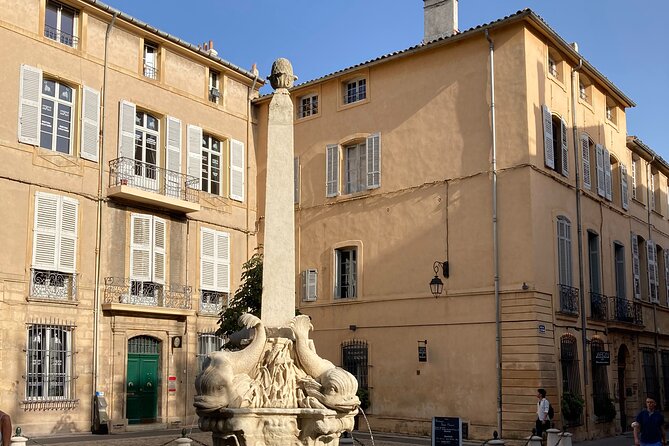
The Fontaine des Quatre-Dauphins sits in the center of its square and dates from 1667. Jean-Claude Rambot created the fountain, which features four architectural dolphins arranged around a pyramid.
The object at the top has changed several times. It originally carried a statue of Saint Michael, followed by a fleur-de-lis, a Maltese cross, and finally a pinecone. That sequence gives the fountain a small but useful lesson in how symbols can shift with political and religious changes.
You spend about 10 minutes here. The stop is short, but the fountain rewards a close look because its dolphins are stylized as architectural supports rather than naturalistic animals.
This is the kind of detail I value in a city walk. You might pass the fountain on your own and simply think it is pretty. With the explanation, you have a reason to inspect the top, the pyramid, and the arrangement of the figures.
The practical catch is that this is another outdoor stop. It is best for people who enjoy visual details and short historical stories, rather than anyone hoping for a long sit-down break.
Saint-Sauveur Cathedral closes the route with Roman echoes
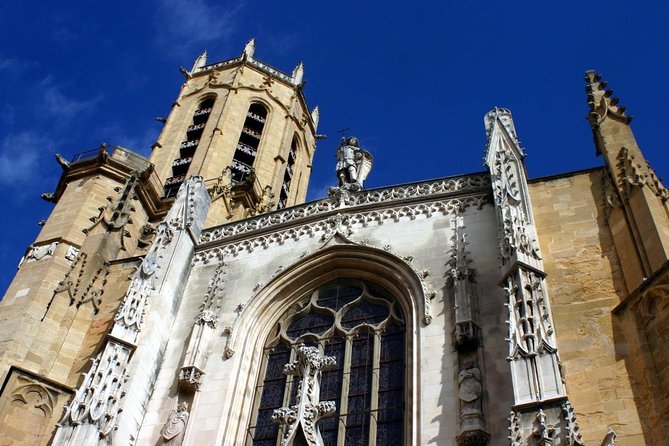
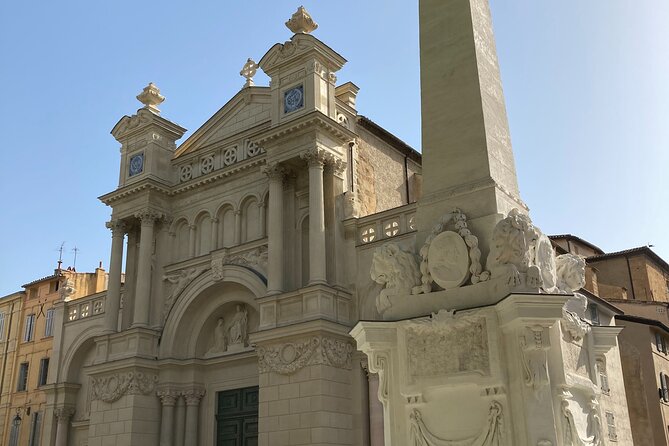
The tour ends at Paroisse Cathédrale Saint Sauveur, at 34 Place des Martyrs de la Resistance. The cathedral sits along the route of the old Via Aurelia, the Roman road that once crossed this part of southern Gaul.
Inside and around the cathedral, a fragment of Roman wall and the columns of the baptistery have helped fuel a long-standing local legend. The story holds that Saint-Sauveur was built on the site of an ancient temple dedicated to Apollo.
The historian Pitton made that claim in 1654, based partly on the discovery of a statue with an uncovered thigh. The guide can separate the surviving evidence from the later interpretation, which is exactly the sort of distinction that makes a history walk useful.
You receive about 15 minutes here. That gives the cathedral a proper closing role, though not necessarily enough time to inspect every part of the building at leisure. Since the tour ends here, you can remain in the area afterward rather than needing to retrace your steps to a meeting point.
I find this a satisfying final stop because the cathedral gathers several themes from the walk: Roman roads, religious buildings, art, local stories, and changing interpretations of the past. The route begins with public sculpture and finishes with a site layered over many centuries.
The treasure hunt keeps the history light
The treasure hunt is not just a name attached to an ordinary walking tour. It shapes the tone of the outing and gives you something active to do as you move through the city.
The clues are described as cute and fun, with a treasure surprise at the end. That sounds best suited to a relaxed afternoon rather than to anyone seeking a difficult escape-room-style challenge. The real value is that the hunt encourages you to pay attention to details along the way.
I especially like this feature for families, younger visitors, and anyone who tires of passive sightseeing. It also gives adults a change of pace. You can listen to a story about a fountain, then shift your attention to finding the next part of the trail.
The treasure element may feel too light if your ideal tour is strictly academic. For most people, though, it seems to add energy without taking over the historical content. The strongest praise for Édouard focuses on both sides of the experience: the walk is informative, but it also feels relaxed and personal.
Édouard’s guide style and the small group advantage
Édouard is the guide named for this experience, and his style is one of its main strengths. He is described as friendly, instructive, and thorough when answering questions. The strongest comments emphasize his special stories and the way he helps you understand why Aix looks the way it does.
That matters because the route includes several places where a guide could easily give only a date and a name. The Rotonde, Hôtel de Caumont, and Quatre-Dauphins fountain all become more interesting when you hear what their symbols and architectural choices mean.
The maximum group size is 10 people. That is small enough for you to ask questions without interrupting a large crowd, and it should make it easier to hear explanations in outdoor spaces. It also supports the relaxed, personal mood that makes this tour different from a standard city orientation.
The tour is offered in English. Service animals are allowed, and the route is near public transportation. Most people can participate, but the supplied details do not specify the walking distance, surface conditions, or seating, so you may want to ask the operator if those points matter to you.
Is $42.10 a fair price for two hours?
At $42.10 per person, this is not the cheapest way to walk around Aix. You can see the fountains and many exterior sights on your own for free. The cathedral and Saint-Jean-de-Malte also have no admission charge listed for this visit.
The price makes more sense if you value interpretation. You are paying for Édouard’s time, the small group, the organized route, the historical connections, and the treasure hunt. A private guide would normally cost much more, while a large group tour may offer less opportunity for questions.
The Hôtel de Caumont is the main extra cost to remember. Admission is not included, so the tour gives you an architectural introduction rather than a full art-center visit.
I would consider the price fair for a first afternoon in Aix, especially if you want to understand the city before exploring it alone. It is less attractive if you already know the old center well or mainly want entry to museums and interiors.
The experience is commonly booked about 41 days in advance. That suggests you should reserve ahead if your dates are fixed, particularly because the group is limited to 10 people. Free cancellation is available until 24 hours before the start time. Changes or cancellations inside that period are not refunded.
Who should choose this Aix treasure walk?
I would recommend it most strongly to first-time visitors who want a quick but meaningful introduction to Aix. It is also a good choice for families, couples, and anyone who prefers local stories to a long list of dates.
The tour suits you if you like:
- A two-hour activity rather than a full-day commitment
- Small groups and time for questions
- Art, fountains, churches, and architecture together
- A friendly guide with a personal style
- A playful activity alongside historical information
- Starting an itinerary with a clear sense of the city
You may want something else if you need extended museum time, a highly specialized art lecture, or a very long historical walk. The short stops are designed to give you a broad picture, not to replace detailed visits inside each site.
I also suggest booking it near the beginning of your stay. The route ends at Saint-Sauveur Cathedral, and the explanations can give you a useful framework for later wandering through Aix on your own.
Should you book this Aix-en-Provence tour?
Book it if you want a friendly introduction to Aix with real historical context, especially if Édouard is available and you enjoy small-group walks. The 4.9 rating from 12 ratings and full recommendation rate match the strongest qualities of the experience: clear explanations, a pleasant pace, and a treasure hunt that adds a little fun.
Go in with realistic expectations. This is not a full museum tour, and the Hôtel de Caumont admission is separate. But for $42.10, two hours, five well-chosen stops, and a group capped at 10, it offers a sensible way to get your bearings and see Aix through more than just its pretty façades.
FAQ
How long does the Aix-en-Provence treasure hunt last?
The experience lasts approximately two hours.
What time and where does the tour begin?
It begins at 2:30 pm at 2 Place du Général de Gaulle, Aix-en-Provence, France.
Where does the tour finish?
The walk ends at Paroisse Cathédrale Saint Sauveur Aix-en-Provence, 34 Place des Martyrs de la Resistance.
Is the tour offered in English?
Yes. The experience is offered in English, and it includes a mobile ticket.
Is admission to the Hôtel de Caumont included?
No. Admission to the Hôtel de Caumont is not included in the tour price.
How far in advance can I cancel?
You can cancel for a full refund up to 24 hours before the experience start time. Cancellations or changes made less than 24 hours before the start time are not refunded.
More History Walks in France
- Historical treasure hunt in the city of Versailles
★ 4.0 · 15 reviews - The Anatomist – Award Winning Historical Escape Room Experience
★ 5.0 · 151 reviews - Private city discovery tour – A Historical Treasure Hunt
★ 5.0 · 146 reviews - Queer Lisbon – A Treasure Hunt in LGBT History
★ 5.0 · 71 reviews
Just added around France
- Historical treasure hunt in the city of Versailles★ 4.0 · 15 reviews
- Outdoor escape game | The Minotaur★ 4.5 · 2 reviews
- Escape game outdoor The Walking Dead in Tours★ 3.0 · 2 reviews
- Romantic Toulouse: Self-Guided Love Story Puzzle Walk★ 4.0 · 2 reviews
- Discover Toulouse while playing! Escape game – The alchemist★ 3.5 · 4 reviews
- Tours: Magic Team Escape Game in Town★ 3.0 · 2 reviews
- Urban escape game in Toulouse – Crazytopia★ 3.0 · 3 reviews
- Unusual treasure hunt at the Christmas markets in Strasbourg★ 5.0 · 9 reviews
Treasure Hunts, compared.


Fun, Flexible Treasure Hunt Around Manchester with Cryptic Clues & Hidden Gems
Read our review →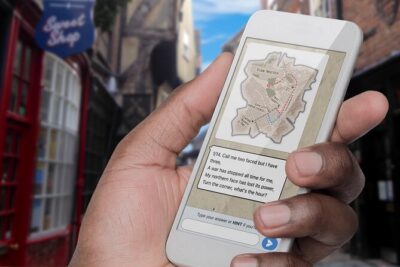
Fun, Flexible Treasure Hunt Around York with Cryptic Clues & Hidden Gems
Read our review →
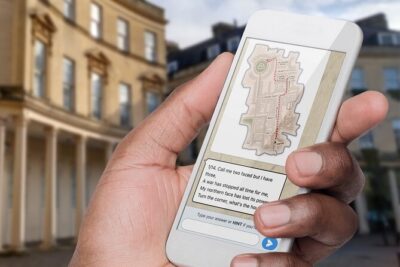
Fun, Flexible Treasure Hunt Around Bath with Cryptic Clues & Hidden Gems
Read our review →York Treasure Hunt Adventure: The Mystery of The Gunpowder Snitch
Read our review →
Fun, Flexible Treasure Hunt Around Oxford with Cryptic Clues & Hidden Gems
Read our review →Browse the lists this game appears in