
Review · ROME
Rome: Hidden Treasures of Trastevere Self-Guided Puzzle Quest
Trastevere turns sightseeing into a game. This phone-based walking quest leads you across bridges, lanes, piazzas, and ancient sites while a story about Luisa’s mystery and local legends gives each stop a purpose. I like the flexible start time and the freedom to pause whenever you wish, and I also like that families can explore together without keeping up with a guide. The main concern is technical reliability: one purchaser reported being unable to connect and had trouble reaching support.
At $8.09 per person, this is a low-cost way to spend roughly 75 to 105 minutes in Trastevere. You receive a mobile access code and 15 real-world puzzles, but no guide and no attraction admissions. Bring a charged phone, keep your group together, and treat the activity as a playful neighborhood walk rather than a full historical tour.
Key points at a glance
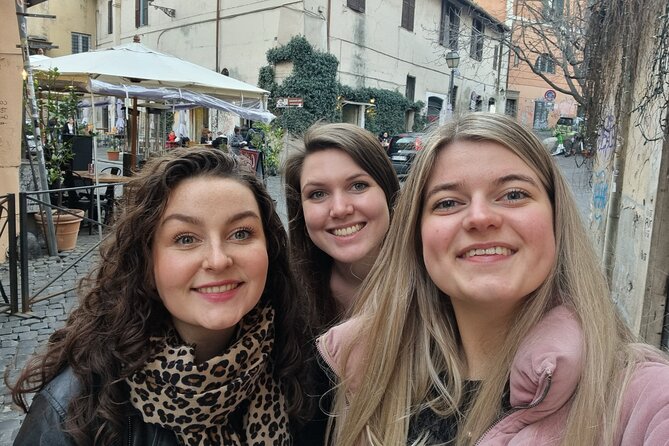
- Fifteen puzzles across twelve stops: The game keeps you moving from Ponte Fabricio to Piazza Trilussa, with challenges tied to local history and personal memories.
- Flexible timing: Start any time during the broad operating period, with no fixed tour slot listed.
- A good family format: Children get a task to focus on, while adults still see churches, Roman remains, lanes, and public squares.
- Private and self-guided: You can play alone or with your own group, without a guide or other participants joining you.
- About 75 to 105 minutes: You can pause at several locations, so the total time depends on your pace and interest.
- One practical warning: The experience depends on app access and a working connection, so technical preparation matters.
What this Trastevere puzzle walk is really like

This is not a standard guided tour with a person explaining every building. It is a story-led walk delivered through your phone. At each location, you receive a clue, solve a challenge, and get directions to the next scene.
The format gives you a reason to look closely. Instead of simply passing through Vicolo dell’Atleta or Via di Santa Dorotea, you stop, study the prompt, and search your surroundings for the answer. That small shift can make Trastevere feel more like a living puzzle than a string of sightseeing stops.
The story centers on Luisa’s mystery, with local legends and personal memories woven into the challenges. The details provided do not explain the full plot, so you should expect the story to unfold gradually rather than arrive as a traditional lecture.
I like this approach best for families and small groups. Children who might tire during a long explanation often respond better when they have something to solve. Adults should keep expectations in check: the game offers historical context, but it is not a substitute for a specialist guide or a detailed church tour.
The route is private, meaning only your group takes part. You can play solo, with a partner, or as a larger group. Group discounts are available, which makes the price more attractive when several people join.
More Self-Guided App Games in Italy
- Rome: Scavenger Hunt Self-Guided Tour
★ 4.6 · 15 reviews - Rome Scavenger Hunt and Highlights Self-Guided Tour
★ 5.0 · 2 reviews - Florence Self-Guided Treasure Hunt & Medici Mystery Walking Tour
★ 5.0 · 69 reviews
Starting at Ponte Fabricio
The quest begins at Ponte Fabricio, the ancient bridge connecting the city center with Tiber Island. It is a strong starting point because the bridge provides a clear sense of movement: you are leaving one part of Rome and heading toward Trastevere.
Your first clue appears here. Solve it to receive the next story section and directions. The listed stop time is about five minutes, though you may need longer if your group enjoys working through the challenge together.
Ponte Fabricio is also a useful place to check your phone before the walk gets underway. Make sure the app or access link is working, your sound is adjusted if needed, and your battery is healthy. One purchaser reported being unable to connect and unable to get useful help at the time, so I would not wait until the bridge to discover a technical problem.
Piazza in Piscinula and Vicolo dell’Atleta
From the bridge, the route moves to Piazza in Piscinula. This smaller square gives the game a more intimate setting than the broad river crossing. Here, you receive another clue and continue the story.
Next comes Vicolo dell’Atleta, one of the narrow lanes that gives Trastevere much of its character. The stop asks you to study the next clue and use the surroundings to solve it. This is where the format works well: narrow streets reward attention, and a puzzle encourages you to look up, around, and along the route rather than march straight to the next point.
Each of these first stops is listed at about five minutes. That estimate likely covers the challenge itself, not every pause for photographs, orientation, or reading nearby details. If you are playing with children, allow extra time for debate. The point is not speed.
Santa Cecilia and Vicolo del Buco
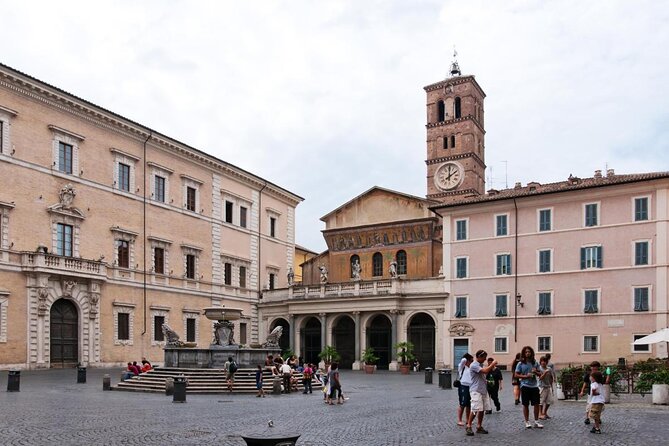
Piazza di Santa Cecilia brings the route to another historic setting. The challenge here advances the story, while the square gives you a chance to pause and take in the surroundings.
The next stop, Vicolo del Buco, 60, adds another short lane to the route. The instruction tells you to look up your next clue, a reminder that the answers may not sit at eye level. That is a useful design choice in a city where balconies, signs, windows, and upper facades often reward a second glance.
You do not need an admission ticket to complete this portion of the walk. The activity takes place in public spaces, and the supplied details do not require entry into the nearby attractions. You may still encounter churches or historic interiors worth visiting, but any separate admission would not be part of the $8.09 price.
More Puzzle Walks and Quests in Rome:
- Fun, Flexible Treasure Hunt Around Manchester with Cryptic Clues & Hidden Gems
★ 5.0 · 253 reviews - Fun, Flexible Treasure Hunt Around York with Cryptic Clues & Hidden Gems
★ 5.0 · 248 reviews - Fun, Flexible Treasure Hunt Around Bath with Cryptic Clues & Hidden Gems
★ 5.0 · 208 reviews - Fun, Flexible Treasure Hunt Around Oxford with Cryptic Clues & Hidden Gems
★ 5.0 · 202 reviews
Ancient clues at the Excubitorium della VII Coorte
The Excubitorium della VII Coorte is one of the route’s more unusual names and gives the puzzle a stronger connection to ancient Rome. At this location, you receive another challenge and can stop as long as you like before continuing.
That freedom matters. The route is not built around a guide waiting for you at a fixed time. You can take a break, examine the area, or let a child work through the clue without feeling that the rest of a tour group is standing nearby.
The details supplied do not promise an included admission or an interior visit. Plan to experience this as an outdoor stop within the walking route. If access to a site changes, the game itself is designed to continue through its phone-based instructions.
In Trastevere House and the lane by Santa Maria
The next stop is listed as In Trastevere House. The name suggests a location tied to the neighborhood’s domestic or local character, though the supplied information does not explain the building in detail. You receive another clue here and continue at your own pace.
After that, the route reaches Vicolo di Santa Maria in Trastevere. This is another chance to slow down and enjoy the setting between puzzles. I appreciate that the activity does not fill every minute with instructions. Some of the pleasure comes from the short pauses when you can simply notice the street around you.
The game includes 15 real-world challenges spread across 12 listed stops. That means some locations likely contain more than one puzzle or task. You should expect a little variation, rather than one identical question at every point.
Basilica of Santa Maria in Trastevere
The Basilica of Santa Maria in Trastevere is the route’s most recognizable landmark. The instructions allow you to explore at your own pace while admiring the basilica around you.
This stop helps balance the smaller lanes and squares. You get a major Roman church within the route without paying an additional ticket for the puzzle walk. Still, the activity should not be confused with a guided visit inside the basilica. It gives you a setting and a story prompt, not a detailed explanation of the church’s art, architecture, or religious history.
If your group wants more time here, take it. The listed five-minute estimate is only a rough guide, and the flexible format lets you pause without losing your place. This is one reason the experience can work better for families than a tightly timed walking tour.
Porta Settimiana and Via di Santa Dorotea
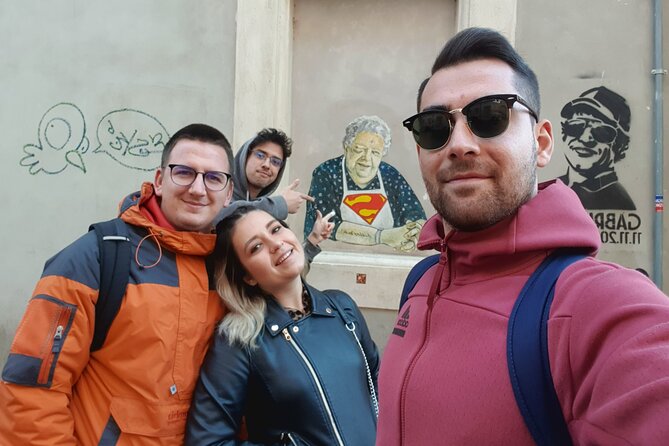
The route continues to Porta Settimiana, a historic gate that brings a stronger sense of Rome’s old defensive structures. The next challenge takes place here, then directs you onward.
Via di Santa Dorotea follows. The instructions ask you to see the street, find the next clue, and solve the challenge before receiving new directions. These stops keep the route varied. You move between a major gate, a street, and earlier squares rather than spending the whole activity around one monument.
The game’s story is likely most useful here as a thread connecting separate places. Without it, some of these stops might feel like quick photographs on a neighborhood walk. With a clue to solve, you have a simple reason to stop and pay attention.
Finishing at Piazza Trilussa
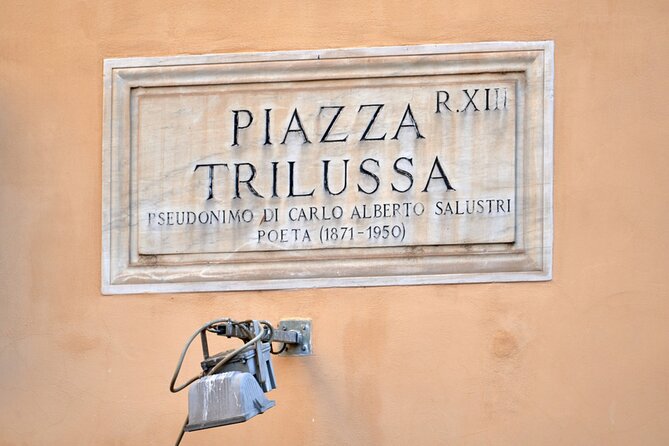
The quest ends at Piazza Trilussa, a well-known public square in Trastevere. The final challenge brings both the story and the city game to a close.
Ending in a square is practical. You can pause after completing the last clue instead of finishing beside a road or at an obscure corner. The supplied information does not include a return transfer or any onward arrangements, so plan your next activity from Piazza Trilussa.
The full route is estimated at 1 hour 15 minutes to 1 hour 45 minutes. The difference depends on puzzle-solving speed, walking pace, photographs, and how long you stay at the stops. Since every location is listed at about five minutes, the longer total likely comes from walking between points and taking natural breaks.
Is $8.09 a fair price?
At $8.09 per person, the price is modest for a private activity in Rome. You are paying for the digital access code, the story, the directions, and 15 puzzles. You are not paying for a guide, transport, food, or admission to attractions.
I think the value is strongest if you already plan to explore Trastevere and want a little structure. The game gives you a route and a reason to notice places you might otherwise pass. It is less compelling if you want expert commentary, a deep explanation of Roman archaeology, or someone who can answer questions in real time.
Group discounts improve the calculation for families or friends. Since the activity can be completed by one group alone, you also avoid the social compromise of joining a large walking party. The low price makes the risk fairly limited, but the technical problem reported by one purchaser is worth taking seriously.
Phones, languages, timing, and practical preparation
The quest works on Android phones and iPhones. It is available in several languages, including English. The supplied details do not list every language, so check your selected language at booking.
You receive confirmation at the time of booking, along with mobile access. There is no fixed time slot to meet, and the listed operating period runs daily from midnight to 11:30 p.m. That broad window gives you plenty of control, though daytime is likely the most practical period for seeing the route clearly.
The route is near public transportation. The starting information gives a Rome address rather than a sharply defined landmark entrance, so pay close attention to the directions sent with your access details.
A few simple preparations can protect your outing:
- Charge your phone fully before starting.
- Download or open the app and confirm access before reaching Ponte Fabricio.
- Keep the access code available.
- Bring a second phone if your group has one, but use one device as the main screen to avoid confusion.
- Wear comfortable shoes for the walking route.
- Allow extra time if children are solving the clues.
Service animals are allowed, and most people can participate. The activity is private, but no special mobility details are provided, so you should check the route directly if your group has specific access needs.
Who should choose this experience?
I would recommend it to families who want sightseeing with a clear goal. Children can search, read, discuss, and solve instead of simply following an adult from monument to monument.
It also suits couples and friends who enjoy word games and self-guided exploration. You can compete playfully, divide the clues, or work together. Solo visitors can complete it alone, though some puzzles may be more enjoyable with another person to discuss the answer.
This is not my first choice for someone visiting Rome specifically for expert historical interpretation. The phone format gives you independence, but it cannot replace a guide who can explain context, answer follow-up questions, and adjust the route to your interests.
The rating supplied for the experience is 4.2 from five ratings, a small sample that offers limited evidence. One available account reports a serious connection problem, paid money without completing the activity, and difficulty reaching support. The response directs customers to [email protected] for help. I would save that address before starting, while also remembering that one poor technical experience does not tell you how every booking will go.
Should you book the Trastevere puzzle quest?
Book it if you want an inexpensive, flexible walk that gives children and adults something to do at each stop. The route covers Ponte Fabricio, historic lanes, Santa Maria in Trastevere, Porta Settimiana, and Piazza Trilussa, while the Luisa mystery supplies a light narrative thread.
Skip it if your priority is a traditional guided tour with detailed commentary or guaranteed hands-on support. The biggest condition is your phone: if the access system fails, there is no guide beside you to keep the experience moving.
For the price, I think it is a sensible add-on to a Rome visit, especially for a private group. Confirm your app access early, keep the cancellation deadline in mind, and allow more than 75 minutes if you want to enjoy the stops rather than race through the clues. You can cancel for a full refund up to 24 hours before the scheduled start, but changes or cancellations within 24 hours are not refunded.
FAQ
How long does the Trastevere puzzle quest take?
The experience lasts approximately 1 hour 15 minutes to 1 hour 45 minutes. Your time may vary based on walking speed, puzzle-solving, and how long you pause at each stop.
Where does the experience start?
It starts at Ponte Fabricio in Rome. The booking information gives the starting area as 00186 Rome, Metropolitan City of Rome Capital, Italy.
Where does the quest finish?
The final stop is Piazza Trilussa, at Piazza Trilussa 42, 00153 Roma RM, Italy.
Do I need an admission ticket for the stops?
No admission ticket is needed to complete the puzzle walk. Entry tickets to attractions are not included, but they are also not required for the activity.
Is a tour guide included?
No. This is a self-guided experience delivered through a mobile access code and app-based instructions.
Can I choose my own starting time?
Yes. The experience has a flexible start time and does not require you to follow a fixed time slot. The listed operating hours run daily from 12:00 a.m. to 11:30 p.m.
Can I complete the activity in a language other than English?
Yes. The quest is available in multiple languages, including English. The full list of languages is not specified in the supplied details.
What happens if I cancel?
You can receive a full refund if you cancel at least 24 hours before the scheduled start time. Cancellations or changes made within 24 hours are not refunded.
More Self-Guided App Games in Rome
- Hamburg: Scavenger Hunt Self-Guided Tour for Children
★ 4.5 · 319 reviews - Dresden: Old Town Self-Guided Scavenger Hunt Tour
★ 4.5 · 151 reviews - Berlin: Self-Guided Family and School Class Scavenger Hunt
★ 4.6 · 128 reviews - Düsseldorf: Scavenger Hunt Self-Guided Tour
★ 4.6 · 127 reviews
Just added around Rome
- Villa Borghese escape game★ 3.0 · 3 reviews
- Rome Treasure Hunt With Leonardo da Vinci★ 4.0 · 3 reviews
- Trevi Pantheon and Spanish Steps Treasure Hunt for Kids & Families in Rome★ 5.0 · 2 reviews
- Vatican Treasure Hunt with Guided Tour for Families with Kids★ 5.0 · 2 reviews
- Treasures of Rome Scavenger Hunt for Friends Team Building & Company Incentive★ 4.5 · 2 reviews
- Treasure hunt in Rome, Ghetto and Trastevere★ 5.0 · 8 reviews
- Colosseum and Roman Forum Treasure Hunt Tour for Kids & Families★ 5.0 · 3 reviews
- Rome Scavenger Hunt and Highlights Self-Guided Tour★ 5.0 · 2 reviews
Puzzle Walks and Quests, compared.

Fun, Flexible Treasure Hunt Around Manchester with Cryptic Clues & Hidden Gems
Read our review →
Fun, Flexible Treasure Hunt Around York with Cryptic Clues & Hidden Gems
Read our review →
Fun, Flexible Treasure Hunt Around Bath with Cryptic Clues & Hidden Gems
Read our review →
Fun, Flexible Treasure Hunt Around Oxford with Cryptic Clues & Hidden Gems
Read our review →
Fun, Flexible Treasure Hunt Around Birmingham with Cryptic Clues & Hidden Gems
Read our review →
Fun, Flexible Treasure Hunt Around Chester with Cryptic Clues & Hidden Gems
Read our review →
Fun, Flexible Treasure Hunt Around Brighton with Cryptic Clues & Hidden Gems
Read our review →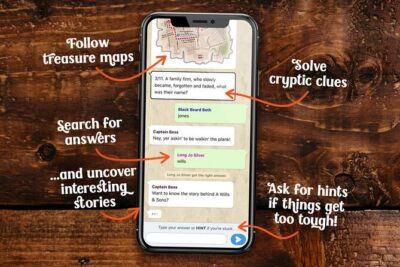
Fun, Flexible Treasure Hunt Around Cambridge with Cryptic Clues & Hidden Gems
Read our review →Browse the lists this game appears in