
Review · EAST OF ENGLAND
Letchworth Garden City: Self-Guided History Puzzle Walk
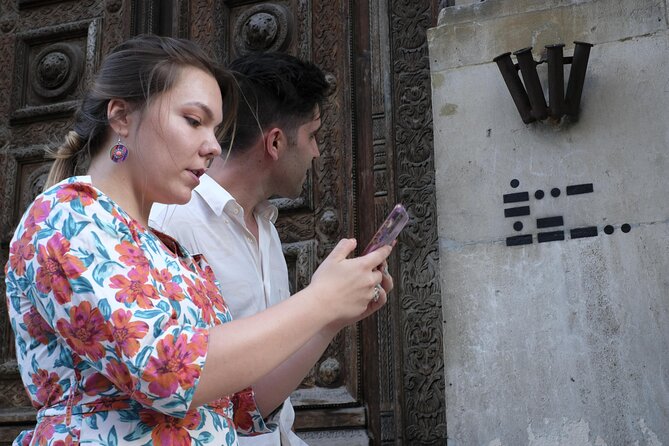
Letchworth turns a town walk into a game. I like the mix of local history and clue solving, which gives you a reason to notice buildings, signs, gardens, and street details you might otherwise pass by. I also like the freedom: you can start at any hour, pause when you wish, and play without an internet connection.
The main drawback is that this is not a guided tour with a person beside you. You need to read the clues, find the answers, and keep your group moving. Some people will love that independence; others may prefer a clear spoken explanation at every stop.
Key points to know before you go
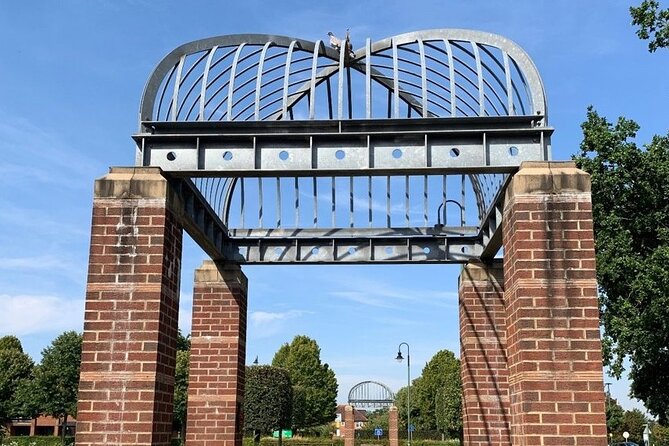
- Seven history stops: Follow a route from Station Place to Norton Way South, with stories linked to railways, gardens, churches, cinema, and town planning.
- A game rather than a standard walk: Solve location-based challenges to move from one stop to the next.
- Flexible timing: The experience lasts about 90 minutes, but you can stop and resume later.
- Strong value at $5.90: One booking can suit a private group, making the cost especially attractive for families or friends.
- Offline play: Download or access what you need before setting out, then play without a live internet connection.
- A good family option: The clues add purpose for children, while the history and architecture give adults plenty to notice.
Why Letchworth works so well for a history game
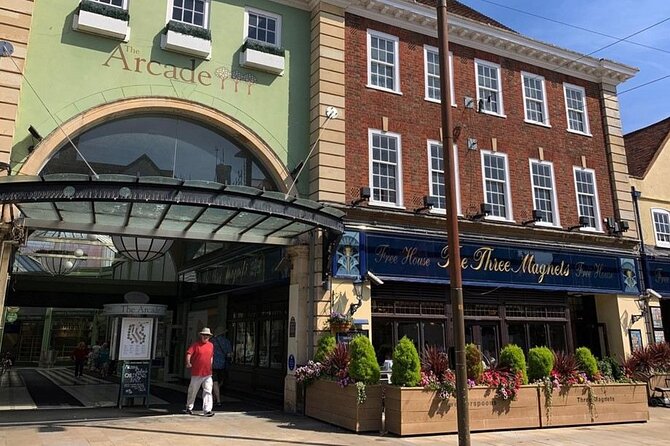
Letchworth Garden City is not simply a place with old buildings. It was planned around an idea. Ebenezer Howard promoted the Garden City movement, which aimed to combine the benefits of town and country. Letchworth became the world’s first Garden City, so its streets, open spaces, public buildings, and gardens form part of a larger experiment in town planning.
That makes a puzzle walk a good fit. You are not being led from one famous monument to another. Instead, you are asked to look closely at the town itself. The challenge format turns ordinary details into clues, and the historical notes explain why those details matter.
The experience costs $5.90 per person. That is a modest price for roughly an hour and a half of activity, especially if you are sharing it with family or friends. A private group can play together, and the game does not require you to hire a guide or join a fixed departure.
I would think of it as a low-cost way to add shape to a walk in Letchworth. You get exercise, a route, local stories, and a few puzzles in one package. The value is strongest when you enjoy solving things together rather than simply listening.
More Puzzle Walks and Quests in the UK
- Fun, Flexible Treasure Hunt Around Manchester with Cryptic Clues & Hidden Gems
★ 5.0 · 253 reviews - Fun, Flexible Treasure Hunt Around York with Cryptic Clues & Hidden Gems
★ 5.0 · 248 reviews - Fun, Flexible Treasure Hunt Around Bath with Cryptic Clues & Hidden Gems
★ 5.0 · 208 reviews
Starting at Station Place and following the railway story
The walk begins at Station Place, at Letchworth Garden City station. This is a useful starting point because the first stop connects the town to the railway that helped it grow.
The first station known as Letchworth Garden City opened in 1903 with a restricted service. It gained full passenger service on 15 April 1905, then was replaced by a new station on another site on 18 May 1913.
Your first task is to look around and find the answer that sends you toward the next location. This opening challenge sets the tone for the rest of the experience. You are not just told where to go. You need to inspect the setting and work out the answer before moving on.
That can be fun for adults and children who like a clear goal. It also means you should allow a little patience at the start. If your group rushes or misses a detail, the route may not feel as smooth as a normal guided walk. The helpful hints are there if you get stuck, so you are not left with an impossible puzzle.
Station Place is also practical for arriving by public transport. The experience is near public transportation, and the stated route begins directly at the station.
Broadway Gardens and the Garden City ideal
From the railway story, the route moves toward Broadway Gardens and Walk. This is one of the most important stops for understanding what makes Letchworth different from an ordinary planned town.
The gardens were developed after a £1 million grant from the Heritage Lottery Fund. Their layout and design reflect the early aims of Ebenezer Howard, who was responsible for the principles and designs behind the world’s first Garden City.
Here, the game asks you to study your surroundings for another answer. That makes the gardens more than a place to pass through. You are encouraged to consider the shape of the public space and how it fits the ideas behind Letchworth.
I like this part because it connects design with daily life. Garden City planning is easier to understand when you see how open areas and streets work together, rather than hearing a long lecture about planning theory. You can pause, look around, and discuss the answer with your group.
The route is not a formal gardening tour, so do not expect detailed plant information. Its focus is the purpose and design of the gardens, along with the clue that advances the game.
The Sisters and Letchworth’s college story
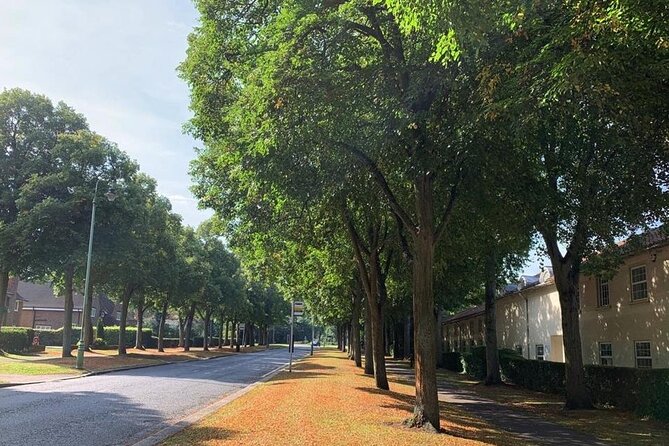
The next stop introduces a different side of the town’s past: the history of the college and the religious order connected with it.
The order was founded in Belgium in 1803 by Canon Triest and later developed international missions. In Britain, the Sisters were already running schools in Devon and Lancashire when a site in Letchworth Garden City became available.
This stop broadens the story beyond town planning. Letchworth was not only about architects, gardens, and railway access. Schools and religious communities also formed part of its development, and this stop gives you a glimpse of that wider social history.
Again, you must look around for the answer. That repeated structure keeps the experience active, but it can also feel similar from stop to stop if you prefer variety in the format. The changing subjects help offset that repetition. You move from transport, to public gardens, to education and religious life.
For families, this can be a useful point to let children take the lead. Give them time to search for the clue while adults read the historical information and discuss what the college story says about the town.
More Self-Guided App Games in the UK
- Houdini’s Golden Handcuffs Leeds Self-Guided Treasure Hunt
★ 5.0 · 29 reviews - Liverpool Ghost Hunt: Paranormal Detective Self-Guided Game
★ 4.5 · 26 reviews - Scholars & Secrets of Cambridge: Self-Guided Puzzle Adventure
★ 3.5 · 19 reviews - Murder Detective Self-Guided Tour in Manchester
★ 3.5 · 16 reviews
A 1936 cinema with a Hollywood opening

The cinema stop adds a touch of glamour to the route. The cinema dates from 1936 and was built after the nearby Palace Cinema, opened in 1909, struggled to handle local crowds. The Palace was one of the first purpose-built cinema venues in the country.
The newer cinema opened with a black-tie gala screening of Follow the Fleet, starring Fred Astaire and Ginger Rogers. That detail gives the stop a clear human and cultural angle. You can picture a formal opening night, complete with evening dress and a major film of the period.
The earlier Palace Cinema is important too. It shows that Letchworth had a strong enough local audience to support purpose-built entertainment venues before the 1936 cinema arrived.
The challenge here asks you to examine the area and work out the next answer. If you enjoy old cinemas, film history, or unusual local facts, this should be one of the more memorable stops. If you are expecting to go inside and see an auditorium, keep your expectations in check. The experience is an outdoor puzzle walk, not a cinema visit.
St Mary the Virgin and Old Letchworth
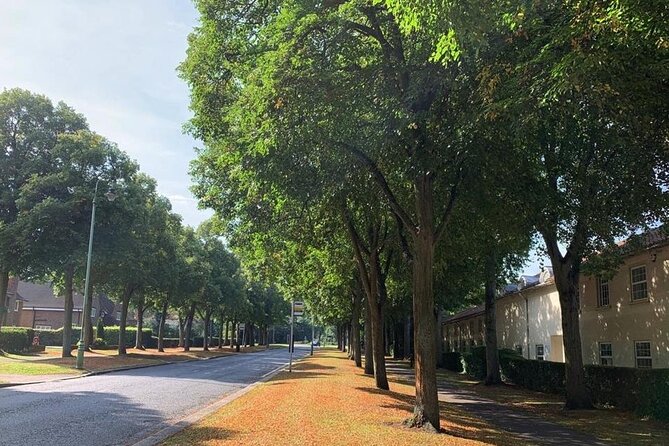
The Church of St Mary the Virgin offers the oldest historical layer on the route. It was the former Church of England parish church for Old Letchworth, and the current church was built in the late 12th century. It is Grade II listed and comes under the Diocese of St Albans.
This stop helps you see that the Garden City was created around an older settlement. Letchworth’s planned identity did not erase the earlier village and its church. The contrast between Old Letchworth and the later Garden City is one of the most useful ideas in the whole walk.
You are asked to find another answer around the church before continuing. Take care here and be respectful. A church is an active place of worship as well as a historic building, and the game should be played with awareness of anyone using the site.
I like this stop because it prevents the town’s story from becoming too neat. Letchworth was not created from nothing. The late 12th-century church provides a long view, while the surrounding route explains what changed in the early 20th century.
The International Garden Cities Institute and the planners’ office

Located on Norton Way South, the International Garden Cities Institute is the natural place to bring the planning story together. It was formerly the office of Letchworth’s town planners and architects, Raymond Unwin and Barry Parker.
From here, you can trace the origins of Letchworth’s formation and learn where the town’s streets and open spaces were designed. The institute also explores Letchworth’s influence on later Garden City developments around the world.
This is likely the most important stop for anyone curious about architecture or urban planning. Earlier points show you the result of the Garden City idea. This one points back to the people and working process behind it.
The route still uses a clue at this stop, so you are not simply arriving for a museum-style explanation. You need to search for the answer before moving on. The combination works well for people who like to learn by doing.
The advertised end point is 296 Norton Way South, Letchworth Garden City, SG6 1SU. That gives you a clear finish rather than sending you back to the start. Plan your onward journey with that in mind.
St Michael’s Church and the final stretch
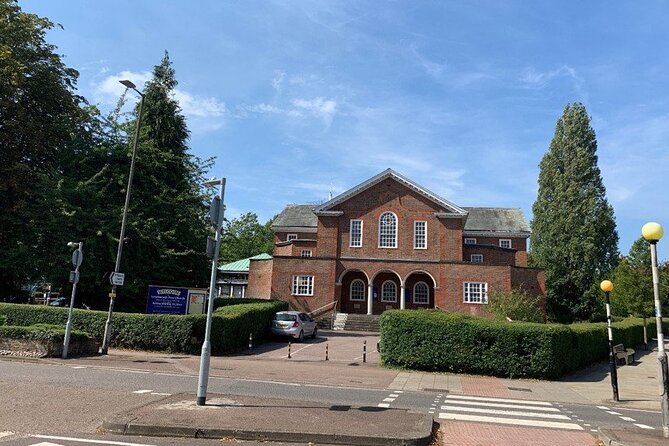
The final stop is St Michael’s Church. It was dedicated on 22 February 1908 and designed by Courtenay Crickmer as a mission church to St Mary’s in Letchworth. Its permanent site on Town Square developed between 1966 and 1968.
This final story returns to the relationship between old and new institutions. St Michael’s began as a mission church linked to St Mary’s, then developed its own permanent site decades later. That change reflects the growth and shifting needs of the town.
The supplied route information does not describe another full challenge at this final stop, so this part may feel more like the endpoint of the story than another major puzzle. It gives the walk a final architectural and religious detail before you finish near Norton Way South.
By this stage, you will have covered railway history, public gardens, education, cinema, medieval church history, professional town planning, and 20th-century church development. That is a good range for a 90-minute walk.
How the self-guided format changes the experience
You control the pace. The stated duration is about one hour and 30 minutes, but the game allows you to start at any hour, take a break, and resume later. Opening hours are listed as 5:00 AM to 9:00 PM from Monday through Sunday, so you have a broad window for planning.
That flexibility is useful if you are fitting the walk around a train, lunch, or another activity. It also makes the game suitable for a slow family outing. You can pause when someone needs a break instead of keeping up with a guide’s schedule.
The experience is private, with only your group taking part. There is no physical guide and no contact with a tour leader. You play through the game on your mobile device, and it can be played offline.
I would still prepare before leaving. Make sure everyone understands how the game works, and have the route ready on your phone. The experience is designed to be used without an internet connection, but that does not mean you should set out without checking access to the game first.
Who will enjoy it most
This works best for people who want a light history lesson with a task attached. Couples, families, groups of friends, and local residents can all get something from it.
The activity is especially good for:
- Families who want children to look closely at the town
- Adults who enjoy riddles, clues, and escape-game formats
- Visitors who prefer private activities over scheduled group tours
- Local residents who want to notice familiar places in a new way
- Anyone interested in architecture, town planning, churches, or local cinema history
The game is also suitable for most participants, and service animals are allowed. Since the route is self-guided, you should be comfortable using a mobile device and walking between the stops.
This may not suit you if you want a detailed spoken tour, a guide who can answer questions on the spot, or a tightly scripted sightseeing route. The fun depends on your group taking an active role.
What the strongest praise tells you
The best part of this experience is the combination of movement, problem solving, and local detail. It is not only a walk, and it is not only a quiz. You get exercise while searching for answers, then receive historical information that gives each stop some purpose.
The game also has a playful connection to Letchworth’s black squirrels. Three black squirrels were spotted during one outing, and another group also enjoyed seeing them while playing. Black squirrels are not guaranteed, of course, but keep your eyes open as you walk.
The feedback also points to the game being easy to use, with all four adults in one group staying engaged. That matters because some city games work best with children or puzzle fans but lose adults along the way. Here, the mix of clues and town history appears broad enough for a mixed-age group.
The price received praise too. At $5.90, it is a reasonable choice for a family day out or a New Year’s Day walk, especially when you can use it at a time that suits you.
Booking, cancellation, and practical details
Confirmation is provided when you book. The activity is available every day, and the listed operating period runs through 7 February 2027.
You can cancel for a full refund if you do so at least 24 hours before the experience start time. Cancellations made within 24 hours are not refunded, and changes inside that period are not accepted. The cut-off uses local time.
The start point is Station Place, Station Place, Letchworth Garden City, SG6, UK. The end point is 296 Norton Way South, Letchworth Garden City, SG6 1SU, UK. Because the walk finishes in a different area, consider where you want to go next before starting.
Should you book the Letchworth puzzle walk?
I would book it if you like independent sightseeing, short walks, and puzzles that make you pay attention. The low price, private format, flexible start, and offline play give it practical advantages over a fixed guided tour.
I would skip it if you want a guide to explain every stop in person or if your group dislikes solving clues. For everyone else, it offers a smart way to meet Letchworth: follow the railway story, study the gardens, spot details in old buildings, and learn why this planned town mattered far beyond Hertfordshire.
FAQ
How long does the Letchworth puzzle walk take?
The experience takes approximately one hour and 30 minutes.
How much does the experience cost?
The listed price is $5.90 per person.
Where does the walk start?
It starts at Station Place, Station Pl, Letchworth Garden City, SG6, UK.
Where does the walk finish?
The end point is 296 Norton Way South, Letchworth Garden City, SG6 1SU, UK.
Can I choose my own start time?
Yes. The start time is flexible, and you can begin at any hour during the stated opening period of 5:00 AM to 9:00 PM, Monday through Sunday.
Can I pause the game during the walk?
Yes. You can take a break at any time and resume later.
Is the experience guided?
No. It is completely self-guided and does not include a physical tour guide.
More History Walks in the UK
- The Anatomist – Award Winning Historical Escape Room Experience
★ 5.0 · 151 reviews - Private city discovery tour – A Historical Treasure Hunt
★ 5.0 · 146 reviews - Queer Lisbon – A Treasure Hunt in LGBT History
★ 5.0 · 71 reviews - Fort Worth Stockyards History, Food, and Puzzle Tour
★ 5.0 · 38 reviews
Just added around the UK
- Stratford-upon-Avon: Self-Guided Walk & Interactive Treasure Hunt★ 5.0 · 2 reviews
- Pedal & Puzzle, Outdoor Escape Room E-Bike Adventure★ 5.0 · 2 reviews
- Immersive Murder Mystery in Sheffield – Outdoor Escape Experience★ 4.5 · 15 reviews
- Adventurous Scavenger Hunt in Exeter by Operation City Quest★ 3.0 · 2 reviews
- Operation City Quest Scavenger Hunt – Peterborough, UK★ 3.0 · 4 reviews
- Oxford Scavenger Hunt and Sights Self-Guided Tour★ 4.5 · 3 reviews
- Oxford’s Famous Alumni: Self-Guided Story Puzzle Walk★ 4.0 · 2 reviews
- Fun and Flexible Treasure Hunt Around Nottingham with Hidden Gems★ 5.0 · 10 reviews
Puzzle Walks and Quests, compared.
Fun, Flexible Treasure Hunt Around Manchester with Cryptic Clues & Hidden Gems
Read our review →
Fun, Flexible Treasure Hunt Around York with Cryptic Clues & Hidden Gems
Read our review →
Fun, Flexible Treasure Hunt Around Bath with Cryptic Clues & Hidden Gems
Read our review →
Fun, Flexible Treasure Hunt Around Oxford with Cryptic Clues & Hidden Gems
Read our review →
Fun, Flexible Treasure Hunt Around Birmingham with Cryptic Clues & Hidden Gems
Read our review →
Fun, Flexible Treasure Hunt Around Chester with Cryptic Clues & Hidden Gems
Read our review →
Fun, Flexible Treasure Hunt Around Brighton with Cryptic Clues & Hidden Gems
Read our review →
Fun, Flexible Treasure Hunt Around Cambridge with Cryptic Clues & Hidden Gems
Read our review →Browse the lists this game appears in