
Review · CAMBRIDGE
Scholars & Secrets of Cambridge: Self-Guided Puzzle Adventure
Cambridge rewards curious walkers. Scholars & Secrets of Cambridge turns a city stroll into a smartphone puzzle game, guiding you between famous colleges and landmarks through riddles, GPS prompts, and a secret-society story. I like the freedom to begin when you choose and pause whenever you want. I also like that your group gets a private experience without a guide or fixed schedule.
The low $8.68 price is appealing, especially for families or small groups. The main concern is quality control: some clues have been unclear or outdated, and the route can feel short for anyone expecting a full Cambridge tour. You also see most colleges from outside, not from their historic interiors.
Key points to know before you play
- A self-guided route through central Cambridge: The game visits the Corpus Clock, King’s College, Trinity College, St. John’s College, and other major landmarks.
- A private activity for your group: Nobody else joins your game, and there is no physical guide leading the way.
- Flexible timing: You can start any time between 8:00 a.m. and 9:00 p.m., take breaks, and continue later.
- No internet connection required during play: The city game can be played offline after setup.
- Best for families and first-time visitors: The puzzles give structure to sightseeing and can help keep teenagers interested.
- Mixed puzzle quality: Some players found the story fun and educational, while others ran into vague clues, missing objects, or incorrect directions.
A secret-society walk with Cambridge as the backdrop
This activity gives you a reason to look closely at Cambridge. Instead of walking from one famous college to the next while checking names off a list, you follow clues tied to a fictional secret society. At each stop, you solve a puzzle and receive instructions for the next part of the route.
That format works best if you enjoy small challenges. You are not simply listening to a guide explain the city. You are searching for visual details, reading prompts, comparing what you see with the game’s clues, and working out the answer with your companions.
I especially like the private format. One person can hold the phone while another reads the clue, which makes this a shared activity rather than a solo audio guide. Still, that setup can create a practical problem. One person may end up doing most of the reading and phone work, so it helps to pass the device around.
The game takes about one to two hours. The listed stops add up to a compact walk through central Cambridge, though your actual time depends on how quickly you solve the puzzles and how long you pause for photographs or college views.
More Puzzle Walks and Quests in the UK
- Fun, Flexible Treasure Hunt Around Manchester with Cryptic Clues & Hidden Gems
★ 5.0 · 253 reviews - Fun, Flexible Treasure Hunt Around York with Cryptic Clues & Hidden Gems
★ 5.0 · 248 reviews - Fun, Flexible Treasure Hunt Around Bath with Cryptic Clues & Hidden Gems
★ 5.0 · 208 reviews
Starting at the Corpus Clock
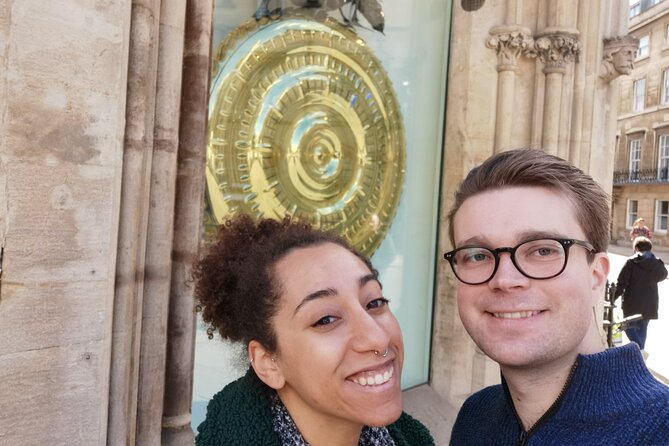
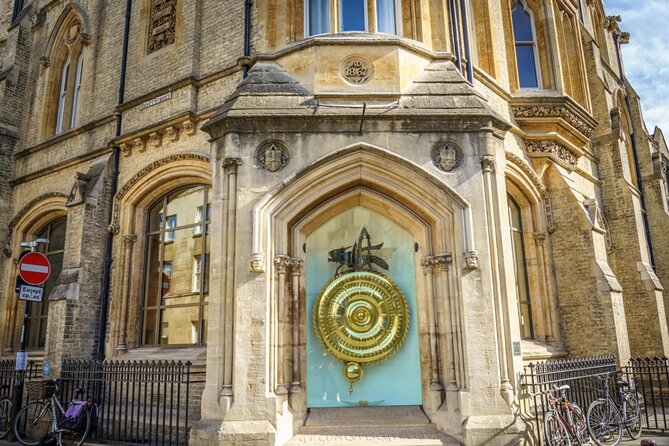
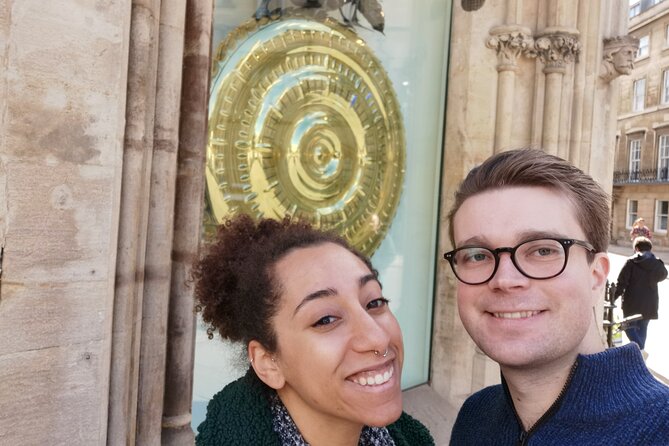
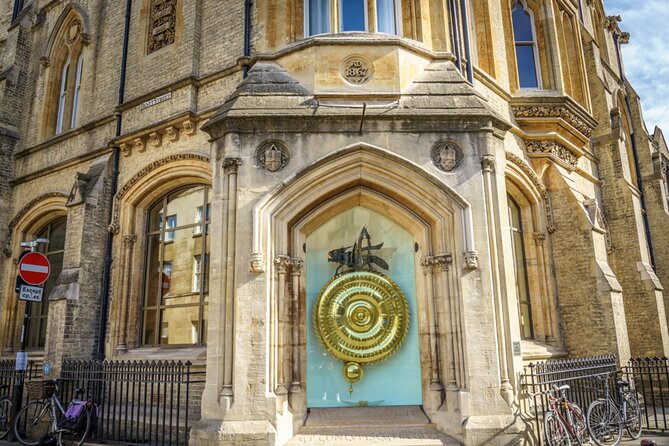
The starting point is the Corpus Clock at 58 Trumpington Street, Cambridge CB2 1RH. This unusual sculptural clock sits at street level on the outside of the Taylor Library at Corpus Christi College. It is a strong opening stop because it is easy to spot and gives the game an immediate sense of oddness.
Allow about ten minutes here. You will study the clock and use the smartphone instructions to begin the first puzzle. The clock itself is free to view, and you do not need an entry ticket for the activity.
This is also a useful place to get your group organized. Make sure the phone is charged, everyone understands how the clues work, and one person is not rushing ahead while another is still reading. Since the game uses GPS and riddles, a little patience at the first stop can prevent confusion later.
King’s College and the classic Cambridge view
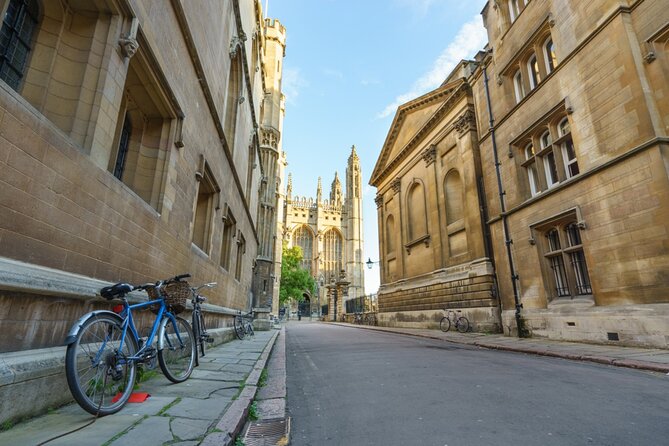
The route continues to King’s College, one of Cambridge’s best-known colleges. Its position beside the River Cam and its frontage on King’s Parade make this one of the most recognizable scenes in the city.
The stop is planned for about ten minutes. You can expect to examine the exterior, solve a clue, and learn a little about the place through the game. The activity does not include admission to the college, so you should plan on seeing it from public areas unless you separately arrange entry.
That distinction matters. If you arrive expecting to tour King’s College Chapel or walk through the college grounds, this game will not provide that experience. It works better as an introduction to the city’s architecture and college system. You can always return later for a paid or scheduled interior visit if one is available.
A past version of the game caused confusion around access to college grounds, with some areas closed and directions no longer matching conditions on the street. I would treat the phone game as a route through public viewpoints, not as a promise of indoor access.
Gonville and Caius College, then Clare College
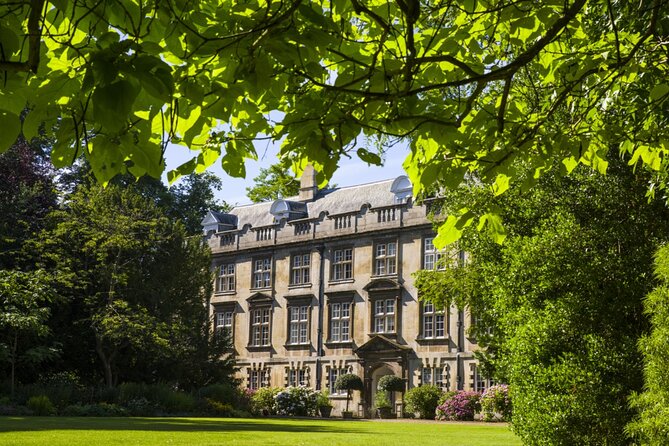
Gonville and Caius College is the next major college stop. Founded in the early years of the university and now one of its oldest colleges, it gives the route another layer of Cambridge character. You have around ten minutes to inspect the setting and solve the related clue.
The game then leads you to Clare College, founded in 1326 as University Hall. Its location near the river and central college district makes it an attractive walking stop, even if you are mainly viewing the outside.
Clare receives another ten-minute portion of the route. This is one place where careful observation matters. A clue may direct your attention upward or toward a gate, sign, statue, or architectural feature. Some players found certain directions too odd or unclear, including references to colored arrows pointing toward the sky. If your group gets stuck, reread the wording slowly and compare it with the exact spot shown on the phone.
The puzzles are not meant to replace a local guide’s explanation. They offer small facts and prompts, but you should expect the game to keep moving rather than stop for a long historical talk.
More Self-Guided App Games in the UK
- Houdini’s Golden Handcuffs Leeds Self-Guided Treasure Hunt
★ 5.0 · 29 reviews - Liverpool Ghost Hunt: Paranormal Detective Self-Guided Game
★ 4.5 · 26 reviews - Murder Detective Self-Guided Tour in Manchester
★ 3.5 · 16 reviews - London’s Crown Secret: Self-Guided Royal Puzzle Quest
★ 4.5 · 8 reviews
Trinity College and St. John’s College
Trinity College gets a shorter stop of about five minutes. It is one of the most prominent colleges in Cambridge and the largest in either Oxford or Cambridge by undergraduate numbers, with around 600 undergraduates, 300 graduate students, and more than 180 fellows.
That short timing tells you how to use the stop. You are passing through the area to identify details and answer a clue, not touring the college in depth. The surrounding streets can be busy with pedestrians, cyclists, and vehicles, so keep the whole group together while looking at the phone.
St. John’s College follows, also with about five minutes set aside. Lady Margaret Beaufort founded the college, and its name is closely tied to the university’s long academic tradition. The game uses the stop as another piece of the secret-society trail rather than as a full college visit.
These shorter sections help keep the activity within two hours, but they can also feel rushed if you want time for photographs. You can pause the game, take pictures, and resume later, which is one of its best practical features.
The Round Church adds a change of pace
The Round Church Visitor Centre gives the route a break from college gates and courtyards. The Church of the Holy Sepulchre, usually called the Round Church, is an Anglican church in Cambridge and one of the city’s more distinctive buildings.
The planned stop lasts around ten minutes. Its shape gives the puzzle route a different visual focus, and the church helps show that Cambridge is more than university colleges. Again, the game does not include a physical guide, so the information comes through the smartphone prompts and what you can observe on site.
This is a good point to slow down. If your group has been hurrying between clues, take a moment to look at the building before moving on. The activity is more enjoyable when you treat each stop as a small sightseeing visit instead of racing to the next answer.
Finishing at Christ’s College
Christ’s College is the final named stop, with about five minutes allocated to it. It is another central Cambridge college and gives the game a final academic setting before the activity returns you to the meeting point.
The route includes additional clue-based locations that are not clearly named in the supplied details. You reach them by solving a puzzle, then receive directions for the next part of the game. This means the exact path depends partly on how the game presents the clues in real time.
The activity ends back at the Corpus Clock meeting point. That makes planning easy. You are not left at an unfamiliar edge of the city, and you can continue with lunch, another museum, a college visit, or a walk along the River Cam afterward.
What the $8.68 price really gets you

At $8.68 per person, this is a low-cost way to add structure to a Cambridge walk. The value improves for a family or group, since everyone can work on the same puzzles and the activity is private. Group discounts may also be available.
You are paying for access to the digital game, route, clues, and story. You are not paying for a guide, college admissions, transport, food, or a long historical lecture. That makes the price fair if you want an entertaining orientation walk.
I would not choose it as your only Cambridge experience. The route lasts one to two hours, and several stops are brief. If you want detailed history, interior visits, or personal answers from a local expert, a traditional walking tour will suit you better.
The value is strongest on a first day in Cambridge. The game can help you identify the central sights, then you can return to the places that interest you most. It is also a sensible choice for families who need a reason to keep walking.
The good and bad of a phone-based format
The biggest advantage is control. You can begin any day of the week, at any hour between 8:00 a.m. and 9:00 p.m., and stop whenever you need a coffee, meal, bathroom break, or change of plan. You can resume later instead of losing the entire booking.
The game is also designed to work offline, so you do not need a live internet connection while playing. That is useful in a crowded city center, where mobile service can be uneven and international data charges can be an issue.
The drawback is that the phone becomes part of the sightseeing. You need to read instructions, check answers, and follow prompts while walking. Keep your eyes up around roads, bicycles, and crowded college streets.
The instructions have not worked perfectly for every player. Some clues were described as too easy, allowing answers without reaching the intended spot. Other parts were unclear, and one game version included a statue that was no longer present. These problems can spoil the momentum, especially if your group is relying on the game to provide a smooth route.
I would build in a little flexibility. If a clue seems impossible, look closely around the immediate area, reread the wording, and use the game’s next instruction if available. Do not let one faulty detail ruin the whole walk.
Who will enjoy this Cambridge activity?
I would recommend it most to:
- Families with older children or teenagers who enjoy puzzles
- First-time Cambridge visitors who want a guided route without a guide
- Couples and friends who like solving problems together
- Independent walkers who dislike fixed departure times
- Small groups looking for a low-cost private activity
The experience may disappoint you if you want a deep account of Cambridge’s history, regular conversation with a local guide, or access to college interiors. It is also not ideal if your group dislikes smartphone activities or wants to wander without following a route.
Most people can participate, and service animals are allowed. The starting point is near public transportation. Since the activity involves walking between central landmarks, comfortable shoes and a charged phone are sensible choices, though the supplied information does not specify an exact walking distance.
You receive confirmation when booking. Free cancellation is available if you cancel at least 24 hours before the start time. Cancellations within 24 hours are not refunded, and changes inside that period are not accepted.
Should you book Scholars & Secrets of Cambridge?
Book it if you want an inexpensive, flexible introduction to Cambridge with a playful twist. The secret-society story, private group format, and offline play make it especially useful for families and independent visitors who want a little structure.
Go in with realistic expectations. This is not a guided history tour, and the route can feel short. The game has earned strong praise for being fun, educational, and easy to follow, but the overall rating of 3.3 from 19 ratings reflects real weaknesses with unclear clues, missing details, and outdated directions.
My advice is simple: use it as a first look at central Cambridge, not as the complete visit. At $8.68, the risk is modest. If your group enjoys puzzles, the activity can turn a routine college walk into a shared challenge. If you mainly want expert history and interior access, spend your money on a traditional tour instead.
FAQ
How long does Scholars & Secrets of Cambridge take?
The activity takes approximately one to two hours, depending on how quickly you solve the clues and how long you spend at each stop.
Where does the experience start?
It starts at the Corpus Clock, at 58 Trumpington Street, Cambridge CB2 1RH, UK.
Where does the activity end?
The activity ends back at the Corpus Clock meeting point.
Can I start the game at any time?
Yes. The activity is available every day, with operating hours listed as 8:00 a.m. to 9:00 p.m.
Do I need an internet connection to play?
No. The city game can be played offline, so you do not need an internet connection during the activity.
Is this a private tour?
Yes. Only your group participates, and there is no physical tour guide.
Are college admission tickets included?
No admission tickets are included. The listed stops are free, but the activity does not provide entry to college interiors or other paid attractions.
Can I cancel for a refund?
Yes, if you cancel at least 24 hours before the experience start time. Cancellations made less than 24 hours in advance are not refunded.
Just added around the UK
- Stratford-upon-Avon: Self-Guided Walk & Interactive Treasure Hunt★ 5.0 · 2 reviews
- Pedal & Puzzle, Outdoor Escape Room E-Bike Adventure★ 5.0 · 2 reviews
- Immersive Murder Mystery in Sheffield – Outdoor Escape Experience★ 4.5 · 15 reviews
- Adventurous Scavenger Hunt in Exeter by Operation City Quest★ 3.0 · 2 reviews
- Operation City Quest Scavenger Hunt – Peterborough, UK★ 3.0 · 4 reviews
- Oxford Scavenger Hunt and Sights Self-Guided Tour★ 4.5 · 3 reviews
- Oxford’s Famous Alumni: Self-Guided Story Puzzle Walk★ 4.0 · 2 reviews
- Norwich Self Guided Walking Tour and Interactive Treasure Hunt★ 5.0 · 7 reviews
Puzzle Walks and Quests, compared.

Fun, Flexible Treasure Hunt Around Manchester with Cryptic Clues & Hidden Gems
Read our review →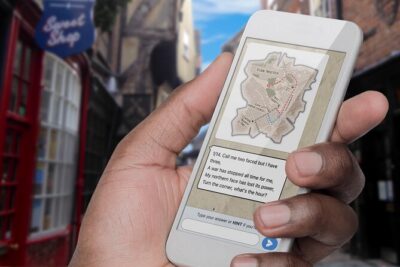
Fun, Flexible Treasure Hunt Around York with Cryptic Clues & Hidden Gems
Read our review →
Fun, Flexible Treasure Hunt Around Bath with Cryptic Clues & Hidden Gems
Read our review →
Fun, Flexible Treasure Hunt Around Oxford with Cryptic Clues & Hidden Gems
Read our review →
Fun, Flexible Treasure Hunt Around Birmingham with Cryptic Clues & Hidden Gems
Read our review →
Fun, Flexible Treasure Hunt Around Chester with Cryptic Clues & Hidden Gems
Read our review →
Fun, Flexible Treasure Hunt Around Brighton with Cryptic Clues & Hidden Gems
Read our review →
Fun, Flexible Treasure Hunt Around Cambridge with Cryptic Clues & Hidden Gems
Read our review →Browse the lists this game appears in