Review · FORT MYERS
Sanibel Island Shuffle Scavenger Hunt
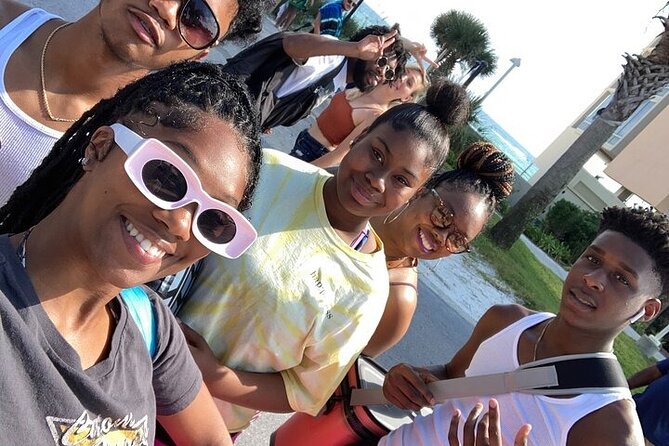
Find Sanibel by playing along. The Sanibel Island Shuffle turns a sightseeing outing into a two-hour, phone-led game with clues, photo tasks, local interaction, and a shot at an international leaderboard. I like the freedom to walk or drive between checkpoints, and I like that families and dogs can join. The main concern is that the remote host and digital instructions need to work properly, or the game can become confusing fast.
The route begins at Over Easy Cafe in The Village Shops on Periwinkle Way, then points you toward the Sanibel Causeway and Sanibel Island Lighthouse before returning to the starting place. I also like the option to extend the hunt for free if your team needs more time. Still, you should arrive with a fully charged smartphone, working data, and a clear contact number, because there is no traditional guide walking beside you.
Key points to know before you book
- Your host stays remote: You receive missions and encouragement by text, with photos and videos sent back during the game.
- The Sanibel Causeway opens the route: Expect a scenic starting area and a location that works well for group photos and early clues.
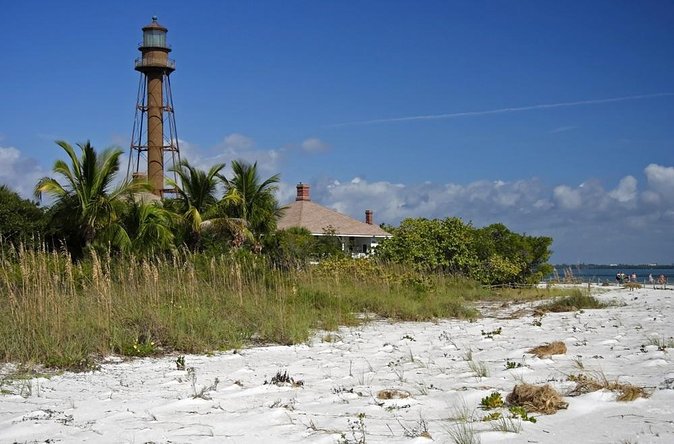
- The lighthouse is a main target: Sanibel Island Lighthouse gives the hunt a clear sightseeing focus beyond the game itself.
- You can walk or drive: The route is not simply a compact stroll, so a car may make the two-hour limit easier to manage.
- The game mixes serious sightseeing with silly tasks: Bonus challenges, wacky prompts, and local conversations are part of the point.
- Your phone is essential: Each team needs at least one GPS-enabled smartphone that can send texts, photos, videos, and data.
What the Sanibel Island Shuffle really is
This is not a standard guided tour with a person explaining Sanibel from one stop to the next. It is a self-directed challenge supported by a live remote host. You receive a digital quest, travel to different points around the island, solve clues, complete oddball assignments, and send proof of your progress.
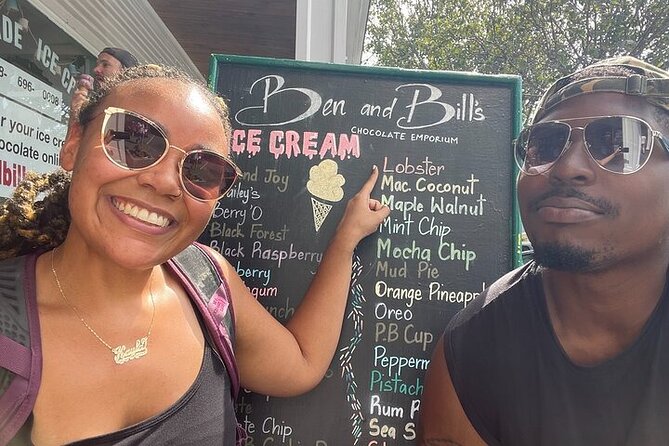
I see the format as part sightseeing game, part group dare. You are not just looking at a lighthouse or crossing the causeway. You may also be asked to photograph something, approach a local for help, record a response, or attempt a task that pushes you slightly outside your usual comfort zone.
That makes the experience a good fit for people who like participation. If you prefer a quiet, carefully narrated tour, this may feel loose and under-explained. If your group enjoys solving problems together and laughing at mildly embarrassing tasks, the format can turn an ordinary afternoon into a shared story.
The game is offered in English and lasts about two hours. It can include indoor and outdoor tasks, so you should be ready to move between different settings rather than spending the whole time at scenic viewpoints.
More Scavenger Hunts in the USA
- An Epic Scavenger Hunt: New York City Central Park Adventure
★ 4.5 · 244 reviews - Creative Soul Scavenger Hunt of Santa Fe
★ 5.0 · 62 reviews - Keep Austin Weird Scavenger Hunt
★ 4.0 · 51 reviews
Starting at Over Easy Cafe on Periwinkle Way
The stated meeting point is Over Easy Cafe at The Village Shops, 2340 Periwinkle Way, Unit B, Sanibel, Florida 33957. That gives your group a recognizable commercial starting area, with the chance to get oriented before the clock starts.
The remote host sends the first digital material around the beginning of the activity. You should not expect a long briefing in person. Have your phone out, your team together, and your contact number ready so you can begin without losing precious minutes.
This part matters more than it sounds. Two hours is not a huge amount of time for a hunt that may involve driving, finding clues, taking photos, and communicating with a host. One poor experience involved delayed instructions, slides that were hard to read, and missions appearing in the wrong order. I cannot promise that problem will occur, but it is a good reason to check your messages before arrival and contact the provider ahead of time if anything looks unclear.
There was also confusion for one participant about a meeting location described as a post office box. The official start point supplied for this activity is Over Easy Cafe, but I would still confirm the exact arrival instructions before the day of your hunt. A few minutes spent clarifying the location is better than burning the opening part of the game trying to find it.
The Sanibel Causeway gives the hunt its first view
The Sanibel Causeway is listed as the first stop. It is a strong choice for a scavenger hunt because it gives you an obvious Sanibel setting right away and creates a natural place for visual clues or team photos.
You may be asked to locate something specific, document your team at the site, or use the surroundings to answer a prompt. The causeway also helps set the tone: this is an outing built around movement and observation, not a sit-down activity.
If you are driving, this stop should feel more practical than trying to cover the route entirely on foot. The activity says you can walk or drive, but one person found the walking option unrealistic. That is useful advice. Do not assume that every checkpoint sits within a short pedestrian loop simply because the game is described as walkable or drivable.
The causeway can also be a tricky place if your team becomes focused on the points system and forgets the time. Take the required photos, solve the clue, and keep moving. The goal is to enjoy the view without letting one assignment swallow the whole session.
Sanibel Island Lighthouse adds a real sightseeing reward
The second named stop is Sanibel Island Lighthouse. This gives the hunt a clear landmark and a satisfying destination. Even if your team is not especially competitive, the lighthouse provides a reason to keep going when a clue feels awkward or a task takes longer than expected.
The lighthouse section may ask you to observe details, complete a photo challenge, or use the area as part of a broader mission. The supplied information does not specify the exact clue wording, so you should treat the stop as a checkpoint rather than assume you will receive a full historical talk.
That distinction is important. This activity is designed to help you notice places while playing, not to replace a traditional island sightseeing tour. You may learn something through clues and local conversations, but the central reward is the shared activity.
Keep an eye on the clock here. If earlier missions took longer than planned, your team may need to make quick decisions about bonus tasks. It is better to complete the main route and send clear proof than to chase every optional point.
Same place, a different puzzle:
- Branson Murder Mystery- Branson’s Original #1 Murder Mystery
★ 5.0 · 1,513 reviews - The Escape Game Orlando: Epic 60-Minute Adventures on I-Drive
★ 5.0 · 730 reviews - The Escape Game Pigeon Forge: 60-Minute Adventures on The Island
★ 5.0 · 646 reviews - The Escape Game Cincinnati: 60-Minute Adventures at The Banks
★ 5.0 · 546 reviews
How the remote host changes the experience
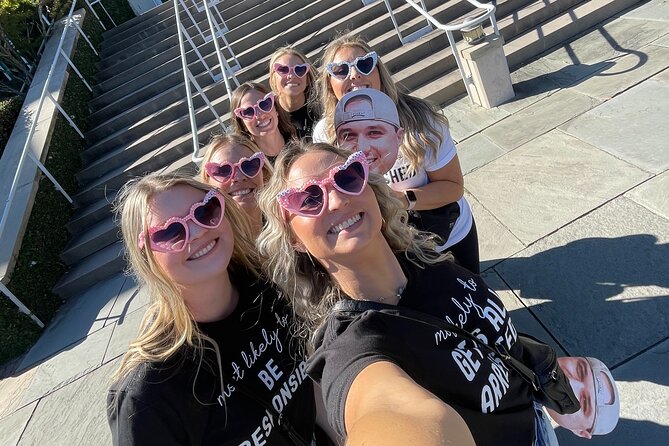
Your host communicates by phone and acts as a cheerleader, helper, and scorekeeper from a distance. You send photos, videos, and messages as you work. The host can encourage you and help document the progress, which gives a small team the feeling of having someone in its corner.
In theory, this is one of the most appealing parts of the format. You get independence without being entirely on your own. You can explore at your own pace, but a real person remains available to react to what you send.
In practice, the phone connection is also the activity’s weak point. If the host does not respond promptly, or if a slide is difficult to read, you may not know if you are solving the right mission. One team reported going for roughly 45 minutes without useful feedback and finding that information appeared under the wrong slides.
You can reduce the risk by making one person the team communicator. That person should monitor incoming messages, send the requested evidence, and ask direct questions as soon as the instructions become unclear. Do not quietly struggle for half an hour if a clue makes no sense.
You also need a domestic phone number in the reservation for the hunt to work as planned. If you use an international number or have technical trouble, the activity can be completed through WhatsApp or email, but you need to provide that contact information in advance through a message.
Points, bonus missions, and the international leaderboard
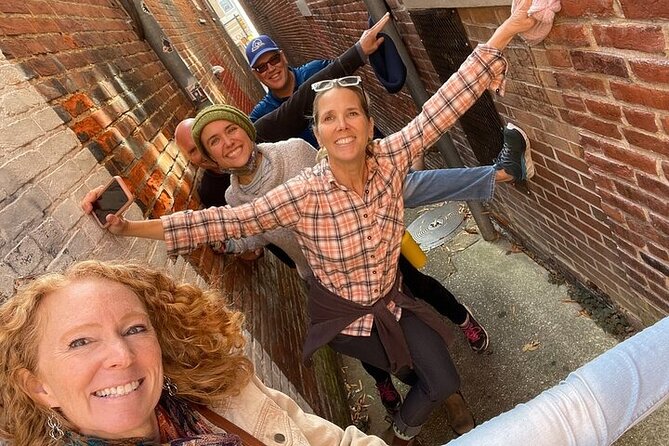
The hunt is built around points and position on an international leaderboard. That competitive layer can add energy, especially for birthday groups, work teams, bachelor or bachelorette groups, and friends who enjoy a little friendly rivalry.
The challenges are not limited to finding objects. You may be asked to take unusual photos, perform a silly task, answer a question, or speak with someone nearby. These prompts aim to get you interacting with Sanibel rather than simply following a map from one landmark to another.
I like the way this can create contact with local people. A resident or shop worker may help you solve a clue, giving your group a brief exchange that a conventional sightseeing route would not provide. Still, do not assume every local will know the game or be willing to participate. The activity materials describe local interaction as an option, not a guaranteed part of every mission.
Bonus challenges give you a choice. Competitive teams can chase extra points, while families or casual groups can skip anything that feels awkward. The hunt can also be extended for free, which is useful if your party needs more time or wants to complete additional tasks.
Family, dog, and group appeal
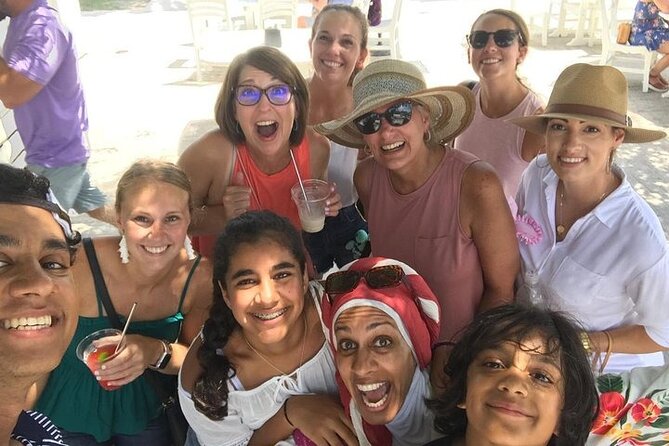
This is a flexible choice for families because the format allows children and adults to contribute in different ways. Younger participants can look for visual details or help with photos, while adults can handle navigation and messages.
The activity is also dog-friendly, and service animals are allowed. That makes it more useful than many structured island excursions for people traveling with a pet. You should still plan around your own dog’s comfort, since the route can include outdoor movement and changing locations.
Groups of up to 30 people can take part. That is large enough for a corporate outing or reunion, but a group of that size will need clear organization. I would split a large party into smaller teams and designate one phone contact for each team if the provider permits that setup.
For a small group, the game may feel more personal because everyone can contribute to each clue. For a large group, the best part may be the competition between teams rather than the individual missions. Either way, the activity gives people a reason to talk, collaborate, and laugh instead of standing around deciding what to do next.
Phone, transport, and timing tips
Bring at least one fully charged smartphone per team. It must have GPS and the ability to send and receive data, texts, photos, and videos. A portable battery is not specifically required, but I would bring one because navigation, camera use, messaging, and mobile data can drain a phone during a two-hour game.
Use a domestic phone number when booking if possible. International visitors should arrange WhatsApp or email contact before the activity begins rather than trying to solve the communication problem at the starting point.
The route is described as walkable or drivable, but the practical choice depends on your group and the exact clue order. Since the named stops are the causeway and lighthouse, I would plan on having access to a car unless the provider gives you a confirmed pedestrian route.
The activity ends back at the meeting point. That makes arrival and departure simple, but it also means you need to budget time to return rather than treating the lighthouse as the final place where you can stop.
The group limit is 30 people, and most participants can take part. Public transportation is nearby, and service animals are allowed. The activity is offered in English.
Value, flexibility, and the main risk
No price is provided here, so I cannot judge the exact dollar value. In general, the value depends on how much your group enjoys active participation. You are paying for a hosted game, a planned route, digital missions, and a reason to explore together, not for transportation, a private guide beside you, or a formal island history lesson.
The free extension is a useful benefit. A strict two-hour limit can feel tight when you are learning the system, traveling between checkpoints, and waiting for replies. Extra time gives you a better chance to finish without rushing.
The largest value risk is technical reliability. If the instructions arrive late, the images are unreadable, or the host does not respond, you may spend the session decoding the game instead of enjoying Sanibel. The average rating supplied for this experience is 3.3 out of 5 from seven ratings, with the strongest criticism focused on unclear directions, incorrect slide order, missing site information, and weak communication.
That does not make the activity an automatic no. It tells me to book it only if your group can stay patient and adapt. I would also message the provider before the day of the hunt to confirm the meeting point, phone contact method, and current condition of the checkpoints. The setting has changed after hurricanes, and one reported task depended on information that was no longer accurate.
Who should book the Sanibel Island Shuffle?
I would choose this for a family that wants more structure than simply visiting the lighthouse, a friend group that likes silly challenges, or a company looking for a light team-building activity. It also suits curious locals, birthday groups, and people who would rather take part than listen to a long explanation.
I would not choose it for a traveler who wants a polished, predictable tour with constant live guidance. It is also a poor fit if your phone connection is unreliable, your group dislikes public challenges, or you need a fully accessible route that has been described in detail. The available information says most people can participate, but it does not provide a full accessibility breakdown.
The provider also offers hundreds of city hunts, custom experiences, and virtual team-building options. Those choices may appeal to repeat customers, but for Sanibel you should judge this outing on its own practical needs: strong phone service, clear instructions, enough time, and a group willing to solve problems together.
Should you book it?
Book the Sanibel Island Shuffle if you want a playful, self-guided way to connect the causeway and lighthouse with photo missions, local interaction, and team competition. The dog-friendly policy, free extension, and remote host add useful flexibility.
I would book with caution, confirm the starting details, and arrive with a charged phone and a backup contact method. If the provider confirms that the digital materials and checkpoint information are current, this can be a fun change from a standard sightseeing stop. If you need dependable narration and smooth guidance from start to finish, choose a conventional Sanibel tour instead.
FAQ
How long does the Sanibel Island Shuffle take?
The activity lasts approximately two hours. A free extension is available if your group needs additional time.
Where does the activity start and end?
It starts at Over Easy Cafe in The Village Shops, 2340 Periwinkle Way Unit B, Sanibel, Florida 33957. It ends back at the meeting point.
Which Sanibel locations are included?
The named stops are the Sanibel Causeway and Sanibel Island Lighthouse. Other checkpoints and challenges are provided through the digital quest.
Do I need a smartphone?
Yes. Each team must bring at least one fully charged smartphone with GPS and the ability to send and receive data, text messages, photos, and videos.
What if I have an international phone number?
You can complete the game using WhatsApp or email if you have an international number or technical problems. You should provide that contact information in advance through a message.
Is the activity suitable for families and dogs?
Yes. The hunt is family-friendly and dog-friendly, and service animals are allowed. It is offered in English, and most participants can take part.
Just added around the USA
- Ventura Scavenger Hunt Walking Tour and Game★ 4.0 · 4 reviews
- Vail Venture Scavenger Hunt★ 3.5 · 8 reviews
- Save the Mountain Escape Room Adventure★ 5.0 · 4 reviews
- A Spectacular Scavenger Hunt: Center of the Universe★ 4.0 · 4 reviews
- Tybee Island, Georgia Scavenger Hunt★ 4.0 · 7 reviews
- Tucson Scavenger Hunt by Wacky Walks★ 4.5 · 2 reviews
- Amazing Scavenger Hunt: Desert Oasis★ 3.5 · 3 reviews
- Thrilling Traverse City Scavenger Hunt★ 4.0 · 7 reviews
Scavenger Hunts, compared.

Amazing Cozumel Race: Small-Group Tour and Scavenger Hunt
Read our review →
An Epic Scavenger Hunt: New York City Central Park Adventure
Read our review →
Escaping and spying on the Berlin Wall Scavenger hunt
Read our review →