

Review · COMMUNITY OF MADRID
Madrid: Prison Island Giant Indoor Escape Game Entry Ticket
Bring your team spirit. Madrid’s Prison Island turns a former escape-room idea into a larger, faster game with 32 themed cells, each built around a mix of physical, mental, and tactical tasks. You are not trying to escape one locked room. You move from challenge to challenge, earning points as you go.
I like the freedom to choose your next cell and the way the game rewards different talents. One person may solve a puzzle, another may handle a physical task, and a third may spot the winning strategy. The main drawback is that some challenges may offer limited clues, so a few cells can feel hard to understand at first.
The activity costs about $26 per person and includes up to two hours inside Prison Island. That is fair value for a group outing, especially when several people can play together, but it is less appealing if you dislike competition or prefer a quiet sightseeing activity.
Key Points Before You Book
- Thirty-two different cells: You move between themed challenges instead of following one fixed escape-room route.
- Three kinds of skill: Expect tasks that test technical ability, physical coordination, and tactical thinking.
- Two hours of play: A fast group may complete many cells, while others will spend longer working through the trickier rooms.
- Scores and rankings: Your team collects points and can check how it compares on the leaderboard.
- Good for groups: Friends, families, birthday groups, and corporate teams all fit the format well.
- Age limits matter: Children under 10 are not accepted, and the information also lists people over 70 as unsuitable.
What Prison Island in Madrid Actually Is

Prison Island is an indoor adventure game inspired by the television show Fort Boyard. The setting is designed as a futuristic prison, but the goal is not simply to find a way out. Instead, your group enters a series of self-contained cells and tries to complete as many tasks as possible.
That difference changes the mood. A traditional escape room usually gives you one story, one room, and one route toward the answer. Here, you have 32 separate challenges and can move around the facility to choose where to spend your time.
Some cells focus on logic. Others may ask you to use coordination, timing, strength, or teamwork. The exact challenge mix is part of the appeal, since you cannot rely on one talented person to carry the whole group.
I would think of it as part escape room, part indoor obstacle course, and part team strategy game. You need to make quick decisions. Do you keep working on a difficult cell, or leave it and try to score points somewhere else?
More Escape Rooms in Spain
- Madrid: Scary Escape Room “The Haunted Box”
★ 4.8 · 5 reviews - Madrid: Retro Escape Room “HEX Game”
★ 5.0 · 5 reviews - Cala Millor: Escape Room “The millionaire’s villa”, fun game
★ 4.6 · 78 reviews
Arriving at the Spark Island Entrance
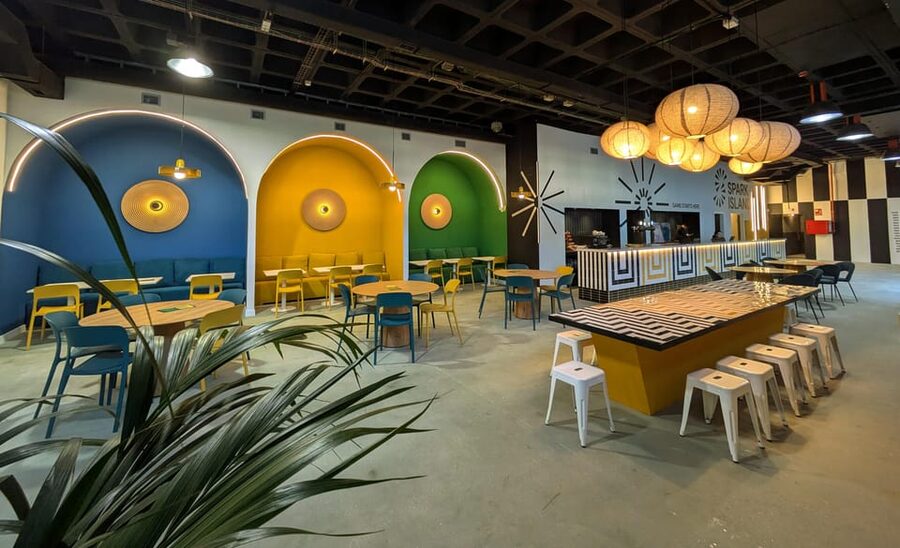
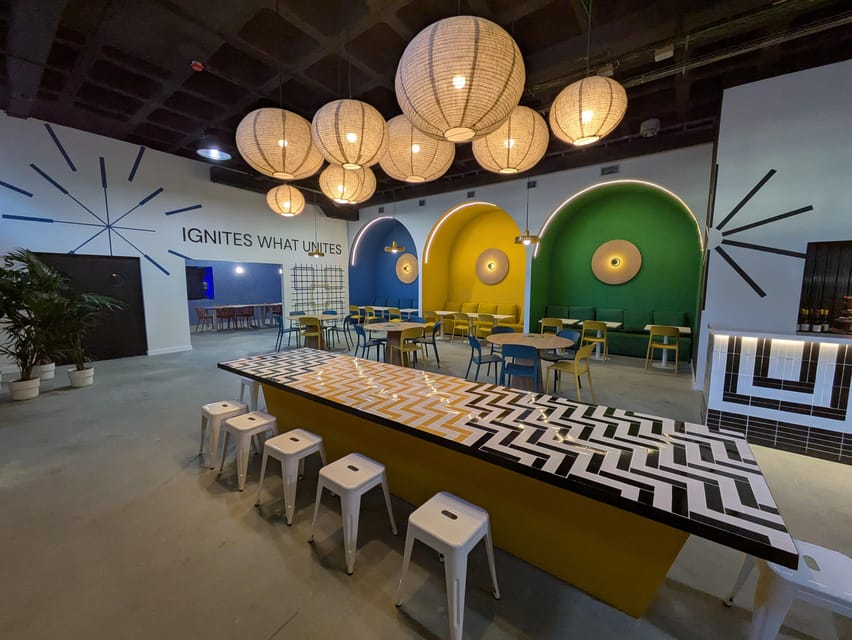
Outside the building, look for the sign marked with the Spark Island logo. At the entrance, show your GetYourGuide voucher to the staff. The host or greeter may assist in English, French, or Spanish, which is useful for mixed-language groups.
The information provided does not give a detailed meeting address or transport plan, so check the exact location and starting time before setting out in Madrid. Booking ahead is recommended because available sessions can fill, particularly when you are organizing a larger group.
Wear comfortable clothes. This is not a sit-down puzzle attraction, and the physical elements make practical clothing a better choice than anything restrictive or delicate. You do not need to bring food or drinks as part of the ticket, since those are not included.
The session length is listed as one to two hours, while the included activity specifies two hours in Prison Island. I would plan for the full two hours and allow a little extra time around the start and finish.
The First Challenge: Learning How the Cells Work

The opening part of the game is about getting your group organized. You enter the indoor arena and begin choosing from the available cells. Since there is no single escape route, your first decision is often simply where to start.
That freedom is useful, but it can also make the game feel less obvious. A traditional escape room normally points you toward the next clue. Prison Island asks your group to manage its own time and choose its priorities.
I recommend agreeing on a simple plan before you begin:
- Split up only if your group is large enough to handle several cells at once.
- Keep track of which challenges you have attempted.
- Do not let one difficult cell consume the entire session.
- Move to another room when your team has stopped making progress.
- Play to your strengths, but give everyone a chance to contribute.
The format rewards communication more than individual brilliance. You may have a very clever puzzle solver in the group, but that person cannot be in every cell at once.
Thirty-Two Cells With Different Types of Pressure
The main attraction is the variety. The cells are built around technical, physical, and tactical skills, so the best team is not always the strongest or fastest one.
Technical tasks may suit someone who enjoys working out how a system operates. Physical challenges call for coordination and movement. Tactical cells ask your group to plan, divide jobs, or make a smart choice under time pressure.
The themed rooms are important because they keep the experience from feeling like one long worksheet. A group completing several cells in a row gets regular changes of pace. You might leave one challenge frustrated, then regain confidence in the next.
The supplied information does not describe each room individually, so I would not promise a particular puzzle type or physical stunt. What you can count on is a broad mixture rather than 32 copies of the same escape-room exercise.
This variety makes Prison Island a good choice for a group with different personalities. Someone who dislikes riddles may enjoy the physical cells. Someone who is not athletic may become the key player in a strategy or logic task.
More Escape Rooms in Madrid:
- Sofia Escape Room – Teorema Rooms
★ 5.0 · 895 reviews - The Escape Game Orlando: Epic 60-Minute Adventures on I-Drive
★ 5.0 · 730 reviews - The Escape Game Pigeon Forge: 60-Minute Adventures on The Island
★ 5.0 · 646 reviews - The Escape Game Cincinnati: 60-Minute Adventures at The Banks
★ 5.0 · 546 reviews
Why Teamwork Matters More Than Speed
Prison Island is built for cooperation. You need to explain ideas clearly, listen when someone else sees a different solution, and avoid wasting time arguing over a single approach.
That makes the experience especially useful for a group that already knows one another. Friends can compete without taking the score too seriously. Families can see which person stays calm when a puzzle refuses to cooperate. Corporate groups can use the format to watch how people communicate under mild pressure.
I would not call it a relaxed family activity in the usual sense. The game is active and competitive, and the score adds pressure. Still, the age guidance makes it suitable for children from age 10, and a 14-year-old group has been able to complete every cell in about an hour and a half. That suggests confident teenagers can handle the format well.
Younger children are not accepted, so families with small children will need another plan. The information also says it is not suitable for people over 70, despite a separate description calling it suitable for ages 10 to 99. Because those details conflict, older participants should confirm eligibility before booking.
How the Two-Hour Time Limit Changes the Game

Two hours sounds generous until you consider the 32-cell layout. You are unlikely to spend equal time in every room, and you may not finish every challenge.
One 14-year-old group completed all the cells in roughly 90 minutes, which shows that an experienced or highly coordinated team can move quickly. Another booking resulted in about three hours at the venue, but the official activity includes two hours, so do not assume that every ticket automatically provides three hours of play.
For most groups, the time limit is part of the fun. You have to decide when to stop chasing a solution and try another cell. If you spend 15 minutes on one problem because you are determined to beat it, you may lose the chance to score elsewhere.
I would set a rough halfway check. At the one-hour mark, ask which cells remain and whether your strategy is working. This small pause can stop the group from drifting between rooms without a plan.
Hints, Difficulty, and the Risk of Confusion
The challenge level is one of the main variables. Some people will enjoy receiving very little help and working things out alone. Others may find the lack of direction frustrating.
One piece of direct feedback points to a real consideration: some activities could use more clues so players can understand the task. That does not mean every cell is unclear, but it does suggest that you should ask the host for help if your group cannot work out what a challenge requires.
The best approach is to separate two problems:
- You understand the task but cannot solve it.
- You do not understand what the task is asking you to do.
The first is a genuine puzzle. The second calls for an explanation. Do not burn half an hour on a challenge simply because your group missed the basic instructions.
This is also why the experience may suit confident groups better than first-time escape-room players who expect a highly guided story. Prison Island gives you more freedom, but that freedom comes with more responsibility.
The Leaderboard Adds a Useful Competitive Finish
After playing, your team can check the leaderboard and see how it ranks. This gives the activity a clear ending and gives competitive groups something to discuss afterward.
The score is also a practical way to make repeated visits more interesting. If you return, you can try to improve your result rather than simply repeat the same outing.
Still, I would not let the leaderboard dominate the day. The game works best when the score encourages teamwork instead of turning one difficult cell into a personal grudge match. For a birthday or group celebration, the shared jokes and surprising successes may matter more than the final number.
The competitive element is strongest for corporate groups and friend groups that enjoy a challenge. Families may prefer to treat the score as a record of what they managed together.
Who Will Get the Most From This Madrid Activity?

I would recommend Prison Island for:
- Friends who want an active indoor group activity
- Families with children aged 10 and over
- Corporate team-building events
- Birthday groups and pre-wedding celebrations
- People who enjoy puzzles but want more movement than a standard escape room
- Groups with mixed skills, since different cells reward different abilities
A first-time group can enjoy it, but you should arrive ready to experiment. You may not understand every challenge immediately, and that is part of the format.
I would be more cautious if your group wants a calm, fully guided experience. The free movement between cells and limited help on some tasks may feel confusing. It may also be a poor fit for anyone with mobility concerns, though the supplied information does not provide detailed accessibility guidance.
A French-speaking pre-wedding group found the different room themes and welcoming reception especially enjoyable, even though it was their first time with the concept. That is a useful sign for groups booking Prison Island as a special occasion rather than a regular hobby.
Is $26 a Fair Price?
At about $26 per person, the value depends on your group size and how actively you use the two hours. You are paying for access to 32 challenge rooms, not a single short puzzle. That gives the experience more variety than many one-room activities.
The price makes good sense for a group that stays engaged and tries many cells. It is less attractive if your team spends most of the session stuck in one room or if only two people are doing the work.
The format also spreads the cost across a full group outing. For a corporate event, birthday, or pre-wedding gathering, the ticket covers a shared activity that naturally creates conversation afterward. Food and drinks are not included, so factor in a separate stop if you want the event to last longer.
I see the strongest value for groups of friends and families who want two hours of active entertainment without committing to a full-day excursion around Madrid.
Practical Booking Advice for a Smoother Session
Book in advance, especially if you need a particular time or are bringing a large group. Starting times vary, so check availability before making other plans.
You can reserve now and pay later, which helps if your Madrid schedule is still changing. Free cancellation is available up to 24 hours in advance for a full refund, according to the booking conditions.
At the venue, show the voucher at the entrance and look for the Spark Island sign outside. Choose comfortable clothing, arrive with a cooperative attitude, and avoid treating every failed attempt as a disaster.
The biggest practical tip is to bring a group that communicates well. A clever team that listens will usually have more fun than a faster team that talks over one another.
Should You Book Prison Island in Madrid?
Book it if you want an active team challenge with many different rooms, and if your group likes making decisions under time pressure. The 32-cell format, two-hour session, and leaderboard give you plenty to do for the price.
I would choose it for friends, families with older children, corporate groups, and celebrations. I would skip it if you want a quiet indoor attraction, a single carefully scripted story, or constant hints from staff.
The main question is simple: do you enjoy figuring things out together, even when the rules are not instantly clear? If yes, Prison Island offers a lively change from Madrid’s museums and plazas. If not, the lack of guidance in some cells may test your patience more than your strategy.
FAQ
How long does the Prison Island experience last?
The activity provides two hours inside Prison Island, while the general duration is listed as one to two hours. Check the available starting time when booking.
How many challenge rooms are included?
The ticket includes access to 32 challenge rooms, also called cells.
What skills do the challenges test?
The cells combine physical, mental, technical, and tactical tasks. Different rooms suit different strengths.
Can children take part?
Children aged 10 and over can take part. Children under 10 are not suitable for this activity.
What should I wear?
Wear comfortable clothes because the game includes physical and active challenges.
Is food or drink included?
No. Food and drinks are not included in the ticket.
Which languages are available?
The host or greeter service is available in English, French, and Spanish.
Can I cancel my booking?
You can cancel up to 24 hours in advance for a full refund. Reserve and pay later is also available.
Just added around Madrid
- Discover Madrid by playing! Escape game – The Walter case★ 4.0 · 2 reviews
- e-Scavenger hunt Madrid: Explore the city at your own pace★ 3.5 · 3 reviews
- Secrets of La Latina: Self-Guided Puzzle Walk in Madrid★ 4.0 · 2 reviews
- Ghosts of Madrid: Exploration Game and Tour★ 5.0 · 4 reviews
- Madrid: Treasure Hunt Experience★ 5.0 · 4 reviews
- Madrid Scavenger Hunt and Sights Self-Guided Tour★ 5.0 · 6 reviews
- Madrid: Scary Escape Room “The Haunted Box”★ 4.8 · 5 reviews
- Madrid: Murder Mystery Dinner Experience★ 5.0 · 2 reviews
Escape Rooms, compared.


The Escape Game Orlando: Epic 60-Minute Adventures on I-Drive
Read our review →
The Escape Game Pigeon Forge: 60-Minute Adventures on The Island
Read our review →
The Escape Game Cincinnati: 60-Minute Adventures at The Banks
Read our review →

The Escape Game Honolulu: 60-Minute Adventures at Ala Moana
Read our review →
The Escape Game San Antonio: Epic 60-Minute Adventures at The Rim
Read our review →
Browse the lists this game appears in