

Review · MADRID
Discover Madrid by playing! Escape game – The Walter case
Let Madrid become your game board. This urban escape game turns the city into a police case, sending your private team through central Madrid to question suspects, search for clues, and make choices in a ticking-bomb story. I like the freedom to choose your route and the fact that your group plays privately, without strangers joining in.
I also like the low group price, especially if six people share the $23.22 cost. The main caution is time: although the advertised duration is about two and a half hours, one family had spent more than three hours and completed only half the game. That makes this better for patient older children and adults than for anyone seeking a quick activity.
Key points at a glance
- Start at Plaza del Callao: The game begins in central Madrid, at a busy and well-connected city square.
- Play as private detectives: Your group investigates blackmail involving a billionaire CEO before a bomb explodes.
- Your choices shape the route: You decide which suspects to question, which places to search, and how to follow the clues.
- Use only a smartphone: The mobile application guides you between points of interest and presents puzzles or missions.
- Private groups up to six: You play only with your own family or friends, not with a mixed tour group.
- Allow extra time: The planned two and a half hours may not be enough if your team works slowly or wants to solve every challenge.
A bomb case begins at Plaza del Callao
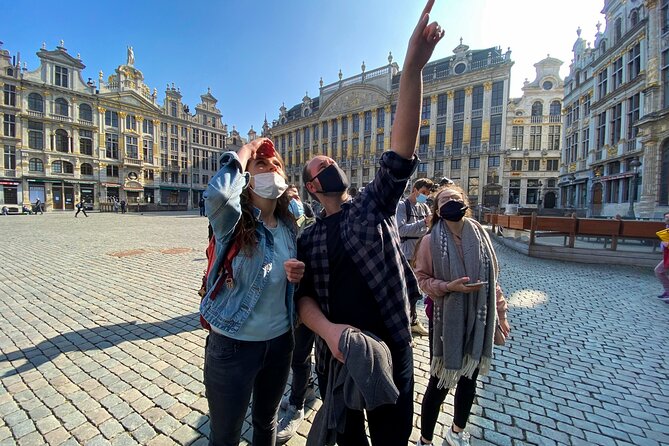
The Walter Case starts at Plaza del Callao, in Madrid’s Centro district. This is a practical meeting point for a city game because it puts you in the middle of Madrid rather than at a remote office or indoor escape room.
From there, the mobile application guides you toward different points of interest. The exact path depends on your decisions, so you are not simply following a guide from one fixed stop to the next. You are playing a case while walking through the city.
The plot gives the activity its purpose. You begin by investigating what appears to be an ordinary blackmail case involving a billionaire chief executive. Then the stakes rise: a bomb is hidden somewhere in town, and you have two hours to stop it.
That countdown creates urgency, but the advertised activity itself lasts about two and a half hours. This is worth noting. The story gives you a two-hour fictional deadline, while the real activity may take longer, especially if you spend time discussing each clue or get stuck on a puzzle.
More Escape Games in Madrid:
- Escape game Madrid, chase the killer
★ 4.5 · 37 reviews - Madrid: Prison Island Giant Indoor Escape Game Entry Ticket
★ 4.8 · 19 reviews - Escape the Inquisition in Madrid Exploration Game
★ 4.0 · 13 reviews
Walking Madrid as a private detective

The appeal here is not sightseeing in the usual sense. You are not being led through a set list of landmarks while someone explains the city’s past. Instead, the streets become part of a working case.
At each point, the app may ask you to solve a puzzle or complete a mission. The supplied information does not specify every location or challenge, so I would not book this expecting a named landmark-by-landmark tour. The value is in connecting the streets and public spaces to the story.
That format can make familiar city walking feel more active. You have a reason to look around, compare clues, and decide what to do next. A normal stroll can become a search area. A square can feel like a meeting point in the investigation. The city is still Madrid, but your attention is directed by the case.
The downside is that the experience depends on your phone and your group’s willingness to work together. If one person wants to move quickly while another wants to inspect every clue, the activity can slow down. This is not a passive tour where you can simply follow along.
Choices matter more than a fixed itinerary
The story is designed to change according to your decisions. You decide which route to take, which suspects to question, and which places to search. That gives the activity a different feel from a standard guided walk.
I like this structure because it gives your group ownership of the investigation. You are not only waiting for the next instruction. You must discuss the evidence and agree on a direction.
It also means your experience may not match another group’s route. One team might move quickly through the case, while another spends more time examining clues or takes a different path. That flexibility is useful for families and friends who enjoy problem-solving, but it can be frustrating if you prefer a clear schedule.
The information does not spell out whether every branch leads to the same conclusion or whether certain choices can cause you to miss parts of the story. You should treat the game as an activity where decisions matter, not as a guaranteed checklist of every Madrid stop.
What the smartphone app adds
You need a smartphone to take part. The application guides you to the different locations and delivers the puzzles and missions that drive the case.
This keeps the experience simple. There is no need to meet a guide at several places or carry printed clues. Your group can read the instructions, discuss the evidence, and continue at its own pace.
The phone-based format also explains why this is easy to fit into a Madrid day. The activity is available from noon until 11:30 p.m., Monday through Sunday, within the stated operating period. That broad schedule gives you room to play during the afternoon or later in the day.
Still, a smartphone-led game is only as smooth as your group’s phone use. You will need to stay attentive to the app while also navigating public streets. I would keep the group together, particularly when attention shifts from the screen to the next location.
Because the experience uses a mobile application, I would also make sure the person handling the phone is comfortable sharing instructions with everyone. One person can easily become the entire team’s screen reader, while the others wait. The game will work better if the group talks through each clue rather than letting one player make every decision.
Same place, a different puzzle:
- Madrid (Historical Centre) Scavenger Hunt and Self-Guided Tour
★ 5.0 · 9 reviews - Madrid Scavenger Hunt and Sights Self-Guided Tour
★ 5.0 · 6 reviews - Discover Madrid: Scavenger Hunt Family Adventure
★ 5.0 · 6 reviews - Madrid: Scary Escape Room “The Haunted Box”
★ 4.8 · 5 reviews
Why the private group setup helps
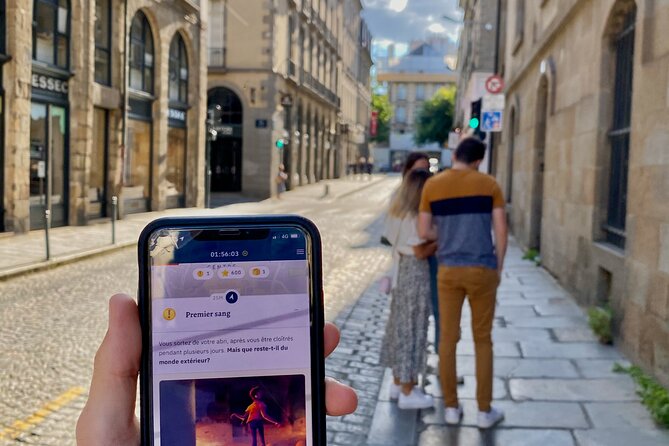
The activity is private, and groups can include up to six people. That is a useful size for an escape game. Six people offer enough opinions to solve a tricky puzzle without creating the confusion of a large crowd.
A family can play together without being paired with strangers. Friends can divide the case between the people who enjoy logic puzzles, storytelling, and route decisions. If you are visiting Madrid with a small group, the private format gives you control over the pace and tone.
The price is $23.22 per group, not per person, for up to six participants. That is the strongest value point. With six people, the cost works out to less than $4 per person. With two people, it is still a low-cost activity, though the puzzles may be easier or harder depending on how well you work as a pair.
The price becomes especially appealing when compared with many paid city activities, but value depends on finishing enough of the game to feel satisfied. If your group loses interest after an hour, the low cost will not rescue the experience. If you enjoy taking your time with a mystery, the same price can buy several hours of shared entertainment.
The real time issue: two and a half hours may be optimistic

The stated duration is approximately two hours and 30 minutes. That is a sensible planning figure for your day, but you should leave extra room around it.
A family with a 10-year-old reached more than three hours while completing only 50 percent of the game. The child became tired, even though the challenges were described as enjoyable and informative. This is the most useful warning for parents: the activity may be longer and more demanding than the headline duration suggests.
The difference may come from the game’s open route, the time needed to solve puzzles, or the pace of the group. A team that gets stuck, stops to discuss each clue, or walks more slowly can use much more time.
I would not schedule a museum reservation or meal immediately after the game. If you have a fixed evening plan, treat the two-and-a-half-hour estimate as a guide rather than a firm finish time.
For adults and older children who enjoy mysteries, the extra time may be part of the fun. For younger children, the countdown story may be exciting at first but less appealing once walking and problem-solving continue for several hours.
A family activity with an age question
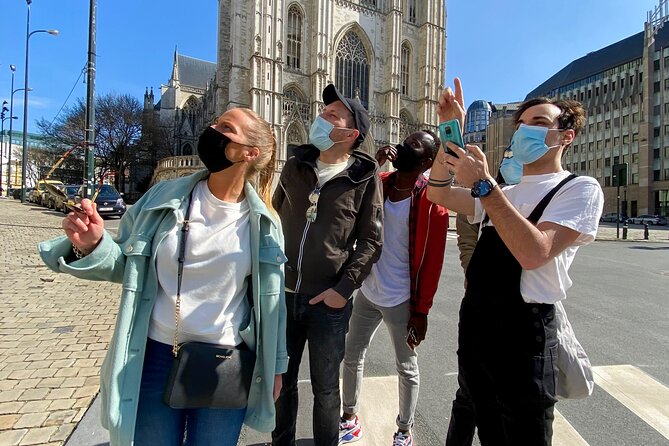
The experience states that most people can participate, but it does not provide a specific minimum age. One 10-year-old took part, found the challenges enjoyable, and also became tired before the game was finished.
That gives you a useful starting point without promising a perfect fit for every child. I would choose this for a family whose children like solving problems and can handle a long walk with regular attention to the app.
The game may work particularly well when adults let children take real roles in the investigation. A child can look for patterns, suggest suspects, or help decide which clue to follow. If adults solve everything on their own, younger players may become spectators.
For a group of adults, the choice is simpler. You can split up reasoning, compare ideas, and accept the possibility that the case takes longer than expected. The private format means you can pause for a discussion without worrying about holding up other people.
What makes the game informative

The game is not only about the bomb plot. The challenges are also described as informative, which suggests that the app uses the city around you as part of the activity.
You should keep your expectations measured. This is still an escape game first, not a traditional history tour. The supplied details do not promise a guide, historical commentary, or a set of major monuments.
Its informative quality likely comes through the places you visit and the information connected with the missions. You may notice parts of central Madrid that you would otherwise pass without a reason to stop. The case gives your group a prompt to pay attention.
That is a useful way to see Madrid if you have already visited the major sights or want something less formal between museum visits. It is also a good option for people who find conventional sightseeing tiring but still want to walk around the city.
Getting to the start and finishing the case
The starting point is Plaza del Callao, Pl. del Callao, Centro, 28013 Madrid, Spain. The location is near public transportation, so reaching the meeting point should be straightforward within Madrid’s central area.
The activity ends back at the meeting point. That makes planning easier than an open-ended city game that leaves you on the far side of town. You can arrange your next meal or activity from the same central area.
The published opening hours run from 12:00 a.m. to 11:30 p.m. every day during the stated operating period, from November 15, 2021, through June 18, 2026. Because the time is shown in a broad daily window, check your selected start time carefully when booking.
You are not meeting a named guide, and no guide-led walk is described. The app provides the instructions, so your group needs to manage the route and the puzzle-solving on its own.
Accessibility and practical limits
Service animals are allowed, and the activity states that most people can participate. It is also near public transportation.
Those facts are helpful, but they do not answer every mobility question. The game takes place in Madrid’s streets and requires walking between points of interest, so you should consider your group’s comfort with urban walking before booking.
The experience also involves following an app while moving through public spaces. If anyone in your group needs frequent rests or has difficulty using a phone for directions and puzzles, the flexible pace may help, but the total time could increase.
Since the activity is private, you can make decisions as a group. You cannot, however, assume that every route or challenge will be easy to complete at the same pace.
Cancellation and booking flexibility
You receive confirmation when you book. Free cancellation is available if you cancel at least 24 hours before the experience start time, based on Madrid’s local time.
A cancellation within 24 hours is not refundable, and changes made within that period are not accepted. I would make your group decision before the deadline, particularly because this is an activity that works best when everyone is ready to spend several hours on it.
Who should book The Walter Case?
I would recommend it to friends, couples, and families who like puzzles more than formal sightseeing. The private format, flexible route, and low group price make it a good fit for a small group looking for a shared activity in central Madrid.
It is also a smart choice if you want to walk through the city with a purpose. The game can add structure to an afternoon without putting you inside another museum or tying you to a guide’s schedule.
I would be more cautious if you have young children, a strict timetable, or limited patience for phone-based activities. The example of a 10-year-old tiring after more than three hours is important. Completing only half the game may be perfectly acceptable for some families, but frustrating for others.
Book it if you enjoy making decisions, solving clues, and allowing the city walk to take as long as it takes. Skip it if you want a short, predictable tour with clear historical commentary. At $23.22 for up to six people, the financial risk is small, but the time commitment deserves serious attention.
FAQ
Where does The Walter Case begin?
The game begins at Plaza del Callao, in Madrid’s Centro district, at Pl. del Callao, 28013 Madrid, Spain.
Where does the activity end?
The activity ends back at the meeting point, Plaza del Callao.
How long does the game last?
The approximate advertised duration is two hours and 30 minutes. Some groups may need longer. One family spent more than three hours while completing about half of the game.
How many people can join one group?
Up to six people can participate in one private group.
Do I need a guide or special equipment?
You only need a smartphone. The mobile application guides you to the points of interest and provides the puzzles and missions.
Can I cancel for a full refund?
Yes. You can receive a full refund if you cancel at least 24 hours before the experience start time. Cancellations within 24 hours are not refunded.
Just added around Madrid
- e-Scavenger hunt Madrid: Explore the city at your own pace★ 3.5 · 3 reviews
- Secrets of La Latina: Self-Guided Puzzle Walk in Madrid★ 4.0 · 2 reviews
- Ghosts of Madrid: Exploration Game and Tour★ 5.0 · 4 reviews
- Madrid: Treasure Hunt Experience★ 5.0 · 4 reviews
- Madrid Scavenger Hunt and Sights Self-Guided Tour★ 5.0 · 6 reviews
- Madrid: Scary Escape Room “The Haunted Box”★ 4.8 · 5 reviews
- Madrid: Murder Mystery Dinner Experience★ 5.0 · 2 reviews
- Madrid: Retro Escape Room “HEX Game”★ 5.0 · 5 reviews
Madrid Escape Games, compared.


Prison Island Giant Indoor Escape Game Entry Ticket
Read our review →
Escape the Inquisition in Madrid Exploration Game
Read our review →
Madrid (Historical Centre) Scavenger Hunt and Self-Guided Tour
Read our review →

Madrid Scavenger Hunt and Sights Self-Guided Tour
Read our review →

Browse the lists this game appears in