Review · LUXEMBOURG CITY
e-Scavenger hunt Luxembourg: Explore the city at your own pace
History comes with a game. Qula’s self-guided city trail turns Luxembourg into a puzzle board, sending your private group between grand squares, fortress remains, museums, bridges, and the old quarter of Grund. I like the freedom to choose your pace, and I like the good value for a group of up to six, since the $37.33 price covers the whole team rather than each person.
The main catch is time. The route covers both the upper and lower parts of Luxembourg City, and one family needed almost four hours rather than the average two and a half. You can skip locations or choose your own route, but this is not always a quick stroll.
The best parts at a glance
- A flexible route through 16 major sights: You visit a broad mix of old-town squares, fortress landmarks, museums, bridges, and viewpoints.
- Good for private groups: Up to six people can play together, with no strangers added to your team.
- A game rather than a standard tour: Assignments give you something to solve at each stop while introducing Luxembourg’s story.
- A strong price for families and friends: At $37.33 per group, the cost works out well when six people share it.
- You control the effort: Finish the full trail, take your time, or skip stops that feel too far away.
- A scenic but hilly city route: The path includes the upper city, Grund, Pfaffenthal, and fortress areas, so expect changes in elevation.
How the Luxembourg city game works
You meet at 9 Place d’Armes, in Ville-Haute, Luxembourg’s upper city. That central start makes the activity easy to find, and it places you beside one of the city’s key public squares. You use your own smartphone and mobile data to open the online app and play.
The format is simple. Your group follows a city trail and solves assignments connected to the sights around you. The game is available in English, and the private setup means your group can decide how competitive to be. You can race for speed, work together, or treat the questions as prompts to look more closely at the city.
The advertised duration is about two to four hours, with an average around two and a half hours. That range matters. Luxembourg’s upper and lower districts are linked by steep streets, lifts, and viewpoints, and the complete route covers roughly four to seven kilometers depending on the city trail and choices you make. One family with children aged 11 and 12 found it took almost four hours. Another group completed it in about an hour and a half.
Those very different times tell you how to use the experience. If you want to stop for photos, read plaques, visit nearby sights, or take the longer route through the lower city, plan on the high end. If you focus on the assignments and skip distant locations, you can finish much sooner.
More Scavenger Hunts in the world:
- Hamburg: Scavenger Hunt Self-Guided Tour for Children
★ 4.5 · 319 reviews - Amazing Cozumel Race: Small-Group Tour and Scavenger Hunt
★ 5.0 · 291 reviews - 3hr Seaside Scavenger hunt
★ 5.0 · 250 reviews
Place d’Armes to Notre-Dame Cathedral
The route begins at Place d’Armes, a central square in the old town. It is a sensible meeting point because it is surrounded by the city’s historic core, and it gives you an immediate feel for Luxembourg’s pedestrian center.
From there, the trail takes you to Notre-Dame Cathedral of Luxembourg. The Jesuits founded the cathedral between 1613 and 1621, giving it an important place in the city’s religious and architectural story. This is a useful early stop because it introduces the older side of Luxembourg before the game moves toward military remains and modern districts.
The cathedral is also a good reminder that Luxembourg is not just a fortress city. Its identity combines government, religion, trade, military power, and modern European institutions. The app’s assignment gives you a reason to pause instead of simply walking past the facade.
The old town’s squares and government buildings
Several stops focus on the civic center, where Luxembourg’s political history is easy to read in the buildings and open squares.
Place Guillaume II lies west of Krautmaart and north of Boulevard Franklin Delano Roosevelt. It is one of the city’s main public spaces, and its location makes it a natural link between the old town’s streets and its government quarter.
The route also includes Luxembourg City Hall. The building serves as the center of local government and includes the mayor’s private office. Its civic role gives the game a practical angle: you are not only looking at old stone, but also seeing where the city is run today.
Another historic building once served as Luxembourg’s city hall from 1572 to 1795. It later became the prefecture of the Département des Forêts in 1795 and the headquarters of the Luxembourg Government in 1817. The changing roles of this building reflect Luxembourg’s shifting political position over time.
You also visit Constitution Square, built on the former Beck bastion, which dates from 1644 and 1685. The square is home to the Gëlle Fra, a monument erected in 1923. This stop links the city’s defensive past with its public memory, and it gives you one of the clearest examples of how Luxembourg reuses fortress spaces for civic life.
Chemin de la Corniche and the best city views
The Chemin de la Corniche is one of the strongest parts of the route. Locals and visitors call it the most beautiful balcony in Europe, a grand claim, but the setting explains why it earned that reputation. The promenade provides broad views over Luxembourg’s dramatic upper and lower districts.
I would not rush this stop. The city’s height changes are easier to understand from here, and the view helps you see why a route that looks short on a map can take time on foot. It is also a natural place to pause between assignments and take photographs.
The route’s viewpoints are especially valuable because the game covers a lot of ground. You are not simply moving from one isolated landmark to the next. You are seeing how the old city sits above valleys, defensive walls, bridges, and former military areas.
More Escape Games in the world:
- Sofia Escape Room – Teorema Rooms
★ 5.0 · 895 reviews - Saw2 vs Squid Game – Escape Game Montpellier
★ 5.0 · 752 reviews - Prague Wizard Experience Magic School Escape Game
★ 5.0 · 746 reviews - The Escape Game Orlando: Epic 60-Minute Adventures on I-Drive
★ 5.0 · 730 reviews
The Bock Casemates and the city’s fortress story
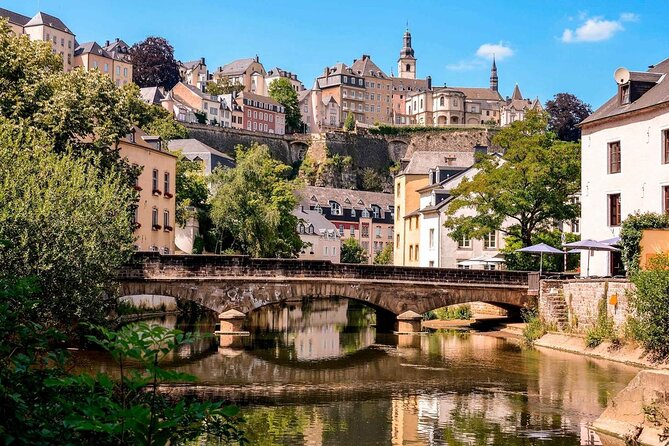
Luxembourg’s fortress history comes into sharper focus at the Bock Casemates. This underground defense system contains kilometers of tunnels and is one of the city’s most important visitor sites.
The casemates give the trail its strongest sense of place. Luxembourg was not built only for beauty or government. Its rock outcrops and high position made it a major defensive site, and the tunnels show how seriously that role was taken.
Above the casemates, the itinerary includes an ancient ruin whose name translates as the hollow tooth. It marks the entrance or beginning of the city and sits above the Bock Casemates. This unusual landmark is exactly the kind of detail that works well in a scavenger hunt. You have a memorable name, a clear physical feature, and a direct link to the city’s old defenses.
The route also reaches the Plateau du Rham, opposite the city. During Luxembourg’s years as a fortress, this plateau served military purposes. From a sightseeing point of view, it broadens the story beyond the best-known casemates. You see that military planning shaped both sides of the city, not just the central rock.
Grund and Pfaffenthal, Luxembourg below the upper city
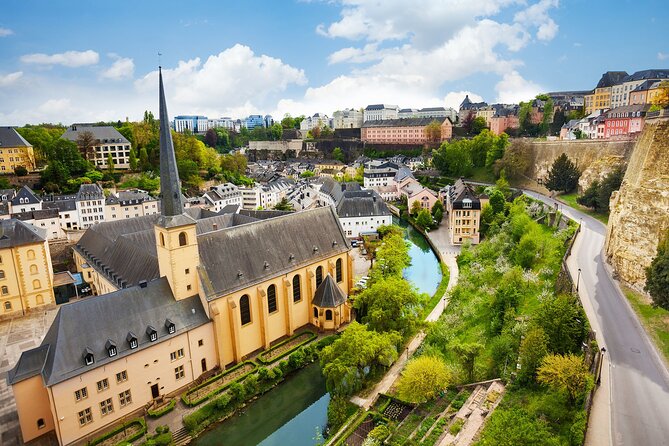
The medieval quarter of Grund is one of the most atmospheric sections of the trail. It has authentic old buildings, restaurants, and bars, and it sits in the lower part of the city. If you enjoy quieter streets and a more lived-in feel, this may be one of your favorite sections.
Grund also explains why the route can take longer than expected. Reaching the lower city means dealing with changes in height, and you may want time to look around rather than solve the next assignment immediately. The route is flexible, so you can choose how much time to give it.
The Pfaffenthal panoramic lift connects Ville Haute, the historic center, with Pfaffenthal in the valley below. It is a practical piece of city infrastructure as well as a sightseeing feature. The lift helps connect the upper and lower districts, making the city’s steep layout easier to manage.
The supplied information does not state that the game includes a ride on the lift, so you should treat it as a landmark on the route rather than assume a particular transport arrangement. Still, its presence helps you understand the city’s unusual vertical design.
Bridges, the railway quarter, and modern Luxembourg
The Adolphe Bridge, also called the New Bridge, was built between 1900 and 1903 during the rule of Grand Duke Adolphe. It is one of the route’s major engineering landmarks. The bridge shows a later phase of Luxembourg’s growth, when the city needed strong connections across its valleys and districts.
The itinerary also reaches the quarter that has housed Luxembourg’s main railway station and terminus since 1859. This adds a useful contrast to the medieval center. The station district represents movement, trade, and the city’s connection with the wider country, while the old town shows its defensive and governmental roots.
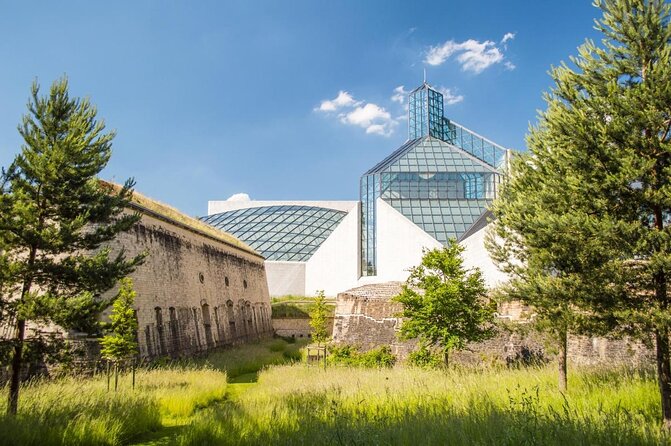
The final major change of mood comes at MUDAM, the Musée d’Art Moderne Grand-Duc Jean. The museum opened in summer 2006 on Kirchberg, outside the city center, and holds an internationally regarded modern art collection. Its inclusion shows that Luxembourg is not frozen in its medieval and fortress past.
The route’s full spread is both its strength and its challenge. You get a wide view of Luxembourg City, from the Jesuit cathedral and old squares to modern art and public transport links. The tradeoff is that the complete trail may feel long if you have young children or only a short free period.
How much value do you get for $37.33?
At $37.33 per group of up to six, this is good value for a family or group of friends. Six people sharing the fee pay only a little over six dollars each, while two people pay more per person but still receive a private activity rather than joining a larger group.
The price includes the online app and the city trail. It does not include a smartphone or mobile data, so you need to bring both. That cost is easy to overlook, especially if your phone plan charges for data abroad.
The value depends on how you like to sightsee. A traditional guided tour gives you a person who can answer questions and adjust the story in real time. This game gives you privacy, flexibility, and a reason to interact with the city. If you prefer an independent visit, the format is appealing. If you want detailed commentary at every stop, it may feel limited.
The private setup is particularly useful for families and friends. You can stop when you like, settle disagreements about answers, and choose whether to compete. There is no pressure from another group waiting behind you.
Who should choose this experience?
I would recommend it most strongly to:
- Families with older children who enjoy puzzles and outdoor activities
- Friends who want a shared challenge rather than a standard walking tour
- First-time visitors who want to cover many major sights
- Independent sightseers who dislike fixed departure times
- Small groups looking for a low-cost private activity
It may be less suitable if you have mobility concerns, very young children, or only one free hour. The activity is described as suitable for most people and user-friendly for people with hearing impairments, but the route still covers upper and lower parts of the city. The supplied information does not provide detailed accessibility notes for every street, stairway, or stop.
Service animals are allowed, and the start is near public transportation. The experience runs every day from midnight to 11:59 p.m. during the stated operating period, giving you unusual freedom over timing. Since the exact start time is not fixed in the details provided, confirm the time shown when you book.
Practical tips for making the game work
Bring a charged smartphone and make sure you have mobile data. The phone is not an optional extra here. It is the tool that delivers the assignments and keeps the activity moving.
Set aside at least three hours if you want to enjoy the route rather than hurry. You can complete it in about an hour and a half by moving quickly and choosing fewer stops, but the upper end of the time range is more realistic if you want views, pauses, and the lower city.
Use the flexibility wisely. If the route feels too long, skip locations that are farther away or choose your own path. The game does not need to become a test of endurance. The best experience is likely one where you solve enough assignments to keep the group interested while leaving room for Luxembourg itself.
Book at least 24 hours before your planned start if you want the option of a full refund. Cancellation is free up to that point. Changes or cancellations within 24 hours are not accepted for a refund.
Should you book the Qula Luxembourg city trail?
Book it if you want a private, flexible way to see a lot of Luxembourg City and your group enjoys solving puzzles. The price is especially attractive for up to six people, and the route covers an unusually broad mix of sights, from Notre-Dame Cathedral and Place d’Armes to the Bock Casemates, Grund, the Chemin de la Corniche, and MUDAM.
Skip it if you need a short, gentle walk or want a live guide to explain every stop. The upper and lower city route can stretch toward four hours, and the experience requires your own phone and data.
For most small groups, this works best as an active introduction to Luxembourg rather than a complete history lesson. Keep the pace relaxed, skip a few distant stops if needed, and let the views and old quarters do some of the work.
FAQ
Where does the e-Scavenger Hunt Luxembourg start?
It starts at 9 Place d’Armes, 1136 Ville-Haute Luxembourg.
Where does the activity finish?
The activity ends back at the meeting point at Place d’Armes.
How long does the city trail take?
The estimated duration is two to four hours, with an average of about two and a half hours. Actual times can vary, with one reported completion taking about one and a half hours and another taking almost four hours.
How many people can join one group?
One group can include up to six people.
Is this a private activity?
Yes. Only your group participates.
What language is the activity offered in?
The activity is offered in English.
What is included in the price?
The price includes the online app used to play the game and the city trail for a team of up to six people.
Do I need to bring a smartphone?
Yes. A smartphone and data are not included, so you need to provide them yourself.
Is the activity available every day?
The stated opening hours run Monday through Sunday, from 12:00 a.m. to 11:59 p.m., during the listed operating period.
Can I cancel for a full refund?
Yes. You can cancel at least 24 hours before the experience start time for a full refund. Cancellations or changes made less than 24 hours before the start time are not refunded.
Just added around the world
- Vienna: Freud, Mozart & Beethoven Exploration Game★ 4.0 · 14 reviews
- e-Scavenger hunt Vienna: Explore the city at your own pace★ 3.5 · 2 reviews
- Mobile puzzle rally tour at the Vienna Central Cemetery★ 4.5 · 3 reviews
- Vienna Scavenger Hunt and Highlights Self Guided Audio Tour★ 4.5 · 13 reviews
- Vienna Highlights Self guided scavenger hunt and Walking Tour★ 4.0 · 5 reviews
- Digital puzzle tour with Marcus Aurelius’ order★ 5.0 · 5 reviews
- True Crime mobile puzzle rally Vienna★ 4.0 · 3 reviews
- The Vienna Augmented Reality Puzzle Rally★ 5.0 · 7 reviews
Scavenger Hunts, compared.


Amazing Cozumel Race: Small-Group Tour and Scavenger Hunt
Read our review →
An Epic Scavenger Hunt: New York City Central Park Adventure
Read our review →

Escaping and spying on the Berlin Wall Scavenger hunt
Read our review →