
Review · BANGKOK
Bangkok Chinatown: Self-Guided Mystery Puzzle Quest
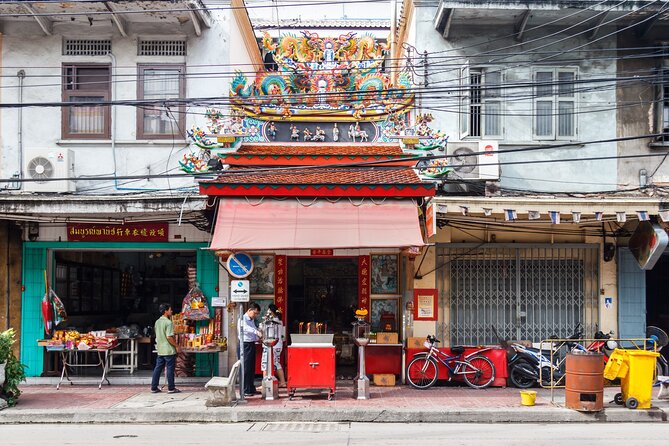
Old Bangkok rewards curious walkers. This self-guided Chinatown puzzle quest mixes a treasure hunt, outdoor escape game, and neighborhood tour into about 90 minutes. I like the freedom to start any time and pause whenever you need, and I like that the route points you toward old businesses, temples, markets, and local customs rather than offering only a list of famous sights. The low $6.99 price is another clear plus.
The catch is simple: you are on your own. One player reported confusing instructions and inaccurate Google Maps locations, eventually giving up. I would treat this as a playful phone-led adventure, not a polished guided tour, and allow extra time for finding the right entrances.
Key points at a glance

- Six Chinatown stops: The route includes the Temple of the Golden Buddha, old coffee and herbal drink shops, Chinese shrines, and small local temples.
- Phone-based play: The Questo app gives directions and puzzles, with each solved challenge revealing the next place and its story.
- Flexible timing: You can begin at any hour, stop for food or a break, and continue later.
- Low cost: At $6.99 per person, it offers a budget-friendly way to explore several landmarks.
- Private group activity: One person can buy access for the whole group, and each player can use a smartphone.
- Plan for navigation quirks: The experience depends on directions and location accuracy, so patience matters.
What kind of Bangkok experience is this?
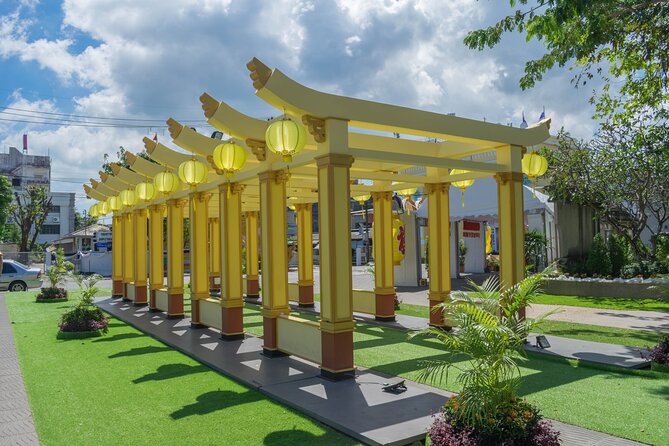
This is not a walking tour with a guide pointing out details as you go. It is a city game. You follow instructions on your phone, walk to a location, inspect the surroundings, and solve a question or challenge. The answer sends you onward and opens a short story about the place.
That format changes the pace. You are not simply looking at a temple or passing a shop. You are searching for a clue, reading signs, noticing details, and working with the people in your group. If you enjoy escape rooms, scavenger hunts, or solving small mysteries, the format should feel natural.
I also like the way the route uses ordinary Chinatown life. You visit places connected to herbal drinks, coffee, markets, Buddhist practice, and Chinese worship. That gives the experience more character than a route built only around major monuments.
Still, you need to accept a little uncertainty. The app provides step-by-step directions, but one reported experience found some instructions confusing and several locations inaccurate on Google Maps. You should not book this expecting a guide to rescue you if the route gets unclear.
More Puzzle Walks and Quests in the world:
- Fun, Flexible Treasure Hunt Around Manchester with Cryptic Clues & Hidden Gems
★ 5.0 · 253 reviews - Fun, Flexible Treasure Hunt Around York with Cryptic Clues & Hidden Gems
★ 5.0 · 248 reviews - Fun, Flexible Treasure Hunt Around Bath with Cryptic Clues & Hidden Gems
★ 5.0 · 208 reviews
Starting near Rong Muang
The stated starting point is in Rong Muang, Pathum Wan, Bangkok 10330. From there, the Questo app guides you toward the first location. The end point is listed at 586 Charoen Krung Road in Pom Prap Sattru Phai, with directions leading to a place described in the instructions as the Wedding store.
That wording may not be immediately helpful, so check the starting instructions before you set off. Keep your phone charged, download what you need, and read each direction carefully. The game can be played offline while you explore, which is useful if your connection becomes unreliable in crowded city streets.
The experience is available every day, around the clock. That is a real advantage in Bangkok. You can begin in the morning, avoid the hottest part of the day, or start later when Chinatown takes on a different mood. The stated duration is about one hour and 30 minutes, though puzzle-solving speed, food stops, and navigation problems may stretch that time.
Kan Kee Nam Tao Thong and the taste of old Chinatown
The first stop is Kan Kee Nam Tao Thong, a roughly century-old business known for Chinese herbal drinks. Many Chinatown businesses have been passed down through generations, and this shop gives the quest an early look at that family-run tradition.
Your task is to inspect the area and find the answer needed to continue. This is a useful part of the format because you are encouraged to look closely instead of walking past. Signs, lettering, displays, and small details become part of the game.
The shop is also a good reminder that Chinatown is not only about temples and grand facades. Food and drink businesses carry their own stories. If you want a quick taste of local life, this stop may be more revealing than another formal sightseeing point. The experience specifically encourages you to sample local drinks and food at shops popular with local people, though any purchase is your own expense.
Wat Traimit and the 5.5-tonne Golden Buddha

Wat Traimit is the route’s major landmark. The temple houses a seated Buddha statue made of gold, dating to the 13th century. The figure is nearly five meters high and weighs about 5.5 tonnes.
The temple is about 450 meters west of Hua Lamphong Railway Station, placing it in a part of Chinatown that is relatively easy to connect with public transport. Here, the puzzle sends you inside the surroundings to find a detail that advances the game. The challenge gives you a reason to study the site rather than simply take a photograph and move on.
This stop will likely feel more formal and monumental than the small shops on the route. Give yourself enough time to look around, follow any temple etiquette, and avoid rushing through the puzzle. The game does not replace a full temple visit, but it can make you pay attention to features you might otherwise miss.
More Self-Guided App Games in the world:
- Hamburg: Scavenger Hunt Self-Guided Tour for Children
★ 4.5 · 319 reviews - Dresden: Old Town Self-Guided Scavenger Hunt Tour
★ 4.5 · 151 reviews - Berlin: Self-Guided Family and School Class Scavenger Hunt
★ 4.6 · 128 reviews - Düsseldorf: Scavenger Hunt Self-Guided Tour
★ 4.6 · 127 reviews
Eiah-Sae coffee shop and a noisy family tradition
The Eiah-Sae coffee shop is almost 100 years old. It has passed through generations and keeps the same homey, noisy atmosphere that made it part of Chinatown life.
This is one of the most appealing stops for anyone who enjoys old cafés more than grand attractions. The setting gives you a break from temple architecture and brings you into a social space shaped by daily habits. The game asks you to search for an answer here, so you have a clear reason to examine the shop and its surroundings.
The instructions do not promise a reserved table, included drink, or included meal. Think of the coffee shop as a stop along the route, not a scheduled tasting. If you decide to order something, allow extra time and pay separately.
Wat Lokanukroh inside the Sampeng Market area
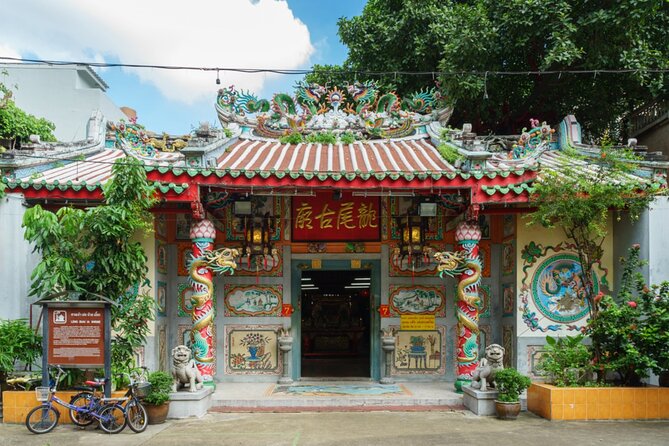
Wat Lokanukroh is described as one of Bangkok’s smallest temples. No monks live there, yet people still come to pray and hold ceremonies. Its location in the heart of Sampeng Market gives it an unusual setting.
This contrast is a major strength of the route. A small place of worship can sit beside the commercial activity of a market, and the game helps you notice that relationship. You are not being taken only to famous, carefully presented sights. You are seeing how religious practice fits into an active neighborhood.
The small scale may also make this stop harder to identify if you are relying only on a map pin. Pay close attention to the app’s wording and visual clues. The route asks you to find an answer at the location, so the surroundings matter as much as the temple name.
Leng Buai Ia Shrine and Chinese business traditions
Leng Buai Ia Shrine is an ancient Teochew shrine and is described as the oldest Chinese shrine in Thailand. It was built in 1658 during the Central Ayutthaya period.
Chinese merchants once came here for refuge and prayed for prosperity in their businesses. The shrine’s traditional Chinese architectural style adds another layer to the route, showing how commerce, migration, faith, and family life meet in Chinatown.
This is the type of stop that benefits from the puzzle format. Without a task, you might glance at the building and continue walking. With a challenge to solve, you look for specific details and connect the place to the short story provided by the app.
As with all religious sites, use respectful behavior. Keep your voice low, watch where you step, and follow any signs about appropriate conduct. The game is meant to guide your attention, not turn worship into a stage set.
The later Chinese Buddhist temple
The final temple stop began as Wat Leng Noei Yi in the 1870s and helped introduce Mahayana Buddhism in Bangkok. King Chulalongkorn later gave it its current name.
The temple is decorated with animal, floral, and Chinese dragon motifs. Its ordination hall contains a gold-colored Buddha. Compared with the smaller shrine and temple earlier in the route, this stop gives you a larger setting filled with decorative details.
The app again asks you to look around for the answer that leads to the next step. That means you should not rush directly to the exit after seeing the main hall. Take time to notice the motifs and the way the temple presents Chinese Buddhist traditions in Bangkok.
The supplied route information does not clearly identify this temple by its current name, so rely on the app’s exact directions rather than guessing from a general map search. This is another point where the experience may reward patience.
How the app-led puzzle system works
Each challenge points you to a location. Once there, you search your surroundings for the answer. A correct solution reveals the story of that place and provides directions to the next stop.
The structure gives your group a reason to cooperate. One person can read the clue, another can examine signs, and someone else can keep an eye on the route. Since the activity is private, only your group participates, with no strangers added to the game.
One person can buy access for everyone by selecting the total number of people. Each member can then play on a smartphone. Alternatively, each person can buy a separate ticket. At $6.99 per person, the group option can make this especially affordable for families or friends who already enjoy puzzle games.
The app is available 24 hours a day, seven days a week, throughout the year. It also allows breaks and later resumption. That flexibility matters in Bangkok, where heat, food stops, and sudden rain can change your walking plans.
Is $6.99 good value?
For $6.99, you are paying for a structured route, puzzle content, directions, and stories about several Chinatown locations. You are not paying for a guide, entrance fees, meals, drinks, or personal assistance.
I consider the price good if you want a low-cost activity that gives shape to independent sightseeing. The route visits enough varied places to make the fee feel reasonable: a famous Buddha, old businesses, a market temple, a historic shrine, and a Chinese Buddhist temple.
The value drops if you prefer detailed explanations from a person. A guide can answer follow-up questions, adjust the pace, explain etiquette, and solve navigation trouble. This game cannot do those things. It works best when you see the puzzle itself as the main attraction.
Group discounts are available, though the supplied details do not state the exact discount amount. Check the price for your group before paying.
Practical advice before you start
Bring a fully charged smartphone and read the app instructions closely. Offline play is included, so you do not need an internet connection while exploring, but your phone still needs enough battery to manage the game.
Allow more than the advertised 90 minutes if you want to stop for a drink, inspect the temples, or deal with a confusing direction. I would avoid planning a tight appointment immediately after the quest.
Use public transport if it suits your plans. The route is near public transportation, and Wat Traimit is about 450 meters from Hua Lamphong Railway Station. The stated start and end points are in different parts of the wider Chinatown area, so check the full route before deciding how to connect it with the rest of your day.
This is suitable for most people, and service animals are allowed. It is also a private activity, so your group can set its own pace. Still, the experience involves walking between several locations and finding clues in public spaces.
Who should book this Chinatown quest?
I would recommend it to independent visitors who like solving problems, exploring on foot, and finding neighborhood details without a guide. It is a particularly good fit for friends, couples, and families who enjoy working together.
It also suits repeat visitors who have already seen Bangkok’s major sights and want a different way to approach Chinatown. The old coffee shop, herbal drink business, small temple, and shrine give the route a local focus.
I would be cautious if you dislike smartphone activities or become frustrated when directions are not exact. The reported problems with confusing instructions and inaccurate Google Maps locations are important. You may need to compare the app’s directions with what you see on the street, and you should be willing to ask for help or retrace your steps.
Free cancellation is available if you cancel at least 24 hours before the scheduled start. Cancellations inside that window are not refunded, and changes are not accepted within 24 hours.
Should you book it?
Book this experience if you want an inexpensive, flexible way to explore Chinatown through small challenges rather than a standard sightseeing walk. The best parts are the unusual stops, the old businesses, the temples, and the freedom to pause.
Skip it if you want a person-led tour with guaranteed navigation and detailed explanations. For everyone else, $6.99 is a modest gamble, provided you bring patience, a charged phone, and enough spare time for the occasional wrong turn.
FAQ
How long does the Bangkok Chinatown puzzle quest take?
The estimated duration is about one hour and 30 minutes.
How much does the experience cost?
The listed price is $6.99 per person.
Is a tour guide included?
No. The experience is self-guided through the Questo app, and no physical guide is included.
Can I start at any time?
Yes. The activity is available 24 hours a day, every day of the year.
Can I take a break during the quest?
Yes. You can pause at any time and resume later.
Do I need an internet connection while playing?
No. The experience can be played offline while you explore.
Where does the experience start?
The stated starting point is Rong Muang, Pathum Wan, Bangkok 10330, Thailand.
Where does the experience end?
The listed end point is 586 Charoen Krung Road in Khwaeng Pom Prap, Khet Pom Prap Sattru Phai, Bangkok.
Can one person buy tickets for a whole group?
Yes. One person can select the total number of people and purchase access for the group. Each group member can play on a smartphone.
Can I cancel for a full refund?
Yes, if you cancel at least 24 hours before the scheduled start time. Cancellations made less than 24 hours in advance are not refunded.
Just added around the world
- Vienna: Freud, Mozart & Beethoven Exploration Game★ 4.0 · 14 reviews
- Mobile puzzle rally tour at the Vienna Central Cemetery★ 4.5 · 3 reviews
- Vienna Scavenger Hunt and Highlights Self Guided Audio Tour★ 4.5 · 13 reviews
- e-Scavenger hunt Vienna: Explore the city at your own pace★ 3.5 · 2 reviews
- Vienna Highlights Self guided scavenger hunt and Walking Tour★ 4.0 · 5 reviews
- Digital puzzle tour with Marcus Aurelius’ order★ 5.0 · 5 reviews
- True Crime mobile puzzle rally Vienna★ 4.0 · 3 reviews
- The Vienna Augmented Reality Puzzle Rally★ 5.0 · 7 reviews
Puzzle Walks and Quests, compared.

Fun, Flexible Treasure Hunt Around Manchester with Cryptic Clues & Hidden Gems
Read our review →
Fun, Flexible Treasure Hunt Around York with Cryptic Clues & Hidden Gems
Read our review →
Fun, Flexible Treasure Hunt Around Bath with Cryptic Clues & Hidden Gems
Read our review →
Fun, Flexible Treasure Hunt Around Oxford with Cryptic Clues & Hidden Gems
Read our review →
Fun, Flexible Treasure Hunt Around Birmingham with Cryptic Clues & Hidden Gems
Read our review →
Fun, Flexible Treasure Hunt Around Chester with Cryptic Clues & Hidden Gems
Read our review →
Fun, Flexible Treasure Hunt Around Brighton with Cryptic Clues & Hidden Gems
Read our review →
Fun, Flexible Treasure Hunt Around Cambridge with Cryptic Clues & Hidden Gems
Read our review →Browse the lists this game appears in