
Review · ILE-DE-FRANCE
Paris: escape game in Montmartre
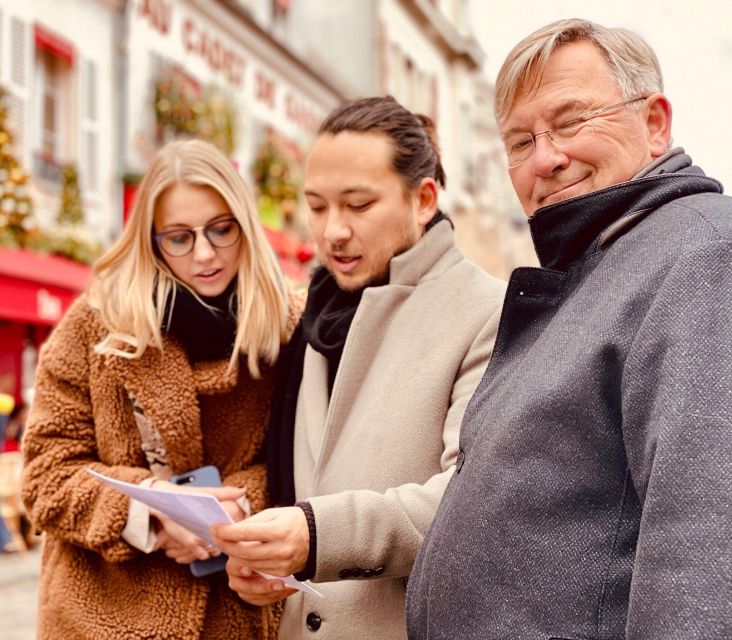
Montmartre turns sightseeing into a puzzle. This outdoor escape game combines 15 riddles with a walking tour of the hill’s best-known spots, so you are not stuck in a room staring at a lock. I like the active format and the way families can play child or adult versions together. The main caution is that the cultural commentary and promised rewards may not feel equally strong on every departure.
You meet a costumed game master in a bowler hat near the upper funicular exit, then work through clues around Sacré-Coeur, Place du Tertre, and nearby streets. I also like the friendly energy reported with guides such as Nicolas and Sacha. At $46 per person, this is good value if you want a playful, guided introduction to Montmartre, but less so if you expect a full traditional walking tour at every stop.
Key points to know before booking
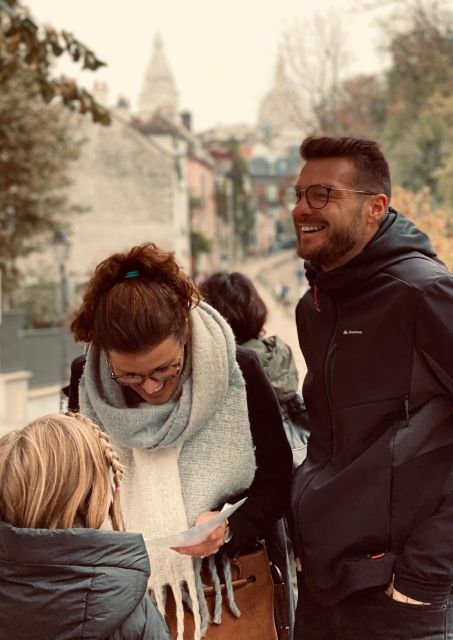
- Fifteen outdoor stages: Each stop gives you a riddle and one letter toward a mystery sentence.
- A moving tour of Montmartre: The route includes Sacré-Coeur, Place du Tertre, and a finish at Place Émile Goudeau.
- Family-friendly design: Children’s and adult versions make it easier for different ages to play together.
- Costumed game master: Look for the guide in a bowler hat near the upper funicular exit on Rue Saint Eleuthere.
- French reward at the finish: The advertised prize comes from a French master confectioner.
- Free souvenir photos: Professional photos are included, though one disappointed participant expected more group images.
What this Montmartre escape game is really like
This is not a standard guided walk with a guide talking while you follow. It is a two-hour outdoor game in which you solve a sequence of clues while moving through Montmartre.
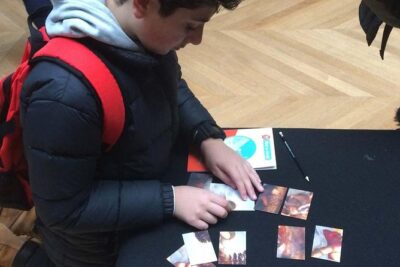
At each of the 15 stages, you face a riddle. Solving it gives you a letter. Those letters eventually form a mystery sentence, and finding the sentence means you win. The format gives you a reason to look closely at your surroundings instead of simply walking from one famous address to the next.
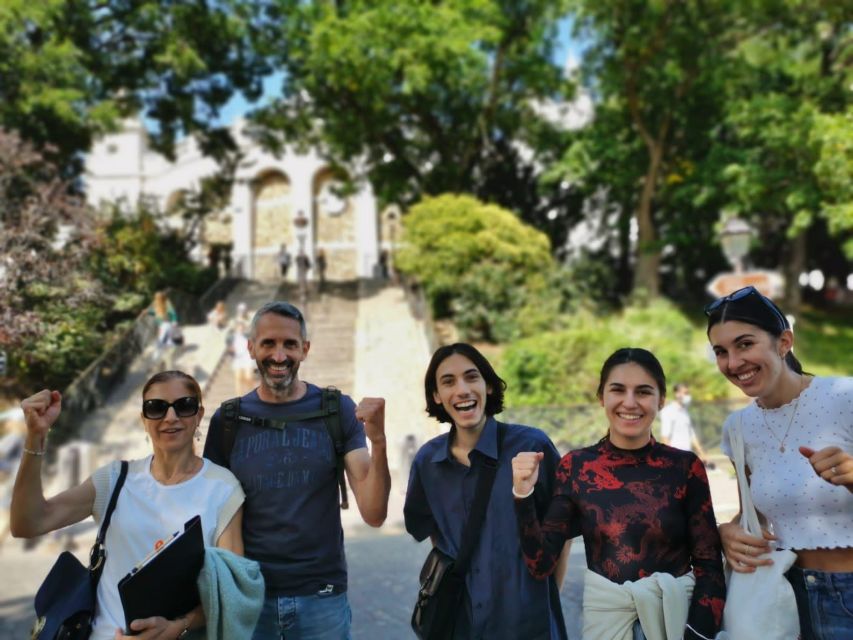
I like that the game keeps the whole group involved. Someone may spot a detail on a building, another person may work out the wordplay, and a child may be first to notice a clue. That shared effort is the point. You are laughing, searching, and making decisions together rather than listening quietly for two hours.
The experience is described as cultural as well as playful. The game master leads the route, helps with the puzzles, and shares anecdotes about Montmartre’s heritage. The balance can vary, however. One low-scoring account said the guide did not provide enough explanation at each stage and felt the activity was too basic for the price. That is useful to keep in mind: this is best treated as a sightseeing game with historical touches, not a detailed art or architecture seminar.
More Escape Games in Paris:
- Who Killed Victor ? Escape Game at Père Lachaise Cemetery
★ 4.8 · 258 reviews - Escape game in Montmartre
★ 5.0 · 247 reviews - Escape Hunt Paris, Escape Game
★ 4.5 · 122 reviews
Meeting the guide by the Montmartre funicular
The meeting point is on Rue Saint Eleuthere, 75018 Montmartre, in front of the upper exit of the funicular. Look for the guide wearing a bowler hat. The stated starting options are both connected with the funicular, and the exact meeting place can vary with the option booked, so check your confirmation carefully.
This location makes practical sense. The funicular brings you directly up the steep hill, and starting near its upper station saves you the climb at the beginning. Montmartre is hilly, and an activity that asks you to solve clues while walking is easier when you are not already tired from a long uphill approach.
The costumed guide gives the outing a clear sense of occasion. You know who to find, and the character helps separate this activity from an ordinary neighborhood walk. Recent guide names connected with particularly warm feedback include Nicolas and Sacha. The quality of the experience depends heavily on this person, since the game master is both host and source of the local stories.
The guide’s role is also practical. If your team gets stuck, you can ask for help rather than losing time on one stubborn puzzle. That matters with a fixed two-hour schedule. You are meant to keep moving and enjoy the route, not prove that your group can solve every clue without assistance.
Sacré-Coeur gives the game a grand opening
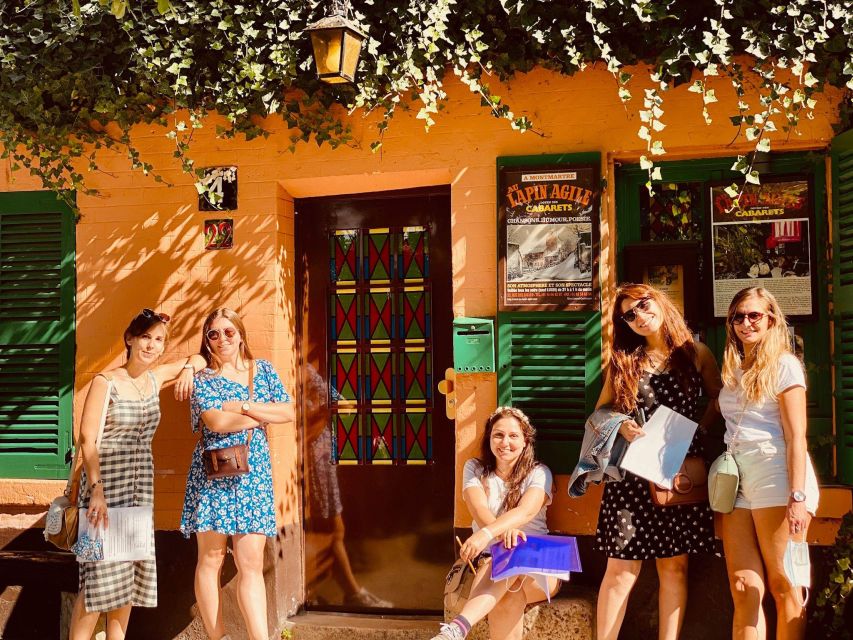
The route begins around the Sacré-Coeur Basilica, one of Montmartre’s most recognizable sights. You get the broad visual introduction first: the basilica, the hill, and the sense that you are starting in one of Paris’s most famous quarters.
The first puzzle helps set the rhythm. You receive a clue, discuss possible answers, and work toward the letter for the final sentence. If your group includes children, this early stage gives younger players a chance to understand how the game works before the clues become more familiar or the route more crowded.
Sacré-Coeur is also a good place for the guide to add context. The activity promises information about Montmartre heritage, but you should expect short explanations woven into the game rather than a long talk. That suits people who lose interest during formal tours, but it may disappoint you if you want detailed information about the basilica itself.
The outdoor setting is a plus here. You are not confined to a game room with themed furniture. The real streets and landmarks provide the setting, and the sightseeing is built into the challenge. At the same time, you must share public space with other people, and solving a puzzle near a major sight can take a little patience.
Place du Tertre adds art, crowds, and more clues
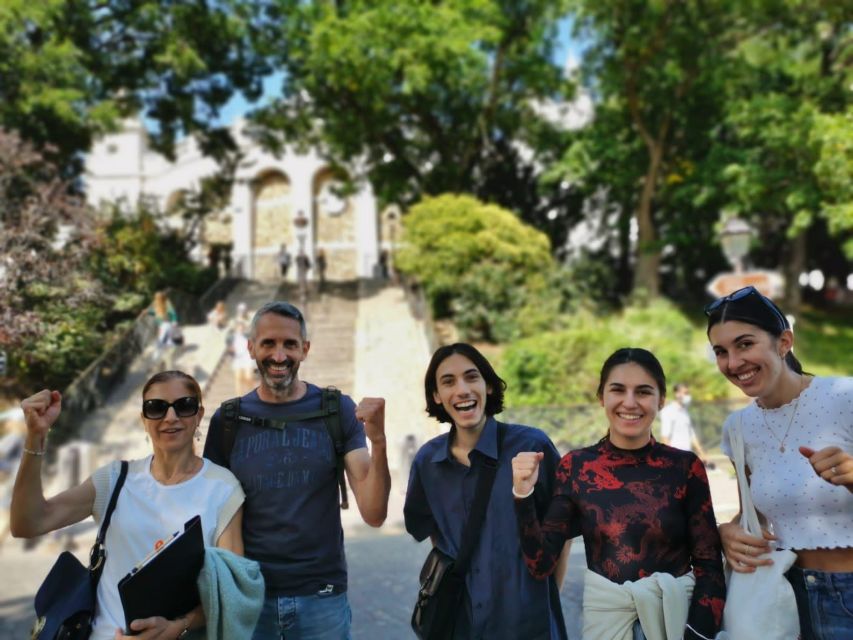
From Sacré-Coeur, the game continues to Place du Tertre. This square is one of the signature stops in Montmartre, known for its artists, easels, and strong connection to the neighborhood’s creative identity.
It is a natural setting for an activity built around observation. Your group is already looking for letters, details, and answers, and the square gives you plenty to examine. The stop also helps connect the puzzle to the character of Montmartre rather than making the game feel like a collection of random tasks.
The drawback is the same feature that makes Place du Tertre appealing: it can be busy. You may need to stay close to the guide and keep your attention on the group. A crowded square is not the easiest place to spread out papers or debate a clue, so this part rewards a team that can make decisions quickly.
The guide’s anecdotes matter most at a stop like this. A few well-chosen stories can turn a pretty square into a meaningful part of the route. The positive feedback about friendly guides, including Nicolas and Sacha, suggests that the personal side of the experience is an important part of its appeal. Still, the mixed account about limited commentary means you should not book this expecting a lecture at every stage.
Same place, a different puzzle:
- Paris: Palais Garnier Mystery Game with Entry Ticket
★ 4.3 · 400 reviews - Escape game on the Île de la Cité
★ 5.0 · 112 reviews - Romantic Montmartre: Paris Lost Lovers Exploration Game and Tour
★ 4.5 · 107 reviews - Escape Game in the Covered Passages in Paris
★ 5.0 · 79 reviews
Fifteen stages keep the two hours moving

The central strength of the format is its structure. Fifteen stages break the outing into small goals, and each solved riddle produces a letter. You always have a next task, which prevents the walk from becoming a simple procession behind a guide.
The mystery sentence gives the activity a clear ending. You are not just collecting points or checking off sights. You are building toward an answer, and the final solution gives the group a shared sense of achievement.
I find this especially useful for families and mixed-age groups. Adults can help with reading, wordplay, and local context, while children can search for clues and contribute guesses. The activity is designed with separate children’s and adult versions, so the challenge can better match the people in your group.
The game also suits friends who want something more active than a museum visit. You are walking, looking around, talking, and solving. It has enough structure to avoid aimless wandering, but enough room for your group to feel involved.
The format will not suit everyone. If you prefer to stop for photographs whenever you like, browse every shop, or listen to long explanations, the timed puzzle route may feel restrictive. Your attention is split between the sights and the next answer. That is the tradeoff for the playful format.
The finish at Place Émile Goudeau
The route ends at Place Émile Goudeau. Reaching the final sentence completes the game, and the prize is described as a French gift made by a master confectioner.
That reward is a pleasant touch because it fits the setting. You are not handed a generic plastic souvenir after solving the puzzle. A small French confectionery gift gives the finish a local flavor and makes the win feel shared by the whole group.
There is one important point to clarify before you pay. A negative account said the promised confectioner reward was not provided and felt the included photos were not what had been expected. The advertised package includes rewards and free memory photos, but the delivery may not always match every participant’s expectations. If these extras are a major reason you are booking, confirm the current details with the operator.
Place Émile Goudeau also gives the activity a quieter endpoint than the opening at Sacré-Coeur or the busy middle around Place du Tertre. You can finish the final puzzle, receive the reward, and mark the end of the route without needing to return to the starting point.
How much value do you get for $46?
At $46 per person, the price covers more than a self-guided puzzle. You are paying for a two-hour activity, a live guide, the game itself, animation, free memory photos, and a reward. You also get a route that links several notable parts of Montmartre.
I consider that fair for a group that wants entertainment and sightseeing in one booking. A family may get more value here than from a conventional walking tour if the children enjoy solving clues. Friends may also find the price reasonable because the activity gives the group something to do together instead of simply following a guide.
The calculation changes if you mainly want historical detail. A traditional specialist walking tour may provide more facts and more time at each sight. This experience puts the puzzles first, with local stories supporting the game.
The feedback is mostly positive, with an overall rating of 4.6 from 18 ratings. The strongest praise focuses on the guides, the family atmosphere, and the clever mix of riddles and sights. One French participant called the activity poorly matched to its description and too cheap in quality for the cost. That gap suggests the experience is quite dependent on the game master and on your expectations.
Photos, language, and group atmosphere
The activity includes professional photos sent to you for free. That is useful because group activities often leave one person out of the pictures. Still, do not assume you will receive a large set of posed group photographs. One disappointed participant expected several group shots and felt the photo offering was less generous than implied.
The game is available in English and French. That makes it workable for mixed-language groups, though your booking should match the language you need.
The social side is one of the best reasons to choose this outing. You are encouraged to search together, laugh at wrong answers, and celebrate the final sentence. A family can divide up the clues, while a group of friends can turn the activity into a light competition without needing a formal prize system.
The game master also helps create the mood. A warm host can make a simple clue feel fun, while a distracted guide can weaken the whole experience. One positive account praised the animation and guide, while another noted that the guide seemed to spend time on a phone between puzzles. That is a small detail, but it shows how much the host affects your impression.
Who should book this Montmartre game?
I would choose this for:
- Families wanting a sightseeing activity that keeps children involved
- Friends who enjoy riddles, word games, and light teamwork
- First-time visitors who want an introduction to Montmartre without a formal lecture
- Couples or small groups looking for a two-hour outdoor activity
- People who prefer active sightseeing to sitting in a museum
I would think twice if you want a detailed architectural tour, extensive time inside Sacré-Coeur, or a completely flexible route. The game asks you to stay with the group and follow its sequence.
You should also be comfortable walking around a hilltop district for two hours. The funicular helps with the initial climb, but the activity itself takes place outdoors and moves between several locations. Wear comfortable shoes and come ready to pay attention to both the streets and the clues.
My verdict on the Montmartre escape game
Book it if your ideal Montmartre outing mixes famous sights, short local stories, and a team challenge. The 15-stage design is easy to understand, the family versions are useful, and the costumed game master gives the route personality. The reward and free photos add value when delivered as described.
Do not book it as a replacement for a serious history tour. The cultural content may be brief, and the experience appears to depend on the guide assigned to your group. Before booking, make sure the current details about the French confectionery prize and souvenir photos match what you want.
For families, friends, and anyone who likes solving things while walking, this is a lively way to see Montmartre. For a quiet, fact-heavy tour, choose another format.
FAQ
Where does the Montmartre escape game meet?
The stated meeting point is on Rue Saint Eleuthere, 75018 Montmartre, in front of the upper exit of the funicular. The meeting point can vary with the option booked.
How long does the activity last?
The escape game lasts two hours.
Which Montmartre sights are included?
The route includes the Sacré-Coeur Basilica and Place du Tertre, then finishes at Place Émile Goudeau.
How many puzzle stages are there?
There are 15 stages. Each stage has a riddle that gives you one letter for the final mystery sentence.
Is the activity available in English?
Yes. The live tour guide is available in English and French.
Is this suitable for children?
Yes. The activity has children’s and adult versions, and it is designed as a family activity.
What is included in the price?
The package includes the escape game, guided tour, animation, free memory photos, and rewards described as gifts made by a French master confectioner.
Just added around Paris
- Treasure Hunt in Paris – From the Panthéon to the Louvre★ 5.0 · 17 reviews
- Paris Covered Passages Treasure Hunt — Self-guided Game★ 5.0 · 5 reviews
- Paris Treasure Hunt to the Auction Rooms★ 5.0 · 2 reviews
- Marais Treasure Hunt & Discovery — Self-guided Paris Game★ 5.0 · 3 reviews
- Private Scavenger Hunt in Montmartre★ 5.0 · 2 reviews
- Paris WWII: Occupation & Liberation Exploration Game and Tour★ 5.0 · 2 reviews
- Montmartre Treasure Hunt — Fun and Cultural Investigation★ 5.0 · 6 reviews
- Paris Scavenger Hunt and Highlights Self-Guided Tour★ 3.5 · 5 reviews
Paris Escape Games, compared.


Who Killed Victor ? Escape Game at Père Lachaise Cemetery
Read our review →

Romantic Montmartre: Paris Lost Lovers Exploration Game and Tour
Read our review →
Browse the lists this game appears in