
Review · VIENNA
Private City Discovery walk – Historical Treasure hunt
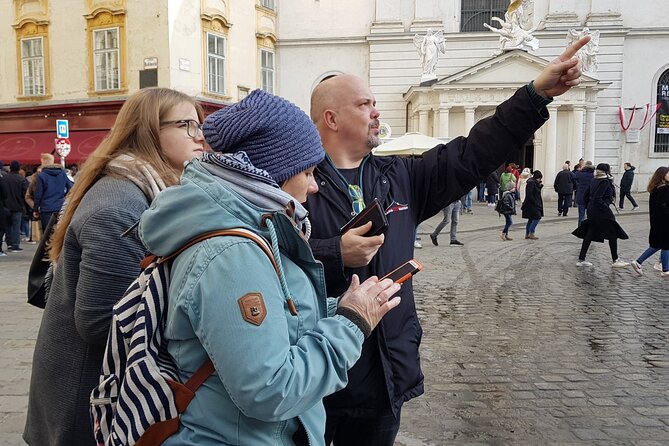
Vienna becomes a game board. This private treasure hunt turns the Inner City into an active puzzle, sending you through old squares, churches, lanes, and former Jewish quarter streets as a smartphone character delivers riddles and tasks. I like the mix of self-guided discovery and live support, and I like that the challenges give you a reason to notice details you might otherwise walk past.
The route includes major sights such as Stephansplatz and Michaelerplatz, but it also leads you toward less obvious corners and stories. A host meets you at the start, explains the rules, and helps with the first tasks. The main consideration is pace: the hunt can feel long for young children or tiring in hot weather, and one family found the Vienna version more demanding than its Prague counterpart.
Key points at a glance
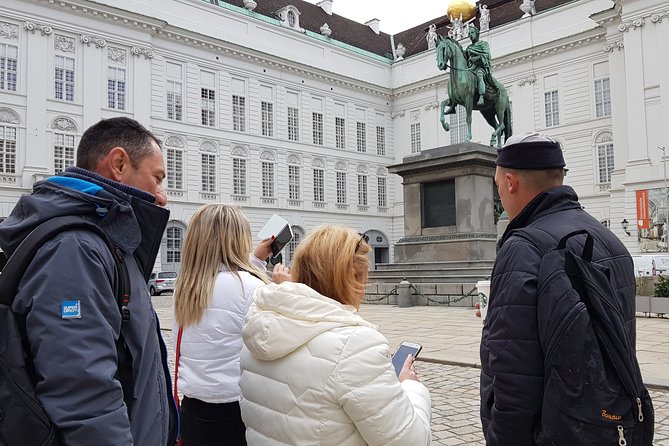
- Sixteen stops across Vienna’s Inner City: The route includes Stephansplatz, Michaelerplatz, Minoriten Church, Hoher Markt, the Jewish quarter, and Albertinaplatz.
- A host starts you off: You meet at Das Michaeler Bierhaus, receive instructions and materials, then continue with smartphone-led clues.
- Teamwork matters more than history knowledge: You need basic orientation, attention, logic, and cooperation, not advance study.
- Private format for your group: Your party plays together, with bookings ranging from two to 30 people.
- Strong choice for families and work groups: The tasks encourage conversation, competition, and shared problem-solving.
- Plan for three hours on foot: Wear comfortable shoes, carry a charged smartphone, and be ready for changing weather.
Starting at Michaelerplatz with a smartphone guide
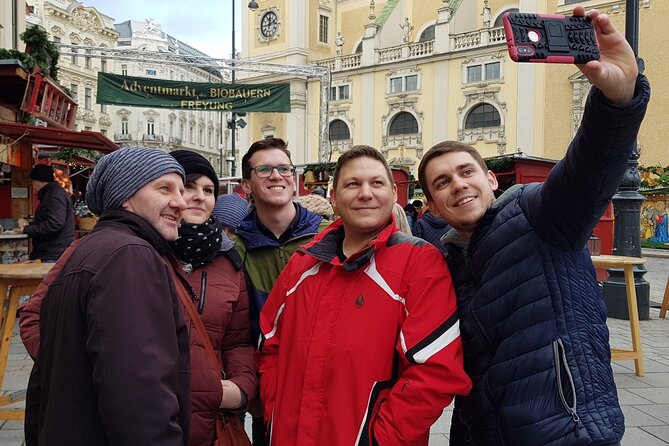
Your meeting point is Das Michaeler Bierhaus at Reitschulgasse 4, in Vienna’s 1010 district. That puts you near the Hofburg area and the heart of the Inner City, a sensible place to begin a walking game built around imperial Vienna.
The host greets your group and explains how the hunt works. You are not simply handed a map and sent off. The host accompanies you through the first couple of tasks, which helps you understand the rhythm before the smartphone takes over.
Once the game begins, a historical character sends the opening riddle to your phone. That clue points you toward the first location. After you arrive, the next challenge appears. Complete it, then receive a story connected with the place before moving on.
This structure gives the walk a useful rhythm: clue, location, task, story, then the next clue. You are not trying to absorb a long lecture while standing in a crowd. You learn a small piece of Vienna because you have just solved something connected to it.
You need one fully charged smartphone per team. The supplied information does not state that each participant needs a phone, so one device should be enough for a team. Still, I would charge it fully before meeting the host. A dead battery could bring an otherwise clever city game to a sudden stop.
More Treasure Hunts in Austria:
- Hamburg: Treasure Hunt Game through HafenCity
★ 4.7 · 364 reviews - Málaga: Private Sightseeing Treasure Hunt
★ 4.8 · 297 reviews - Fun, Flexible Treasure Hunt Around Manchester with Cryptic Clues & Hidden Gems
★ 5.0 · 253 reviews
Sixteen stops through the Inner City
The route has 16 stops, though only several are named in the available details. That means you should expect a broad walk through central Vienna rather than a short activity based around one square.
Michaelerplatz
Michaelerplatz is both the meeting area and one of the listed stops. It sits beside the Hofburg, so it gives the game a grand opening, with imperial architecture and major city sights close at hand.
The value here is not only the setting. A puzzle makes you examine your surroundings with purpose. Instead of taking a quick photograph and moving on, you may need to identify a detail, interpret a clue, or complete a funny task connected to the location.
Stephansplatz
Stephansplatz is Vienna’s central cathedral square and one of the route’s major landmarks. It is the sort of place many people visit quickly, often focusing on the cathedral before heading elsewhere.
A challenge here can help break that routine. You work as a group, compare ideas, and look more closely at the square. The game does not require specialist knowledge, so you are not expected to identify architectural terms or remember dates from a guidebook.
The practical issue is crowds. A central square can be busy, and your group may need to stay alert while reading the phone and watching where you walk. Keep the device in hand only when needed, then look up and enjoy the place.
More History Walks in Austria:
- The Anatomist – Award Winning Historical Escape Room Experience
★ 5.0 · 151 reviews - Private city discovery tour – A Historical Treasure Hunt
★ 5.0 · 146 reviews - Queer Lisbon – A Treasure Hunt in LGBT History
★ 5.0 · 71 reviews - Fort Worth Stockyards History, Food, and Puzzle Tour
★ 5.0 · 38 reviews
Minoriten Church
Minoriten Church adds a quieter religious and architectural stop to the route. It gives the hunt a different mood from the larger public squares.
The game’s story element matters here. After solving a task, you learn something tied to the place, so the church becomes more than another waypoint. The exact challenge is not provided, but you should expect the same pattern of clue, task, and historical explanation.
Hoher Markt
Hoher Markt is one of Vienna’s older central squares and another named stop. It helps show how the hunt shifts between famous sights and places with a more local street feel.
This is where the format works well for groups. One person may spot a clue, another may make sense of the wording, and someone else may notice the detail that confirms the answer. The activity rewards cooperation rather than a single person racing ahead with all the answers.
Vienna’s Jewish quarter
The route also includes the Jewish quarter, bringing a serious layer to an otherwise playful activity. This part of the walk offers a chance to connect streets and buildings with Vienna’s Jewish past.
You should approach this stop with attention. The funny challenges may keep the energy light, but the stories can point toward difficult parts of the city’s past. That contrast is useful. A city hunt should not reduce Vienna to palaces and picture-perfect squares.
The supplied details do not identify the exact sites or explain how long the group spends here. For that reason, I would treat the stop as an introduction rather than a full study of Jewish Vienna. If this subject is a main interest, plan a separate museum visit or dedicated walking tour.
Albertinaplatz
Albertinaplatz gives the route another prominent Inner City setting. It is a useful late-stage stop because the group has had time to settle into the game and work together.
By this point, the activity may feel less like a sightseeing tour and more like a shared mission. That is its appeal for friends, families, and office groups. You are collecting memories through small wins, wrong turns, photographs, and jokes, not just listening to facts.
How the clues and challenges work
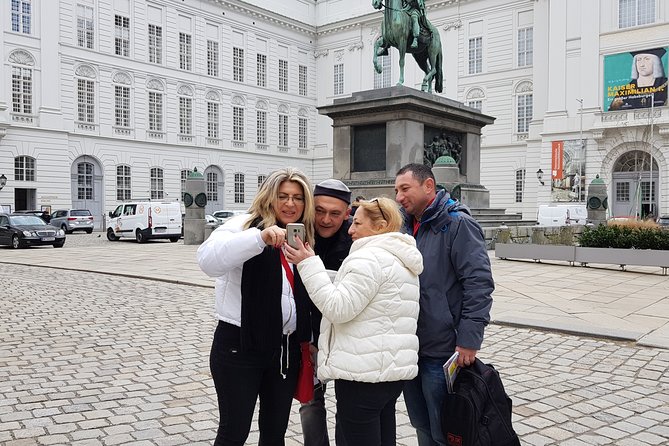
The activity does not demand prior knowledge of Vienna. You need basic orientation, careful observation, logic, and teamwork. That makes it easier for a mixed group, especially when some people know the city and others are visiting for the first time.
The smartphone character guides you from one place to the next. At each stop, the task appears after you arrive, followed by a story about the location. This keeps the route interactive and prevents the sightseeing from becoming a simple list of landmarks.
The challenges can include funny tasks, photographs, and videos. That detail matters for groups. A business team may use the game to get colleagues talking, while friends can enjoy the competitive side without needing a formal quizmaster at every corner.
The activity has been used successfully for large group events, including a gathering with eight competitive teams across the city and a business group of about 35 people. The standard booking information says a maximum of 30 people can be included in one booking, so larger groups may need separate arrangements.
Do not expect a quiet, private walk in the traditional sense. It is private because only your group participates, but the game itself asks you to communicate, make decisions, and sometimes perform a silly task in public. That is a plus for outgoing groups and a possible drawback for anyone who dislikes attention.
Why the live host still matters
At first glance, a phone-led activity might seem to remove the need for a host. Here, the host has a useful job at the beginning. They explain the rules, provide what you need, and help you complete the first few tasks.
The human welcome also helps with practical questions. Shushan, one of the hosts associated with this experience, has been praised for being friendly, energetic, and helpful with Vienna tips beyond the game itself. That kind of local advice can be especially useful during a short stay.
The host may not walk the full route with you. The information says the host accompanies the group through the first tasks, after which the historical character guides you by smartphone. So you get an introduction and a safety net without having a guide talk continuously for three hours.
That balance suits people who want structure but not a formal lecture. If you prefer a guide beside you explaining every building in detail, this is not the right format. If you like solving your way through a city, the design makes more sense.
Is three hours and $34.84 good value?
The price is $34.84 per person, with group discounts available. For roughly three hours, that is a fair price if you value an organized route, live support at the start, interactive tasks, and stories tied to 16 stops.
You are not paying for entry to a major attraction. The listed admission ticket is free, and the value comes from the game design rather than a museum ticket or a meal. Think of it as a structured walking activity with entertainment built in.
The price becomes more attractive for groups that might otherwise need to plan their own route and activities. A family can keep children involved, friends can add friendly competition, and a company can use the hunt as a team exercise.
For a couple, the cost is still reasonable if you enjoy puzzles. For someone who wants a traditional historical tour, it may feel less worthwhile because the storytelling comes in short pieces after each task. You are paying for participation, not an expert lecture.
The group discount may also change the calculation for larger parties. Check the final rate at booking, since the supplied information does not give the discount amount.
Family, friends, and company groups
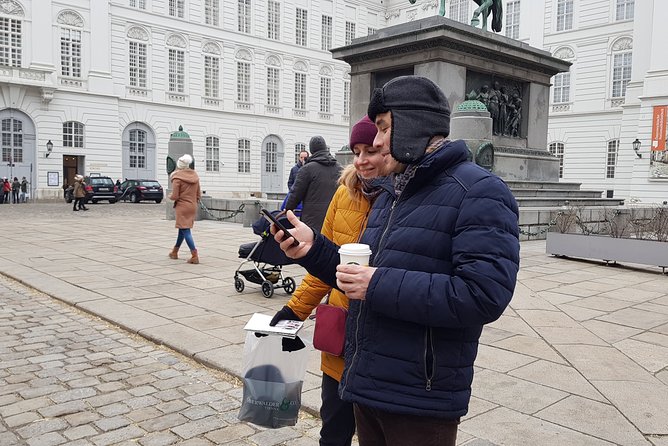
This is a flexible activity, but the best audience is clear. I would recommend it most strongly for:
- Families who need a reason for children to keep walking
- Friends who enjoy puzzles, photos, and competition
- School or youth groups with adult supervision
- Companies planning a relaxed team-building event
- First-time visitors who want a route through central Vienna
One family used the hunt during a first visit and found that the children stayed interested even when the walk became challenging. The 8-year-old needed breaks during the August heat, but the host allowed the group to pause as needed. That suggests the format can work with children, provided you build in rest, water, and patience.
The Vienna hunt has also been described as longer and harder than the Prague version. That does not make it unsuitable for families, but it does mean you should consider the youngest participant before booking. A child who enjoys riddles may have a great time. A child who dislikes walking or waiting for adults to solve clues may lose interest.
For work groups, the activity has a strong practical benefit. The tasks create natural reasons to speak with colleagues you may not know well. Photo and video challenges can lower the awkwardness of standard team exercises, and the private format lets the organizer keep the group together.
Some groups have added a wine tasting break during the game. That was arranged for the event rather than listed as a standard feature, so do not assume it is included. Ask CityQuester if you want an added stop or a custom plan.
Weather, walking, and practical preparation
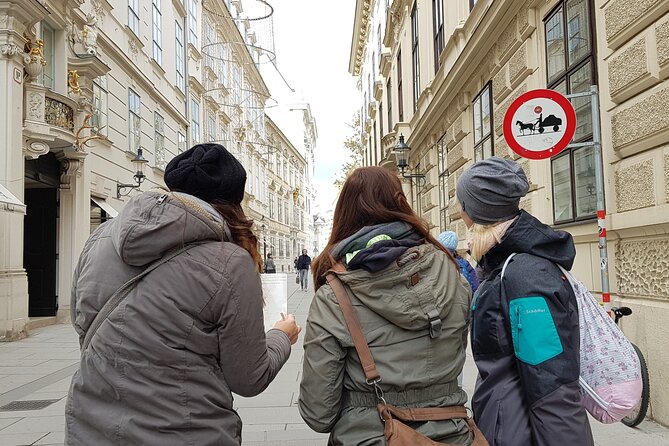
The activity is listed as operating in all weather conditions, with advice to dress appropriately and wear comfortable shoes. Elsewhere, the cancellation terms say the experience requires good weather and may be canceled in poor conditions. Those two details do not fully match, so check the weather policy with the provider if rain or severe conditions are forecast.
The route lasts about three hours and takes place outdoors in the city center. Wear shoes that you can walk in comfortably, not the pair chosen only for photographs. In hot weather, carry water and plan for breaks, especially with children.
The meeting point is near public transportation. The activity ends back at the same meeting point, which makes it easier to plan dinner, a museum visit, or a return to your hotel afterward.
The tour is offered in English and German, although the main feature information lists English. Ask about your preferred language at booking. One group received French translation support, but French is not presented as a standard language, so do not count on it without confirmation.
Bookings require at least two people and allow up to 30 people. Confirmation is due within 48 hours, subject to availability. You can cancel for a full refund up to 24 hours before the start time. Changes or cancellations inside that window are not refunded, and weather-related cancellations offer a new date or full refund.
The main strengths and limitations
The strongest part of the experience is its ability to turn sightseeing into a shared activity. The city provides the setting, but the puzzles give your group a reason to look, discuss, and keep moving.
The second strength is its range. You see well-known places such as Stephansplatz and Michaelerplatz, then shift toward sites such as Minoriten Church, Hoher Markt, the Jewish quarter, and Albertinaplatz. That mix gives the route more substance than a game built around one postcard view.
The main limitation is that the format may not suit everyone. You must use a phone, solve problems, walk for several hours, and sometimes complete playful tasks in public. If you prefer a calm guide-led stroll, this could feel busy or distracting.
The historical content also comes in brief portions. You learn stories connected with the stops, but the experience is not designed as a full historical course. Use it as an engaging first look at central Vienna, then choose a museum or specialist tour for subjects you want to study closely.
Should you book the Vienna treasure hunt?
Book it if you want a private, active way to see central Vienna and your group enjoys puzzles, teamwork, and a little silliness. It is especially useful for families who need to keep children involved, friends seeking a shared challenge, and companies planning a team-building afternoon.
Think twice if you dislike smartphone activities, public challenges, or walking for three hours. Also check the weather and language details before paying, since the operating information is not fully consistent.
At $34.84 per person, the experience offers good value for groups that would rather do something together than follow a standard sightseeing script. You will not see every major Vienna attraction, and you will not receive a long lecture at each stop. You will get a route, a game, local stories, and plenty of reasons to pay attention.
FAQ
Where does the Vienna treasure hunt begin?
It begins at Das Michaeler Bierhaus, Reitschulgasse 4, 1010 Vienna, Austria.
Where does the activity end?
The activity ends back at the meeting point.
How long does the treasure hunt last?
It lasts approximately three hours.
How many stops are included?
The route includes 16 stops. Named locations include Stephansplatz, Michaelerplatz, Minoriten Church, Hoher Markt, Vienna’s Jewish quarter, and Albertinaplatz.
How many people are required for a booking?
A minimum of two people is required per booking, and a maximum of 30 people can be included in one booking.
What do I need to bring?
You need one fully charged smartphone per team. You should also wear comfortable shoes and dress appropriately for the weather.
Just added around Austria
- Vienna: Freud, Mozart & Beethoven Exploration Game★ 4.0 · 14 reviews
- e-Scavenger hunt Vienna: Explore the city at your own pace★ 3.5 · 2 reviews
- Mobile puzzle rally tour at the Vienna Central Cemetery★ 4.5 · 3 reviews
- Vienna Scavenger Hunt and Highlights Self Guided Audio Tour★ 4.5 · 13 reviews
- Digital puzzle tour with Marcus Aurelius’ order★ 5.0 · 5 reviews
- True Crime mobile puzzle rally Vienna★ 4.0 · 3 reviews
- Vienna Highlights Self guided scavenger hunt and Walking Tour★ 4.0 · 5 reviews
- The Vienna Augmented Reality Puzzle Rally★ 5.0 · 7 reviews
Treasure Hunts, compared.


Fun, Flexible Treasure Hunt Around Manchester with Cryptic Clues & Hidden Gems
Read our review →
Fun, Flexible Treasure Hunt Around York with Cryptic Clues & Hidden Gems
Read our review →
Fun, Flexible Treasure Hunt Around Bath with Cryptic Clues & Hidden Gems
Read our review →York Treasure Hunt Adventure: The Mystery of The Gunpowder Snitch
Read our review →
Fun, Flexible Treasure Hunt Around Oxford with Cryptic Clues & Hidden Gems
Read our review →Browse the lists this game appears in