
Review · MONTREAL
Old Montreal self-guided walking tour & scavenger hunt
Old Montreal rewards curious walkers. This private, self-guided hunt gives you 30-plus challenges while leading you from Place Royale to Notre-Dame Basilica and the Old Port. I like the freedom to stop for coffee or photos, and I like that one price covers up to six people. The clues also point out places you might otherwise pass without noticing.
The main catch is the advertised two-hour length. The route covers a huge area, and one participant reported walking about seven miles while taking the day at a relaxed pace. You also need cellular internet, not just Wi-Fi, and a few directions may need a sharp eye.
Five things to know before you go
- It is a private hunt: Your group of up to six people completes the challenges without joining a larger walking party.
- The route is ambitious: Thirty-five stops range from Old Montreal to the Old Port, Habitat 67, and Parc de Dieppe.
- The phone setup matters: This uses a mobile website, not a downloadable app, and requires internet access on your phone.
- The clues add purpose: Questions and puzzles can draw your attention to buildings, monuments, and stories easy to miss on a casual stroll.
- Two hours is only a rough estimate: If you stop at cafés, shops, viewpoints, or museums, plan for much longer.
- The price depends on group size: At $44.85 for six people, it is inexpensive per person. For one or two people, a free map may offer better value.
How this Old Montreal scavenger hunt works
You begin in the western part of Old Montreal, near the Old Customs House and Place Royale. The opening challenge is designed to make you look closely, so do not expect a simple point-and-click walk from one obvious sign to the next.
The experience is self-guided. You use your own smartphone to access a mobile site, then solve challenges as you reach different places. There is no guide setting the pace, explaining every building, or waiting for late arrivals. That makes the outing private and flexible, but it also means you are responsible for reading the directions carefully.
The route has more than 30 challenges and 35 named stops. That is a lot for a two-hour walk. A brisk group that focuses only on the puzzles may finish more quickly, but a relaxed group will likely need much of a day. One useful way to treat the time estimate is as a starting window, not a strict promise.
Bring a charged phone and mobile data. Wi-Fi alone is not enough. Since the activity is delivered through a mobile website rather than an app, your group should also make sure everyone knows which phone will handle the hunt before arriving.
More Scavenger Hunts in Canada
- Montréal Scavenger Hunt and City Highlights Walking Tour
★ 4.5 · 25 reviews - Foxtrail Scavenger Hunt – Amphibious Trail Vancouver
★ 4.5 · 17 reviews - Victoria Scavenger Hunt and City Highlights Walking Tour
★ 5.0 · 17 reviews
Place Royale and Montreal’s early waterfront
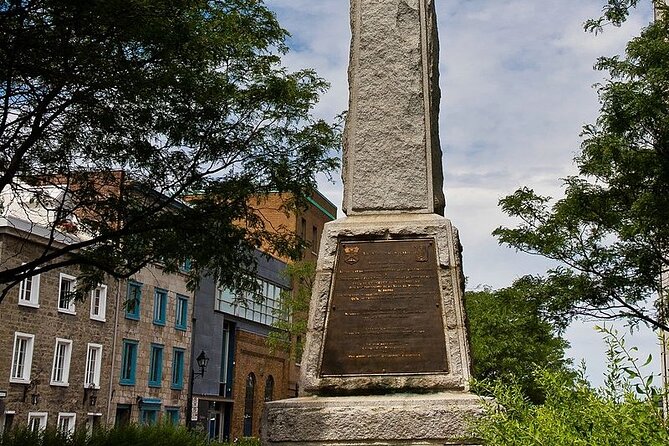
Place Royale is a fitting starting point. This historic square gives you a sense of Old Montreal as a port district, with old masonry buildings and a compact street plan that feels quite different from modern downtown.
The next stop, Pointe-a-Calliere, Montreal Archaeology and History Complex, adds useful context. Even if you do not pay to enter, the area helps explain why this part of the city matters. The experience takes you around the site rather than inside it, so you should not expect museum exhibits or admission to be included.
You then reach the National Historic Site of the Lachine Canal. This stop broadens the story beyond the old city core and introduces Montreal’s industrial and transportation past. The main benefit here is geographical: the hunt shows you how the historic district connects to the wider waterfront zone.
The Old Port, Habitat 67, and the river views
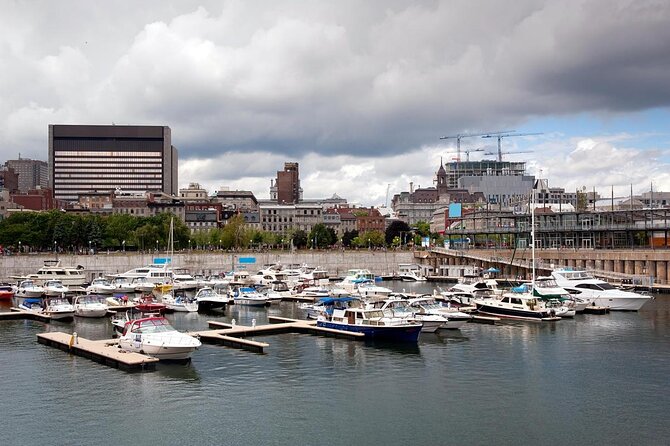
The Old Port section is one of the strongest parts of the route. You pass the Old Port of Montreal, Alexandra Pier, Parc Lineaire de la Commune, and the Montreal Science Centre. These stops place historic streets beside newer public spaces and attractions.
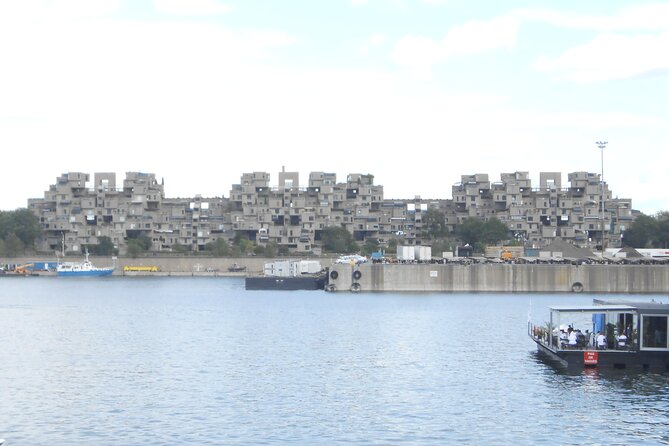
Habitat 67 gives the route a sharp change of mood. Its unusual stacked-home design is one of Montreal’s most recognizable modern sights. The hunt takes you to the location, but admission to attractions is not included, so you should think of this as an exterior-focused experience unless you choose to pay separately.
Parc de Dieppe appears later in the route and gives you another waterfront viewpoint. The wide sweep of the river can make this one of the better photo stops, though reaching it adds to the walking distance. If your group includes children or anyone who tires easily, you may want to treat the western waterfront section as optional rather than forcing every challenge into a short visit.
Piers, Bonsecours, and the Clock Tower
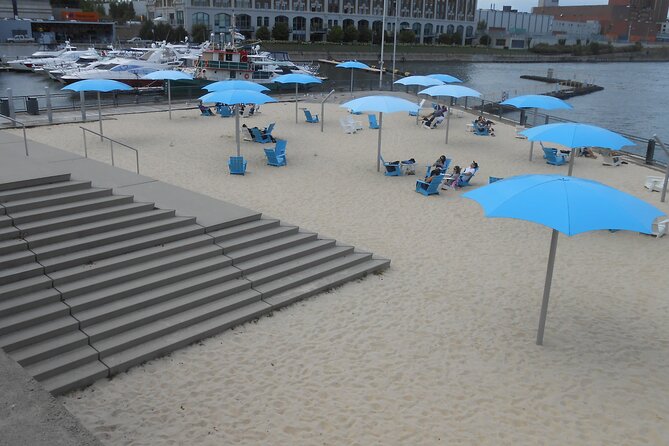
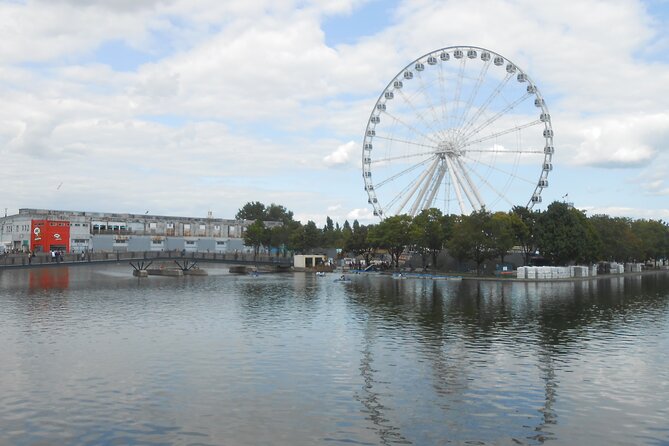
The route returns to the Old Port through Jacques-Cartier Pier, Terrasses Bonsecours, the La Grande Roue de Montreal, the Montreal Clock Tower, and Clock Tower Beach. These locations are easy to recognize, which helps when the clue wording feels less clear.
The Ferris wheel and clock tower create obvious landmarks, while the beach and piers give you open space after the tighter streets of Old Montreal. The tradeoff is distance. You are not simply circling one small neighborhood. You are covering the waterfront in sections, then heading back toward the historic core.
Sos Labyrinthe is another playful stop along this stretch. The scavenger hunt may use the site as a point of interest, but it does not include entry fees. Keep that distinction in mind if your group wants to visit attractions rather than simply locate them.
More Self-Guided App Games in Canada
- Street Art Exploration Game and Self-Guided Tour in Ottawa
★ 4.0 · 20 reviews - Vancouver Old Town Treasure Hunt: Self-Guided Walking Game
★ 4.5 · 12 reviews - Ottawa Mystery Quest: Self-Guided Detective Adventure
★ 4.0 · 11 reviews - Kingston Self-Guided Walking Tour & Scavenger hunt (updated)
★ 3.5 · 10 reviews
Notre-Dame-de-Bon-Secours and Bonsecours Market
Notre-Dame-de-Bon-Secours Chapel brings the route back to one of Old Montreal’s best-known historic religious buildings. Its exterior and location near the waterfront make it an important orientation point, even for people who are not planning to go inside.
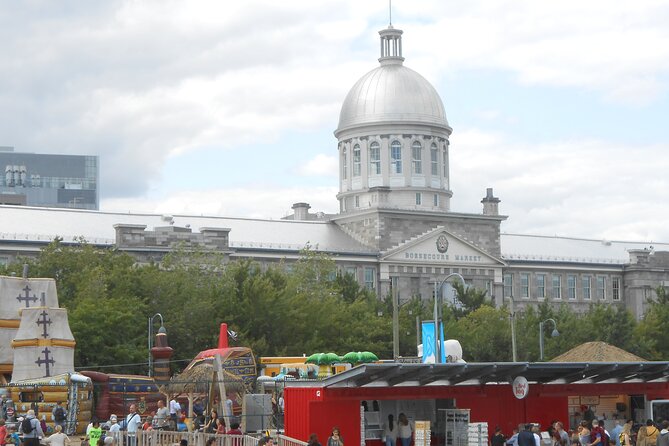
Nearby Bonsecours Market, or Marche Bonsecours, is useful for getting a feel for the district’s commercial side. The building is a natural place to pause, browse, or find a café break, but the hunt does not cover purchases or entry costs.
The Chateau Ramezay Historic Site and Museum of Montreal continues the history theme. Again, the experience brings you to the site, not through its galleries. I see that as a strength for a first walk because you can mark places for a later visit, but it may feel incomplete if you expected a guided museum tour.
City Hall, Place Jacques-Cartier, and the central squares
Montreal City Hall and the Nelson Monument anchor the next section. These stops help connect Old Montreal’s colonial-era buildings with the city’s civic story. The puzzles give you a reason to stop and inspect the surroundings instead of treating the area as a corridor between attractions.
Place Jacques-Cartier is one of the route’s natural rest points. It is close to several other stops, including Marguerite Bourgeoys Park, Notre-Dame and Saint-Gabriel, and La Presse. This cluster is easier to cover than the farthest waterfront points, so it could work well as the core of a shorter visit.
The inclusion of La Presse adds a modern media reference to a route otherwise heavy on monuments and old buildings. That variety is useful. A good city walk needs more than churches and stone façades, and this section shows how old and contemporary Montreal occupy the same few blocks.
Place d’Armes and Notre-Dame Basilica
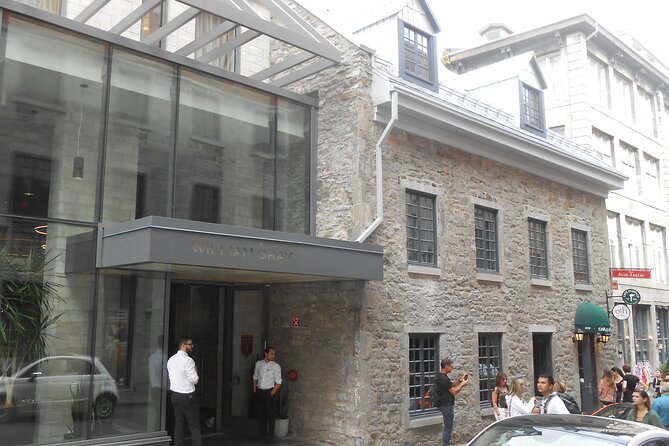
Place d’Armes is one of the most rewarding urban spaces on the route. From here, the Notre-Dame Basilica is a major visual anchor, and the surrounding buildings help you read Old Montreal as a complete historic district rather than a collection of isolated sights.
The experience takes you to Notre-Dame Basilica but does not include admission. If you want to see the interior, plan for a separate ticket and extra time. That choice also explains why the hunt may take far longer than two hours. An exterior challenge can take minutes, while a proper visit inside a major attraction may take much longer.
Maisonneuve Monument completes this central historic stretch. Together, Place d’Armes, the basilica, and the monument offer some of the most concentrated sightseeing on the route. If you only have a short window, focus here and around Place Royale rather than trying to reach every outlying stop.
Place d’Youville and the city’s memory
Place d’Youville marks a transition between Old Montreal and the western edge of the historic district. The MEM, Centre des Memoires Montrealaises, adds a local memory angle to the walk. Its presence makes the route feel less like a checklist of postcard views and more like an introduction to how Montreal presents its own past.
The archaeological site of the Parliament of the United Canadas, near marche Sainte-Anne, adds another layer. It reminds you that the political history of the city is not confined to grand surviving façades. Archaeological remains can be harder to understand without a guide, so the challenge format is helpful here if the clue gives you enough context.
This western stretch may also explain why the route feels longer than the map suggests. The stops are spread across several parts of the district, and you are repeatedly shifting between waterfront, civic, commercial, and archaeological sites.
Square Victoria and the modern business district
Square Victoria-OACI takes you beyond the most old-fashioned streets and toward the business district. The Montreal World Trade Centre and Montreal Convention Centre continue that shift, showing the city’s modern commercial face.
The Theatre St-James and Bank of Montreal Museum bring the route back toward grand architecture and finance. These stops are especially useful for visitors who want to understand how Montreal’s old trading center connects with today’s offices, hotels, event spaces, and shops.
The route finishes at Parc de Dieppe, giving the walk a final waterfront note. That ending is scenic in concept, but it also confirms that this is not a compact two-hour loop. You cover a substantial portion of central Montreal, and your feet will notice.
What the challenges add, and where they fall short
The best part of the format is its sense of purpose. Instead of wandering past 35 names on a map, you have questions to answer and details to find. That can turn a familiar-looking street into a small investigation, especially when you are exploring with children, friends, or a group that enjoys friendly competition.
The route also encourages you to visit places you might skip. One participant found it led to many spots that would otherwise have been missed and enjoyed stopping at shops and cafés along the way. That is exactly how I would use it: as a flexible framework for seeing Old Montreal, not as a race to complete every clue.
The weak point is accuracy. Some directions have reportedly been confusing, with an incorrect street name and mixed-up references to east, west, left, and right. Those errors can send you on a needless search. Keep a regular map available as a backup, and use the landmark names rather than following a directional instruction blindly.
There is also a setup step that may frustrate you. After booking, you need to connect the purchase with the scavenger hunt website. That registration process can feel tedious before the walk begins. Once the hunt is active, the format becomes much easier to use.
Is $44.85 a fair price?
The answer depends almost entirely on your group size. For six people, $44.85 works out to roughly $7.48 per person, which is good value for a private activity that can fill several hours. For three people, it is about $14.95 each, still reasonable if you enjoy puzzle-based sightseeing.
For one or two people, the calculation changes. You are paying for access to a route and challenges rather than a human guide, and you can find Old Montreal maps and public information at no cost. The price makes the most sense when you value the game format, privacy, and built-in structure.
No admission fees are included. That keeps the base price down, but it also means you should budget separately if you want to enter the basilica, museums, the Science Centre, the Ferris wheel, or other attractions along the way.
Who should book this experience?
I would recommend it to groups that like walking, solving clues, and setting their own pace. Families with older children may appreciate the challenge format, while friends can turn the route into a light competition. It also suits repeat visitors who want a new reason to explore familiar streets.
You should think twice if you want a polished historical lecture, a short route, or a guide who can answer questions on the spot. The clues provide structure, but you must manage the map, the timing, the phone connection, and any unclear directions yourself.
The activity requires a moderate level of physical fitness. Service animals are allowed, and the route is near public transportation, but the supplied details do not promise a fully accessible route or specify accessible conditions at every stop. If that matters to you, confirm the current route details before booking.
Should you book the Old Montreal scavenger hunt?
Book it if your group enjoys independent exploring and wants more structure than a simple map. The strongest reason to choose it is the combination of private pricing, more than 30 challenges, and a broad route that reaches well beyond the most obvious Old Montreal streets.
Skip it if you only have two hours, dislike phone-based activities, or want guaranteed accuracy in every direction. For the best value, bring a group of four to six, use cellular data, carry a backup map, and allow a full half-day if you plan to pause for food, photos, or paid attractions.
Free cancellation is available when you cancel at least 24 hours before the local start time. Inside that window, the amount paid is not refunded, and changes are not accepted.
FAQ
How long does the Old Montreal scavenger hunt take?
The estimated duration is about two hours, but the route includes 35 stops across Old Montreal and the waterfront. If you walk at a relaxed pace or stop at cafés, shops, and attractions, it can take much longer.
How many people can join one booking?
The price covers one private group of up to six people.
Is the experience guided?
No. It is a self-guided scavenger hunt completed through a mobile website on your smartphone.
Do I need internet access?
Yes. Internet access on your smartphone is required. Wi-Fi alone is not enough.
Is there a downloadable app?
No. The scavenger hunt uses a mobile site rather than an app.
Are attraction entry fees included?
No. The experience takes you around the sites, but admission fees are not included.
Is the activity offered in multiple languages?
The experience is offered in English.
Is public transportation available nearby?
Yes. The activity is near public transportation.
Can I cancel for a full refund?
Yes, if you cancel at least 24 hours before the experience start time. Cancellations made less than 24 hours beforehand are not refunded.
Just added around Canada
- After The Gold Rush – Victoria Outdoor Escape Game★ 5.0 · 5 reviews
- Foxtrail Scavenger Hunt – Compass Trail Vancouver★ 4.5 · 14 reviews
- Spy Escape in Vancouver: Outdoor Puzzle Adventure★ 5.0 · 2 reviews
- Vancouver Gastown Scavenger Hunt★ 5.0 · 7 reviews
- Outdoor Escape Room – Downtown Vancouver★ 5.0 · 2 reviews
- Murder Mystery Detective Experience in Langford BC★ 4.5 · 3 reviews
- Trois-Rivières Self-Guided Walking Tour and Scavenger Hunt★ 3.0 · 2 reviews
- Outdoor Escape Room in Downtown Toronto★ 5.0 · 5 reviews
Self-Guided App Games, compared.








Browse the lists this game appears in