

Review · GDANSK
Scavenger Hunt in Gdańsk, Poland
Solve clues, then see the city differently. This Gdańsk scavenger hunt turns sightseeing into a team game, mixing puzzles about local monuments with logic, math, legends, and hidden envelopes. I like the way it gets you moving through the city rather than simply following a guide, and I like that the activity is private, so your group plays together. The main caution is that some tasks may feel difficult or rushed, especially if the advertised one-hour format becomes closer to the 100 minutes described by one participant.
The experience begins at a playground with swings at Plac zabaw z huśtawkami, Podwale Przedmiejskie 26, and returns there at the end. St. Mary’s Church is the named stop, though the game also leads you through other parts of the city as you solve clues. You receive a mobile ticket, and the activity is offered in English, but check the materials when you start. One group received code sheets in Polish by mistake.
Key points at a glance
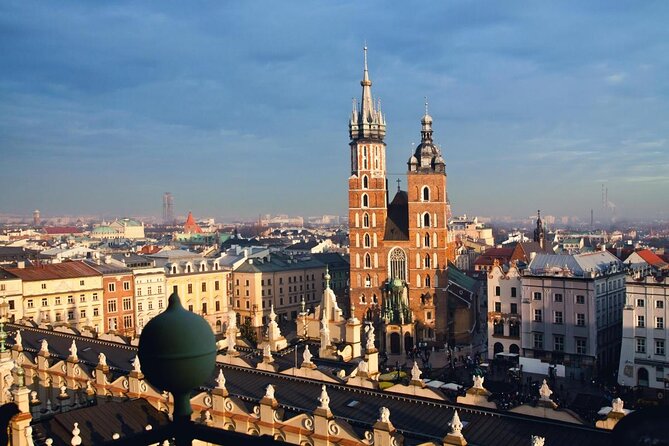
- City sightseeing with a game structure: Solve puzzles connected to Gdańsk monuments, stories, and legends as you walk.
- A private group activity: Only your party takes part, making it a good fit for friends, families, or a small group wanting to compete together.
- Hidden envelopes and a final treasure: The game uses physical clues around the city and includes a reward at the end.
- Logic and math matter: This is not only a monument quiz. You will need careful thinking as well as local awareness.
- English is offered, but check the materials: One group found some code sheets in Polish, and dark iPad screens made the tasks harder.
- About $23.66 per person: The price is reasonable if your group enjoys puzzles and active sightseeing, but less attractive if you prefer a relaxed guided walk.
Why a puzzle is a good way to see Gdańsk
Gdańsk rewards close attention. Details on buildings, public spaces, monuments, and old stories can easily blur together when you are walking through the center on a standard city tour. A scavenger hunt gives you a reason to stop, look again, and connect what you see with a clue.
The format also changes the pace. Instead of listening for an hour while one person explains the city, you and your companions work things out together. You may be reading an assignment, checking a monument, looking for an envelope, or testing an answer before moving on.
That makes this especially useful if your group has mixed interests. Someone who is less interested in formal history may enjoy the competition, while someone who likes local stories can focus on the legends and monument clues. The activity is not simply a walk with questions added at the end. The puzzles are the main way you experience the route.
You should also expect some mental work. The game includes logical and mathematical tasks, so success does not depend only on knowing Gdańsk. A person who enjoys numbers or pattern-solving may become the star of the group, while someone who prefers easy sightseeing may find the harder clues frustrating.
More Scavenger Hunts in Poland:
- Hevelius Treasure | Scavenger Hunt
★ 5.0 · 76 reviews - Gdansk Scavenger Hunt and Highlights Self Guided Audio Tour
★ 5.0 · 6 reviews - Hamburg: Scavenger Hunt Self-Guided Tour for Children
★ 4.5 · 319 reviews
Starting at Podwale Przedmiejskie
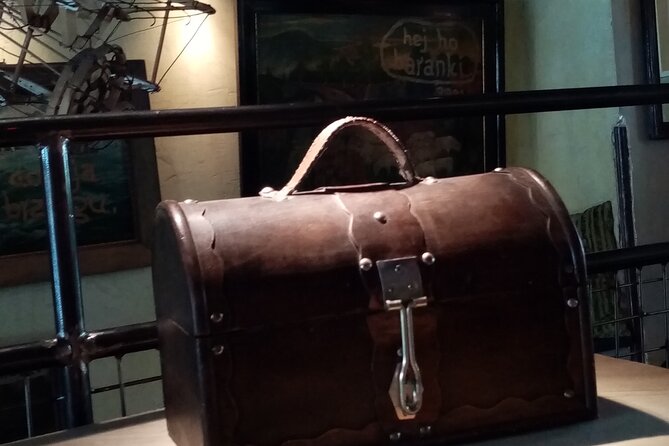
The meeting point is listed as the playground with swings at Podwale Przedmiejskie 26. That is a useful detail to pin down before you leave, since a playground can be less obvious than a church, square, or hotel entrance.
The activity ends back at this same meeting point. That gives you a clear finish and makes the event easier to fit into a day of sightseeing. You do not need to plan a separate pickup location or wonder where the game concludes.
The activity is private, so your group does not compete with strangers. That matters more than it may seem. A couple can play at its own pace, a family can divide tasks among different ages, and a group of friends can make teams and keep the competition friendly.
One group of six split into two teams and found the format especially enjoyable. If you have a larger party, team play may add energy. Just remember that the game works best when everyone gets involved instead of leaving every puzzle to the quickest reader.
St. Mary’s Church and the city clues
St. Mary’s Church is the named stop on the itinerary. It is one of Gdańsk’s defining landmarks, so including it gives the game a strong visual anchor. You are not simply hunting for envelopes in random streets. The activity connects its tasks to the city and its monuments.
The exact order and full list of stops are not provided, so you should not expect a detailed traditional route description in advance. The game’s appeal is partly that the next clue directs you onward. You will learn the route through the tasks rather than by studying a fixed sightseeing schedule.
At St. Mary’s, and at other places along the way, pay attention to the surroundings before reaching for the answer. The clues are designed to make you observe the city. A carved detail, a nearby monument, a number, or a piece of local information may matter more than a quick guess.
The activity also uses stories and legends. That gives the route a more personal feel than a set of dry facts. You may not remember every date or name, but you are more likely to remember a strange story when it is tied to a puzzle you solved with your group.
Hidden envelopes, code sheets, and the final reward
The physical clues are a major part of the fun. You will look for hidden envelopes around the city, then use what you find to move forward. This makes the activity feel more like an urban mystery than a worksheet handed to you at the start.
There is also a treasure at the end. The exact nature of the reward is not specified, which is probably for the best. Part of the pleasure comes from not knowing every twist before you begin.
The game has been praised for clever puzzle writing and unexpected turns. That is important because a scavenger hunt can quickly become dull if every task follows the same pattern. Here, the mix of monument clues, stories, legends, logic, math, envelopes, and a final reward gives the hour more variety.
Still, the clue system has some practical weak points. One group found too much text in the assignments, and one team received Polish code sheets despite playing in English. If you are handed anything in the wrong language, raise it at once rather than trying to push through. A language error can turn a fair puzzle into an impossible one.
More Escape Games in Poland:
- Krakow Escape Rooms – fantasy, adventure, action, crime and more!
★ 5.0 · 72 reviews - City Game Tour Gdańsk
★ 5.0 · 19 reviews - Private 2-Hour Tour with City Game in Gdańsk
★ 5.0 · 15 reviews - Krakow Old Town Mysteries: Exploration Game and Tour
★ 5.0 · 4 reviews
Is one hour enough for the tasks?
The experience is advertised at approximately one hour. That makes it easy to add to a morning or afternoon in Gdańsk, especially if you want an activity between major sightseeing stops.
Timing may not be perfectly consistent. One account describes having 100 minutes, while the listed duration is about one hour. That difference could reflect the way the game was run on that day, but it means you should leave some flexibility in your schedule.
The harder question is not just how long the game lasts. It is how much of that time you spend reading, thinking, searching, and walking. One team felt there was too little time to complete all the tasks, with assignments that contained a lot of text. If your group reads slowly or wants to discuss every answer, the clock may feel tight.
I would avoid booking this immediately before a train, meal reservation, or timed museum entry. You finish back at the start, but the activity may not feel identical for every group. Give yourself a buffer after the game.
The technology can affect the experience
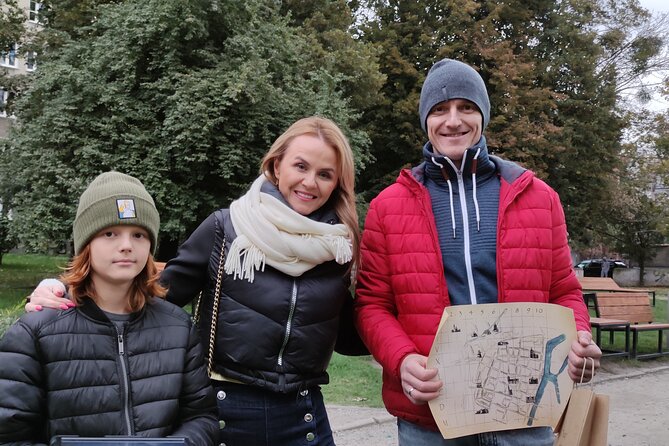
The hunt uses mobile technology, and one participant specifically mentioned iPads. That can be handy when the game includes several assignments, codes, and instructions in one place. It also keeps the activity organized while you move through the city.
The reported drawback was screen brightness. The iPad screens were described as too dark, which made the tasks harder to read. Bright daylight can make any screen less comfortable, so this is worth keeping in mind if you have trouble reading small text.
The practical fix is simple: check the screen as soon as the game begins. If the display is difficult to read, ask the coordinator about brightness or another solution. Do not assume a confusing task is your fault. The problem may be the device or the way the information was presented.
The English option is another useful feature, but language accuracy matters. Since one group received Polish code sheets, confirm that every written instruction is in English before leaving the start point. This is a small check that could save a lot of time.
What the coordination adds
The activity includes coordination from a host, and the available feedback describes the person running the game as friendly. The creators themselves were also described as very welcoming and strongly connected to Gdańsk.
That personal touch matters in a puzzle activity. A host can explain the rules, clarify an unclear instruction, and help keep the game moving. The game is not entirely self-guided, even though much of the sightseeing happens through your group’s own problem-solving.
No guide name is provided, so I cannot tell you who will lead your session. The important point is that the human coordination is part of the experience, especially if your group needs help with a clue or a language issue.
The private format should also make the host’s attention more useful. You are not one party in a large crowd. Your group receives the instructions together and can ask questions without holding up a full tour group.
Who will enjoy this most?
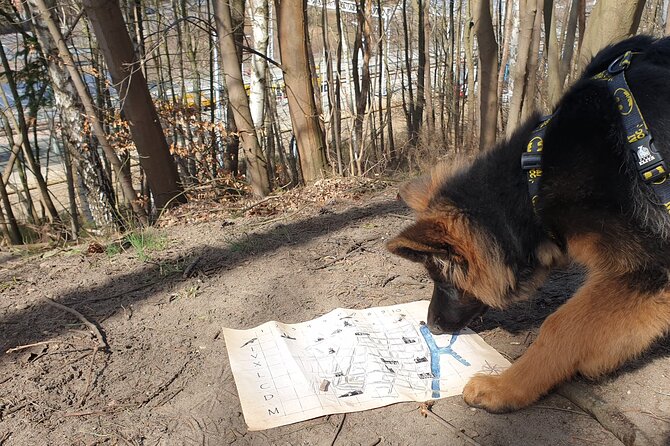
I would choose this for people who like a challenge and want a different way to see Gdańsk. It suits friends, families, couples, and small private groups that enjoy working together or competing in teams.
It is also a good choice if you have already spent time walking through the city and want an activity with more purpose. The game gives you reasons to examine monuments, search the streets, and remember local stories.
You may want a different experience if your ideal tour is slow, quiet, and led by a historian from beginning to end. The puzzles require participation. You cannot simply stand back and absorb information while someone else does the work.
The activity can suit many ages because no special physical skill is listed, and most people can participate. However, the practical challenge is reading and solving the assignments. Children may enjoy the hunt, but the adults in the group may need to help with longer text, logic, or math.
Service animals are allowed, and the start is near public transportation. Those details make the activity easier to fit into a wider day in Gdańsk, though the supplied information does not specify the exact transit lines or walking conditions.
Is $23.66 good value?
At about $23.66 per person, this costs more than simply walking through Gdańsk on your own. You are paying for the game design, the clue materials, the host coordination, the private format, and the added structure.
The value depends on how your group spends time together. If four or six people enjoy puzzles, the cost buys more than a list of sights. It gives you a shared challenge, a reason to explore, and a final reward. The game also turns ordinary walking time into part of the activity.
The value is weaker if you mainly want facts about Gdańsk. A conventional guided tour may give you more historical explanation in a smoother format. This experience puts the emphasis on discovery and problem-solving rather than on a long spoken presentation.
The strongest praise focuses on fun, clever tasks, humor, city information, and the pleasure of finding out what comes next. The clearest criticism concerns dark screens, lengthy instructions, language mix-ups, and time pressure. At this price, those practical details matter. You should expect an inventive activity, but not a perfectly relaxed one.
Booking and practical preparation
Confirmation is sent within 48 hours of booking, subject to availability. Plan ahead rather than assuming an immediate confirmation, especially if your schedule in Gdańsk is tight.
You can cancel for a full refund if you do so at least 24 hours before the local start time. Cancellations or changes made less than 24 hours before the start are not refunded or accepted.
Before starting, I would do four quick checks:
- Confirm the meeting point at the playground with swings at Podwale Przedmiejskie 26.
- Make sure the game materials and code sheets are in English.
- Check that the iPad screen is bright enough to read.
- Leave extra time after the advertised one-hour duration.
These steps do not change the game itself, but they can prevent the most avoidable problems.
Should you book the Gdańsk scavenger hunt?
Book it if you want sightseeing with a playful edge, enjoy logic and math puzzles, and have a private group ready to work together. The mix of monuments, legends, hidden envelopes, humor, and a final treasure gives the hour a clear sense of purpose.
I would be more cautious if you dislike timed tasks, long written instructions, or technology problems. The reported language mix-up and dark screens are not fatal flaws, but they are reasons to check everything at the start.
For friends or families looking for an active way to explore central Gdańsk, this is a promising choice at $23.66 per person. Go in expecting a game first and a sightseeing tour second, and you will have the right idea.
FAQ
Where does the scavenger hunt start?
It starts at Plac zabaw z huśtawkami, Podwale Przedmiejskie 26, Gdańsk, Poland.
Where does the activity end?
The activity ends back at the meeting point.
How long does the scavenger hunt last?
The listed duration is approximately one hour. One account describes a 100-minute game, so leaving extra time is sensible.
What language is the activity offered in?
The activity is offered in English.
What kinds of tasks are included?
You solve puzzles linked to Gdańsk, its monuments, stories, and legends. Logic and mathematical thinking can also help.
Do participants look for physical clues?
Yes. The game includes searching for hidden envelopes around the city.
Is this a private activity?
Yes. Only your group participates.
Is St. Mary’s Church included?
Yes. St. Mary’s Church is the named stop in the itinerary.
Can I cancel for a full refund?
Yes, if you cancel at least 24 hours before the experience’s local start time. Cancellations or changes made less than 24 hours before the start are not refunded or accepted.
Just added around Poland
- Undercover City Games: Torun★ 5.0 · 8 reviews
- Undercover City Games: Szczecin★ 5.0 · 14 reviews
- Undercover City Games: Bydgoszcz★ 5.0 · 13 reviews
- Krakow Old Town Mysteries: Exploration Game and Tour★ 5.0 · 4 reviews
- Private 2-Hour Tour with City Game in Gdańsk★ 5.0 · 15 reviews
- Gdansk Scavenger Hunt and Highlights Self Guided Audio Tour★ 5.0 · 6 reviews
- Lions & Unicorns of Gdańsk: Self-Guided Fantasy Puzzle Walk★ 3.5 · 3 reviews
- Sopot: Escape Room Adventure★ 4.4 · 3 reviews
Scavenger Hunts, compared.


Amazing Cozumel Race: Small-Group Tour and Scavenger Hunt
Read our review →
An Epic Scavenger Hunt: New York City Central Park Adventure
Read our review →
Escaping and spying on the Berlin Wall Scavenger hunt
Read our review →
Browse the lists this game appears in