
Review · SEDONA
Treasure Hunter Escape Room
The clock starts ticking fast. Treasure Hunter combines a 1976 murder mystery with an ancient-artifact heist, giving you a clear mission and plenty of reasons to search, think, and work together. I like the small eight-person limit and the care given to first-timers. The main drawback is the fixed, non-refundable booking policy, so choose your time carefully.
You meet at 551 S Main St in Cottonwood, not in Sedona itself. That matters when you plan your day. The game lasts 60 minutes, but you should allow about 90 minutes total for check-in, preparation, a short debrief, and crew photos.
Key points to know before booking
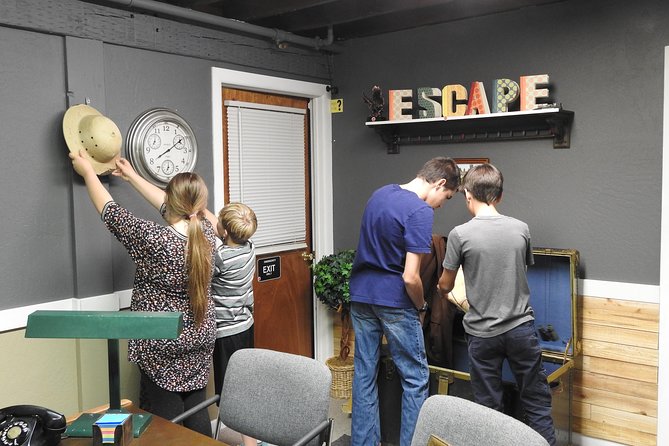
- The story begins in 1976: You investigate the untimely death of Professor Marcus Montgomery in his office.
- Your final goal is an ancient golden artifact: Solving the mystery and stealing the treasure give the game a clear purpose.
- The active game lasts 60 minutes: Add 15 minutes before and 15 minutes afterward for the full visit.
- Treasure Hunter allows up to eight players: A smaller group gives everyone a better chance to take part.
- The difficulty is rated easy to medium: It suits first-time players, families, and groups looking for a challenge without an extreme test.
- You may share the room: Unless you reserve the whole room, other players could join your team.
A 1976 mystery with a clear mission
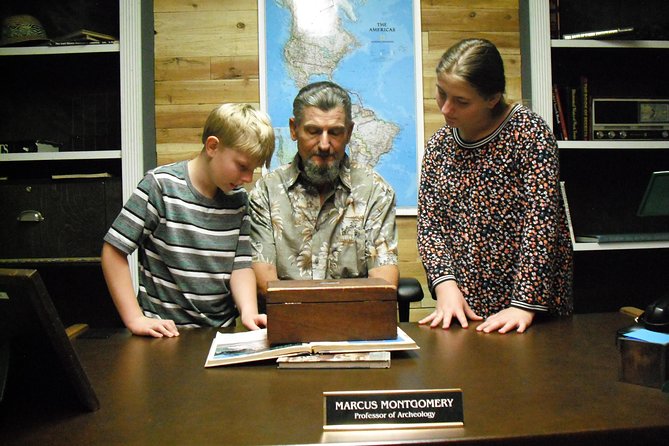
Treasure Hunter puts you in the office of Professor Marcus Montgomery. The year is 1976, and the professor has died under troubling circumstances. Your assignment is to investigate what happened, uncover the conspiracy behind his death, and steal an ancient golden artifact before time runs out.
That combination gives the room more shape than a simple hunt for random codes. You are not just opening locks because a timer says so. You are following a story, looking for clues, and trying to connect the professor’s death with the missing treasure.
I like that the mission has two parts. The mystery gives you a reason to examine the room carefully, while the artifact gives the final task a strong finish. The plot also gives your group something to talk about as you work. One person may focus on the professor’s office, another may search for evidence, and someone else may keep track of the larger conspiracy.
The 1976 setting is another useful touch. It gives the room a distinct period rather than leaving the story in a vague modern office. You should expect the theme to guide the mood and the clues, though the available information does not promise specific props or technology. Go in ready to pay attention to the room’s details and story references.
More Escape Rooms in the USA
- The Escape Game Orlando: Epic 60-Minute Adventures on I-Drive
★ 5.0 · 730 reviews - The Escape Game Pigeon Forge: 60-Minute Adventures on The Island
★ 5.0 · 646 reviews - The Escape Game Cincinnati: 60-Minute Adventures at The Banks
★ 5.0 · 546 reviews
What happens during the 90-minute visit
Plan your visit in three parts:
- About 15 minutes before the game for check-in and mission preparation
- 60 minutes inside the escape room
- About 15 minutes afterward for a debrief and photographs
The full visit is roughly an hour and a half, even though the main challenge lasts one hour. Arrive 15 minutes before your scheduled start. That buffer is important because a late arrival could cost you part of the game, and every minute matters once the clock begins.
During the preparation period, you can get familiar with the rules and the basic idea of the mission. This is especially useful if you have never tried an escape room. First-timers can feel awkward at the start, but that feeling usually fades once the group finds its first clue and begins to understand how the puzzles work.
The central game lasts 60 minutes. You search for clues, solve puzzles, and try to stay focused while the time slips away. The experience is designed to feel quick, and that can be both the fun and the frustration. You may leave pleased by how much your group accomplished, even if you did not escape.
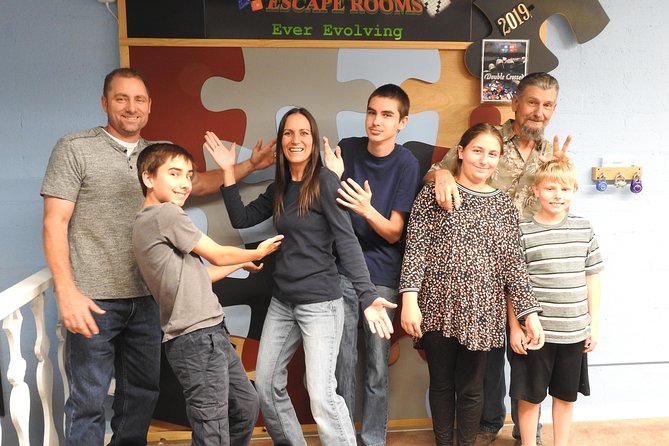
Afterward, allow time to debrief and take photographs with your crew. The photo opportunity is a simple but welcome extra, especially for birthdays, family outings, office groups, or a weekend with friends.
Why the eight-player limit matters
Treasure Hunter accepts a maximum of eight players. That is a useful limit for an escape room because larger groups can become noisy and disorganized. With eight or fewer people, you have a better chance to split up tasks without losing track of the story.
The best group size depends on your style. A small team may communicate more easily, but it also has fewer eyes and hands searching for clues. A larger team can cover more of the room, though some people may need to make an effort to stay involved.
If you want the room for your own party, book all the available places. If you do not reserve the entire room, you could be joined by other players. That can add energy and extra problem-solving help, but it means your group will not have complete privacy.
For a corporate outing, the eight-person cap is worth considering before you book. A company with more than eight people may need multiple sessions, and the experience is not built as one large-group activity. For a family or a group of friends, the limit is easier to manage.
Easy to medium difficulty, with room to learn
Treasure Hunter is rated easy to medium. That makes it a sensible starting point for someone who has never played an escape room, while still giving experienced players something to work through.
The challenge depends heavily on teamwork. You need quick thinking, determination, and a sense of urgency, but you also need to communicate. One of the most common beginner mistakes is having three people stare at the same clue while another useful object sits unnoticed across the room.
I recommend saying your discoveries out loud. If you find a number, symbol, key, paper, or unusual object, tell the whole group. Keep clues visible and avoid assuming that the first idea is the right one. A calm team can make more progress than a clever team that keeps its discoveries to itself.
You may also need help from the staff. That is not a failure. First-time players often need a nudge to understand how the room’s clues work, and the staff is prepared to help you get moving. The experience should feel challenging, not embarrassing.
The game is suggested for ages 10 and up. Younger children are allowed, but some of the puzzles may be too difficult for them. An adult age 18 or older must remain on site with anyone 15 or younger, and every participant under 18 needs a signed waiver from an adult before playing.
More Treasure Hunts in the USA:
- Snowshoe Treasure Hunt (Outdoors)
★ 5.0 · 92 reviews - Treasure Hunt Ride Ticket and 1 Power-Up Combo
★ 4.5 · 45 reviews - Monterey: Treasure Hunt The Ride – Ticket + Power-Up Combo
★ 4.6 · 14 reviews - Self-Guided Denver’s Golden Treasure Scavenger Hunt
★ 4.0 · 11 reviews
A good choice for first-time players
The strongest appeal here is the welcoming approach. A first escape room can seem intimidating, especially when you are not sure what counts as a clue or how difficult the puzzles will be. Treasure Hunter’s easy-to-medium rating gives you a reasonable entry point.
The staff also plays an important role. Help is available when your group gets stuck, and that can make the difference between a fun challenge and an hour of confusion. The aim is not to make you feel foolish for missing something. It is to help your group understand the room and enjoy the process.
You should still expect to think hard. Easy to medium does not mean effortless. The clock keeps running, and the room asks you to combine observation, logic, and teamwork. The pressure is part of the appeal.
If your group includes people with different comfort levels, this room may work well. Puzzle fans can take on the more complex connections, while less experienced players can search, notice objects, and help test ideas. The story gives everyone a shared goal instead of requiring every person to solve the same kind of puzzle.
What makes the experience worth $30
The price is $30 per person, with taxes, fees, and handling charges included. Transportation, food, and drinks are not included.
At that price, the value depends on your group. You are paying for about 90 minutes at the venue, but only 60 minutes is the main game. The preparation period, staff support, debrief, and group photos add to the visit, though the main attraction is clearly the timed room.
For a group that enjoys puzzles, mystery stories, or cooperative activities, $30 is a reasonable entertainment price. You are getting a structured activity rather than simply an admission ticket, and the private-group format can make the experience feel more personal if you reserve the full room.
The value is less convincing if your group dislikes time pressure or gets frustrated by puzzles. In that case, you may not use the full benefit of the experience. You should also remember that the fee cannot be refunded or changed after booking. Since the policy is strict, confirm your schedule before paying.
Because the activity is near Sedona but meets in Cottonwood, include driving time in your plans. The meeting point is 551 S Main St, Cottonwood, Arizona 86326. Free parking is available in the lot behind the building or in the connecting parking area around State Farm Insurance.
Planning your visit in Cottonwood
The listed destination is Sedona, but the actual meeting point is in Cottonwood. Do not assume you can walk to the activity from a Sedona hotel or sightseeing stop. Put the Cottonwood address into your route plan and arrive early enough to park and check in.
The activity ends back at the meeting point. There is no transportation to or from the venue, so you are responsible for getting there and continuing to your next stop.
Mobile tickets make arrival simple. Have your Viator voucher ready as proof of purchase. Confirmation is provided at booking, so keep the booking details accessible on your phone.
Free parking helps keep the visit straightforward. The lot behind the building is the first place to try, with the connecting parking area around State Farm Insurance as another option. Arriving 15 minutes early gives you time to park without turning the pre-game period into a race.
Service animals are allowed, and most people can participate. The room is still a puzzle environment with a fixed time limit, so think about your group’s ages and comfort before reserving.
Who will enjoy Treasure Hunter most
I would choose this experience for a family with older children, a small group of friends, a couple looking for a different activity, or a company team that fits within the eight-player limit.
It is especially suitable if you:
- Enjoy mystery stories and clue-based games
- Want to try an escape room for the first time
- Like solving problems as a group
- Prefer a one-hour activity with a clear finish
- Want a photo of your group afterward
- Are comfortable sharing the room if you do not reserve every place
I would think twice if your group strongly dislikes being timed, has young children who may struggle with the puzzles, or expects a fully private room without booking it out. The game is meant to create urgency, and the clock is not a background detail.
The room’s easy-to-medium rating makes it a better fit for beginners than for people seeking a punishing puzzle marathon. Experienced escape-room players may still enjoy the story and teamwork, but they should not book expecting the hardest possible challenge.
How to work better as a team
You do not need an escape-room expert in your group. You do need a simple plan.
Start by spreading out and looking carefully. Share every discovery. If you find a lock, symbol, number, or written clue, leave it where the group can see it unless staff directs you otherwise. Try to connect clues to the story instead of forcing every object into the first puzzle you notice.
Give each person a role when possible. One person can watch the clock, two can search different parts of the office, and another can track solved and unsolved clues. Change roles if someone gets stuck.
Most important, ask for help when the team has gone in circles. The staff’s support is part of the experience. A hint can put you back on course without taking away the satisfaction of solving the larger mystery.
Remember that escaping is not the only measure of a successful visit. One first-time group enjoyed the hour even though it did not get out. That is a useful expectation to set before you enter. You may solve everything, or you may get close, but the shared effort is the heart of the activity.
Final call: should you book it?
Book Treasure Hunter if you want a story-led escape room near Sedona, prefer a manageable challenge, and enjoy solving problems with a small group. The 1976 professor mystery, ancient golden artifact, eight-player limit, and helpful staff create a friendly introduction to the format.
Before you reserve, confirm three things: you can reach Cottonwood at 551 S Main St, your group can arrive 15 minutes early, and your schedule is firm because the booking is non-refundable and cannot be changed. If those details work, $30 per person is a fair price for a focused 90-minute outing with a full hour of play.
For first-timers, families with children around age 10 and older, and groups that like a little pressure with their puzzles, this is a sensible pick. Just keep your expectations realistic: the fun comes from the hunt, the teamwork, and the story, not only from beating the clock.
FAQ
Where does Treasure Hunter take place?
The meeting point is 551 S Main St, Cottonwood, Arizona 86326. Although the experience is associated with Sedona, you should plan to travel to the Cottonwood address.
How long does the experience last?
The full visit takes about 90 minutes. Allow 15 minutes before the game, 60 minutes for the escape room, and 15 minutes afterward for a debrief and photos.
How many people can play Treasure Hunter?
The game has a maximum of eight players. If you do not book the entire room, you could be joined by other players.
What age is recommended?
The experience is recommended for ages 10 and up. Younger children are allowed, but some puzzles may be too difficult for them. An adult age 18 or older must remain on site with anyone age 15 or younger.
Is parking available?
Yes. Free parking is available in the lot behind the building or in the connecting parking area around State Farm Insurance.
Can I cancel or change my booking?
No. The experience is non-refundable and cannot be changed for any reason. Make sure your date and time are correct before booking.
Just added around the USA
- Ventura Scavenger Hunt Walking Tour and Game★ 4.0 · 4 reviews
- Vail Venture Scavenger Hunt★ 3.5 · 8 reviews
- Save the Mountain Escape Room Adventure★ 5.0 · 4 reviews
- A Spectacular Scavenger Hunt: Center of the Universe★ 4.0 · 4 reviews
- Tybee Island, Georgia Scavenger Hunt★ 4.0 · 7 reviews
- Tucson Scavenger Hunt by Wacky Walks★ 4.5 · 2 reviews
- Amazing Scavenger Hunt: Desert Oasis★ 3.5 · 3 reviews
- Thrilling Traverse City Scavenger Hunt★ 4.0 · 7 reviews
Treasure Hunts, compared.



Fun, Flexible Treasure Hunt Around Manchester with Cryptic Clues & Hidden Gems
Read our review →
Fun, Flexible Treasure Hunt Around York with Cryptic Clues & Hidden Gems
Read our review →

Fun, Flexible Treasure Hunt Around Bath with Cryptic Clues & Hidden Gems
Read our review →York Treasure Hunt Adventure: The Mystery of The Gunpowder Snitch
Read our review →
Fun, Flexible Treasure Hunt Around Oxford with Cryptic Clues & Hidden Gems
Read our review →Browse the lists this game appears in