
Review · SINGAPORE
The Piece-ful General – Ransack Puzzle Hunt
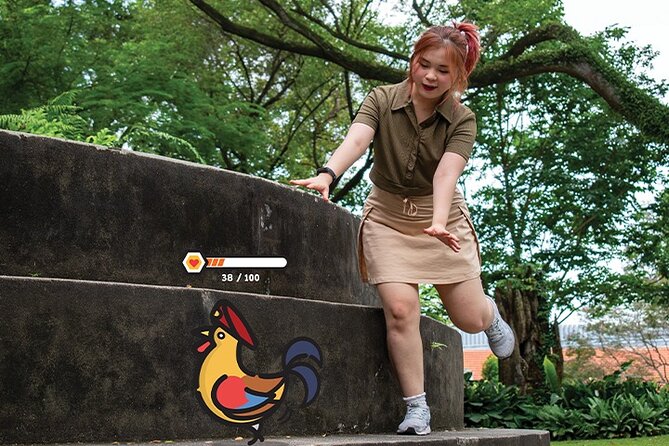
Fort Canning hides more than old trees. This two-hour puzzle hunt turns the park into a giant game board, mixing clues, teamwork, local history, and a little comic chaos. I like the way it gets you walking through places you might otherwise pass without noticing, and I like that the story gives the outing a clear purpose: help Pepper the dinosaur recover the scattered pieces of his war hero statue. The main drawback is Singapore’s heat, plus a map and clues that may feel confusing if you are exploring alone.
This is not a standard guided sightseeing walk. You work in a group, follow a map, inspect the park for clues, and solve puzzles linked to Fort Canning’s past. Michelle and Jay are named as helpful game facilitators, but the activity is largely self-guided, so you control the pace. Give yourself time to stop, read, think, and enjoy the park rather than racing only toward the final answer.
Key points at a glance
- A treasure hunt with an escape-room spirit: You collect clues and solve challenges outdoors instead of sitting in one room.
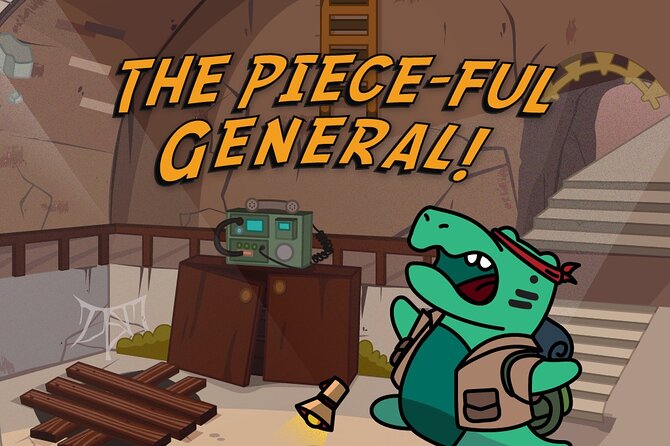
- Pepper’s statue emergency: The story follows a clumsy dinosaur who accidentally blasts a war hero mannequin into pieces.
- Fort Canning becomes the game board: Existing structures, exhibits, and historic sites help conceal clues.
- A useful history lesson: The puzzles introduce Singapore and Fort Canning Park, including connections to World War II.
- Good for groups of up to 20: Friends, families, couples, and adventurous visitors can work together.
- Allow for heat and head-scratching: The puzzles are designed to be solvable, but some clues are cryptic and the map may take time to understand.
Why Fort Canning makes a good game board
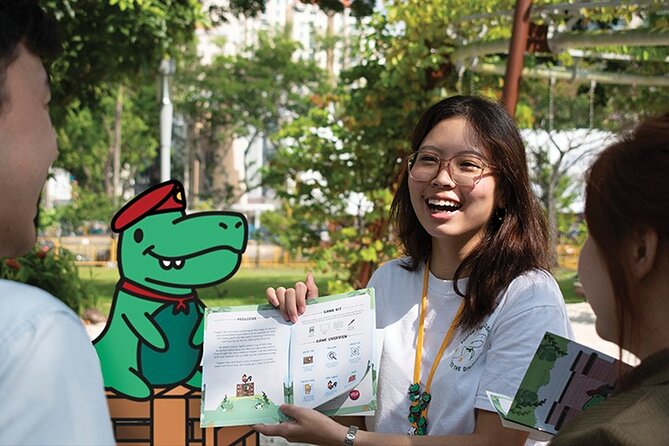
Fort Canning Park is an excellent setting for this kind of activity because it gives you more to do than simply follow a marked trail. The park combines greenery, old fort remains, historic sites, and reminders of Singapore’s wartime past. Here, the setting is not just scenery between challenges. It supplies the context and, at times, the hiding places for the clues.
That makes the experience feel more connected to Singapore than a generic scavenger hunt. You are not solving unrelated riddles in a shopping mall. You are looking closely at a real place and learning why it matters.
The activity also offers a different first visit to Fort Canning. One person described discovering that the park was much larger and fuller of points of interest than expected. That is an important benefit: the game gives you a reason to explore beyond the most obvious paths.
You should still expect a walk rather than a seated game. The exact route and clue locations are not described in detail, but the instructions direct you around the park, with the meeting point at Singapore History Consultants, 179622 Cox Terrace, and the activity finishing back there.
More Escape Games in the world:
- Sofia Escape Room – Teorema Rooms
★ 5.0 · 895 reviews - Saw2 vs Squid Game – Escape Game Montpellier
★ 5.0 · 752 reviews - Prague Wizard Experience Magic School Escape Game
★ 5.0 · 746 reviews
Pepper, the dinosaur, and the broken war hero
The central story is silly in the best way. Pepper is a clumsy dinosaur and a history enthusiast who finds an ancient bunker containing a mannequin of his war hero. A wrong step sends the statue flying into pieces across the park.
Your group must find those pieces and help repair the statue before anyone discovers what happened. This story gives each puzzle a reason to exist. Instead of collecting random objects, you are working toward a clear rescue mission.
That playful setup helps children and adults meet on equal ground. Younger participants can enjoy Pepper and the search, while older players may focus on the historical details and the logic behind each challenge. It also keeps the activity from feeling like a lecture delivered while walking.
The story does not replace the history. It provides a friendly doorway into it. As you move around Fort Canning, you learn about Singapore and the park through the places you are already examining. The result is more active than a conventional tour, though anyone wanting a full, detailed historical explanation may find the information lighter than in a dedicated museum visit.
How the two-hour puzzle hunt works
The experience lasts about two hours. You begin at the listed meeting point and receive the materials needed to start the hunt, including a map. From there, your group works through a series of clues, games, and tasks around Fort Canning Park.
Because the hunt is self-guided, you are not tied to a guide’s walking speed. You can pause to study an exhibit, read about a site, or discuss a difficult clue. That freedom is one of the activity’s strongest features. It also means your group must stay organized and pay attention to the instructions.
The puzzles are not described as physically demanding. The challenge comes from observation, wordplay, teamwork, and creative thinking. You may need to inspect existing structures or historic exhibits carefully rather than simply searching bushes and benches. The cleverest moments come when a clue is built into something already present at the site.
At the end, there is a final challenge and a prize for adventurers who complete the quests. The prize is described as exclusive, though no further detail is provided. Think of it as a cheerful reward, not the main reason to book.
The park’s history becomes part of the puzzle
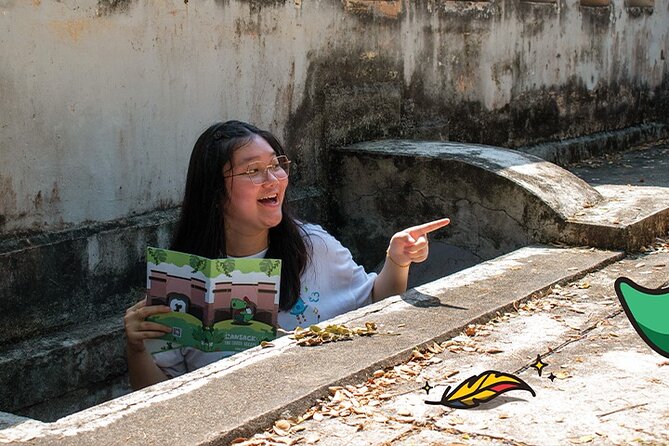
The strongest educational feature is the way the activity connects facts to places. You are encouraged to learn about Fort Canning Park, the former fort, and Singapore’s World War II story while solving the clues.
One useful detail is that the experience can include the Battle Box area. The supplied information does not promise a separate entry or a full Battle Box tour, so you should not assume that admission is included. Still, the connection matters because it places the game within a part of Singapore associated with wartime history.
This approach works well if you remember places better when you have a task to complete. A date or military fact can pass quickly during a standard walk. A clue that requires you to inspect a structure or match information to a location gives that fact a practical purpose.
You also have room to read more because the activity is self-guided. If your group enjoys history, slow down and use the hunt as a framework for exploring. If your group is focused on winning, you can keep moving, but you may miss some of the best details.
Same place, a different puzzle:
- The Escape Game Orlando: Epic 60-Minute Adventures on I-Drive
★ 5.0 · 730 reviews - The Escape Game Pigeon Forge: 60-Minute Adventures on The Island
★ 5.0 · 646 reviews - Prison Break – Escape game in Montpellier
★ 5.0 · 583 reviews - The Escape Game Nashville Berry Hill
★ 5.0 · 546 reviews
Puzzle difficulty, teamwork, and the solo question
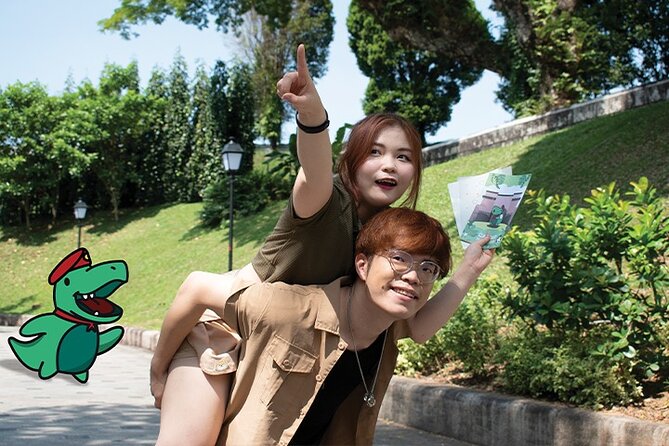
The puzzles are generally aimed at a broad audience. They are described as hard but not impossible, and the difficulty seems to sit in a useful middle range for couples, families, and friends. You should expect moments of confusion, but not a challenge designed only for expert escape-room players.
The best results will come from sharing jobs. One person can hold the map, another can search for visual details, and someone else can test possible answers. The activity rewards conversation rather than one person solving everything alone.
Solo participation is possible, but it may be less comfortable. One person found the map confusing and the clues quite cryptic when exploring alone. That makes sense: an outdoor hunt spreads your attention across navigation, observation, and problem-solving. A group can compare ideas and spot details faster.
For two people, the experience may be especially appealing if you enjoy solving problems together. For families, older children can help with clues while adults handle the route and reading. Large groups should remember that the maximum is 20 people, and a very large team may need to divide tasks so nobody is left standing around.
What makes the clues memorable
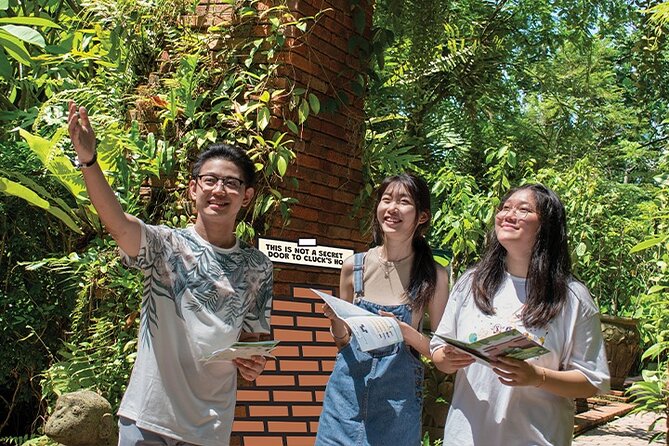
The most creative element is the use of the site itself. Hints may be hidden in or connected to existing structures and local-history exhibits, so the park becomes part of the answer. You are not simply handed a booklet of puzzles that could take place anywhere.
That design encourages careful looking. A wall, monument, display, or historic feature may carry more importance than you first expect. It also means you should resist rushing from one checkpoint to the next. Take a moment to compare the clue with what you can see around you.
The clues are described as creative, well thought out, and simple enough to solve, but not always obvious. That balance is good for a mixed group. A puzzle hunt with no difficulty becomes a walk with paperwork, while one that is too cryptic turns into frustration.
If your group gets stuck, the facilitators are part of the support system. Michelle is specifically praised for being a great guide and helper, while Jay is described as an excellent game master. Since the hunt is self-guided, do not expect a guide to narrate every step, but help is available when needed.
Weather, maps, and practical comfort
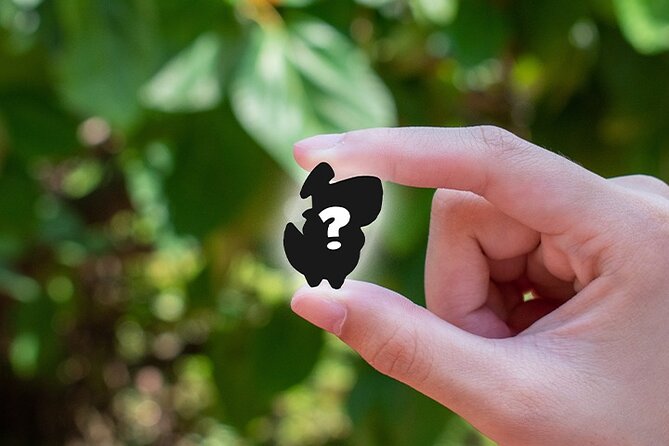
Singapore’s heat is the main practical issue. Fort Canning is outdoors, and the hunt takes about two hours, so hot or wet weather can affect your concentration. Comfortable walking clothes and water are sensible choices. The activity is much more enjoyable when you are not trying to solve a clue while feeling overheated.
A good-weather day can make the park walk excellent. In poor weather, the outdoor format becomes less forgiving. The supplied information does not describe a rain plan, indoor alternatives, or shade at each clue point, so check conditions before committing to a non-refundable booking.
The map is useful for making sure you visit the relevant places, but it may take a little effort to read. If you are responsible for navigation, look at it carefully before setting off. Keep the group together and agree on the next location before everyone wanders in different directions.
The activity is near public transportation, which makes reaching the starting point more convenient. The meeting point is Singapore History Consultants at 179622 Cox Terrace, and you return there when the hunt ends.
Is the $36.37 price good value?
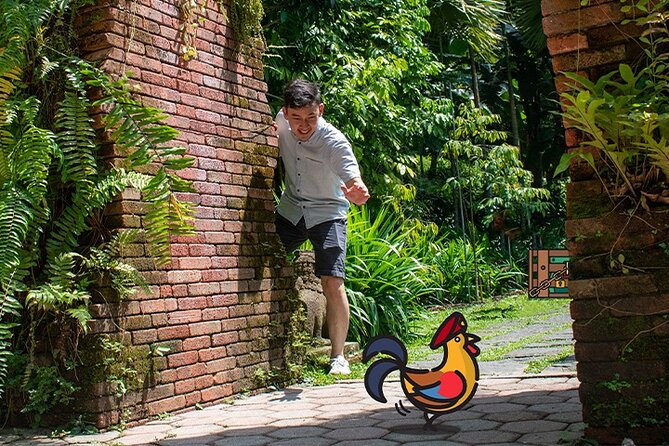
At $36.37 per person, this costs more than simply walking through Fort Canning Park on your own. You are paying for the game design, the clue materials, the story, staff support, and the extra structure that turns a park visit into a shared activity.
The value improves if you already enjoy escape rooms, scavenger hunts, or group games. Instead of paying only for access to a place, you get a planned two-hour experience that gives everyone something to do. That can be especially worthwhile for families or friends who want an activity with more energy than ordinary sightseeing.
The price is less appealing if you mainly want a quiet historical walk or a detailed lecture. You can explore the park independently for less, then read the information at your own pace. This hunt makes sense when you value play, teamwork, and a reason to look closely at the surroundings.
A mobile ticket keeps the booking process simple, but the experience itself depends on the physical materials and outdoor route. The booking is non-refundable and cannot be changed after purchase, so confirm your date, group size, and weather plans before paying.
Who should book this Fort Canning experience?
I would recommend it to friends who like solving problems together, families with children who need a reason to keep walking, and couples looking for a shared challenge. It also works well for people who have already seen Singapore’s major sights and want something less conventional.
History fans may enjoy the World War II and Fort Canning connections, though they should treat the game as an introduction rather than a full historical course. The self-guided format gives you time to read and explore, but the amount of historical detail you absorb depends partly on how much time your group gives it.
Solo explorers can take part, but I would choose this only if you are comfortable with map reading and cryptic clues. The format is built around teamwork, and the puzzles are more enjoyable when several people can test ideas.
Most people can participate, and the maximum group size is 20. Still, the activity involves walking around an outdoor park, so anyone who finds extended walking or hot weather difficult should consider that before booking.
Should you book The Piece-ful General?
Book it if you want Singapore sightseeing with a playful mission attached. The best parts are the clever use of Fort Canning’s actual features, the chance to learn while moving, and the satisfying teamwork involved in solving a chain of puzzles.
Skip it if you want a fully narrated tour, guaranteed cool indoor conditions, or a simple route with no head-scratching. The map and clues can challenge solo participants, and the non-refundable booking requires a firm commitment.
For most families, couples, and friend groups, this is a smart way to spend two hours at Fort Canning. Bring water, give yourself time to read the history, and do not be afraid to ask for help. Pepper’s statue may be in pieces, but your group does not have to be.
FAQ
How long does The Piece-ful General puzzle hunt last?
The activity lasts approximately two hours.
Where does the experience start?
It starts at Singapore History Consultants, 179622 Cox Terrace, Singapore.
Where does the activity finish?
The hunt ends back at the meeting point.
Is the puzzle hunt guided?
It is primarily self-guided. You follow the map, search for clues, and solve the activities as a team, with facilitators available to help.
How many people can join?
The maximum group size is 20 participants.
Can I cancel or change my booking?
No. The experience is non-refundable and cannot be changed for any reason after booking.
Just added around the world
- Vienna: Freud, Mozart & Beethoven Exploration Game★ 4.0 · 14 reviews
- e-Scavenger hunt Vienna: Explore the city at your own pace★ 3.5 · 2 reviews
- Mobile puzzle rally tour at the Vienna Central Cemetery★ 4.5 · 3 reviews
- Vienna Scavenger Hunt and Highlights Self Guided Audio Tour★ 4.5 · 13 reviews
- Digital puzzle tour with Marcus Aurelius’ order★ 5.0 · 5 reviews
- True Crime mobile puzzle rally Vienna★ 4.0 · 3 reviews
- Vienna Highlights Self guided scavenger hunt and Walking Tour★ 4.0 · 5 reviews
- The Vienna Augmented Reality Puzzle Rally★ 5.0 · 7 reviews