
Review · SALZBURG
Mozart’s Salzburg Exploration Game and Tour
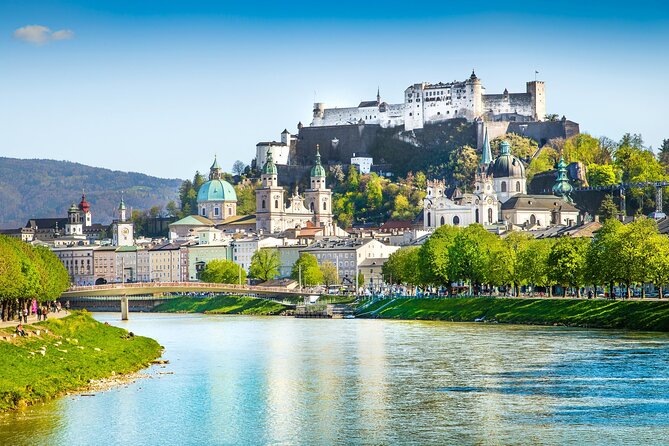
Follow Mozart through Salzburg’s streets. This low-cost city game turns sightseeing into a hunt for clues tied to Mozart’s life, music, and family. I like the flexible 90-minute format, which lets you pause for coffee or sightseeing, and I like the way the route connects famous sights with less obvious corners of town. The main drawback is the app setup: two poor ratings describe trouble entering the Viator booking reference, so you should prepare before arriving.
You play a wannabe pianist searching for Mozart’s lost opera. The route begins at Makartplatz and ends near Kapuzinerberg, passing nine locations along the way. I especially like this for families and teenagers, since it gives everyone a reason to look up from the phone and notice Salzburg’s details. Just remember that admission fees at several stops are not included, and this is not a guided tour with a person leading you.
Key points to know before you play
- A Mozart mystery guides the route: You solve clues connected with Mozart, Salzburg, and the city’s famous buildings.
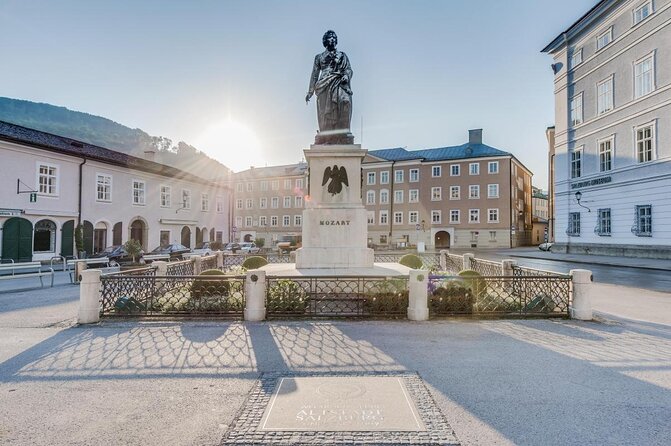
- Nine stops fit into about 90 minutes: The route includes Mozart’s Residence, Mozartsteg, Getreidegasse, Café Tomaselli, the cathedral, Mozartplatz, and Kapuzinerberg.
- The game works offline: After setup, you do not need a continuing internet connection to play.
- You control the pace: Start any time between 5:00 AM and 9:00 PM, pause whenever you like, and continue later.
- The price is unusually low: At $7.24 per person, it costs far less than a traditional private tour, but you provide your own guidance.
- App access needs care: Use the booking reference from your Viator confirmation and the same email address when creating your Questo account.
Why this Salzburg game works better than a standard city walk
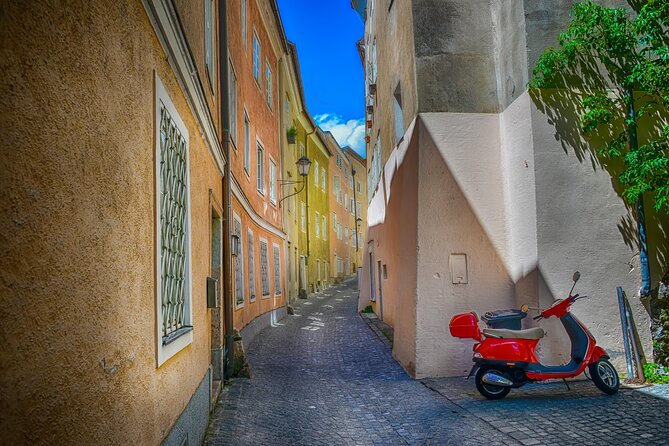
Salzburg is easy to admire and easy to rush through. You see the cathedral dome, Mozart’s name on every other sign, and the narrow lanes of the Old Town. Then you move on without noticing the small clues that make the city more personal.
This game gives you a reason to pause. At each stop, you look around for an answer before moving to the next location. The sightseeing is still self-guided, but the puzzle gives it shape. You are not simply following a blue dot from one sight to another. You are looking at a doorway, plaque, bridge detail, or building feature because the answer depends on it.
I think that makes the experience especially useful at the start of a Salzburg visit. One family used it with teenagers upon arrival and found that the route helped them get their bearings for the next two days. That is a real strength. The game introduces central Salzburg while also showing you how the sights relate to one another on foot.
The Mozart theme adds focus, but you do not need to be a serious classical music fan. The story is about a lost opera and your attempt to become a pianist. That playful setup gives children and adults a shared task. It also keeps the experience from feeling like a string of textbook facts.
More City Exploration Games in Austria:
- Vienna: The Great Plague Exploration Game
★ 4.5 · 60 reviews - Vienna: Freud, Mozart & Beethoven Exploration Game
★ 4.0 · 14 reviews - Zell am See Exploration Game and Tour
★ 3.0 · 2 reviews
Starting at Makartplatz and Mozart’s Residence
The starting point is Makartplatz, in central Salzburg. From there, the game leads you to Mozart’s Residence, known in German as the Mozart Wohnhaus.
This is where Mozart’s family lived after leaving his birthplace. The building was partly destroyed during World War II, reconstructed, and reopened to the public in 1996. Inside, displays cover the family’s biographies and daily life. The historic Dancing Masters’ Hall contains Mozart’s original instruments.
The game asks you to look around for the answer to its first challenge. That is a useful way to approach the building, even if you do not buy an admission ticket. You can treat the stop as an exterior introduction, then decide if the museum deserves extra time.
Admission is not included. That matters because the game itself costs only $7.24, but the total price rises if you add several museum entries. I would not build the day around entering every paid sight. Pick the one or two places most important to you and use the game as the free walking framework around them.
The planned stop lasts about 10 minutes. That is enough for a clue and a look around, but not enough for a serious museum visit. If you enter Mozart’s Residence, plan additional time outside the game’s suggested schedule.
Mozartsteg and the bridge with a film connection
Next comes Mozartsteg, a pedestrian bridge across the Salzach. Built by 1903 through a private association called the Mozartstegverein, it has an Art Nouveau design and a name that fits the Mozart theme perfectly.
This stop is free, and the bridge itself is part of the public city route. The game uses it as a visual puzzle location, so pay attention to the structure instead of crossing on autopilot.
Mozartsteg also appeared in the film The Sound of Music. That connection gives the stop extra appeal for people combining a Mozart visit with Salzburg’s movie locations. You do not need to join a separate film tour to appreciate the bridge, though the game does not promise a full explanation of the movie connection.
The bridge is one of the better parts of the route because it changes the rhythm. After a museum-style stop, you are outside, moving beside the river and solving a clue in an open public space. It also helps you understand Salzburg’s compact center, since the river is one of the city’s main visual reference points.
Mozart’s Birthplace on Getreidegasse
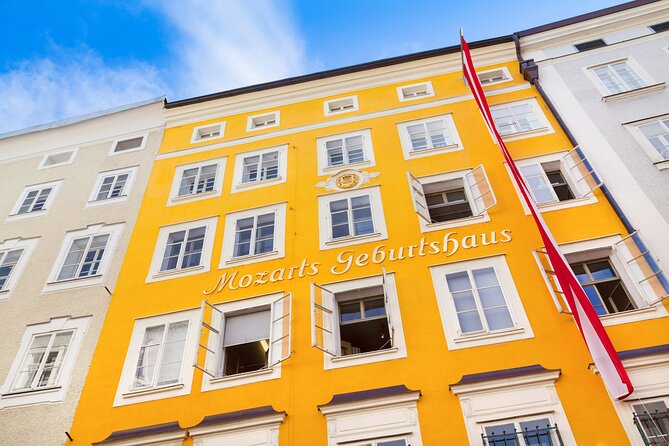
The route then reaches Mozart’s Birthplace at Getreidegasse 9. Mozart was born here on January 27, 1756, and the Mozart family lived on the building’s third floor from 1747 to 1773.
This is one of Salzburg’s most important Mozart sites, and it can be busy because Getreidegasse is one of the Old Town’s best-known streets. The game gives you a specific task, which can help you focus on details rather than simply taking a photograph of the famous address.
Admission is not included. Again, the planned 10 minutes is a clue-solving estimate, not a proper museum visit. If you enter, you will need to stop the game or let the schedule stretch. The pause function is important here. You can explore the interior, have a closer look at the exhibits, and then return to the route.
For a first-time visitor, this stop provides the clearest link between the city and Mozart’s early life. For repeat visitors, the puzzle may offer a fresh reason to revisit a place you already know.
More Escape Games in Austria:
- Vienna: Scavenger Hunt Self-Guided Tour
★ 4.7 · 83 reviews - Escape game in Salzburg
★ 4.5 · 23 reviews - Private City Discovery walk – Historical Treasure hunt
★ 5.0 · 18 reviews - Fun & mobile scavenger hunt through Vienna
★ 4.5 · 17 reviews
Coffee, cake, and Café Tomaselli
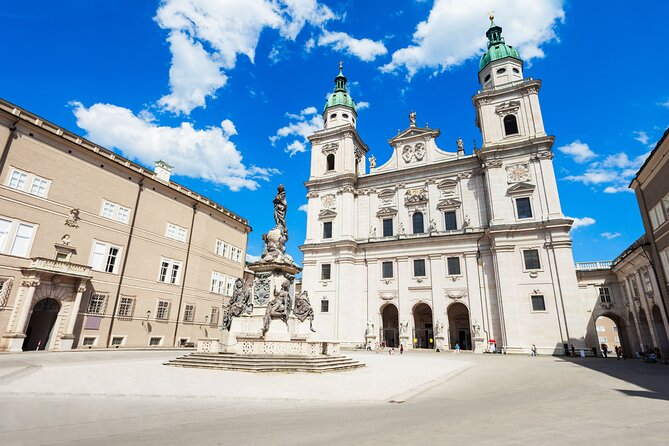
Café Tomaselli sits on the Alter Markt and has been run by the Tomaselli family for more than 150 years. Its long history, central location, coffee specialties, and selection of sweet dishes make it a natural pause point.
The game treats the café as another clue location. You are not required to turn the stop into a meal, and the experience does not include food or drink. Still, this is one place where I would be happy to ignore the 10-minute target. Salzburg sightseeing is better with a proper coffee break, and the game’s pause feature lets you take one.
The café is also a good test of how you want to use the experience. If you treat the route as a race, you may miss the point. If you treat it as a flexible outline, you can solve the clue, sit down for a drink, and continue when ready.
Food and drinks cost extra, of course. The game’s low price leaves room in the budget, but Café Tomaselli is a separate purchase, not part of the booking.
Salzburg Cathedral and Mozartplatz
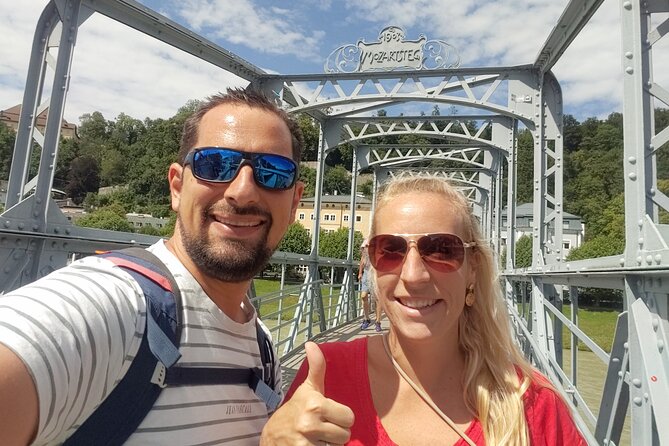
The next section brings you to Salzburg Cathedral, the large Baroque church dedicated to Saint Rupert and Saint Vergilius. A church was founded here in 774, and the cathedral was rebuilt after a fire in 1181.
The building is one of the strongest visual stops on the route. Even if you do not go inside, the exterior gives you a clear sense of Salzburg’s grand ecclesiastical center. The game asks you to search for another answer here, so take time to notice the architecture and nearby details.
Admission is not included. The route allows about 10 minutes, which works for an exterior clue but not for a full look inside. The cathedral is best treated as a major sightseeing stop that happens to contain one stage of the game.
Mozartplatz follows. The square has a direct connection to Mozart’s family story. Constanze Mozart-Nissen, Mozart’s wife, once lived at number 8, and a plaque on the building recalls that connection.
Mozartplatz is also a practical orientation point in the Old Town. By this stage, you have passed several central sights, so the square helps the route feel like a connected walk rather than a set of unrelated challenges.
Zeugwartstöckl and Salzburg’s quieter corners
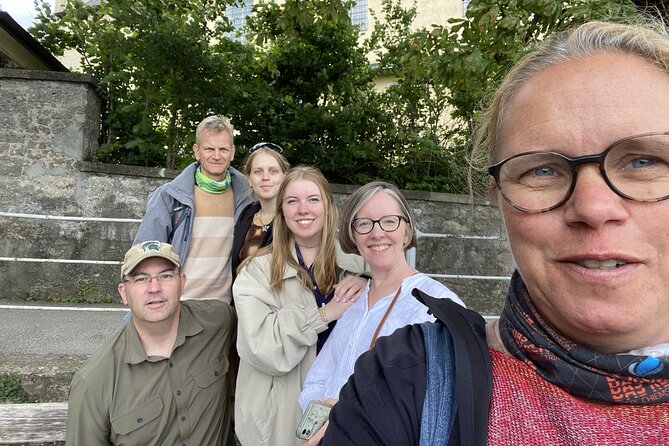
Zeugwartstöckl is less famous than the cathedral, birthplace, or Mozartplatz. That is part of its value. The stop introduces the Michaelstor, an early gate built on the left bank of the Salzach in 1620 during the third city fortification under Prince Archbishop Paris Count von Lodron.
The surviving Zeugwartstöckl was part of that gate complex. The actual gatehouse was later demolished, but the small building remains. You may pass such a place on an ordinary walk without learning why it matters. Here, the puzzle gives you a reason to stop and inspect it.
This is where the experience moves beyond a greatest-hits tour. You still see Salzburg’s headline sights, but you also get a bit of fortification history and a less obvious landmark. The game’s 10-minute estimate is suitable for the clue, though not for extended historical study.
Steingasse and the route’s historical layers
Steingasse adds another change of mood. The information connected with this part of the route includes the Joseph Mohr House, associated with Joseph Mohr, the writer of Silent Night, Holy Night. Mohr served as a vicar in Hintersee from 1827 to 1837.
This connection is not strictly Mozart-related, but that is not necessarily a problem. Salzburg’s history does not fit into one biography. The game uses Mozart as its main thread while allowing other people and stories to enter the walk.
For me, this helps prevent the experience from becoming repetitive. If every stop displayed only Mozart’s name, the route would feel narrow. The references to Joseph Mohr and Salzburg’s religious past add another layer without turning the game into a formal history lesson.
The stop is another exterior puzzle location, and admission is not included. Keep the route’s overall timing in mind, since the final section involves an uphill destination.
The climb toward Kapuzinerberg
The final stop is the northern viewpoint of Kapuzinerberg, a 640-meter hill on the right bank of the Salzach. The hill has forested paths, churches, an abbey, and walking routes. Chamois are also found in the area.
The route ends at Kapuzinerkloster, Kapuzinerberg 6. This finish gives the game a more satisfying shape than simply ending in another Old Town square. You move from Mozart’s family connections and central streets toward a higher point with views over Salzburg.
The important practical point is the uphill finish. The information provided does not give a detailed trail description, so I would not assume the final stretch is effortless. If anyone in your group has difficulty with hills, keep the ending in mind before starting.
The reward is a change of setting. You are no longer surrounded only by souvenir shops and historic façades. Kapuzinerberg offers a recreation area with paths, religious buildings, and a view over the city. The game’s final clue gives your walk a clear endpoint, while the hill itself can encourage you to linger.
How the app affects the experience
The game is played through a mobile app and is designed to work offline. That is useful in practice because you do not need to keep searching for a signal while moving between stops.
The weak point is the initial setup. One poor experience came from confusion over the QR code and the booking reference. The game provider’s instructions say to use the booking reference from the Viator confirmation email, then create the Questo account with the same email address used for the booking.
I would handle this before reaching Makartplatz. Download what you need, read the confirmation carefully, and check that the email address matches. If something goes wrong, support is available through Questo chat at all hours, according to the supplied information, and by email at [email protected].
This is not a minor detail. A self-guided game has no person waiting at the meeting point to fix a login problem. The attraction is independence, but independence also means you need to solve technical snags yourself.
Once working, the app provides the map-free structure promised by the experience. You can start at any hour, pause at any time, and resume later. The stated operating window is 5:00 AM to 9:00 PM every day.
Price, timing, and who gets the best value
At $7.24 per person, this is inexpensive by Salzburg tour standards. You are paying for a private, self-guided activity, not for a guide, museum tickets, transportation, food, or drinks.
I think the value is strongest for a small group that wants a shared activity. Families and friends can work on the clues together, and group discounts may reduce the cost further. It is also a sensible option for teenagers who would resist a traditional history walk.
The value is weaker if you want detailed musical analysis, personal storytelling, or answers to spontaneous questions. There is no physical guide. The app delivers the route and story, but it cannot adjust the explanation to your interests in the way a human guide can.
The advertised duration is about 90 minutes, with roughly 10 minutes at each of nine stops. In real use, you should expect the timing to change. Café Tomaselli, Mozart’s museums, the cathedral, and Kapuzinerberg can all justify extra time. The flexible format is therefore more useful than the fixed schedule.
Free cancellation is available up to 24 hours before the local start time. Cancellations within 24 hours are not refunded, and changes during that period are not accepted.
Should you book Mozart’s Salzburg game?
I would book this if you want a cheap, private way to get oriented in Salzburg, especially with children or teenagers. The route combines major Mozart locations with bridges, squares, cafés, fortifications, and a hilltop finish. The puzzle format gives your group a reason to pay attention.
I would skip it if you want a polished, human-led tour or if app setup is likely to frustrate you. Prepare the booking reference and matching email address before you arrive, and treat the 90 minutes as a flexible base rather than a strict promise.
For $7.24, the risk is fairly small. Just budget separately for museum admission, food, and any extra time you spend at the sights. If you enjoy solving clues and prefer to set your own pace, this is a practical way to meet Salzburg through Mozart without committing to a full guided tour.
FAQ
How long does Mozart’s Salzburg Exploration Game take?
The experience lasts approximately 1 hour and 30 minutes. Each of the nine listed stops is planned for about 10 minutes, but you can pause and continue later.
Where does the game start?
It starts at Makartplatz, 5020 Salzburg, Austria.
Where does the game end?
The route ends at Kapuzinerkloster, Kapuzinerberg 6, 5020 Salzburg, Austria.
What is the price?
The stated price is $7.24 per person. Group discounts are available.
Does the price include museum admission?
No. Admission is not included at Mozart’s Residence, Mozart’s Birthplace, Café Tomaselli, Salzburg Cathedral, Mozartplatz, Zeugwartstöckl, Steingasse, or the Kapuzinerberg viewpoint. Mozartsteg is listed as free.
Is a physical guide included?
No. This is a mobile game and self-guided activity. No physical tour guide is provided.
Do I need an internet connection while playing?
No. The game is designed for offline play, so you do not need an internet connection during the route.
Can I pause the game?
Yes. You can take a break at any time and resume later.
What are the available playing hours?
The stated opening hours are Monday through Sunday, from 5:00 AM to 9:00 PM.
What happens if I need to cancel?
You can receive a full refund if you cancel at least 24 hours before the local start time. Cancellations or changes made less than 24 hours before the start are not accepted for a refund.
Just added around Austria
- Vienna: Freud, Mozart & Beethoven Exploration Game★ 4.0 · 14 reviews
- e-Scavenger hunt Vienna: Explore the city at your own pace★ 3.5 · 2 reviews
- Mobile puzzle rally tour at the Vienna Central Cemetery★ 4.5 · 3 reviews
- Vienna Scavenger Hunt and Highlights Self Guided Audio Tour★ 4.5 · 13 reviews
- Digital puzzle tour with Marcus Aurelius’ order★ 5.0 · 5 reviews
- True Crime mobile puzzle rally Vienna★ 4.0 · 3 reviews
- Vienna Highlights Self guided scavenger hunt and Walking Tour★ 4.0 · 5 reviews
- The Vienna Augmented Reality Puzzle Rally★ 5.0 · 7 reviews
City Exploration Games, compared.
Romantic Montmartre: Paris Lost Lovers Exploration Game and Tour
Read our review →
Sibiu Old Town Exploration Game and Self-Guided Tour
Read our review →
Glasgow Ghost Hunt: The Soul That Got Away Exploration Game
Read our review →
Rotterdam Highlights & Spies: Interactive City Game
Read our review →
Discover Utrecht with a self-guided Outside Escape city game tour
Read our review →
Bristol Street Art: Banksy Exploration Game and Tour
Read our review →Browse the lists this game appears in