
Review · NIJMEGEN
Discover Nijmegen with an Outside Escape city game tour!
Save Nijmegen before the Waal rises. This self-guided Outside Escape turns a 2.5-kilometer walk into a city puzzle, using a flood emergency to lead you through Nijmegen’s riverfront and old center. I like the mix of local sights and playful problem-solving, and I like that your group can begin whenever it suits you.
The price is $29.65 per group of up to six, which is good value if you fill the team. The main tradeoff is that you are on your own, so the fun depends on your group staying engaged with the clues rather than expecting a guide to explain every sight.
Key points to know before you play
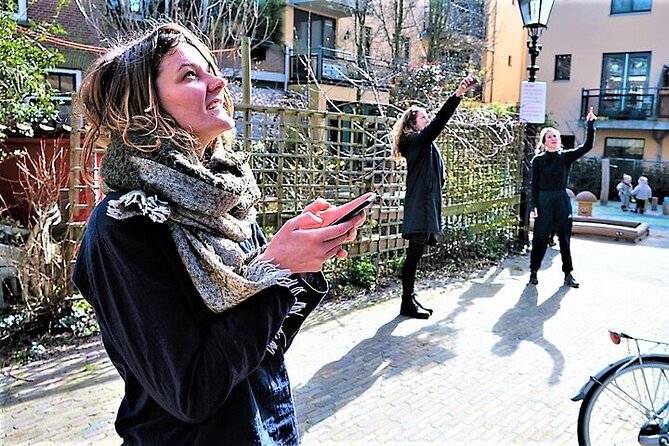
- The Waal flood story gives the walk a clear purpose: You must get the city’s floodgates working and send a warning in time.
- The route covers about 2.5 kilometers: Plan on roughly two hours, though a quick group may finish sooner.
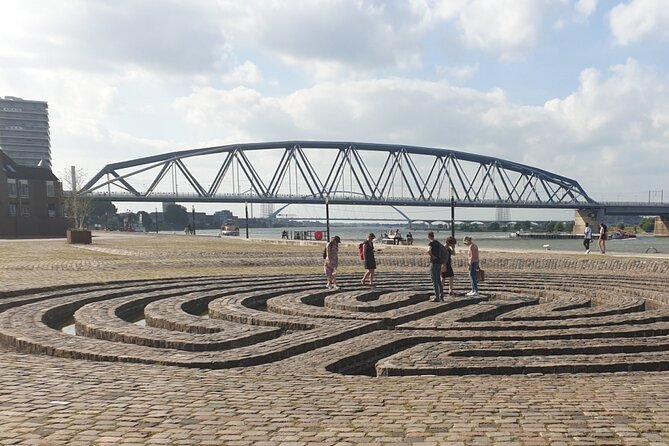
- The walk links river views with old Nijmegen: You visit the Snelbinder, Besiendershuis, Stevenskerk, Valkhof Museum, and Valkhof Park.
- It is private and self-guided: Only your own group plays, using a smartphone with mobile data.
- The team size is practical for puzzle solving: Up to five or six people can play together, with the activity aimed at ages 15 and older.
- Hot weather requires a slower plan: A previous participant found the game manageable even on a very hot day, helped by Nijmegen’s cafés and terraces.
A flood warning turns Nijmegen into a game
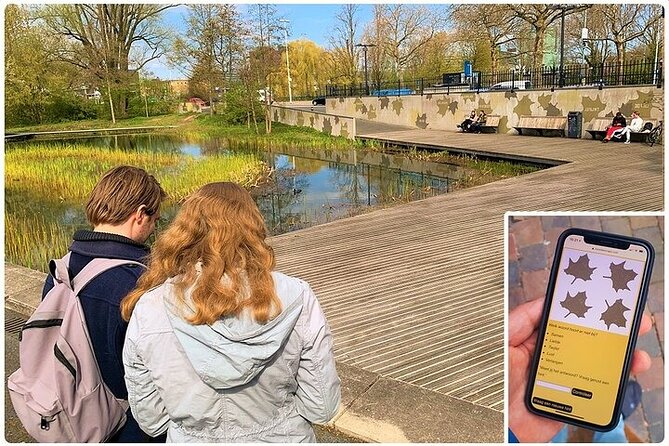
The central idea is simple: a giant floodwave is moving down the Waal, the floodgates are not working, and your group must warn Nijmegen before it is too late. That story gives each puzzle a reason to exist. You are not simply walking from one monument to another. You are looking for information that might help solve the city’s crisis.
I like this format because it gives you a little more purpose than a standard sightseeing walk. The next clue encourages you to look closely at buildings, bridges, views, and public spaces. You may notice details you would otherwise pass without a second glance.
The story also helps keep the route moving. A self-guided walk can sometimes feel loose or directionless, especially when you are exploring an unfamiliar city. Here, the flood problem gives your group a common goal. Someone can focus on the directions, another person can inspect the surroundings, and someone else can work through the puzzle.
Still, this is not a traditional guided tour. You will not have a local expert beside you to explain every event, architectural detail, or museum object. The historical information is folded into the game, so I would treat the activity as a lively introduction to Nijmegen rather than a full history lesson.
More City Exploration Games in the Netherlands
- Discover Utrecht with a self-guided Outside Escape city game tour
★ 4.5 · 51 reviews - Rotterdam Highlights & Spies: Interactive City Game
★ 4.0 · 51 reviews - Discover Delft with a self-guided Outside Escape city game tour!
★ 5.0 · 32 reviews
Starting near Kronenburgersingel
The stated starting point is on Kronenburgersingel in Nijmegen. From there, the route leads toward the river and the old center before finishing in Valkhof Park at Kelfkensbos 59.
You receive confirmation at booking, and the activity begins whenever you choose. That flexibility matters if you are fitting Nijmegen into a larger day trip. You are not tied to a morning departure or a fixed meeting time, and you do not need to wait for a group of strangers.
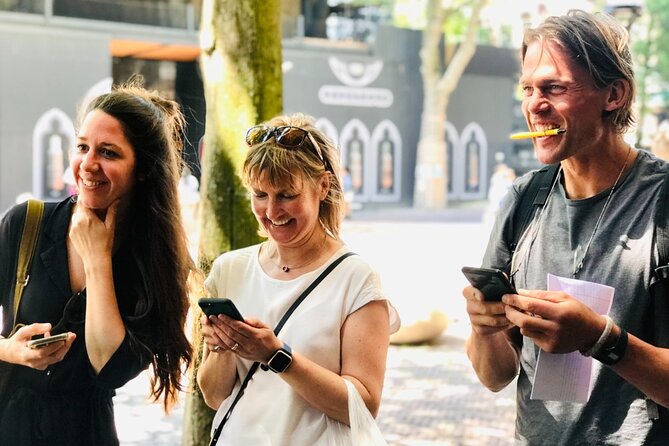
You do need a smartphone with a mobile data plan. Charge it before you begin, since the phone is your route guide and puzzle tool. It is also wise to keep the whole group close together. If one person walks ahead to solve a clue while the rest miss the location, the game loses some of its shared energy.
The route is near public transportation, and most people can take part. Service animals are allowed. Since the walk is outdoors and includes city streets, riverfront space, and a park, comfortable walking shoes make sense even though the distance is modest.
The Snelbinder gives you Nijmegen from above
One of the first important stops is the Snelbinder, the bicycle bridge running alongside the railway. It gives you a wide view over the Waal, the city quay, and the surrounding part of Nijmegen.
This is a strong opening location for the story. The river is not just scenery here. It is the reason the flood emergency matters, and the bridge lets you see the water and the city together. The view also gives you a useful sense of Nijmegen’s setting before the route turns into narrower historic streets.
You spend about 10 minutes at this stop, and admission is free. That short visit should be enough for the view and the puzzle, but you may want extra time if the river is busy with boats or the weather is pleasant.
The route also includes a place where you can catch your breath, have coffee, and watch boats pass along the river. The exact stop is not specified, so do not treat it as a formal café reservation or scheduled break. Think of it as a useful pause built into a route with room for your own pace.
Hot weather is worth considering. One participant completed the activity during very warm conditions and still found it manageable. Nijmegen’s center has terraces where you can stop for a drink, but carry water and avoid rushing through the riverfront section at midday.
Besiendershuis connects the river to Nijmegen’s past
The Besiendershuis is one of the most distinctive stops. Built around 1525, it is one of Nijmegen’s oldest buildings. Its name comes from the besiender, the official who collected tolls from ships using the river.
That detail gives the building a practical connection to the Waal. You are not looking at an old house simply because it is old. Its original purpose links Nijmegen to river traffic, trade, and the business of controlling movement along the water.
The stop takes about five minutes and costs nothing to visit. It is brief, but that fits the game format. You pause, inspect the setting, use the information available to solve the clue, and continue before the walk loses momentum.
I especially like this kind of stop because it rewards attention. A grand church or museum naturally attracts your eye. A smaller historic building can slip past unnoticed unless the route gives you a reason to look. The Besiendershuis helps show how Nijmegen’s riverfront was part of daily working life.
Do not expect to enter the building based on the information provided. The activity treats it as an outdoor stop, and the main value is seeing its place in the old city and understanding its link to river tolls.
More Outdoor Escape Games in the Netherlands
- Discover Amerfoort’s city center in this Outside Escape game tour
★ 4.5 · 32 reviews - Discover Maastricht with a self-guided Outside Escape city game
★ 5.0 · 29 reviews - Discover Deventer with an Outside Escape city game tour!
★ 4.5 · 23 reviews - Discover Amsterdam’s city center in this Outside Escape game tour
★ 4.5 · 18 reviews
Stevenskerk marks the historic center
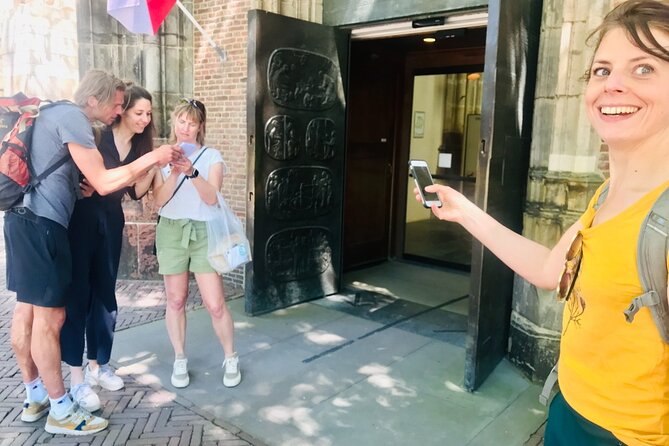
The route also takes you to the monumental Stevenskerk, located in Nijmegen’s historic center. The church was built in 1243, giving it a long connection to the city’s medieval past.
This is likely to be one of the most recognizable sights along the walk. After the open views from the Snelbinder and the smaller scale of the Besiendershuis, the church gives the route a stronger architectural focal point.
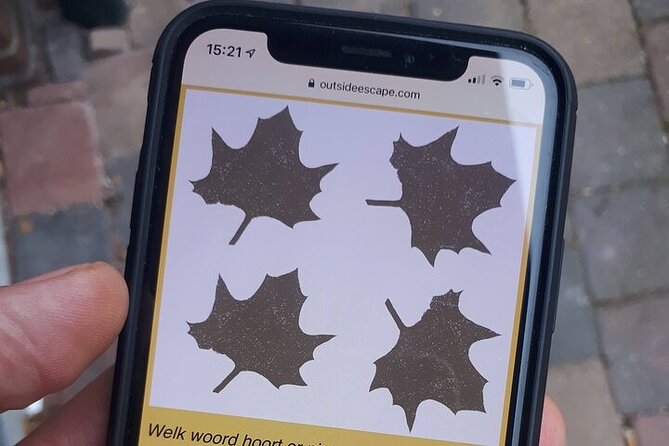
The game format changes how you approach it. Instead of stopping only to take a photograph, you are encouraged to inspect the church and its surroundings for information connected to the next puzzle. That can make the visit more active, though it also means you may not spend as long studying the building as you would on a dedicated church tour.
If you want a slower look, allow extra time beyond the suggested two-hour schedule. The listed duration is approximate, and your team’s solving speed will make a difference. Puzzle fans may stop often to debate answers, while a group with one fast solver may move through the clues quickly.
Valkhof Museum adds art and archaeology
Another route stop is the Valkhof Museum, an archaeology and art museum in Nijmegen. The museum was created in 1999 through a merger between the G. M. Kam Museum of archaeology and the Commanderie van St. Jan Museum of classical and modern art.
The museum gives the walk a different kind of cultural reference. The riverfront and Stevenskerk show Nijmegen through place and architecture. The Valkhof Museum points toward objects, art, and archaeology.
The stop itself is listed as about 10 minutes, with free admission to the game route. That does not mean you receive a full museum visit within that time. If the museum is a major reason for your visit, check its current opening details separately and plan a longer visit outside the puzzle schedule.
For this activity, the museum works best as part of the city story rather than as a standalone museum tour. You get a taste of the area’s cultural importance, then continue toward the final park setting.
Finishing in Valkhof Park
The endpoint is Valkhof Park at Kelfkensbos. The park is open daily from 7:00 in the morning until 10:00 at night for the stated operating period. It contains Roman ruins, a chapel, wooded paths, and a view over the river.
This is a satisfying place to finish because it combines several sides of Nijmegen in one setting. You have the river, archaeology, religious history, and green space. After working through the flood story in city streets, a park gives your group somewhere to pause and talk through the final puzzle.
The ending also feels less abrupt than finishing beside an ordinary street corner. You can continue exploring the park after the game, sit for a while, or use the location as a transition to another Nijmegen sight.
Keep in mind that the attraction’s opening hours are listed for the park, not necessarily for every building or nearby facility. The park is open late, but do not assume that a museum, chapel, or interior site shares those hours.
What the $29.65 group price really offers
At $29.65 per group, the cost is attractive if you have four to six people. Split six ways, it comes to roughly five dollars per person before any currency or booking differences. Even a smaller group of three pays about ten dollars each, which remains reasonable for a private activity lasting up to two hours.
The value comes from combining a route, a story, and puzzles in one purchase. You are not paying for a guide’s time, a museum admission, or transport between sights. That keeps the price low, but it also explains the limits. You need to bring your own energy, solve the puzzles yourselves, and provide your own deeper historical context.
I would choose this for a group of friends, a family with older teenagers, or anyone who finds ordinary sightseeing a little passive. It is less suitable if you want a detailed lecture, a carefully paced architectural tour, or someone to answer every question on the spot.
The private format is a real advantage. Your team can pause for coffee, debate a clue without feeling rushed, and move at its own speed. A group of five or six may also have enough different viewpoints to solve puzzles more easily, though too many competing ideas can create its own small flood.
How long you should allow
The stated duration is one to two hours, with about two hours being a sensible plan. The walk covers approximately 2.5 kilometers, so the physical distance is not demanding for most people.
The puzzles are the variable. If your group enjoys discussing each clue, taking photographs, and stopping at the river, you may use the full time. If one person quickly spots patterns and the rest follow along, you may finish earlier.
I would not schedule a tight train connection immediately afterward. The route is short, but puzzle timing is hard to predict, and you may want a drink or a few extra minutes in Valkhof Park. The flexible start helps, but your own schedule should still leave breathing room.
The walk is most pleasant when you treat the two-hour estimate as a relaxed guide rather than a race against the clock. The story already supplies urgency. You do not need to add a real-world deadline.
Who will enjoy this Nijmegen experience
This activity suits people who like to combine sightseeing with a challenge. You should enjoy reading clues, discussing possible answers, and paying attention to your surroundings.
It is aimed at players aged 15 and older. Younger participants can join with supervision, but the puzzle design and story are not described as a children’s attraction. Families with teenagers may find the format a good compromise between a formal tour and a simple walk.
It also works well for groups who have already seen the major outline of Nijmegen and want a different way to move through it. The route includes familiar landmarks, but the puzzle gives you a new reason to inspect them.
I would be more cautious about booking it for someone with limited phone access, no mobile data, or little interest in games. The entire experience depends on the smartphone and the group’s willingness to take part. If one person does all the solving, everyone else may feel like they are simply following.
The current score is 4.7 from 19 ratings, with 100 percent recommending it. That is a strong result for a small, specialized activity, and the most useful practical point is that the route remains workable in hot weather if you use the cafés and terraces for breaks.
Should you book it?
Book this Outside Escape if you want a private, low-cost way to see Nijmegen and your group enjoys puzzles. The river views, the Besiendershuis, Stevenskerk, Valkhof Museum, and Valkhof Park create a varied route, while the flood story keeps the walk from feeling like a string of unrelated stops.
Skip it if you want a traditional guided tour with detailed commentary or if your group does not enjoy solving clues together. For everyone else, the price is fair, the distance is manageable, and the flexible start makes it easy to fit into a day in Nijmegen. You can cancel for a full refund up to 24 hours before the start time, but cancellations within 24 hours are not refunded.
FAQ
How much does the Nijmegen Outside Escape cost?
The price is $29.65 per group, with up to six people allowed to participate.
How long does the city game take?
The activity takes approximately one to two hours. The route is about 2.5 kilometers long.
Where does the activity start and finish?
It starts on Kronenburgersingel in Nijmegen and ends at Valkhof Park, Kelfkensbos 59, 6511 RR Nijmegen.
What do I need to take part?
You need a smartphone with a mobile data plan. The activity is self-guided, so there is no guide meeting your group.
How many people can join, and what age is recommended?
The activity is designed for a team of up to five or six players aged 15 and older. Younger players can participate with supervision.
Can I cancel for a refund?
Yes. You can cancel at least 24 hours before the local start time for a full refund. Cancellations or changes made within 24 hours are not accepted for a refund.
Just added around the Netherlands
- Discover Utrecht’s Zocherpark in this Outside Escape game tour!★ 5.0 · 2 reviews
- Utrecht Scavenger Hunt and Highlights Self Guided Audio Tour★ 4.0 · 10 reviews
- e-Scavenger hunt The Hague: Explore the city at your own pace★ 3.5 · 10 reviews
- The Hague Scavenger Hunt and Highlights Self Guided Audio Tour★ 3.5 · 8 reviews
- Delft Self Guided Sherlock Holmes Murder Mystery Game★ 4.5 · 2 reviews
- The Blue’s Clues in Delft Exploration Game and Tour★ 3.5 · 10 reviews
- 90 minutes Self Guided Walking Tour with puzzles in Den Haag★ 4.5 · 7 reviews
- e-Scavenger hunt Schiedam: Explore the city at your own pace★ 4.5 · 4 reviews
City Exploration Games, compared.
Romantic Montmartre: Paris Lost Lovers Exploration Game and Tour
Read our review →
Sibiu Old Town Exploration Game and Self-Guided Tour
Read our review →
Glasgow Ghost Hunt: The Soul That Got Away Exploration Game
Read our review →
Rotterdam Highlights & Spies: Interactive City Game
Read our review →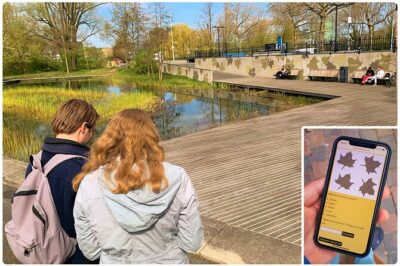
Discover Utrecht with a self-guided Outside Escape city game tour
Read our review →
Bristol Street Art: Banksy Exploration Game and Tour
Read our review →Browse the lists this game appears in