
Review · GHENT
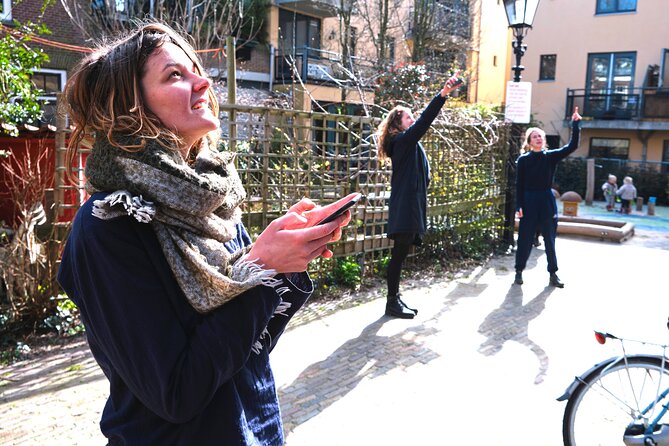
Discover Ghent with a self-guided Outside Escape city game tour!
Ghent turns its old streets into a puzzle. This self-guided Outside Escape game links the city’s best-known sights with a mystery about a missing panel from the Lamb of God painting. I like the freedom to start whenever you wish, and I like that the route reveals lesser-known corners without tying you to a guide. The main drawback is value: at $28.66 per group, the game can feel costly if you need frequent hints or expect a polished finale.
You need a smartphone with mobile data, comfortable shoes, and a group ready to work together. The route covers about 2.5 kilometers and usually takes around two hours, though the stated range is roughly 90 minutes to 2.5 hours. The puzzles are aimed at players aged 15 and older, with supervision recommended for younger participants.
Key points at a glance
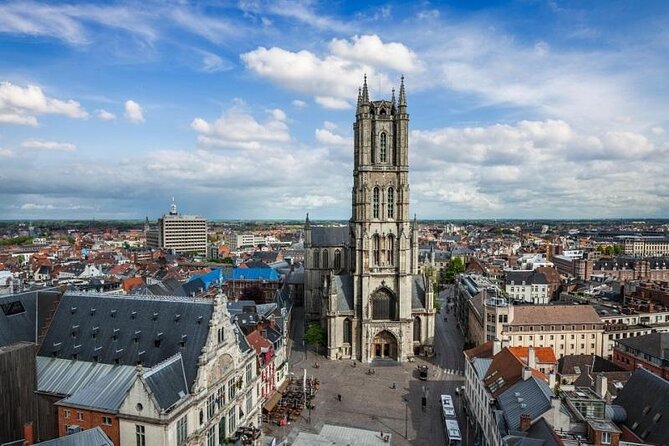
- A Ghent mystery with real historical landmarks: Follow a deathbed confession connected to a missing panel from the Lamb of God painting.
- A compact central route: Walk from Vrijdagmarkt to Saint Bavo’s Cathedral, passing major squares, churches, riverside areas, and medieval buildings.
- Self-guided from your phone: Start at any time during the stated daily hours, with no guide or fixed group departure.
- Private and flexible: The activity is for your own group, with the listed price covering up to five people.
- Good for puzzle-loving companions: You will need observation, teamwork, and patience more than specialist historical knowledge.
- One small warning: The puzzles may be challenging, and the ending may feel abrupt if you expect a final explanation.
Ghent becomes a game at Vrijdagmarkt
The route begins at Vrijdagmarkt, one of Ghent’s oldest squares. This broad space covers about a hectare and has played an important role in the city’s public life and political history. It is a sensible starting point because you begin in an open place, with room to get your team organized before the clues start demanding attention.
The game’s story centers on a deathbed confession. That confession may lead you toward the location of a missing panel from the Lamb of God painting, one of the most important works connected with Ghent. The central question is not simply where the panel went, but whether anyone still alive knows its exact location.
That setup gives the walk a purpose beyond taking photographs. You are not just moving from monument to monument. You are looking for details that may help solve the next step. I like this approach because it gives you a reason to examine the city rather than hurry past it.
Plan about 20 minutes for this first stop, according to the supplied timing. You may need less if your group solves the opening puzzle quickly, or more if you are still learning how the game works. The square itself is free to visit, and no admission ticket is required for the stop.
More Self-Guided App Games in Belgium
- Bruges Scavenger Hunt and Highlights Self Guided Audio Tour
★ 4.0 · 54 reviews - Brussels Highlights Self guided scavenger hunt and Walking Tour
★ 4.0 · 14 reviews - Antwerp Scavenger Hunt and Best Landmarks Self Guided Audio Tour
★ 4.0 · 14 reviews
St. Veerleplein and the edge of the medieval city
From Vrijdagmarkt, the route leads toward St. Veerleplein. This square is dominated on its northern side by Gravensteen, Ghent’s famous castle. The Lieve runs behind the buildings to the west, while the Leie lies to the south. The Patershol district begins to the east.
This is one of the strongest parts of the route for atmosphere. You get several pieces of old Ghent in one compact area: water, medieval streets, a major castle, and an older neighborhood. The square is named after Saint Pharaïldis of Ghent, a detail that may become useful when the puzzle asks you to pay attention to names, places, or symbols.
The stop is listed at about 20 minutes. Give yourself time to look around before trying to force an answer. In a city game, the obvious object is not always the useful one. You may find that your group works best when one person reads the clue, another checks the surroundings, and a third keeps track of the story.
There is no admission fee included because the route uses public spaces. The game does not promise entry into Gravensteen or any other paid attraction, so think of the castle as part of the setting, not as a separate visit built into the activity.
Sint-Niklaaskerk brings Gothic detail into the puzzle
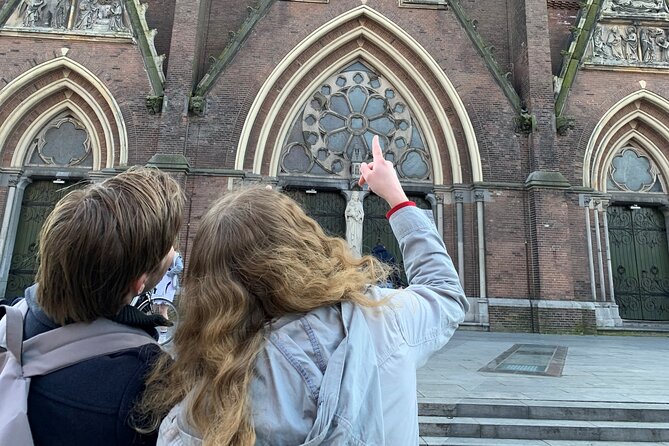
The next major stop is Sint-Niklaaskerk, dedicated to Nicholas of Myra. The church is a fine example of Scheldt Gothic architecture, a regional style associated with the use of local stone and strong vertical forms.
The feature most likely to catch your eye is the crossing tower. It is a lantern tower, designed to bring light into the transept and the flying buttresses around the main choir. The tower rises 76 meters, giving you a useful landmark as you move through central Ghent.
The church stop is allotted about 20 minutes. That sounds generous, but it is useful if you need to inspect architectural details for a clue. You may find yourself looking upward, checking shapes, or comparing features that would be easy to ignore on a standard city walk.
The limitation is that a self-guided game cannot respond to your questions. If a clue seems unclear, you must work it out as a group or use a hint. One piece of feedback on the experience described the puzzles as difficult and said that hints were needed often. That is not necessarily a problem for a puzzle fan, but it matters if you expect a relaxed walk with simple trivia.
Stadshal mixes new design with old Ghent
The Stadshal is a large open canopy on Emile Braunplein in the historic center. Its modern form is part of the KoBra project, an urban development effort in central Ghent.
This stop gives the route a useful change of mood. Much of the game’s setting comes from medieval streets, churches, and older buildings. The Stadshal is more recent and more open, so it reminds you that Ghent is not preserved in one single period. The city continues to change, sometimes in ways that are debated, but the canopy has become part of the central scene.
The stop is listed at approximately 20 minutes. Since the Stadshal is open rather than enclosed, you can pause here without needing to enter a building. It may also be a practical place for your group to regroup, read the next clue carefully, and decide on a plan.
The game’s design works best when you enjoy noticing contrasts. One clue may ask you to think about a historic church, while the next may depend on a modern public structure or a visual detail in the square. That variety helps keep the walk from feeling like a string of identical monument stops.
More City Exploration Games in Belgium:
- Romantic Bruges: Love Between the Canals Exploration Game
★ 4.5 · 32 reviews - Discover Bruges with a self-guided Outside Escape city game tour!
★ 5.0 · 4 reviews - Discover Antwerp with this Outside Escape city game tour!
★ 5.0 · 4 reviews - Brussels Origins of the City: Exploration Game and Tour
★ 5.0 · 2 reviews
Geeraard de Duivelsteen and Ghent’s defensive past
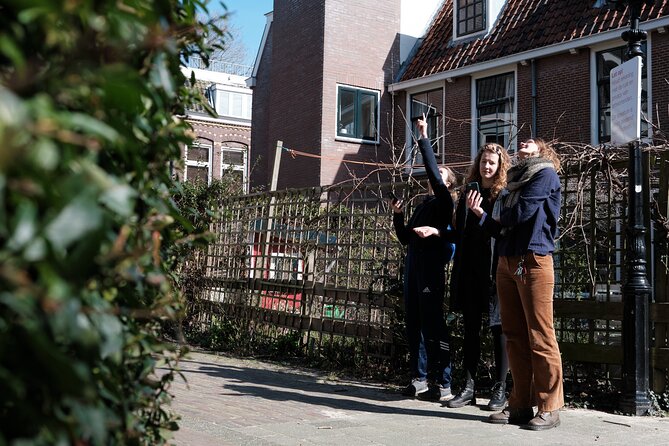
Geeraard de Duivelsteen, or the Castle of Gerald the Devil, is another memorable stop. Despite its dramatic name, the important point here is its practical role. The building helped defend the Portus aan de Reep, a trading settlement connected with the early development of Ghent.
This stop adds a useful layer to the mystery. Ghent was not only a city of churches and handsome squares. It was also a trading center that needed protection. The building’s connection with the Portus aan de Reep helps explain why the city grew where it did and why defense mattered.
You can expect roughly 20 minutes here. The structure may prompt questions about what you are seeing, especially if the game asks you to connect the building to a date, name, or visual clue. Take care not to rush simply because the castle is smaller or less famous than Gravensteen. In a puzzle route, a modest-looking building can carry the key detail.
The practical advantage is that this stop keeps the story tied to real places. You are not solving abstract riddles in a blank setting. The clues are meant to make you look more closely at buildings that already have a role in Ghent’s past.
Sint-Lievenscollege and the Bishop’s Palace area
The route then reaches Sint-Lievenscollege Business campus Baudelo and the area around Bisdomplein. The nearby Bishop’s Palace is the administrative seat of the Diocese of Ghent and the residence of the bishop. The present building is protected as a monument.
This part of the walk may feel quieter and less instantly recognizable than the main squares. That is useful. A city game should give you more than the postcard views, and this stop points toward the working religious and civic life of Ghent.
Allow about 20 minutes. You may need to read the clue twice and compare the wording with what you can see around you. Since this is a public urban route rather than a guided interior visit, do not assume the game includes access to the palace or the college campus. The value is in the setting and the details visible from the route.
The name of this stop can be a little confusing because the supplied route refers to both Sint-Lievenscollege Business campus Baudelo and the Bishop’s Palace area. Keep your phone handy and follow the game’s directions carefully. If your group gets separated or distracted, a clear meeting point is helpful.
Saint Bavo’s Cathedral provides the final setting
The route ends at Saint Bavo’s Cathedral on Sint-Baafsplein. The church began as a parish church dedicated to John the Baptist. In 942, Transmar, bishop of Tournai, consecrated it as the Sint-Janskerk.
This is a fitting place to finish a story linked to the Lamb of God painting. The cathedral gives the mystery a clear connection to Ghent’s religious art and long history. It also makes a useful endpoint because you finish in one of the city center’s most important public spaces.
The experience description says the end point is at St. Bavo’s Cathedral. It does not promise a guided cathedral visit or a full explanation inside the building. That distinction matters. You may reach the correct location and solve the final task, but you should not assume the game includes admission, an extended art talk, or a formal conclusion.
One participant’s feedback described the ending as sudden and said there was no closing text. The provider indicated that it would look at the abrupt ending. I would treat this as the chief weakness of the current format. A final paragraph explaining the mystery, the answer, and the historical connection would give the walk a much stronger sense of completion.
How the timing and distance work in practice
The route is approximately 2.5 kilometers, which is short for a city walk. The challenge is not physical endurance. It is the time spent studying clues, discussing possible answers, and using hints when the group gets stuck.
The stated duration ranges from 1 hour 30 minutes to 2 hours 30 minutes. The detailed description says the game takes around two hours. The seven listed stops each have an approximate 20-minute allocation, so the actual pace will depend heavily on your team.
You can start at any moment during the published opening period, from 7:00 a.m. to 11:00 p.m., Monday through Sunday, for the dates provided. An early or late start gives you flexibility, but daylight and general comfort may affect how easily you inspect outdoor details. The game itself requires a smartphone with a mobile data plan.
Wear shoes suitable for walking on city streets. You do not need special equipment beyond the phone, but you do need enough battery for the route and the puzzle instructions. Since this is self-guided, there is no guide to keep you moving if your group gets caught on one difficult clue.
Is $28.66 good value for a private group?
The price is $28.66 per group, with the listed limit of up to five people. That can be reasonable if five friends share the cost. It works out to less than six dollars per person for a two-hour activity, before any other expenses.
The description also refers to teams of up to five or six players, while the price information specifies up to five. I would confirm the allowed group size before booking if you have six people. The activity is private, so only your own group participates, which is a real advantage for people who dislike being mixed with strangers.
Value depends on what you want. If you are happy with a creative puzzle, a self-guided walk, and some historical context, the price can make sense. If you mainly want a detailed explanation of Ghent from an expert guide, this is not a replacement for a traditional guided tour.
The strongest value comes from the flexibility. You do not need to match a departure time, and you can fit the walk around other plans. The weaker side is the lack of personal help. If the puzzles are too hard, the experience can become a series of hints rather than a smooth story.
Who will enjoy this Ghent game most?
I would recommend it most for friends, couples, and families with older children who enjoy solving problems together. The age guidance is 15 and older, with supervision recommended for younger players. The activity gives you a reason to talk, observe, and make decisions as a group.
It also suits repeat visitors who have already seen the basic sights and want a different way to move through central Ghent. The route passes familiar landmarks, but the game asks you to inspect them rather than simply photograph them.
You may want a standard guided tour instead if you prefer a steady flow of historical explanation, or if you dislike stopping to test several possible answers. The difficulty is part of the point, but it will not suit every mood.
Service animals are allowed, and the route is near public transportation. Most people can participate, although the supplied information does not give detailed accessibility notes about surfaces, steps, or entrances. The activity takes place along city streets and public areas, so check your own mobility needs before booking.
Booking, cancellation, and the final decision
Confirmation is provided at booking. You can cancel for a full refund up to 24 hours before the scheduled start time. Changes or cancellations within 24 hours are not accepted for a refund, and the cut-off follows local time.
I would book this experience if you want a flexible, private way to see central Ghent and your group genuinely likes puzzles. The route is compact, the price is manageable when shared, and the story gives familiar sights a fresh purpose.
I would skip it if you want a polished beginning-to-end narrative, an expert guide, or guaranteed easy clues. The reported need for frequent hints and the abrupt ending are fair warnings. For the right group, though, this is a playful two-hour walk through Ghent that rewards curiosity more than speed.
FAQ
Where does the Ghent city game start?
It starts at Vrijdagmarkt in Ghent, Belgium.
Where does the experience end?
The route ends at Saint Bavo’s Cathedral, at Sint-Baafsplein 1, 9000 Ghent.
How long does the activity take?
It takes approximately two hours, with a stated range of about 1 hour 30 minutes to 2 hours 30 minutes.
How far is the walking route?
The route is approximately 2.5 kilometers long.
How many people can join one group?
The price information covers a private group of up to five people. The experience description also mentions teams of up to five or six, so confirm the limit if your group has six players.
What equipment do I need?
You need a smartphone with a mobile data plan.
What age is the activity suitable for?
It is recommended for players aged 15 and older. Younger players may participate with supervision.
Can I cancel for a full refund?
Yes. You can cancel at least 24 hours before the scheduled start time for a full refund. Cancellations or changes made within 24 hours are not refunded or accepted.
More Outdoor Escape Games in Belgium
- Outdoor Escape Game with drinks in Brussels
★ 4.5 · 8 reviews - Outdoor Escape Game in Étretat
★ 5.0 · 171 reviews - Bamberg: Outdoor Escape Game with a Puzzle Backpack
★ 4.8 · 101 reviews - Game of Thrones Private Outdoor Escape Game in Dubrovnik
★ 5.0 · 84 reviews
Just added around Belgium
- Discover the secrets of Mechelen while playing! Escape room★ 4.0 · 6 reviews
- Discover Mechelen while escaping the zombies! Escape room★ 4.0 · 3 reviews
- Discover Mechelen while playing! Escape game – The Walter case★ 3.5 · 2 reviews
- Discover Namur while playing! Escape game – The Walter case★ 4.5 · 2 reviews
- e-Scavenger hunt Namur: Explore the city at your own pace★ 3.5 · 5 reviews
- Discover Liège while playing! Escape game – The Walter case★ 4.5 · 5 reviews
- Namur: Escape Game in the city – The Alchemist★ 4.0 · 5 reviews
- Cork: Magic Themed Escape Game in Town★ 4.5 · 2 reviews
City Exploration Games, compared.

Romantic Montmartre: Paris Lost Lovers Exploration Game and Tour
Read our review →
Sibiu Old Town Exploration Game and Self-Guided Tour
Read our review →
Glasgow Ghost Hunt: The Soul That Got Away Exploration Game
Read our review →
Rotterdam Highlights & Spies: Interactive City Game
Read our review →
Discover Utrecht with a self-guided Outside Escape city game tour
Read our review →
Bristol Street Art: Banksy Exploration Game and Tour
Read our review →Browse the lists this game appears in