
Review · OSLO MUNICIPALITY
Oslo: Prison Island Adventure Escape Game
Expect fast teamwork, not a quiet escape room. Oslo’s Prison Island combines puzzle-solving, physical tasks, and TV-style challenges across a large set of themed rooms. I like the constant change from one task to the next, and I like that success depends more on communication than on being a puzzle genius. The main catch is that first-time teams may need several attempts to understand the best approach, especially when the venue is busy.
You pay about $33 per person for access to multiple challenge rooms and a team scorecard. That is a fair price if you enjoy active group entertainment and use most of the 90 minutes to two hours well. It is less attractive if your group dislikes competition, gets frustrated by unclear instructions, or expects a traditional escape room with one continuous story.
Key points at a glance
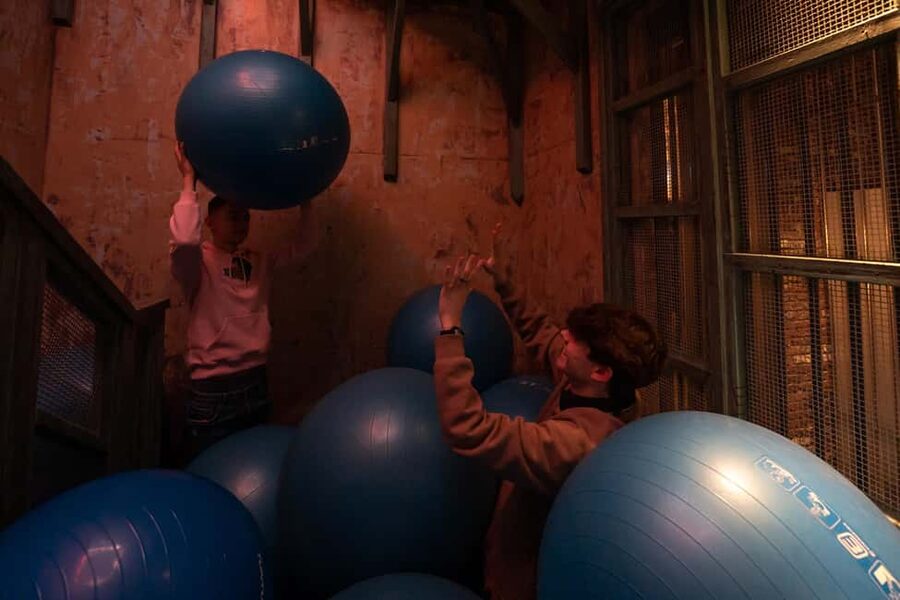
- Around 50 rooms: One reported visit featured about 50 different rooms, giving you far more choice than a single-room escape game.
- Teams of two to five: Small groups must communicate clearly, divide tasks, and make quick decisions.
- A new task in every room: Puzzles and physical challenges keep the pace moving instead of repeating one style of game.
- Suitable for many ages: The activity is designed for different skill levels, but children under nine cannot take part.
- English-language gameplay: The game is played in English, even though the host or greeter may speak English or Norwegian.
- Flexible booking terms: You can cancel up to 24 hours ahead for a full refund and reserve without paying immediately.
What Prison Island in Oslo actually is
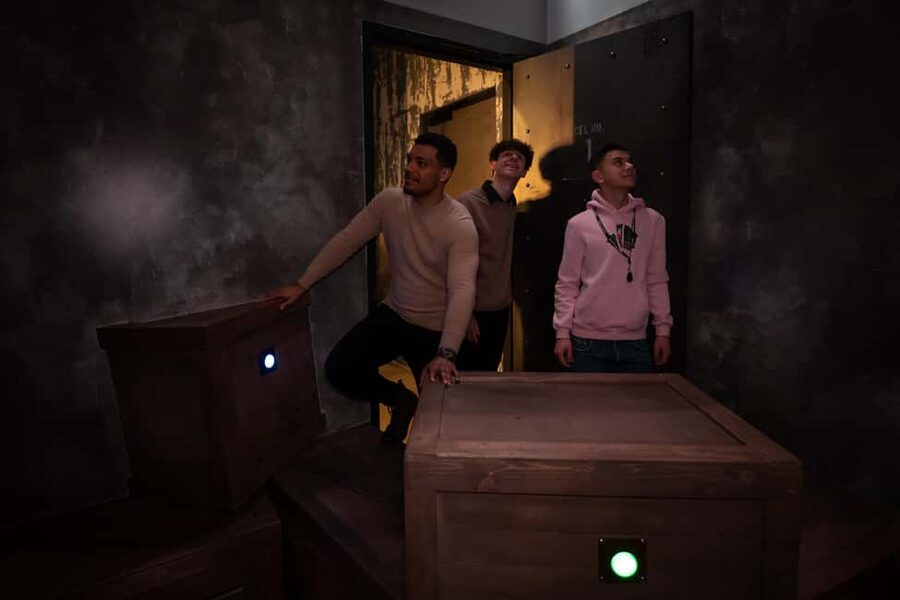
Prison Island is best understood as a collection of mini challenge rooms rather than one ordinary escape room. You and your team move from cell to cell, trying to complete a task and earn points before time runs out.
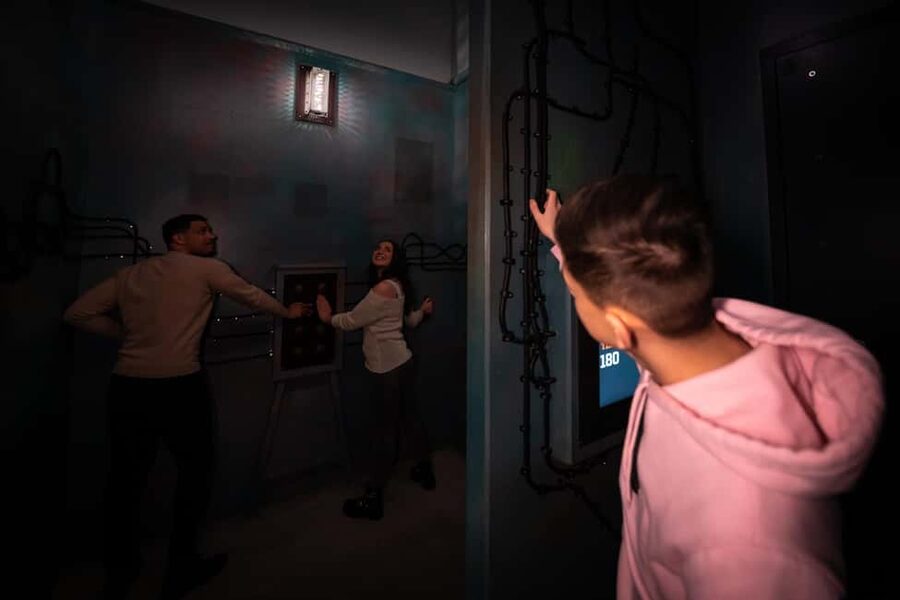
The setup borrows from escape rooms and television challenge shows. Some rooms may test logic. Others may ask you to coordinate movements, spot patterns, handle an obstacle, or make a fast group decision. The supplied information does not give the exact task in every room, and that is part of the appeal: you do not know precisely what comes next.
The aim is not simply to escape. Your team tries to score as many points as possible by completing rooms successfully. You receive a team scorecard, which gives the outing a clear purpose and makes it easy to compare your performance with your own expectations.
I like this format for groups with mixed abilities. One person may be quick with a code or pattern, while another is better at giving directions or keeping everyone focused. You do not need every team member to excel at the same thing.
More Escape Games in the world:
- Sofia Escape Room – Teorema Rooms
★ 5.0 · 895 reviews - Saw2 vs Squid Game – Escape Game Montpellier
★ 5.0 · 752 reviews - Prague Wizard Experience Magic School Escape Game
★ 5.0 · 746 reviews
Your first 15 minutes: briefing and team planning
Arrive 15 minutes before your booked time. That buffer matters because you need a briefing before the game begins, and a late start cuts into your chance to try more rooms.
Teams can include two to five people. Two players may find the game intense because every task depends on a small amount of communication. A group of four or five has more ideas and more hands, but it can also become noisy or disorganized. Before entering the rooms, agree on a simple plan: speak clearly, let one person take charge when needed, and move on if a challenge is eating too much time.
The host or greeter speaks English or Norwegian, but the game itself is played in English. If your group includes someone who is less comfortable with English, make sure everyone understands the instructions before starting. One practical issue reported about the experience is that some room descriptions changed language, which made certain tasks harder to follow.
The briefing is also your moment to ask how scoring works and how to keep track of rooms. This is useful because the venue can contain many rooms, and it may be easy to lose your place when several groups are moving around.
The challenge rooms: why the format keeps you moving
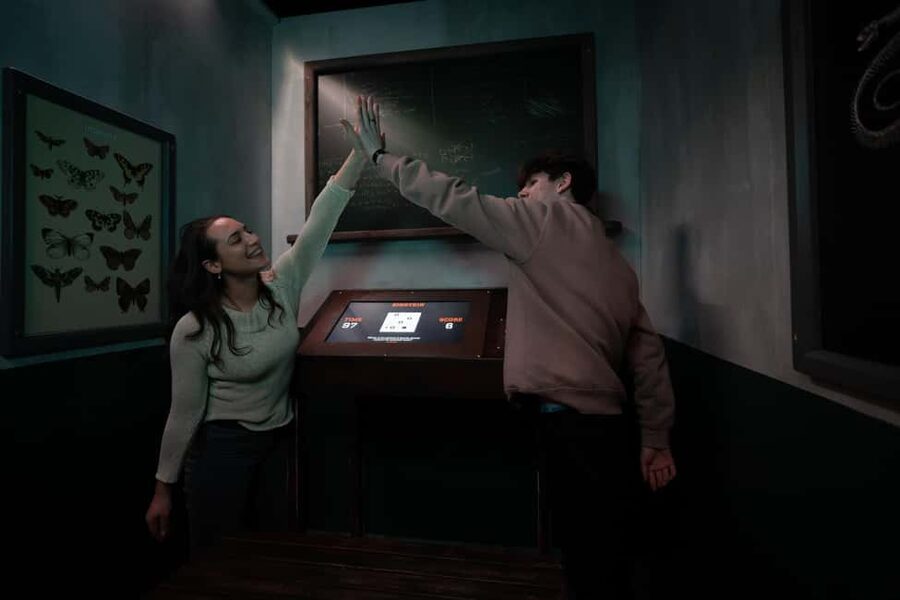
The central part of the experience is a rapid series of separate challenges. You are not walking through a sightseeing attraction or following a guide from room to room. Your team chooses or reaches a room, reads the instructions, and tries to complete the task within the available time.
The variety is the strongest feature. A puzzle that rewards careful observation may be followed by a task that needs physical coordination. Then you may face something that calls for quick thinking under pressure. This variety helps prevent the familiar escape-room problem of having one player dominate every puzzle.
You should expect some trial and error. A first attempt may show you the basic idea without giving you enough time to finish. Returning to the same room can be part of the strategy, especially once your group understands the rules. One first-time participant specifically found that several rooms needed more than one attempt.
That may sound inefficient, but it changes the mood of the activity. You are not expected to solve every challenge instantly. You are learning how the rooms work, deciding which tasks suit your group, and choosing when another attempt is worth the time.
About 50 rooms, but not necessarily every room
A useful detail for planning is the reported figure of about 50 rooms. That does not mean you will complete all 50 during one visit. In fact, one family had plenty of fun but did not reach every room.
Think of Prison Island as a menu rather than a fixed route. With 90 minutes to two hours, you will need to make choices. If your group spends too long on one difficult task, you may miss several easier or more suitable rooms. If the venue is crowded, you may also need to skip a room and return later.
This is the main difference between Prison Island and a standard escape room. A traditional game usually gives you one carefully paced story. Here, you have more freedom but less certainty. You may score well in several rooms while never seeing others.
I recommend keeping a loose mental note of the rooms you have attempted. If your scorecard allows it, mark strong results and unfinished tasks. That way, you do not circle back by accident or lose track when you move past a busy room.
Same place, a different puzzle:
- The Escape Game Orlando: Epic 60-Minute Adventures on I-Drive
★ 5.0 · 730 reviews - The Escape Game Pigeon Forge: 60-Minute Adventures on The Island
★ 5.0 · 646 reviews - Prison Break – Escape game in Montpellier
★ 5.0 · 583 reviews - The Escape Game Nashville Berry Hill
★ 5.0 · 546 reviews
Teamwork matters more than raw cleverness
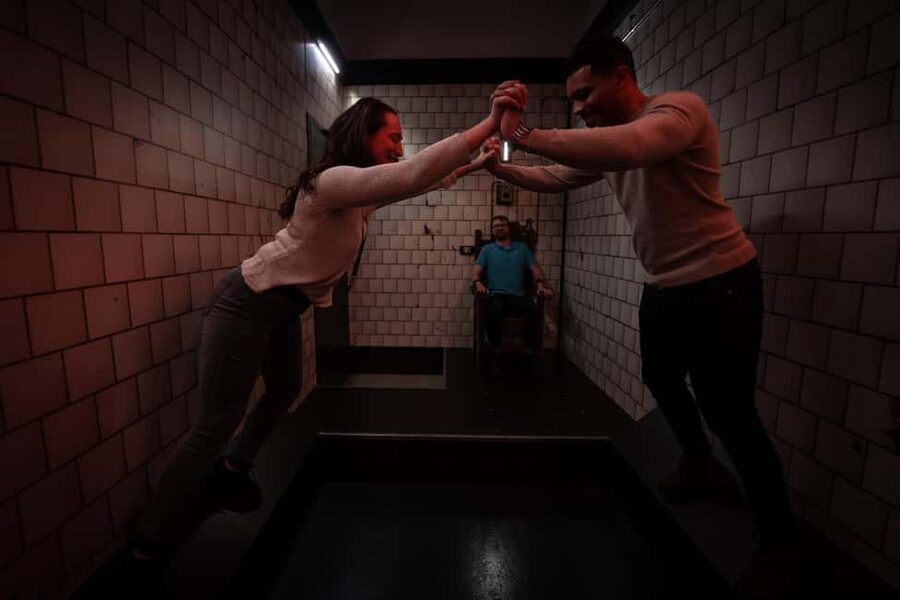
The game is built around teamwork, communication, and quick thinking. Those are not just marketing words here. With several people trying to solve one task, poor communication can waste more time than a difficult puzzle.
Choose roles naturally. One person can read the instructions aloud, another can test the obvious options, and another can watch the clock or scorecard. Do not force these roles for the whole session. Switch them when a task calls for a different strength.
I especially like this for families and work groups because it reveals how people respond under mild pressure. The setting is playful, but you still have to listen, explain an idea clearly, and accept that your first solution may be wrong.
There is also a social lesson in knowing when to stop. If a room is not working, leave and try another one. Pride is expensive when the clock is running. A strong team is not the one that solves every room immediately. It is the one that manages time and keeps everyone involved.
Physical activity and what to wear
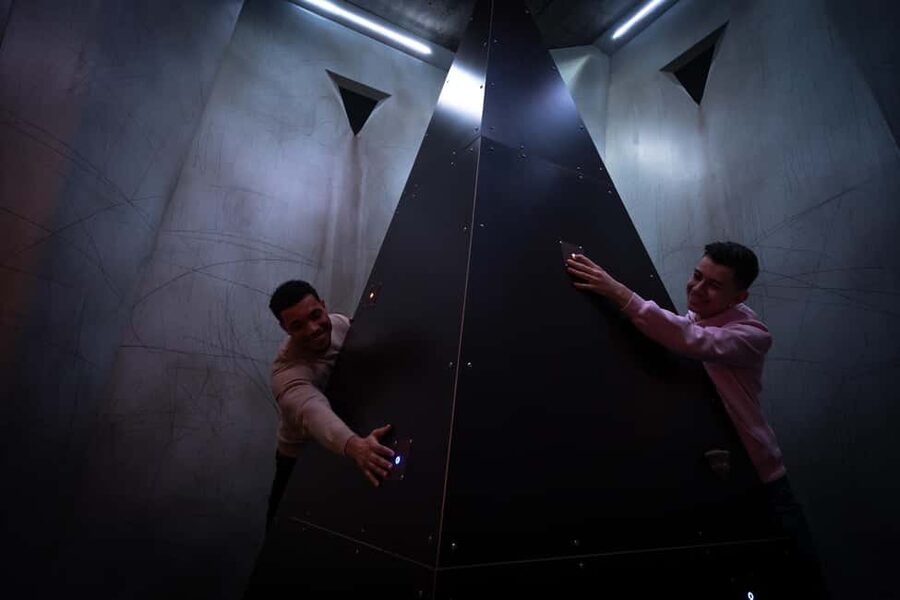
Wear comfortable clothing and shoes suitable for physical activity. The experience is not described as an extreme fitness challenge, but the tasks can involve movement and obstacles, so stiff clothing or unsuitable footwear may make the session less enjoyable.
The information does not specify the physical requirements of each room. That means you should not assume every challenge will suit every physical ability. If someone in your group has mobility concerns, contact the provider before booking and ask which rooms are accessible.
There is a clear inconsistency in the supplied details: the activity is marked as wheelchair accessible in one place, but wheelchair users are also listed under not suitable for the experience. Do not rely on the general accessibility label. Confirm the current arrangements directly with Fangene på Fortet Oslo before paying.
Children under nine are not permitted. For older children, the varied format can work well because a child who does not enjoy logic puzzles may still contribute to another type of task. Adults should still be ready to help explain instructions and keep the group organized.
Handling crowds, language, and lost time
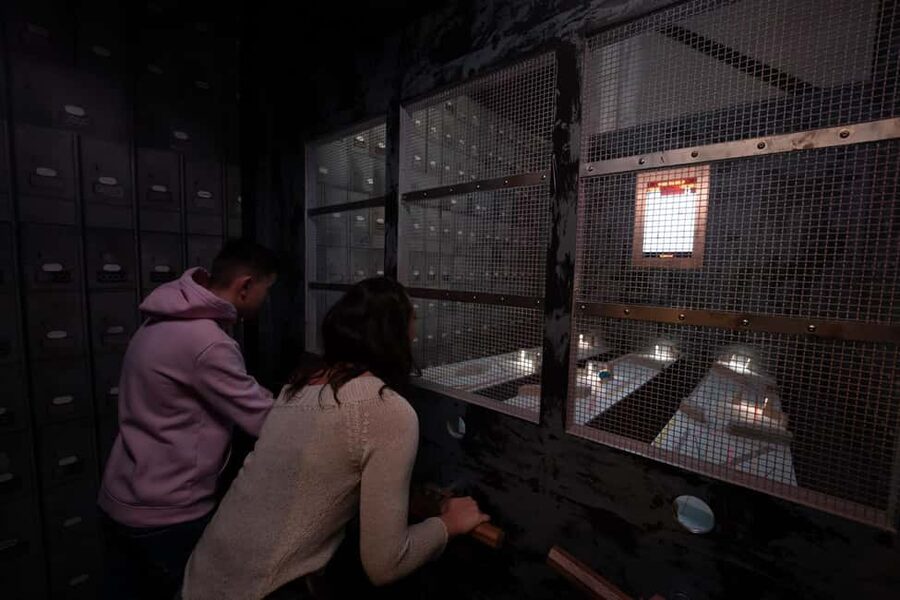
The venue can become busy, and this affects your strategy. One account describes having to pass by some rooms and then losing track of which rooms had already been tried. That is not a small issue if your goal is to maximize points.
You can reduce the problem by agreeing on a meeting point or a simple route through the available rooms. Keep your team together rather than scattering in search of open challenges. If the group separates, you may waste time finding one another instead of earning points.
Language can also affect the pace. The game is played in English, while some room instructions have reportedly shifted between languages. If an instruction seems unclear, ask the host rather than guessing. A misunderstanding can cost a whole attempt.
These limitations do not ruin the experience, but they change the kind of outing you are buying. Prison Island rewards flexibility. You need to accept that you may not get a perfect sequence of rooms and that a second attempt may be useful.
Is $33 per person good value?

At about $33 per person, the price is reasonable for a 90-minute to two-hour group activity, particularly in Oslo, where indoor entertainment can be a useful break from sightseeing or poor weather. You are paying for access to multiple rooms rather than one short puzzle session.
The value depends on how actively your group plays. If you try several rooms, return to difficult challenges, and use most of the allotted time, the price compares well with other paid indoor activities. If you arrive late, spend much of the session waiting, or dislike competitive tasks, the cost will feel higher.
The biggest value comes from repeatability. Because there are many rooms with different difficulties, a second visit should not be identical to the first. You may choose different challenges, improve your score, or bring a new group with different strengths.
That said, the experience is not ideal for a group seeking a polished, linear story. The scorecard and room-based format offer action and choice, not a carefully scripted theatrical adventure.
Who will enjoy this most?
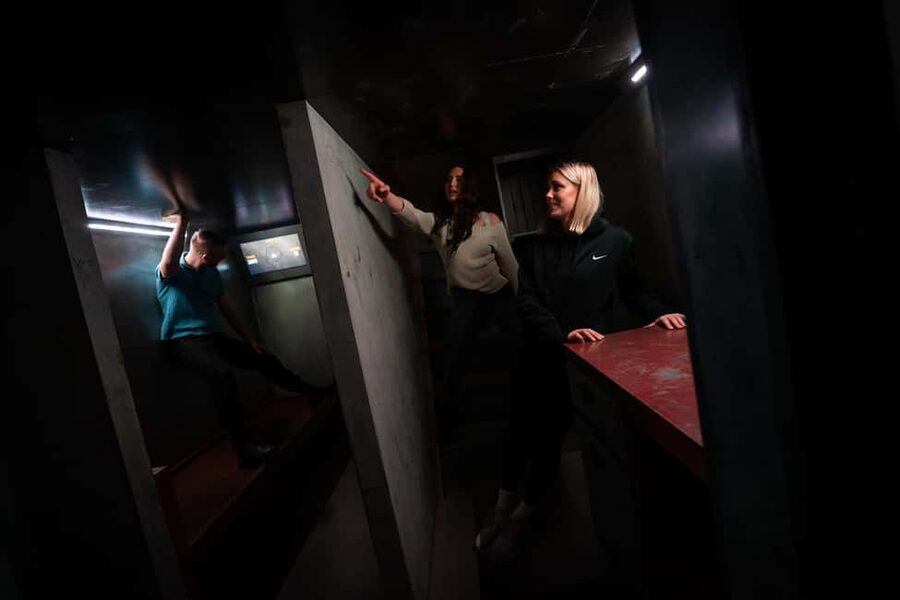
I would recommend Prison Island for:
- Friends who like friendly competition
- Families with children aged nine and older
- Colleagues looking for a shared activity
- School groups that can work in small teams
- Visitors who want an indoor activity with both mental and physical elements
- Groups with mixed abilities and different comfort levels
It is less suitable for a group that wants a quiet museum visit, a single story-driven escape room, or a fully guided experience. There is no personal guide included, so your team must read, decide, and manage its own progress.
Small groups of two can enjoy it, but five-person teams may have more ways to solve each challenge. The tradeoff is that a larger group needs stronger turn-taking. If everyone talks at once, even an easy room can become difficult.
Practical booking advice for Oslo
Your booking includes entry to the challenge rooms and a team scorecard. Transportation to and from the venue is not included, so plan your route separately within Oslo Municipality.
Check the available starting times when you book. The listed duration ranges from 90 minutes to two hours, so leave enough room in your day for the full session rather than scheduling a tight connection afterward.
The cancellation policy is helpful: you can cancel up to 24 hours in advance for a full refund. You can also reserve now and pay later, which gives you flexibility while you finalize your Oslo plans.
Most importantly, arrive 15 minutes early, wear active clothing, and keep your group to two to five people. Those simple choices will do more for your experience than trying to prepare for every possible puzzle.
Should you book Prison Island?
Book it if you want an energetic group activity where every room brings a new problem. I particularly like the mix of physical tasks and puzzles, the large number of rooms, and the fact that different people can contribute in different ways.
Think twice if your group dislikes crowds, unclear instructions, or repeated attempts. The language issue and the need to skip rooms when the venue is busy can frustrate people who prefer a neat, controlled experience.
For most families, friend groups, and company teams, the $33 price is fair if you arrive ready to cooperate and use the full session. Treat the score as a bonus, not the whole point. The best result is a group that communicates better by the end than it did at the start.
FAQ
How long does the Prison Island experience last?
The activity lasts about 90 minutes to two hours. Check the available starting times when booking.
How many people can be on one team?
Teams can include two to five people.
Is the game suitable for children?
Children under nine are not suitable for the activity. The game is designed for a range of other ages and skill levels.
What language is the game played in?
The game is played in English. The host or greeter may speak English or Norwegian.
What should I wear?
Wear comfortable clothing and shoes suitable for physical activity.
Is the venue wheelchair accessible?
The supplied information gives conflicting details. It marks the activity as wheelchair accessible but also lists wheelchair users under not suitable for the experience. Contact Fangene på Fortet Oslo before booking to confirm current access arrangements.
Just added around the world
- Vienna: Freud, Mozart & Beethoven Exploration Game★ 4.0 · 14 reviews
- e-Scavenger hunt Vienna: Explore the city at your own pace★ 3.5 · 2 reviews
- Mobile puzzle rally tour at the Vienna Central Cemetery★ 4.5 · 3 reviews
- Vienna Scavenger Hunt and Highlights Self Guided Audio Tour★ 4.5 · 13 reviews
- Vienna Highlights Self guided scavenger hunt and Walking Tour★ 4.0 · 5 reviews
- Digital puzzle tour with Marcus Aurelius’ order★ 5.0 · 5 reviews
- True Crime mobile puzzle rally Vienna★ 4.0 · 3 reviews
- The Vienna Augmented Reality Puzzle Rally★ 5.0 · 7 reviews
Norway Escape Games, compared.

e-Scavenger hunt Kristiansand: Explore the city at your own pace
Read our review →
Vigeland Alien Threat in Oslo Exploration Game and Tour
Read our review →
e-Scavenger hunt Stavanger: Explore the city at your own pace
Read our review →

Oslo Scavenger Hunt and Highlights Self Guided Audio Tour
Read our review →

Browse the lists this game appears in