
Review · TOULOUSE
Toulouse “Ville Rose”: Interactive Game & Walking Tour
Toulouse turns history into a scavenger hunt. This app-led walk guides you from Saint-Étienne Cathedral to the Basilica of Saint-Sernin through ten puzzle stops, mixing local legends, short historical notes, and clues you solve on your phone. I like the freedom to pause whenever you wish, and I like the route itself, which links major sights with less obvious corners of the old center.
At $5.95 per person, it is an inexpensive way to get your bearings, especially for families or friends who enjoy a little competition. The main concern is technical reliability: some players have been unable to open the quest or resume it, so you should download and test the app before reaching the starting point.
Key points at a glance
- Ten historic stops: Follow a route from Toulouse Cathedral to Saint-Sernin, passing the Hôtel d’Assézat, Pont Neuf, Jacobins Convent, and more.
- A puzzle walk, not a guided tour: You solve clues on your phone rather than follow a person carrying a sign.
- Offline play after download: The app is designed to work without mobile data once the quest is fully downloaded.
- Flexible timing: The advertised duration is about 1 hour 50 minutes, but you can pause, stop, or take longer at any point.
- Excellent low-cost value: At $5.95, it costs far less than most guided sightseeing activities.
- Best for curious, self-directed groups: Families with older children, couples, and friends may enjoy the game format most.
What this Toulouse game actually feels like
This is a self-guided city puzzle with a sightseeing route attached. At each stop, you look around for a detail, answer a question, and use the solution to move forward. The app also gives you a short piece of information about the place, often connected to Toulouse legends or local history.
That distinction matters. The experience is not an escape room, and it does not come with a physical guide. It is closer to a digital treasure hunt through the city center. You will not receive a long lecture about architecture, but you will have a reason to examine doorways, facades, statues, and church details that you might otherwise pass without noticing.
The route is private for your group, so you can play with your own companions rather than join strangers. The published time is approximately 1 hour 50 minutes, though the pause and resume feature gives you plenty of room to stop for coffee, enter a church, or linger at a viewpoint.
The current rating is 3.5 out of 5, which is a fair warning to take the app setup seriously. The best experiences praise the fun format, useful route, and flexibility. The weakest experiences involve access problems, unclear first instructions, or clues that are hard to interpret.
Other games people play around France:
- Saw2 vs Squid Game – Escape Game Montpellier
★ 5.0 · 752 reviews - Prison Break – Escape game in Montpellier
★ 5.0 · 583 reviews - School of Magic – Escape game Montpellier
★ 4.5 · 536 reviews
Starting at Toulouse Cathedral

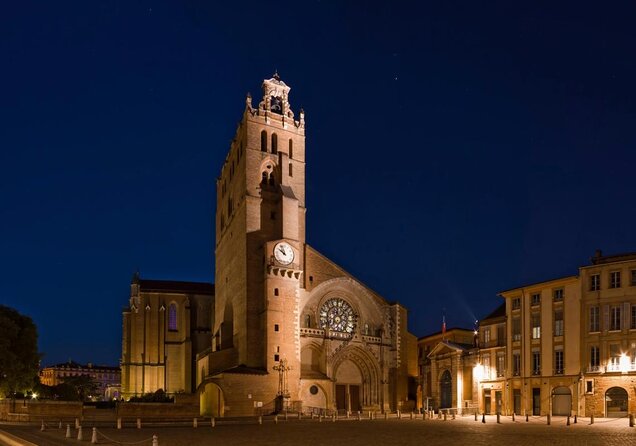
The route begins at Place Saint-Étienne, beside Toulouse Cathedral. This Roman Catholic church has been listed as a French historic monument since 1862, and its building history reaches back more than a thousand years.
The first known mention of a church on this site dates to 844. A larger structure began in the 11th century, with further work added in the 13th century. That long building process helps explain why Toulouse Cathedral feels less uniform than a church built in one clean campaign.
Your first challenge asks you to look around and find the detail needed to continue. This is a useful introduction to the game because it gets you examining the setting instead of simply reading an instruction on a screen. The first clue directions have been difficult for some players to read, so take your time here and make sure the starting quest is working before you move on.
Musée des Augustins and Place de la Trinité
The next stop is the Musée des Augustins, Toulouse’s fine arts museum. Its collection covers sculpture and painting from the Middle Ages through the early 20th century, with a particularly strong group of Romanesque sculpture from the Occitan region.
The activity focuses on what you can observe around the site rather than requiring a museum visit. That keeps the walk moving, but it also means the game gives you only a taste of the museum. If you want to see the artworks properly, plan a separate visit and allow extra time.
Place de la Trinité follows. Built between 1824 and 1826, the square was designed by urban planner Urbain Vitry and decorated by Parisian sculptor Alexandre Romagnési. This is a good example of how the route moves across different periods of Toulouse history, from medieval religious buildings to 19th-century urban design.
The puzzles here are generally short. Some people will find them easy, while others may need to inspect the surrounding details carefully. That range can work well in a family group, where younger players can spot visual clues and adults can help interpret them.
The Hôtel d’Assézat and Toulouse’s woad wealth
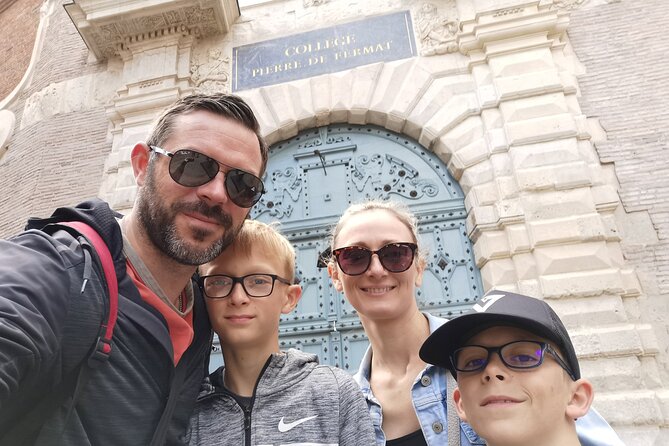
The Hôtel d’Assézat is one of the route’s most striking stops. Toulouse architect Nicolas Bachelier likely designed it for Pierre d’Assézat, a wealthy woad merchant whose trade brought him international fame.
Construction began in 1555, but the building was not finished when d’Assézat died in 1581. Its presence gives the puzzle walk a useful economic angle. Toulouse was not shaped only by bishops, kings, and pilgrims. Merchants also built grand homes, and their fortunes helped define the city’s Renaissance architecture.
You will look for the answer to the next clue around the building. The challenge is a good reason to study the stonework and layout, but keep your expectations measured. The app provides brief historical notes, not a full architectural explanation.
Same place, a different puzzle:
- Mission Possible – Escape game Montpellier
★ 5.0 · 437 reviews - Paris: Palais Garnier Mystery Game with Entry Ticket
★ 4.3 · 400 reviews - Who Killed Victor ? Escape Game at Père Lachaise Cemetery
★ 4.8 · 258 reviews - Escape game in Montmartre
★ 5.0 · 247 reviews
Pont Neuf and the Garonne
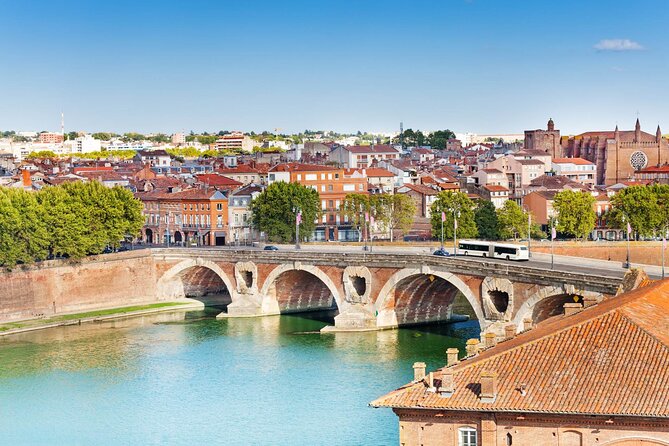
The route then reaches Pont Neuf, the oldest bridge in Toulouse. It links the historic regions of Gascony and Languedoc, and its construction began in 1544 under Nicolas Bachelier. The bridge was finally completed in 1632.
That long construction period tells you something about the difficulty of major public works in the 16th and 17th centuries. The bridge was commissioned by François I, yet it took nearly a century to finish. Here, the game connects a practical piece of city infrastructure with royal ambition and Toulouse’s position between regional centers.
Pont Neuf is also a natural place to pause. The experience allows you to stop the timer during its short information sections, and the bridge gives you a break from close-up clue hunting. If the day is hot, use this flexibility. One player specifically found the walk less comfortable in very warm weather, even though the ability to pause made it easier.
Notre-Dame de la Daurade
Notre-Dame de la Daurade adds an older religious layer to the route. The basilica was established in 410, after Emperor Honorius allowed pagan temples to be converted to Christian use. The original building was a temple dedicated to Apollo.
That history makes this stop more than another church visit. It shows how Toulouse’s religious sites can contain several earlier identities beneath the present building. The app’s legend-based storytelling suits this location, though you should expect a compact explanation rather than a full lesson in late Roman Toulouse.
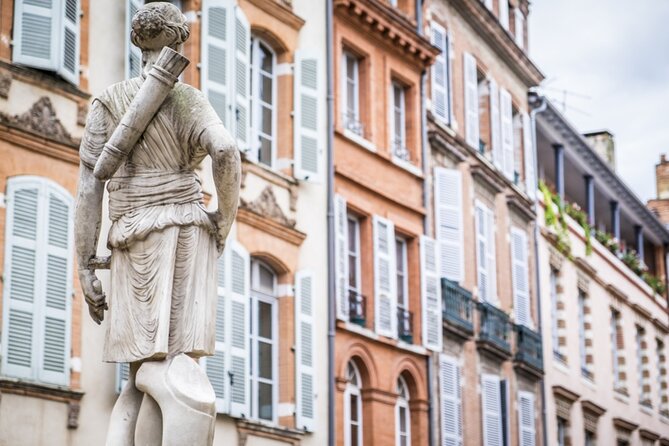
The clue requires you to inspect the surroundings. This is where the activity works best: the city itself becomes your game board. You are not just walking to a pin on a map. You are checking architectural details and trying to connect what you see with the question on your phone.
The Jacobins Convent’s stone palm tree
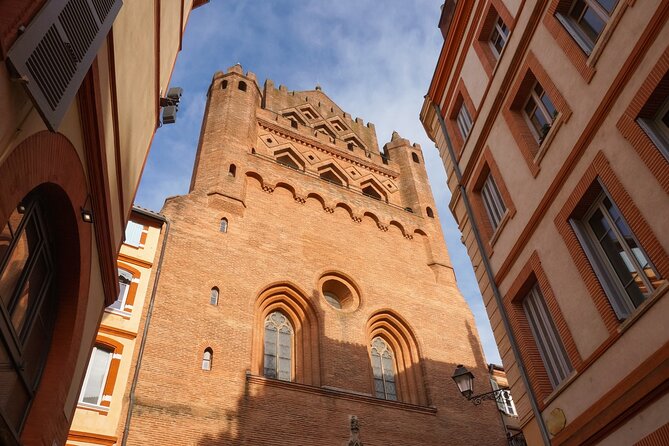
The Jacobins Convent is one of the route’s strongest stops. Its exterior is austere, but the interior is known for its light, double nave, and remarkable vaulting. The ceiling ends in a stone palm tree with 22 branching veins.
That detail is exactly the kind of thing a puzzle walk can bring to your attention. Without the challenge, you might enter, glance around, and move on. With it, you have a reason to look upward and notice how the structure spreads above you.
The church is described as unique in its style, and it is easy to see why the app places it on the route. Still, the game cannot replace time spent inside the convent. If the building is open and you want more than a quick stop, pause the quest and take a proper look.
The Capitol and Notre-Dame du Taur
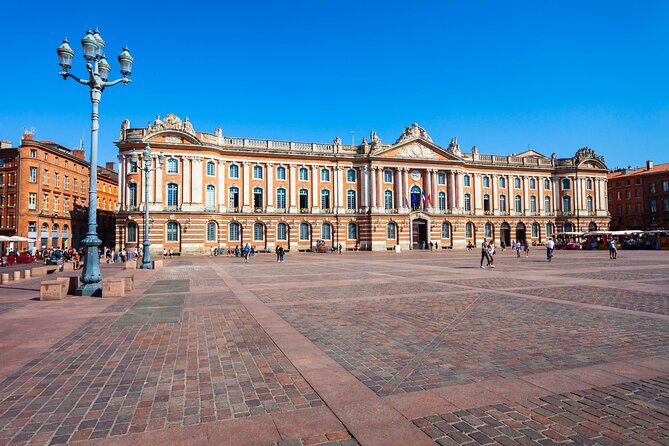
The Capitol is Toulouse’s symbolic civic center. Unlike many French cities, Toulouse has a majestic Capitol rather than a building commonly called city hall. The complex houses municipal offices, a theater, and ceremonial rooms, with a neoclassical facade facing the main square.
Municipal power has been based here since the Capitouls decided to establish the seat in the 12th century. The building has changed over time, so this stop helps you see how Toulouse’s government adapted its central setting across different eras.
Next comes Notre-Dame du Taur. According to local tradition, the church marks the place where the body of Saint Saturnin became detached from the bull that dragged him to his death. Saint Saturnin, also called Sernin, is Toulouse’s patron saint.
The legend gives this part of the walk a more dramatic tone. It also prepares you for the final stop, where Saint Saturnin’s story becomes central. The clues here may rely on details around the church facade, so read the wording carefully and do not rush if an answer is not immediately clear.
Ending at the Basilica of Saint-Sernin
The route finishes at Place Saint-Sernin, beside the Basilica of Saint-Sernin. This is one of Toulouse’s essential sights and the largest Romanesque church in France. It is also listed as a UNESCO World Heritage site because of its role on the pilgrimage route to Santiago de Compostela.
Built between the 11th and 14th centuries, the basilica honors Saint Saturnin, Toulouse’s first bishop. Its brick-and-stone exterior is immense, while the interior includes numerous reliquaries connected with the pilgrimage tradition.
Ending here gives the route a strong sense of place. You have moved from the cathedral district through civic squares, merchant architecture, the Garonne, medieval religious buildings, and finally to the church most closely tied to Toulouse’s pilgrimage identity.
The final stop is also a good point to stop the game and explore on your own. The app’s historical notes are intentionally brief. If you want to understand Saint-Sernin fully, give the basilica more time than the puzzle requires.
Price, timing, and app concerns
At $5.95 per person, the price is the easiest part of the decision. Even if you treat it simply as a walking route with ten short challenges, it is inexpensive. Group discounts may make it more attractive for families or larger parties, though the exact discount is not specified.
The value comes from structure. You receive a route, a storyline, ten puzzles, and the freedom to play without paying for a live guide. You also avoid mobile data charges after downloading the content for offline use.
The tradeoff is that you must manage the technology yourself. The app is supposed to work offline after a complete download, but some players have been unable to start the quest, access their account, or resume the game. Do not wait until you are standing at Place Saint-Étienne to discover a problem.
Before leaving your hotel, download the quest, open it, and check that your access code works. Keep the booking confirmation and support contact available. The operator offers help by chat and email, and the cancellation policy allows a full refund if you cancel at least 24 hours before the start time. Cancellations within 24 hours are not refunded.
Who will enjoy this Toulouse walk?
I would recommend it most to people who like to set their own pace and need a reason to look closely at city details. Families with older children and teenagers may find the puzzle format more engaging than a standard history walk. Couples and friends can also turn the clues into a light competition.
It is less suitable if you want a polished, expert-led explanation at every stop. You will not have a guide to answer questions or adjust the route for your interests. You also need enough patience for occasional wording issues. Some English clues have been described as awkwardly translated, and certain answers may not be obvious from the surrounding facades.
The route is offered in English, and most people can participate. Service animals are allowed, and the starting and ending points are near public transportation. The published hours run daily from 5:00 AM to 9:00 PM, giving you broad scheduling flexibility, but opening access to individual religious sites can vary, so do not assume every interior will be available at every hour.
Should you book it?
Book this Toulouse game if you want a cheap, flexible way to see the old center and you enjoy solving clues on your phone. The route includes excellent sights, the private format suits your own group, and the freedom to pause is genuinely useful.
Skip it if you need dependable technical support at the starting point or want detailed commentary from a human guide. My practical advice is simple: test the app before you go, download everything on reliable Wi-Fi, and treat the game as a playful introduction to Toulouse rather than a full historical tour. With that expectation, $5.95 buys a worthwhile walk and a fresh way to notice the Ville Rose.
FAQ
How long does the Toulouse Ville Rose game take?
The experience is designed to take approximately 1 hour 50 minutes. You can pause, stop, and resume it, so the actual time can be longer.
Where does the game start?
It starts at Place Saint-Étienne, Place Saint-Étienne, 31000 Toulouse, France.
Where does the route finish?
It ends at Place Saint-Sernin, Place Saint-Sernin, 31000 Toulouse, France.
What sights are included?
The route includes Toulouse Cathedral, the Musée des Augustins, Place de la Trinité, Hôtel d’Assézat, Pont Neuf, Notre-Dame de la Daurade, the Jacobins Convent, the Capitol, Notre-Dame du Taur, and the Basilica of Saint-Sernin.
Is this a guided tour?
No. It is a private, self-guided activity using a mobile app. There is no physical tour guide.
Does the app work offline?
Yes, the app is designed to work offline after the quest has been fully downloaded. Download it before arriving if you expect limited internet access.
Is the activity available in English?
Yes. The experience is offered in English.
What is the cancellation policy?
You can receive a full refund if you cancel at least 24 hours before the scheduled start time. Cancellations within 24 hours are not refunded.
Just added around France
- Historical treasure hunt in the city of Versailles★ 4.0 · 15 reviews
- Outdoor escape game | The Minotaur★ 4.5 · 2 reviews
- Escape game outdoor The Walking Dead in Tours★ 3.0 · 2 reviews
- Romantic Toulouse: Self-Guided Love Story Puzzle Walk★ 4.0 · 2 reviews
- Discover Toulouse while playing! Escape game – The alchemist★ 3.5 · 4 reviews
- Tours: Magic Team Escape Game in Town★ 3.0 · 2 reviews
- Urban escape game in Toulouse – Crazytopia★ 3.0 · 3 reviews
- Unusual treasure hunt at the Christmas markets in Strasbourg★ 5.0 · 9 reviews
France Escape Games, compared.





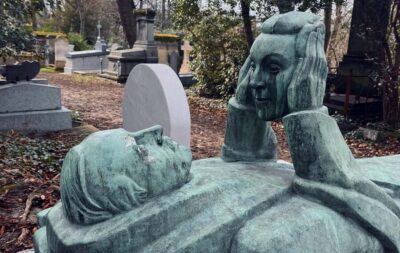
Who Killed Victor ? Escape Game at Père Lachaise Cemetery
Read our review →
Browse the lists this game appears in