
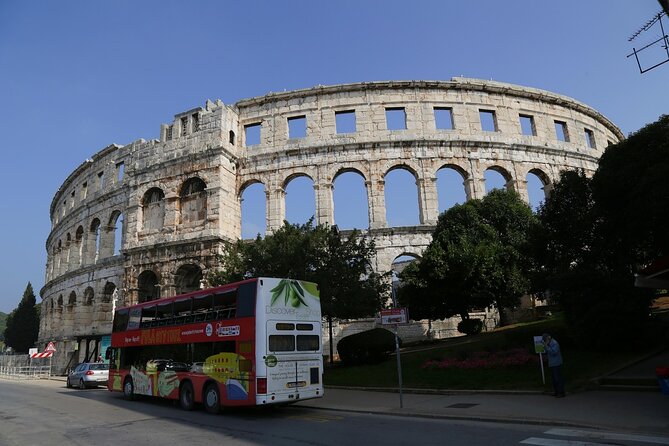
Review · PULA
Pula Empire Secrets Exploration Game and Tour
Pula turns sightseeing into a puzzle. This self-guided city quest leads you through Roman monuments, wartime tunnels, harbor landmarks, and old-town corners while giving you a reason to look closely at the details around you. I especially like the freedom to pause and resume whenever you wish, and the low price makes it an easy addition to a day in Pula. The main drawback is that some directions and puzzle instructions may take extra patience, especially when you first start the app.
I also like that this is a private experience for your own group, rather than a fixed tour with strangers and a guide setting the pace. You will need to supply some of the historical context yourself, though, since there is no live guide and the explanations are not always as full as you might expect from a traditional walking tour.
Key Points About the Pula Quest
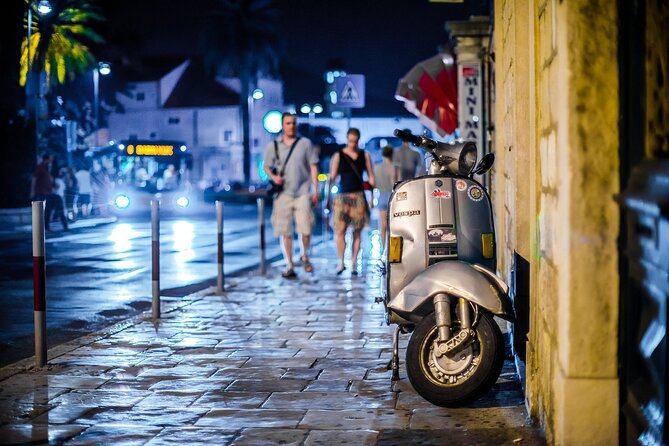
- Ten puzzles guide you through Pula, turning a sightseeing walk into a team game.
- The route links major landmarks including the Arch of the Sergii, Zerostrasse, the Roman Forum, and Pulski Kaštel.
- You set the pace, with the option to stop, continue later, or finish when convenient.
- The experience costs $5.91 per person, a very small outlay for about 90 minutes of activity.
- No live guide is included, so you navigate with the mobile app and built-in GPS map.
- Some instructions can be unclear, particularly at the beginning and in a few of the quizzes.
What This Pula City Game Actually Feels Like
This is not a standard walking tour where someone leads you from one monument to the next. Instead, you receive a mobile access code, open the Questo app, and follow a story built around Pula’s past. The app provides a map, clues, puzzles, and historical prompts as you move through the city.
The format gives you more control than a scheduled tour. You can begin any time during the stated operating hours, from 8:00 in the morning until 9:00 at night, and you are not tied to a group departure. If your coffee runs long, a shop catches your eye, or you want to spend more time at the fortress, you can pause the activity.
The total playing time is about 90 minutes. That is a useful estimate for the actual quest, though your outing may take longer if you stop for photographs, read nearby signs, visit attractions, or pause for lunch. The route ends uphill at Pulski Kaštel, so comfortable shoes are sensible.
The game works best when you treat it as a shared activity. One person can read the clues, another can watch the map, and someone else can scan the buildings for details. Families and friends get a clear reason to talk, look around, and work as a team rather than simply walking from one pin on a map to another.
More City Exploration Games in the world:
- Malaga city game: Operation Mindfall
★ 5.0 · 111 reviews - Romantic Montmartre: Paris Lost Lovers Exploration Game and Tour
★ 4.5 · 107 reviews - Sibiu Old Town Exploration Game and Self-Guided Tour
★ 4.5 · 82 reviews
Starting at Narodni Trg
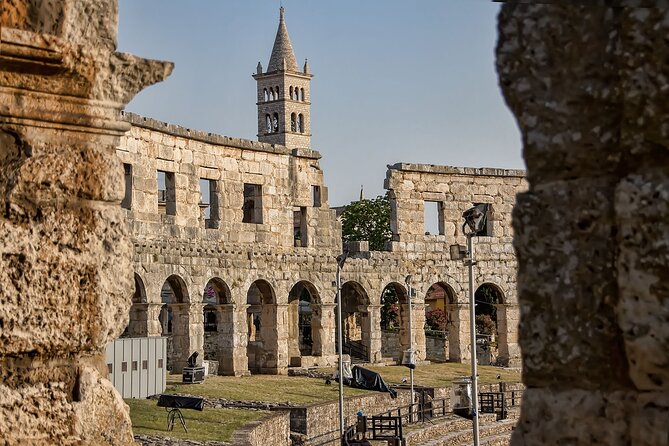
The quest begins at Narodni trg 9, in the People’s Square. This is a good starting point because it places you in the middle of Pula’s old town, where Roman remains, later buildings, cafés, and everyday city life sit close together.
The first section takes about ten minutes. You follow clues through the surrounding streets before facing an opening puzzle connected with the square. It is a gentle introduction to the idea that the city itself is the game board.
Give yourself a little extra time at the start. The first setup can feel less obvious than expected, and the app instructions may require careful reading. Once you understand how the clues, map, and puzzle answers work, the activity becomes easier to follow.
The Arch of the Sergii and Roman Pula
From the square, the trail leads to the Arch of the Sergii, one of Pula’s most impressive Roman monuments. The arch is more than a photo stop. Its carvings and connection to the Sergii family give the game a natural setting for a clue about power, public honor, and Roman life.
The puzzle here encourages you to examine the monument instead of glancing at it and moving on. That is one of the strongest features of this format. The game gives your eyes a job, which helps you notice details you might otherwise miss.
The Arch of the Sergii is in an active part of the old town, so take care while reading your phone and walking. You will get more from this stop if you first look at the structure in front of you, then return to the app for the challenge.
Zerostrasse and Pula’s Underground Past
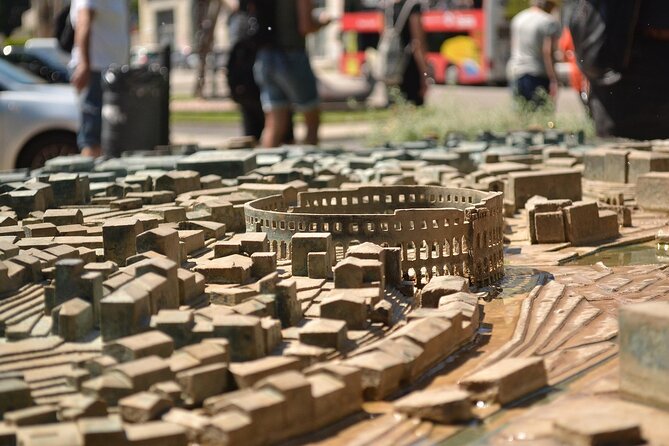
The route then shifts from ancient Rome to the 20th century at Zerostrasse. This network of underground tunnels was built during World War I as shelter for city residents. The setting changes quickly: the light fades, the air becomes cool, and the city above feels far away.
The puzzle connects the tunnels with Pula’s wartime defenses. This is a valuable change of pace because the quest does not treat Pula as only a Roman city. You get a glimpse of the military role that shaped the city long after Roman rule ended.
The tunnel section also shows one limitation of a phone-based game. You may need to balance looking at the screen with watching where you walk and noticing the space around you. If the directions feel vague, slow down and reread the clue rather than guessing quickly.
More Escape Games in the world:
- Sofia Escape Room – Teorema Rooms
★ 5.0 · 895 reviews - Saw2 vs Squid Game – Escape Game Montpellier
★ 5.0 · 752 reviews - Prague Wizard Experience Magic School Escape Game
★ 5.0 · 746 reviews - The Escape Game Orlando: Epic 60-Minute Adventures on I-Drive
★ 5.0 · 730 reviews
Tito’s Park and a More Recent Chapter
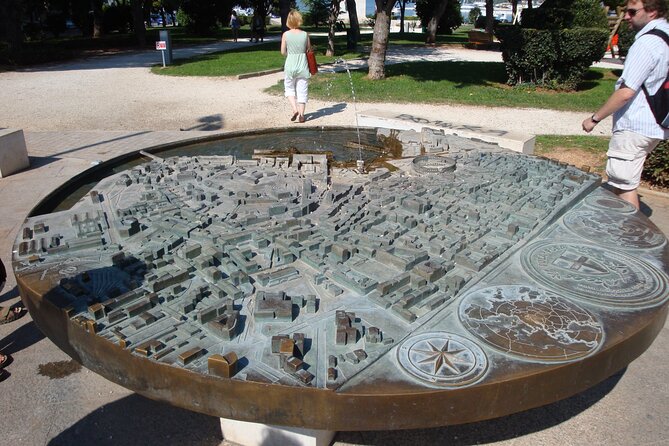
Tito’s Park offers a quieter stop between the underground tunnels and the harbor. Cannons and monuments point to Pula’s military past and its 20th-century connection with Yugoslav history.
Here, the challenge depends on observation. The park is a useful place to pause, read the clue carefully, and inspect the surroundings before entering an answer. It also gives the walk a little breathing room after the darker tunnel section.
This part will appeal to you if you enjoy seeing how a city carries several eras at once. The game moves from Roman families to World War I defenses and then to Yugoslav memory without requiring a museum visit at every stage. The tradeoff is that the app may not explain each period in great depth, so you should consider this a prompt to notice the setting rather than a full history lesson.
ACI Marina Pula and the Old Naval Harbor

At ACI Marina Pula, the quest reaches the water and the city’s long naval story. Pula’s natural harbor was important to sailors in ancient times and later served as the main naval base of the Austro-Hungarian Empire.
The marina’s circular building, known locally as the Cake, gives the puzzle a distinctive visual marker. The nautical challenge asks you to connect the harbor’s present-day use with its older military and maritime role.
This is one of the route’s more appealing transitions. You move from the old streets to the harbor, and the setting helps explain why Pula mattered to successive empires. If the weather is warm, this stop may also be a welcome open-air break.
Keep in mind that this is an urban route, not a scenic boat trip. You are visiting the marina as part of a clue trail, so the value comes from the location and its historical setting rather than from any included harbor activity.
The Cathedral of the Assumption
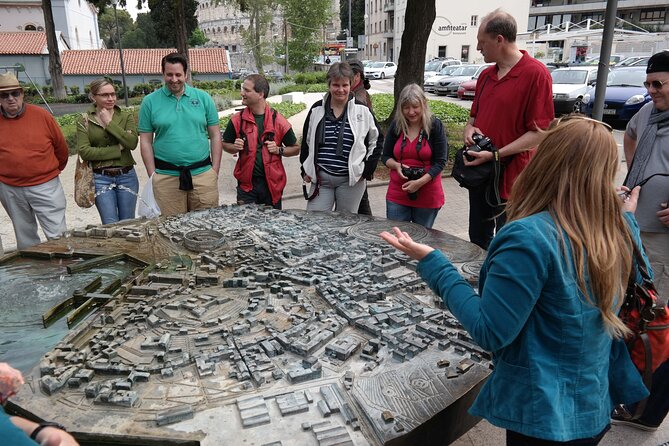
The Cathedral of the Assumption of the Blessed Virgin Mary adds a religious layer to the route. It was built over Roman ruins, and its structure reflects Pula’s movement from the Roman period into later Christian history.
The quest points you toward symbols and relics connected with the cathedral. The puzzle encourages a closer look at the building’s details, but you should behave respectfully. This remains a place of worship, not simply another game station.
This stop works well for anyone who enjoys seeing how older buildings are reused and reshaped over time. You will not get a guided explanation from a local expert, so read the app carefully and take a moment to look at the building before moving on.
The Town Hall and Roman Forum
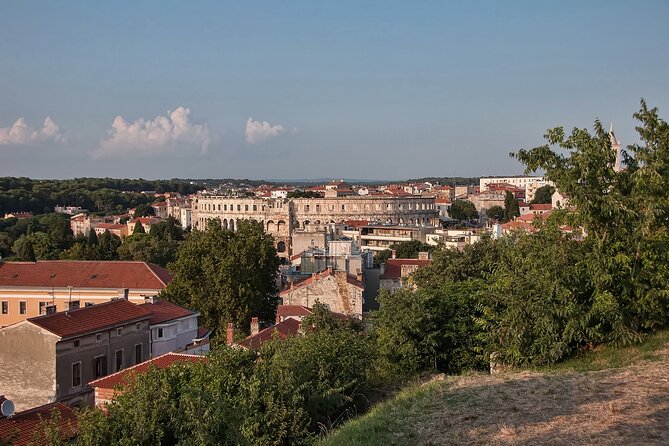
The Town Hall, also called the City Palace, sits beside Pula’s Roman Forum. Its architectural layers include Romanesque, Gothic, and Renaissance elements, while the building itself occupies the site of the Temple of Diana.
This is a compact lesson in how cities change. One location can carry Roman religious use, medieval civic life, and later architectural styles. The puzzle asks you to examine the building more carefully, particularly its exterior details.
The Town Hall section is especially useful if you tend to pass historic façades without stopping. You may find the instructions less direct than you would like, but that also makes the challenge more satisfying once you understand what the app wants you to observe.
Dom Branitelja and the Austro-Hungarian Era
Dom branitelja was once an Austro-Hungarian naval casino. Its grand staircase, high ceilings, and decorative halls reflect the city’s role as a naval center and give the quest another change in tone.
The clue here focuses on the building’s former social life. Officers, music, and formal gatherings are easier to imagine when you are looking at an ornate structure rather than reading about them in isolation.
Access and viewing details can depend on the site’s current conditions, so expect the game to focus on the building and its surroundings rather than promising a full interior visit. The stop still helps connect Pula’s architecture with the empire that shaped much of the city’s later identity.
The Roman Mosaic of The Punishment of Dirce
One of the most memorable stops is the Roman mosaic known as The Punishment of Dirce. It dates from the third century and depicts a dramatic story from Greek mythology. The mosaic is located behind an otherwise modest courtyard, making the discovery feel more rewarding than a standard monument stop.
The puzzle draws your attention to the image and its myth. This is exactly the sort of detail a self-guided game can bring forward. Without the clue, you might walk past the entrance or fail to understand why the mosaic matters.
Look carefully for directions at this point. The site is less obvious than the Arch of the Sergii or the Forum, and unclear wording could slow you down. That is not necessarily a problem, but you should allow a few extra minutes instead of expecting every turn to be automatic.
Finishing at Pulski Kaštel
The final destination is Pulski Kaštel, a hilltop fortress with views over the city and harbor. The Venetians used it as a stronghold, and its walls reflect Pula’s long military importance.
Reaching the fortress gives the quest a fitting finish. You have moved through Roman monuments, shelters, parks, harbor buildings, religious sites, civic architecture, and a mosaic. The last puzzle asks you to connect the fortress with the conflicts and empires that shaped Pula.
The end point is Gradinski uspon 10, not the starting square. That matters when you plan your next activity. You finish in the upper part of the old town, so you may want to continue sightseeing from there rather than assuming you will return to Narodni trg.
Price, Pace, and Overall Value
At $5.91 per person, this is inexpensive even by self-guided sightseeing standards. You are paying for the app access, storyline, GPS map, and ten interactive challenges, not for entry to a guided attraction or personal instruction.
I see the price as good value if you want a light activity that gives structure to an old-town walk. It is especially useful for a family or small group that might otherwise lose interest after a few monuments. Group discounts can improve the value further.
The low price also helps set fair expectations. You should not book this expecting the depth, polish, or personal context of a private historian-led tour. The game provides prompts and a route. You and your group supply the curiosity, patience, and extra reading.
The flexibility is the biggest practical benefit. You can pause and resume, which makes it easier to fit around meals, shopping, church visits, or changing weather. There is no pressure to keep up with a guide or reach the next stop by a fixed time.
What Could Be Better
The app start can be confusing. Read the access instructions before setting off, and do not assume the first puzzle will explain every feature perfectly.
Some directions and quiz prompts may also be unclear. In one early challenge, it may not be obvious whether you need to find every item shown in the images. If an answer does not make sense, reread the full instruction and inspect the location again before moving on.
The historical information is useful but limited. You will see important places, yet the app does not replace a full city tour or museum visit. If you want detailed explanations of Roman government, Austro-Hungarian naval history, or Yugoslav politics, plan to supplement the game with another source.
You should also remember that this is a walking activity through public spaces. Phone navigation, street crossings, stairs, and the uphill finish at the fortress all require ordinary attention. Service animals are allowed, and the activity is listed as suitable for most people, but the information does not provide detailed mobility notes for every stop.
Who Should Book This Pula Experience?
I would choose this for families, couples, and friends who like solving clues together. It is also a smart option if you have already taken a formal tour and want a more playful way to revisit the old town.
It suits independent visitors who dislike fixed schedules. You can start during the operating window, stop when needed, and continue at your own pace. English is the available language, so you should be comfortable reading clues and answering puzzles in English.
I would be more cautious if you want a polished historical lecture, a local guide, or detailed explanations at every site. The absence of a live guide is central to the format, not a minor detail.
Should You Book the Pula Empire Secrets Quest?
Book it if you want an affordable, flexible walk that makes Pula’s landmarks easier to notice. The route covers a strong mix of Roman, religious, military, maritime, and civic sites, and the ten puzzles give your group a shared purpose.
Skip it if you prefer to learn through long explanations or do not enjoy troubleshooting an app. For most independent visitors, though, the combination of a $5.91 price, private group format, and pause-anytime schedule makes this a sensible way to spend about 90 minutes in Pula. Start with patience, wear comfortable shoes, and treat the clues as a fun framework rather than a substitute for a full guided history tour.
FAQ
How long does the Pula Empire Secrets Exploration Game take?
The experience lasts approximately 1 hour and 30 minutes.
How much does the experience cost?
The listed price is $5.91 per person. Group discounts are available.
Is a live guide included?
No. This is a self-guided experience using a mobile access code, GPS map, storyline, and interactive puzzles.
How many puzzles are included?
The quest includes 10 interactive puzzle challenges.
What language is offered?
The experience is offered in English.
Where does the quest begin?
It begins at Narodni trg 9, 52100 Pula, Croatia.
Where does the quest finish?
It ends at Gradinski uspon 10, 52100 Pula, Croatia, at Pulski Kaštel.
Can I pause the experience and continue later?
Yes. The quest can be paused and resumed, allowing you to explore at your own pace.
What is the cancellation policy?
You can cancel for a full refund if you cancel at least 24 hours before the experience start time. Cancellations made less than 24 hours in advance are not refunded, and changes within 24 hours are not accepted.
Just added around the world
- Vienna: Freud, Mozart & Beethoven Exploration Game★ 4.0 · 14 reviews
- e-Scavenger hunt Vienna: Explore the city at your own pace★ 3.5 · 2 reviews
- Mobile puzzle rally tour at the Vienna Central Cemetery★ 4.5 · 3 reviews
- Vienna Scavenger Hunt and Highlights Self Guided Audio Tour★ 4.5 · 13 reviews
- Digital puzzle tour with Marcus Aurelius’ order★ 5.0 · 5 reviews
- True Crime mobile puzzle rally Vienna★ 4.0 · 3 reviews
- Vienna Highlights Self guided scavenger hunt and Walking Tour★ 4.0 · 5 reviews
- The Vienna Augmented Reality Puzzle Rally★ 5.0 · 7 reviews
City Exploration Games, compared.
Romantic Montmartre: Paris Lost Lovers Exploration Game and Tour
Read our review →
Sibiu Old Town Exploration Game and Self-Guided Tour
Read our review →
Glasgow Ghost Hunt: The Soul That Got Away Exploration Game
Read our review →
Rotterdam Highlights & Spies: Interactive City Game
Read our review →
Discover Utrecht with a self-guided Outside Escape city game tour
Read our review →
Bristol Street Art: Banksy Exploration Game and Tour
Read our review →Browse the lists this game appears in