

Review · CENTRAL GREECE
Athens Escape City Game “The Journey Through Time”
Athens becomes a puzzle box. This private city game mixes sightseeing with clues, history, and a backpack of curious objects, taking you from the Acropolis area through Plaka, Syntagma Square, and the National Garden. I especially like the small-group format and the way the story links famous places to lesser-known moments in Greek history. The main drawback is that walking and problem-solving are central to the experience, so it is not suitable for people with mobility impairments.
I also like that you do not need a large team or a formal tour group. Two to six people can play together, and one charged smartphone is enough for hints from the Game Master. At $34 per person, it is not the cheapest way to see Athens, but the private format, two-and-a-half-hour duration, prepared game materials, and guided storytelling make it a fair choice for families and friends who want more than a standard walking route.
Key details that shape the experience
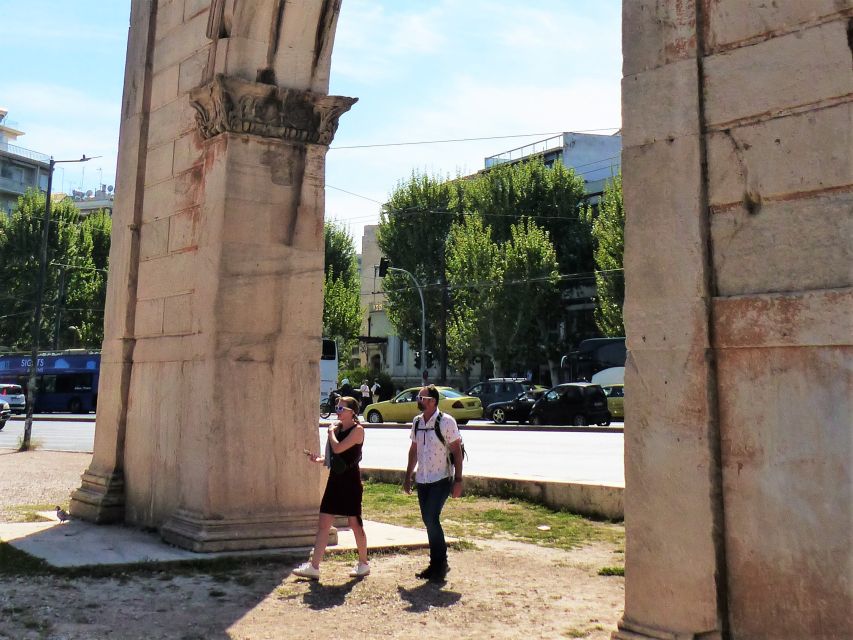
- A time-travel story across Athens: You move through ancient Greece, the Greek War of Independence, the first modern Olympics, and the era of Queen Amalia.
- A private team of 2 to 6 people: You solve the challenges with your own group instead of joining strangers.
- A prepared backpack: Maps, games, and mysterious objects give the walk a physical, hands-on quality.
- A 150-minute route: The game covers Makrygianni, Plaka, the Temple of Olympian Zeus area, Syntagma Square, and the National Garden.
- A useful hint system: You can message the Game Master during the game if your team gets stuck.
- A family-friendly age range: The activity is listed for ages 8 to 99, though some war-related content may matter when young children are involved.
Starting at Leonidas by Acropoli Metro Station
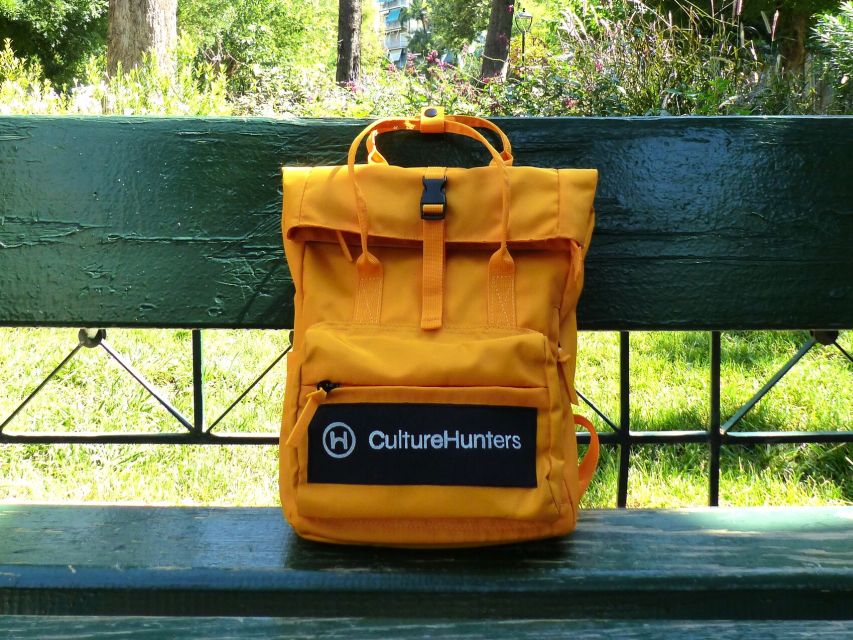
The meeting point is easy to identify: the Leonidas chocolate shop in front of Acropoli Metro Station. The Game Master holds a sign, gives you the backpack, explains the rules, and introduces the story before you set off.
That simple beginning matters. City games can feel confusing if the first instructions are rushed or vague. Here, the host meets you in person at the start and again at the finish, while message support remains available during the game. If Maëlle is your Game Master, you may also receive the warm, personal touch that past participants have specifically praised, including a thoughtful gift and extra Athens recommendations at the end.
You should arrive with a charged smartphone and internet access. You do not need a phone for every person in the group. One phone can handle communication with the Game Master, which keeps the activity from turning into a small technology exercise.
Bring a passport or ID card as well. The instructions list both as items to carry, even though no further reason is given. Comfortable walking shoes are sensible because this is an outdoor city route with several stops and self-guided sections.
More City Exploration Games in Athens:
- Athens City Game: The Journey through Time
★ 5.0 · 9 reviews - Athens Greek Mythology Exploration Game
★ 3.5 · 7 reviews - Malaga city game: Operation Mindfall
★ 5.0 · 111 reviews
Makrygianni and the ancient starting point
The first sightseeing section takes you through Makrygianni, the area around the Acropolis and Acropoli Metro Station. The game begins here with the ancient past as its first major chapter, including the story of the Acropolis and the sculptor Phidias.
This is a clever place to begin. You are close to Athens’ best-known ancient monuments, but the game asks you to look beyond the usual postcard view. Instead of simply walking toward the Acropolis, you use clues and objects to connect the place with people, construction, and historical moments.
The first sightseeing stop lasts about 10 minutes. That is enough time for a focused challenge, but not enough for an extended archaeological visit. If you want to tour the Acropolis itself, buy a separate ticket and plan another block of time. This activity uses the surrounding city as its playing field and does not include entry to paid monuments.
One practical point: the game gives you a reason to pause and examine your surroundings, but you still need to keep your group together near busy streets and crowded public areas. The fun comes from solving the clue, not from racing.
Secret stops and the pleasure of finding your own route
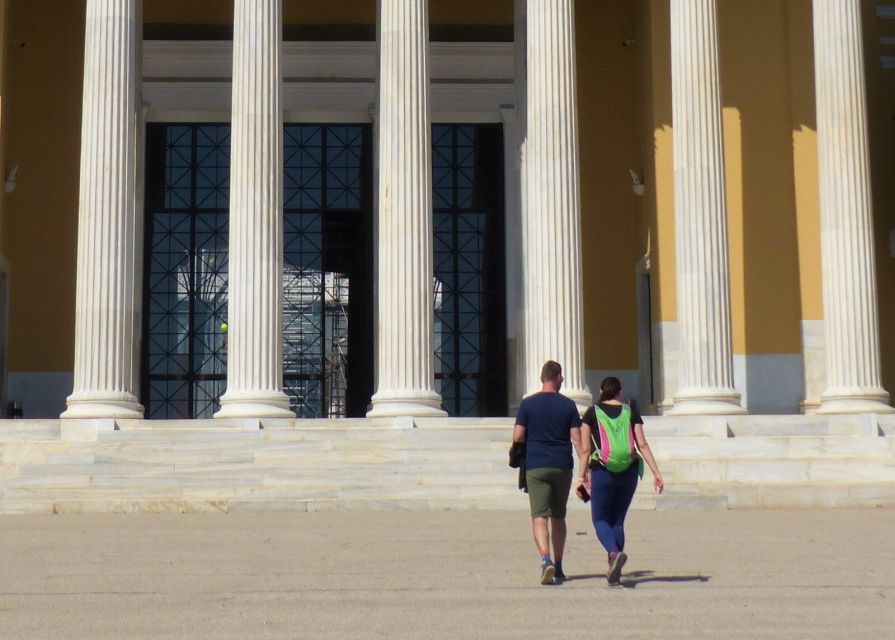
Several parts of the route are listed as secret stops. That keeps the exact sequence under wraps and protects the puzzle. You can expect short sightseeing sections of roughly 10 minutes, with clues that move the story forward.
This structure is one of the best reasons to choose the experience. A normal walking tour tells you where to look. This game makes you work out why a location matters. You may already know the major monuments, but the challenge encourages you to notice a detail, follow a piece of information, or connect one historical era with the next.
I would not book this expecting a traditional guide to speak continuously for two and a half hours. The explanations arrive through the game, your group’s discoveries, the backpack materials, and the instructions from the Game Master. That makes the experience more active, but it also means your enjoyment depends on your willingness to read, discuss, and solve.
The support system helps keep the game from becoming frustrating. If your group has tried every idea and still cannot move on, you can send a message for a hint. The goal is not to prove who is the cleverest person in Athens. It is to keep the story moving.
Plaka, where history becomes a team challenge
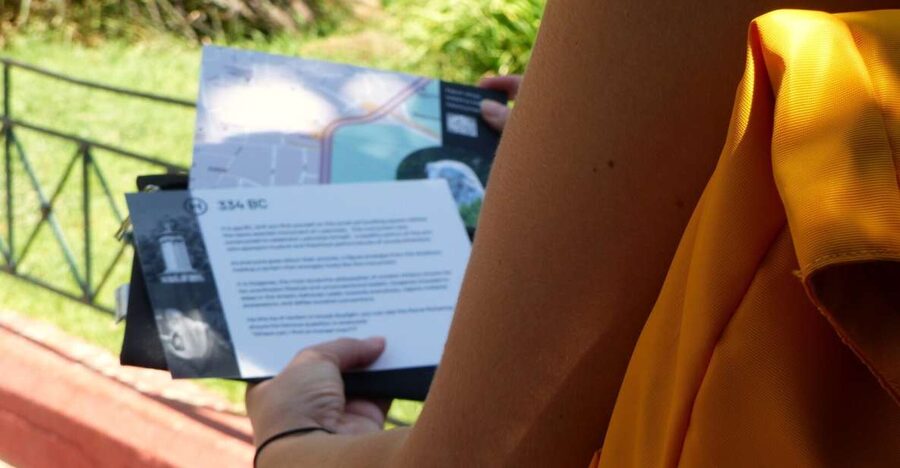
The Plaka section lasts about 20 minutes, making it the longest sightseeing stop on the route. That extra time gives your group room to work through a more involved part of the story while surrounded by one of central Athens’ most atmospheric areas.
Plaka is a natural setting for this type of activity. Its lanes and historic character provide visual clues and a strong contrast with the large monuments nearby. The game uses the area not just as scenery but as part of the problem-solving process.
Past participants have especially valued being taken to places they would not have selected on their own. That is a meaningful benefit for first-time visitors. You still see familiar Athens, but the route may also point you toward details and corners that a standard checklist of sights can miss.
The tradeoff is pace. Twenty minutes is not enough to linger over every lane or stop for a long meal. If you want photographs, allow yourself to take them quickly and return your attention to the task. This is a sightseeing game first, not a leisurely Plaka stroll.
More Outdoor Escape Games in Athens:
- Outdoor Escape Game in Étretat
★ 5.0 · 171 reviews - Bamberg: Outdoor Escape Game with a Puzzle Backpack
★ 4.8 · 101 reviews - Game of Thrones Private Outdoor Escape Game in Dubrovnik
★ 5.0 · 84 reviews - Discover Utrecht with a self-guided Outside Escape city game tour
★ 4.5 · 51 reviews
The Temple of Olympian Zeus and the ancient-to-modern shift
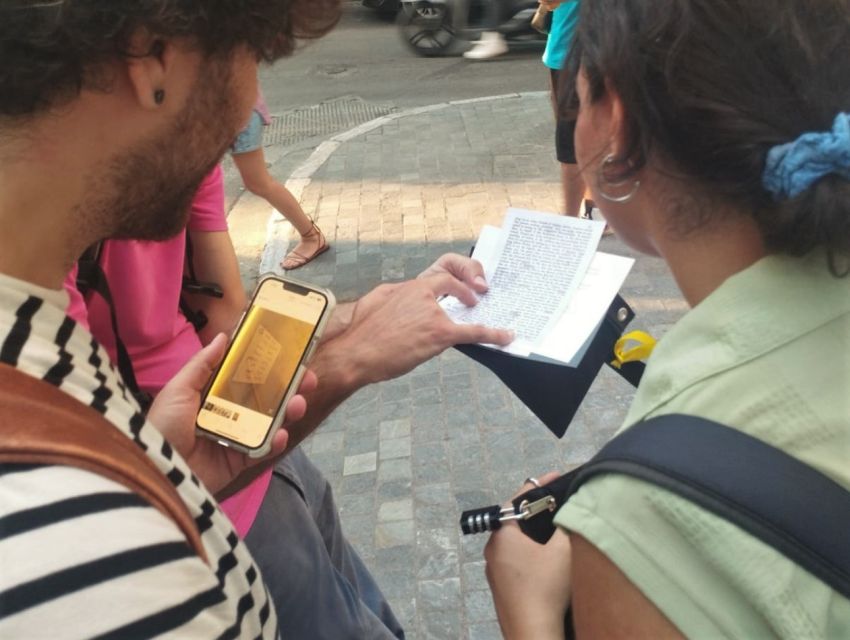
The route passes by the Temple of Olympian Zeus for about five minutes. It is not described as a full sightseeing stop, so you should not expect an extended visit or interior access as part of the game.
Even a short pass-by can work well in the story. The temple represents the scale and ambition of ancient Athens, while later stops shift toward modern Greek identity. The game’s subject is not one monument in isolation. It is the way Athens changes over time.
Because this stop is brief, I would treat it as a visual chapter rather than a major activity. If the temple is high on your personal list, schedule a separate visit. The city game gives you context and a route, but it cannot replace time at the archaeological sites themselves.
Syntagma Square and the birth of modern Greece
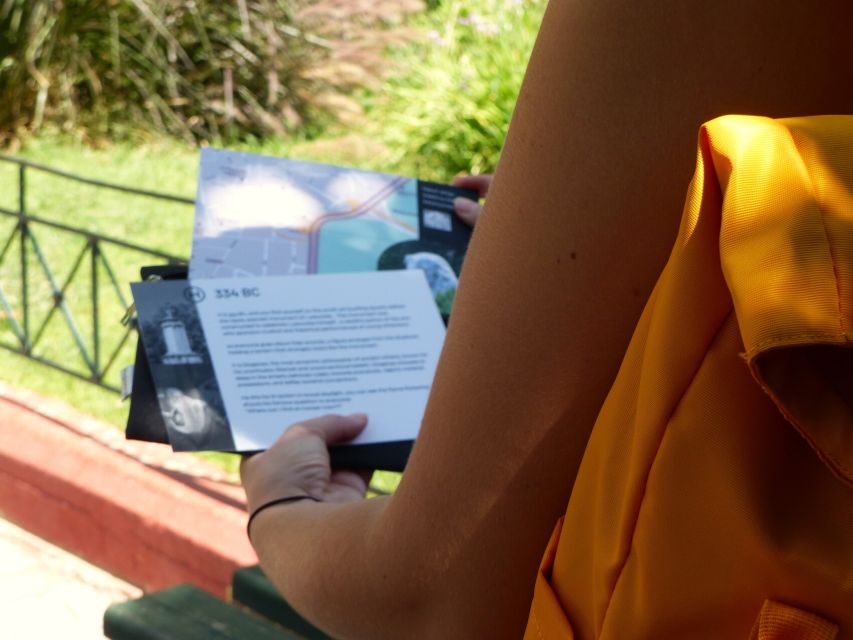
The game then moves toward Syntagma Square, with about 10 minutes devoted to sightseeing. This section brings the story into more recent Greek history, including the struggle for independence from the Ottoman Empire.
Syntagma is one of the most useful places in Athens for a history-based game because it links public space with national memory. The route also passes the Tomb of the Unknown Soldier and the Hellenic Parliament, each for about five minutes.
The brief stops are important. You get to see the buildings and memorials connected with modern Greece, but the game does not pretend that a few minutes can explain every political event. Instead, it uses selected moments to keep the time-travel plot moving.
If your group includes children, this part may require a little care. The activity is open to ages 8 through 99, but the information notes that a small part refers to war and violence. That does not make it an adult-only experience, but parents should decide if the theme fits their children.
Queen Amalia and the National Garden

The National Garden provides another 10-minute sightseeing section and introduces the era of Queen Amalia. This is a welcome change of pace after the monuments, squares, and city streets.
The Queen Amalia connection gives the game a personal angle. Instead of dealing only with wars, rulers, and famous buildings, you encounter a specific figure and a more everyday side of Athens’ development. The setting also gives your team a quieter place to pause, read the clues, and work together.
Do not expect a full garden tour. The stop is compact, and the route includes additional secret and lesser-known points after it. Still, this section shows the game’s range. It moves from ancient sculpture to national independence, then into the city’s modern era without making you sit through a formal lecture.
More secret points before returning to Acropoli
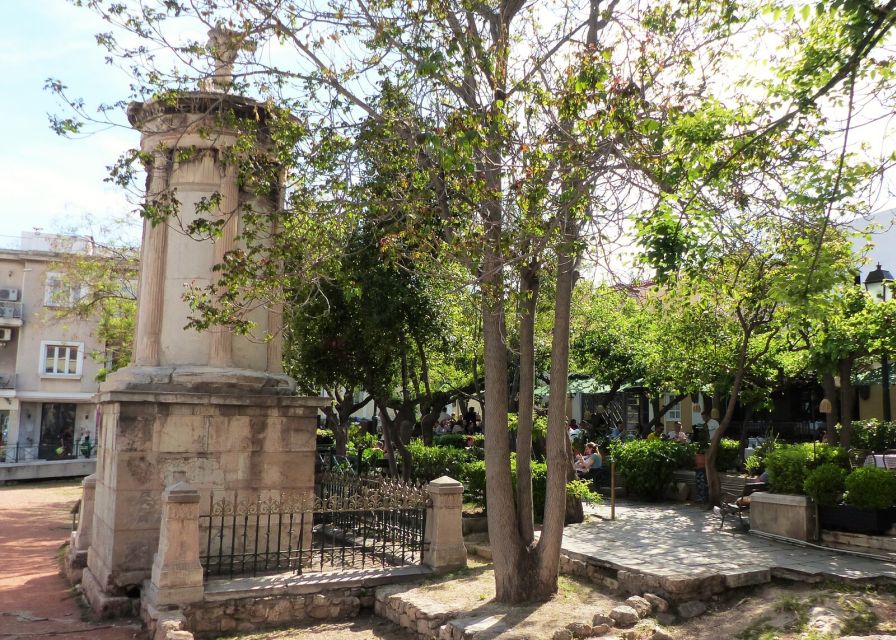
After the National Garden, the game continues through another secret stop and a further lesser-known sightseeing point, each listed at about 10 minutes. These final sections help prevent the route from feeling like a simple parade of famous monuments.
I like this part of the design because it rewards curiosity. You are not only moving between Acropolis, Plaka, and Syntagma. You are also asked to pay attention to less obvious locations and use the city itself as a set of clues.
The exact details are intentionally not revealed in advance. That is good for the game but less helpful for planning your day. If you need a precise route for accessibility, photography, or a strict schedule, this format may feel too uncertain. You know the main districts and landmarks, but not every stop before you begin.
Finally, you return to Leonidas at Acropoli Metro Station and hand back the backpack. The Game Master meets you there, allowing the experience to end where it began rather than leaving you in an unfamiliar part of Athens.
What the backpack adds to the experience
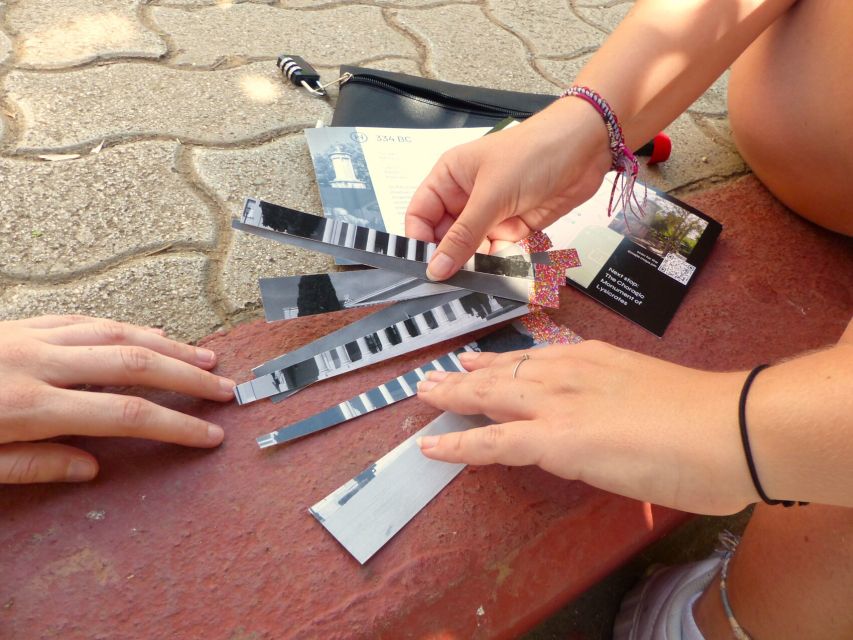
The backpack contains maps, games, and mysterious objects. This is more than a decorative extra. Physical materials give the activity a clear sense of purpose and help separate it from an ordinary self-guided walk.
You and your team must use your wits, historical clues, and problem-solving skills to progress. Different people can contribute in different ways. One person may spot a visual detail, another may enjoy the historical information, and someone else may be better at arranging the objects or following the map.
That variety is why the game works well for families. Three teenagers in one group reportedly became fully absorbed in the challenges, and another family appreciated finding places they would not have chosen by themselves. The activity gives young people something to do with the city instead of asking them to listen quietly beside a monument.
Still, the game is not passive entertainment. If your group dislikes puzzles, reading instructions, or discussing possible answers, the format may feel like work. The private setting helps because you can set your own pace, but you cannot remove the central challenge.
Price, timing, and who gets good value
At $34 per person, the experience costs more than walking through Athens independently. You can visit many of the areas on the route without paying for a tour, and the game does not include hotel pickup, monument admission, food, or transportation.
The comparison is not quite fair, though. You are paying for a private 150-minute activity, a prepared backpack, a Game Master at the start and finish, a custom story, and on-call hints. For a group of four to six friends or family members, the cost buys a shared activity rather than just information.
The private-group format is especially useful. You do not need to match your pace to strangers, and you can discuss clues openly without worrying about holding up a larger party. Groups of two can play, though a pair has fewer minds available when a clue becomes difficult.
The full route lasts 150 minutes, with listed sightseeing stops ranging from five to 20 minutes. I would keep the rest of your day flexible. The game finishes back at Acropoli Metro Station, which makes it easy to continue sightseeing afterward, but you should not plan a tightly timed appointment immediately after the start.
Free cancellation is available up to 24 hours before the activity for a full refund, and you can reserve now and pay later. Those terms are useful if your Athens schedule may change, but they do not alter the main question: do you want a puzzle experience or a conventional tour?
Best for families, friends, and repeat visitors
I would recommend this for families with children aged eight and older, especially if the group enjoys solving problems together. It also fits friends who want a shared activity that keeps everyone involved instead of splitting into separate interests.
First-time visitors can use it as a lively introduction to Athens. The route covers major landmarks and gives you a story to connect them. You will not receive a full archaeological lecture, but you may remember the places better because you had to work with them.
Repeat visitors may get even more from the format. If you have already seen the Acropolis and Syntagma Square, the game offers a fresh reason to walk through familiar districts and notice details you might normally pass.
I would be cautious about booking it for anyone with mobility limitations. The experience is explicitly listed as unsuitable for people with mobility impairments, and the route includes several outdoor walking sections. I would also avoid it for a group that wants a relaxed, unstructured afternoon with long café stops.
The listed host languages are English and French. If your group is comfortable in one of those languages, the game should be easier to follow and discuss.
Should you book Athens Escape City Game?
Book it if you want Athens to feel like a shared mystery rather than a sequence of photo stops. The best parts are the private team format, the physical backpack, the mix of famous landmarks and less obvious points, and the way the story moves from Phidias and the Acropolis to Queen Amalia, independence, and the first modern Olympics.
Skip it if you want extended time inside monuments, a fully narrated history tour, or an easy route with little walking. At $34 per person, the value depends on your interest in puzzles and group activities.
For a family or friend group of two to six people, I think it is a strong choice. Bring one charged smartphone, wear comfortable shoes, allow the full 150 minutes, and let the clues guide your attention. Athens has plenty of monuments that speak for themselves. This game gives you a reason to listen more closely.
FAQ
Where does the Athens Escape City Game begin?
It begins at Acropoli Metro Station, in front of the Leonidas chocolate shop. The Game Master will be holding a sign.
How long does the experience last?
The game lasts 150 minutes, or two and a half hours.
How many people can play together?
The game is designed for a private group of 2 to 6 people.
What should I bring?
Bring a charged smartphone with internet access, plus a passport or ID card. One smartphone is needed for the whole team to contact the Game Master if hints are required.
Is the game available in English?
Yes. The host or greeter can provide the experience in English or French.
Is the activity suitable for children?
It is listed for ages 8 to 99. A small part of the game refers to war and violence, so consider that theme when deciding if it suits younger children.
Just added around Athens
- Treasure Hunt Around Acropolis— Private Group★ 5.0 · 10 reviews
- Athens City Game: The Journey through Time★ 5.0 · 9 reviews
- Athens Urban Treasure Hunt w Food Stop★ 5.0 · 16 reviews
- Private Athens Treasure Hunt★ 5.0 · 4 reviews
- Athens Treasure Hunt Tour of the Lost Library of Aristotle★ 5.0 · 4 reviews
- Athens Highlights Self guided scavenger hunt and Walking Tour★ 4.5 · 6 reviews
- Private Athens Family Treasure Hunt★ 5.0 · 3 reviews
- Athens Greek Mythology Exploration Game★ 3.5 · 7 reviews
City Exploration Games, compared.

Romantic Montmartre: Paris Lost Lovers Exploration Game and Tour
Read our review →
Sibiu Old Town Exploration Game and Self-Guided Tour
Read our review →
Glasgow Ghost Hunt: The Soul That Got Away Exploration Game
Read our review →

Rotterdam Highlights & Spies: Interactive City Game
Read our review →
Discover Utrecht with a self-guided Outside Escape city game tour
Read our review →
Bristol Street Art: Banksy Exploration Game and Tour
Read our review →Browse the lists this game appears in