
Review · LONDON
Interactive Treasure Hunt Experience – Central London’s Secrets
London rewards curiosity. This self-guided treasure hunt turns central London into a 15-clue walking puzzle, beginning at Piccadilly Circus and moving through Covent Garden, Seven Dials, and Soho. I like the freedom to start whenever you choose, and I like that the route points you toward places you might pass without noticing on a normal sightseeing walk.
The price is about $20.57 per person, which is fair if you enjoy word games and want a private activity for your own group. The main concern is the phone-based setup and clue difficulty. A few players have had trouble receiving the starting message or getting help, while others found the clues too obscure.
Five useful things to know before you book

- Start at Piccadilly Circus: The trail begins in one of central London’s busiest squares, then heads east on foot.
- Solve 15 mobile clues: Each answer leads you to the next location, with hints and a lost command available if you need help.
- Plan for 4.5 kilometers: The route takes about 2.5 to 3.5 hours, depending on your pace, breaks, and success with the puzzles.
- Pause at a Dickens-linked tavern: The halfway break is at a tucked-away pub near Covent Garden, though food and drinks cost extra.
- Choose your own pace: You can race the clock and appear on the leaderboard, or take your time with your group.
- Expect a private outing: Only your group participates, and no guide walks with you.
Starting among the lights of Piccadilly Circus
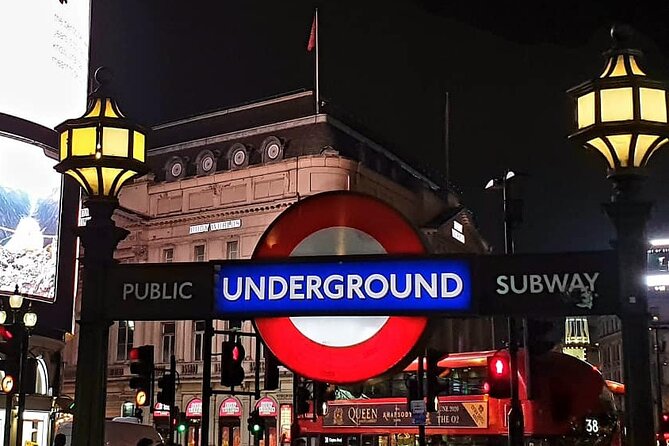
Your first task begins at Piccadilly Circus, a useful meeting point with excellent public transport connections. The setting gives the hunt an energetic opening, with traffic, signs, shops, and people moving in every direction. You are not simply given a list of sights. You receive a clue on your phone, work out what it means, and search for the answer in the surrounding streets.
That difference matters. A standard walking tour tells you where to look. This activity asks you to notice details for yourself. I like that approach for repeat visitors who have already seen the main monuments and want a reason to pay closer attention to central London.
The route moves east from Piccadilly Circus. You should expect regular walking on pavements rather than a long march between distant districts. The total distance is about 4.5 kilometers, but the puzzle-solving adds time. You may stop to read signs, examine buildings, compare ideas, or wait for a teammate to spot something you missed.
The activity is rated difficulty 3 out of 5. That sounds moderate, and the experience can be fun at that level, but clue difficulty depends heavily on how your group thinks. One group found the puzzles challenging without being irritating. Another found the wording so obscure that the activity stopped feeling enjoyable. If you like cryptic clues, escape rooms, or word puzzles, you will have a better chance of enjoying the challenge.
More Treasure Hunts in London
- London: Food Treasure Hunt and Walking Tour
★ 5.0 · 92 reviews - Immersive Treasure Hunt Adventure – City of London’s Secrets
★ 4.5 · 41 reviews - Immersive London Treasure Hunt Adventure – Outdoor Escape Room
★ 5.0 · 11 reviews
How the phone-based clues work
Each clue arrives by mobile phone. You follow it to a new spot within walking distance, work out the answer, and send that answer back. A correct response gives you the next step.
The system is designed to support both casual players and competitive teams. You can ask for a hint when a clue has you stuck, and a lost command can send help if you are unsure where to go. I would use those tools early rather than let one difficult clue consume half an hour.
There is one practical rule worth remembering: send each answer only once and wait for the reply. If a message is slow, sending the answer again from another person’s phone can create confusion and possible time penalties for wrong answers. Keep one person in charge of submitting answers, or agree clearly on who handles the phone.
The phone setup is the activity’s weak point. Most people apparently get started within minutes, but there have been cases where the opening link or text did not arrive. Customer support has also been inconsistent, with some players reporting unanswered messages, an undeliverable email, or no response by phone. That does not mean you will have a problem, but I would check that the starting information is working before your group gets far from Piccadilly Circus.
Because the activity is self-guided, you will not have a guide on hand to explain a clue or rescue the group. That is part of the appeal, but it also means your enjoyment depends on the technology working and your group staying patient.
From Piccadilly to Covent Garden
The first part of the trail leads through central London toward Covent Garden. This is a good stretch for getting used to the system. You learn how cryptic the clues are, how long the answers take to process, and how your group divides up the work.
I like the way this route gives you a reason to look above shopfronts, scan signs, and pay attention to small details. The city becomes your puzzle board. Instead of rushing from one famous building to another, you may find yourself checking a corner, reading a plaque, or comparing a clue with the street in front of you.
The route passes into the Covent Garden area, one of central London’s most recognizable districts. The activity does not promise a formal history lesson, so do not book it expecting a guide to explain every building. Its value is more informal. You pick up bits of London as you solve the clues, with the streets providing the setting.
At roughly the halfway point, you can stop at a tucked-away tavern near Covent Garden. The pub is described as a former haunt of Charles Dickens, which gives the break some literary flavor. It is a sensible pause, especially if you have been walking and concentrating for more than an hour.
Drinks and food are not included. You can choose to stop, refresh yourself, and continue, or keep moving if your group is racing the clock. I would treat the tavern as an optional part of the experience, not a guaranteed meal stop. The information describes it as a place to warm up and refresh, but it does not specify a reserved table or included items.
Seven Dials and the turn toward Soho
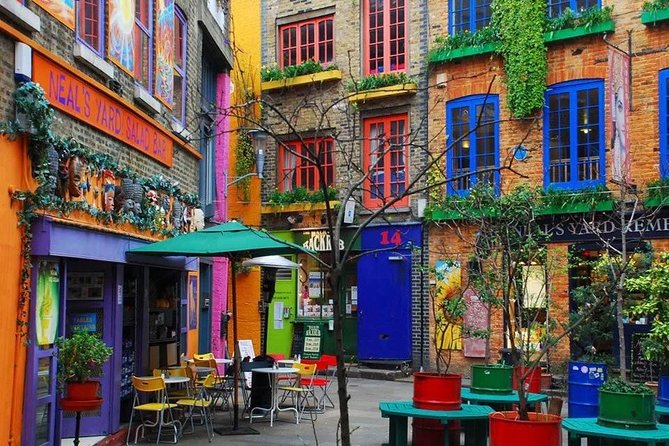
After the Covent Garden break, the trail continues through Seven Dials on its way toward Soho. This part gives the activity a nice change of mood. You move from the broad, well-known meeting point at Piccadilly Circus into streets where the pleasure comes from noticing the route rather than ticking off major landmarks.
Seven Dials is well suited to a clue trail because several streets meet around a central feature, and the surrounding lanes invite careful looking. I would not assume every clue is solved instantly. The route is designed to make your group stop, talk, test ideas, and sometimes use a hint.
The final section leads into the heart of Soho. The activity description points to another good pub at the end, giving your group a place to relax after the last clue. Again, drinks are optional and extra. The booking information also says the activity ends back at the meeting point, so check the exact end instructions you receive before setting off. The route description finishes in Soho, while the meeting-point details list Piccadilly Circus as the end location.
That small inconsistency is worth noting because it affects your plans. Do not arrange a tight reservation immediately after the advertised 2.5-hour duration. Allow extra time for clue solving, a pub break, wrong turns, and the possibility that the finish instructions direct you back to the starting point.
More Treasure Hunts in the UK
- Interactive Treasure Hunt London – City of London/Southwark
★ 3.5 · 5 reviews - London: British Food Treasure Hunt With Gourmaze
★ 5.0 · 4 reviews - Cluefall – Immersive Treasure Hunt in London’s South Bank
★ 5.0 · 3 reviews - Interactive Treasure Hunt Experience of Greenwich’s Secrets
★ 5.0 · 2 reviews
Racing the clock or taking your time
The experience works in two distinct ways. You can treat it as a competition, with your progress timed and ranked on a leaderboard. This suits friends, families, or colleagues who enjoy a little pressure and want to compare results.
Or you can ignore the race and use the trail as a relaxed city walk. The advertised average duration is 2.5 to 3.5 hours, but a group that takes breaks or needs several hints can take longer. That flexibility is one of the strongest features because you are not tied to a fixed departure time or a guide’s schedule.
I would choose the relaxed approach for a first attempt. The route covers central London, where crowds, crossings, and distractions can slow you down. A strict time goal may turn a pleasant puzzle into a frantic search for the next answer. You can still see how quickly your group progresses without making the entire outing depend on the score.
The competitive element is also limited by the information provided. Your progress is timed and ranked, but one player specifically wanted a way to see how they compared with people who had completed the trail before. If a historical leaderboard matters to you, confirm what ranking information is currently available.
The walking, weather, and comfort factor
The distance is manageable for many people, but the experience is still a walking activity. You will spend much of the time on pavement, often while looking around and discussing clues. Comfortable shoes matter more here than they might on a short sightseeing circuit.
Warm weather can make a big difference. One group stopped halfway on the hottest day of the year because the heat and sun became too much. The route includes optional pub and cafe breaks, but there is no promise that you will always find a convenient shaded place exactly when you want one.
I would bring water and avoid placing this activity at the end of an already exhausting sightseeing day. A participant with sore knees and feet needed several breaks, while another group completed the route in two to three hours with time to look around. Your pace will depend on your walking comfort, the weather, and how quickly your team handles the clues.
One reviewer suggested bikes or scooters for the stretches between clues. I would be cautious about relying on them. The activity is described as a walking route, and central London streets may not make riding easy, especially when you are stopping to read clues and search for answers. Walking keeps the route simple and lets you notice more along the way.
What the $20.57 price really buys you
At about $20.57 per person, the price is reasonable for a private activity that can occupy half a day and includes a structured route through central London. You are paying for the puzzle design, the mobile clue system, and the chance to explore with only your own group.
The value improves when several people share the experience. Friends, families with older children, and work groups can divide the clues and enjoy the discussion. A teenager who likes puzzles may find this far more engaging than a standard lecture-style tour.
The price looks less attractive if you want a traditional guide, detailed historical commentary, or included food and drinks. Those are not part of the package. You should also factor in the possibility of spending money at the two suggested pubs.
I see this as an activity purchase rather than a sightseeing ticket. Its success depends on your group enjoying the process. If everyone wants a polished tour with facts delivered clearly and no technical risk, this may not be the best use of your money. If your group likes solving problems together, the cost is fair.
Who will enjoy this most
I would recommend it most strongly to:
- Friends who enjoy competition and word games
- Families with teenagers who like puzzles
- Couples looking for an active way to explore central London
- Repeat visitors who want a different reason to walk through familiar districts
- Private groups that prefer choosing their own start time
I would be more cautious if your group includes people who dislike cryptic clues, tire easily while walking, or need a guide present throughout. The activity is also a poor fit if you need guaranteed customer support at every stage.
A little familiarity with London may help, but it is not required. The clues are meant to lead you through the city, and the route itself provides the setting. Still, you should expect to think rather than simply follow arrows.
Booking, cancellation, and practical details
You receive confirmation at booking, and the experience is offered in English with a mobile ticket. It is available at any time rather than at a fixed start hour, which makes it easier to fit around other plans.
The activity is private, so only your group takes part. Service animals are allowed, and the start is near public transportation. Most people can participate, but the 4.5-kilometer walking distance and pavement-based route should guide your decision.
Free cancellation is available if you cancel at least 24 hours before the local start time. Changes or cancellations made inside that window are not accepted for a refund.
Should you book Central London’s Secrets?
Book it if you want a flexible, puzzle-led walk and your group enjoys working things out together. The route covers Piccadilly Circus, Covent Garden, Seven Dials, and Soho, with two optional pub opportunities and enough structure to make central London feel fresh.
Skip it if you want a guide, guaranteed smooth technical support, or easy clues with no risk of frustration. Before starting, make sure the phone link works, choose one person to submit answers, wear good shoes, and leave room in your schedule for a break.
For the right group, this is a clever way to see London with a little more attention and a little less routine.
FAQ
How long does the treasure hunt take?
The advertised average duration is about 2.5 to 3.5 hours. The route covers approximately 4.5 kilometers, and your actual time will depend on your walking pace, clue-solving speed, breaks, and use of hints.
Where does the experience start?
The trail starts at Piccadilly Circus in London, England.
Where does the activity end?
The meeting-point information says the activity ends back at the meeting point. The route description also refers to a final pub in Soho, so check the end instructions sent to you before planning onward travel.
How many clues are included?
There are 15 clues. Each clue leads you to another location within walking distance.
Can I choose my start time?
Yes. The experience is available to play at any time, with no fixed start-time restriction.
Is this a guided tour?
No. It is a self-guided, private activity for your group. Clues are sent to your mobile phone, and no guide accompanies you.
Are food and drinks included?
No. Optional breaks at pubs or cafes are not included in the price. The route includes a suggested tavern near Covent Garden and another pub near the end.
What happens if I get stuck?
Hints are available, and you can use a lost command to receive help if you are unsure where to go. It is best to submit answers from one phone and wait for the response before trying again.
How difficult are the clues?
The activity is rated 3 out of 5 for difficulty. Some people find the clues challenging but enjoyable, while others find them too obscure. It is likely to suit you best if you enjoy cryptic puzzles or escape-room-style challenges.
Just added around London
- Zombie Scavengers Game – Southend-on-Sea, UK★ 4.5 · 2 reviews
- Undercover Agent Escape Game – High-Tech Spy Thriller★ 5.0 · 2 reviews
- e-Scavenger Hunt London: Explore the City at Your Own Pace★ 4.5 · 3 reviews
- Unique Survival Scavenger Hunt in Luton by Zombie Scavengers★ 3.0 · 2 reviews
- Secrets of Bermondsey: Self-Guided Urban Puzzle Walk★ 5.0 · 2 reviews
- Operation City Quest Scavenger Hunt – Southend-on-Sea, UK★ 3.5 · 2 reviews
- Private Prison Van Escape Game – London Immersive Experience★ 4.0 · 15 reviews
- London Self-Guided Sherlock Holmes Murder Mystery Game★ 4.0 · 2 reviews
Treasure Hunts, compared.



Fun, Flexible Treasure Hunt Around Manchester with Cryptic Clues & Hidden Gems
Read our review →
Fun, Flexible Treasure Hunt Around York with Cryptic Clues & Hidden Gems
Read our review →
Fun, Flexible Treasure Hunt Around Bath with Cryptic Clues & Hidden Gems
Read our review →York Treasure Hunt Adventure: The Mystery of The Gunpowder Snitch
Read our review →
Fun, Flexible Treasure Hunt Around Oxford with Cryptic Clues & Hidden Gems
Read our review →Browse the lists this game appears in