
Review · LONDON
Jack the Ripper: Night Murder Mystery Walking Tour in London
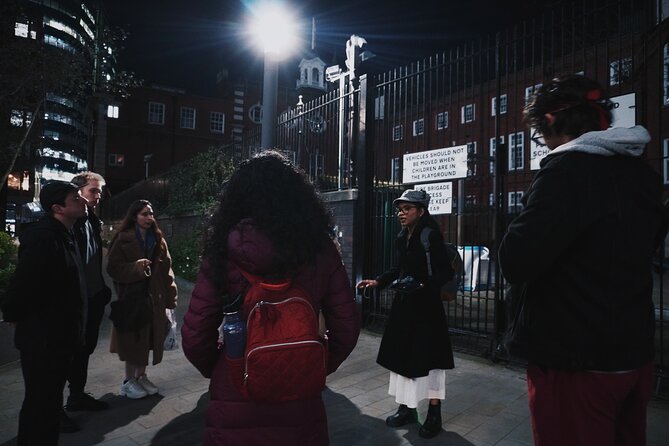
Dark London makes a grim story feel close. This two-and-a-half-hour Whitechapel walk links streets, pubs, churches, and murder sites associated with Jack the Ripper while placing the victims within the poverty of Victorian London. I like the chronological storytelling and the attention given to the women behind the case, not only the man who became infamous. The main drawback is that you will be outdoors and on your feet for most of the evening, with little chance to sit until the finish.
I also like the small-group size, capped at 25 people, and the strong value at $22.93 per person. Guides such as Tyson, Kory, Dougal, Hadi, and Korhan have been praised for clear storytelling, humor, and respectful treatment of difficult material. Still, sound can be a concern if the guide turns away while speaking, so staying near the front is a smart move.
Key points to know before booking
- Seven Whitechapel stops connect narrow lanes and public places with the 1888 murders and the lives of the victims.
- A chronological route helps you follow the case as it unfolded instead of sorting names and dates on your own.
- The women receive serious attention, including their working lives, poverty, and limited choices.
- The $22.93 price is strong value for a 2-hour-30-minute guided walk through central London.
- The group can reach 25 people, so stand close to the guide if hearing every detail matters to you.
- The Ten Bells Pub is part of the story, though the tour finishes at Mitre Square rather than inside the pub.
Why this Whitechapel walk works at night
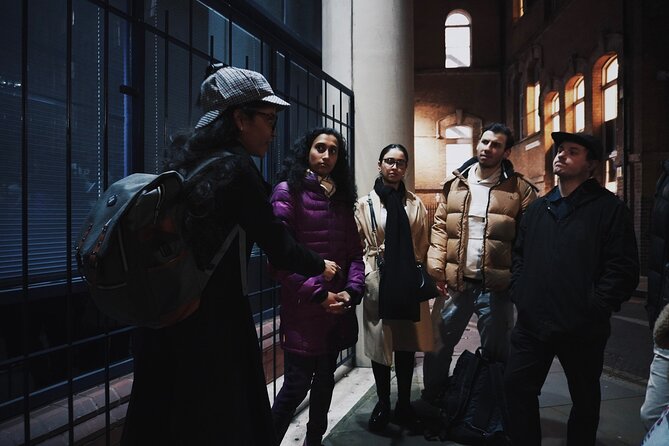
Jack the Ripper is often treated as a puzzle, but the setting tells a larger story. Whitechapel’s narrow passages and old streets help you picture a district shaped by crowded housing, poverty, and insecurity. The evening timing adds atmosphere without requiring theatrical effects. Darkness, cold weather, and rain can make the walk feel more intense, though they also make warm clothing and good shoes important.
This tour is led by a guide presented as a Ripperologist, so you get more than a list of names and gruesome details. The strongest guides build a timeline, explain competing theories, and point out what is known, what is disputed, and what may have grown through later mythmaking.
The best part is the human focus. One review specifically praised the attention given to the victims, who are too often reduced to footnotes in the Jack the Ripper story. You hear about women such as Annie Chapman, Catherine Eddowes, Martha Tabram, and Mary Jane Kelly within the conditions of their time.
That matters. The tour can be about murder and mystery while still showing respect for the people involved. Hadi was praised for handling the subject with care and avoiding gratuitous detail. Dougal and Kory were also singled out for bringing the period and the neighborhood to life through strong storytelling.
More Murder Mystery Games in London:
- Interactive Jack the Ripper Night Walk: London’s Murder Mystery
★ 5.0 · 171 reviews - Colombia’s Finest Outdoor Murder Mystery London
★ 5.0 · 122 reviews - London: Murder Mystery Cruise With 3-Course Dinner
★ 4.5 · 18 reviews
Starting at St Mary’s Whitechapel Church Memorial
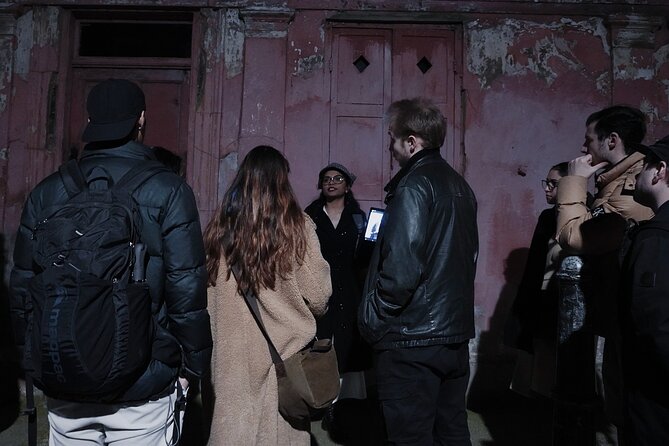
The meeting point is St Mary’s Whitechapel Church Memorial on an unnamed road in London E1 1FE. The tour then moves into the Whitechapel area, where the guide begins to explain the social conditions that shaped the case.
Arrive ready to walk rather than expecting a stage-like presentation. The guide may pause in public streets and explain a location while other groups, traffic, or city noise continue around you. One guide was praised for finding ways to help the group see the location even when other tour groups were nearby.
The group limit of 25 people is useful. It keeps the experience more personal than a very large city walk, but it is not intimate in the way a private tour would be. If you want to catch every name, date, and theory, remain near the guide and avoid drifting toward the back.
Brick Lane and the poverty behind the case
The first major stop is Brick Lane, now known for food, shops, and street culture. The tour uses it to explain the slum conditions of Victorian Whitechapel: overcrowding, poverty, and desperation.
This is an important opening because it gives the murders a social setting. You begin to see why vulnerable women moved through streets where shelter, work, and safety were uncertain. The guide’s job here is not simply to point at a street and announce a crime. It is to show how the district worked and why the area became linked with the case.
You spend about 17 minutes at this stop, with no admission fee. Since the route is outdoors, the meaning comes from the guide’s explanation rather than from a museum display or preserved interior.
Princelet Street and the lives behind the names
Princelet Street is narrower and quieter. Here, the guide discusses the Ripper’s connection with the area and the living conditions of women such as Annie Chapman.
This is where the tour’s emphasis on victims becomes clearer. A name in a crime timeline can feel distant. A guide who explains work, housing, and daily hardship gives that name a human shape.
The street itself helps. Its quiet character creates a pause after the broader setting of Brick Lane. You may find this stop more reflective than theatrical. The tour is not designed as a haunted attraction, and that is a strength if you want social context alongside the mystery.
Same place, a different puzzle:
- Private Escape Room with a Zombie in London
★ 5.0 · 128 reviews - London: Food Treasure Hunt and Walking Tour
★ 5.0 · 92 reviews - One-Hour Private Capital Caper Escape Room Gaming in London
★ 4.0 · 58 reviews - Interactive Treasure Hunt Experience – Central London’s Secrets
★ 4.5 · 43 reviews
Puma Court and the danger of narrow passages
Puma Court remains close to its 19th-century appearance, according to the tour description. The guide uses the narrow passage to explain how someone could vanish into darkness and why the physical shape of Whitechapel matters.
This is one of the stops where the walk itself does much of the work. You are not just hearing that the streets were confined. You are looking at a passage where visibility is limited and movement feels compressed.
The stop lasts about 17 minutes. Expect to stand while listening, and be aware that narrow streets may not offer a comfortable place for everyone to gather. The guide’s ability to project clearly matters here. One otherwise positive account noted that it was sometimes difficult to hear when the guide looked away, so staying close is practical.
The Ten Bells and a pub tied to the case
The Ten Bells is one of the most recognizable names in the Jack the Ripper story. Many of the victims are believed to have visited the pub before their deaths, and the tour explains why the building remains linked with the case.
The tour stops outside the pub rather than promising a pub visit or a reserved drink. That distinction matters if you are picturing a sit-down break. You are still on a walking tour, and the stop is used for storytelling about the victims’ final hours.
The Ten Bells also provides a useful reminder that these were real streets used by ordinary people. The pub was part of the neighborhood’s daily life, not simply a backdrop created for crime stories.
Gunthorpe Street and Martha Tabram’s disputed place
Gunthorpe Street is described as the location where Martha Tabram was brutally murdered. The guide examines the clues and the argument over whether she should be counted among the Ripper’s victims.
This is a good stop for anyone who enjoys the uncertain side of the case. The famous victim list is not as simple as a neat set of solved facts. Martha Tabram’s death raises questions about timing, method, and the evidence used to connect separate crimes.
A good guide should make clear where the facts end and theory begins. Several highly praised guides were noted for explaining competing ideas rather than presenting one answer as settled. If you enjoy testing evidence and weighing possibilities, this section may be one of the most engaging parts of the evening.
Goulston Street and the apron clue
At Goulston Street, the focus turns to a bloody piece of apron linked to Catherine Eddowes. A chalk message found nearby added another layer of controversy and led to theories that continue to surround the case.
This stop shows why the Ripper story remains so durable. It contains physical clues, hurried decisions, missing information, and later speculation. The guide can explain the clue without pretending that every question has an answer.
The stop also adds a police and public dimension. A piece of evidence in a street can create fear, rumors, and pressure on officials. You get a sense of how quickly an already tense district could become consumed by suspicion.
St Botolph without Aldgate and the people left behind
St Botolph without Aldgate offers a quieter pause. The church was associated with women seeking refuge, and the guide uses the location to discuss how Victorian society failed women who were poor and vulnerable.
This is one of the most worthwhile parts of the walk because it moves beyond the identity of the killer. You are asked to consider the conditions that left women exposed, including the lack of secure support and the harsh choices available to them.
The stop is also a chance to slow down and reflect. The subject is heavy, but the tour does not need to become bleak at every moment. Guides praised for subtle humor and calm delivery can give the group enough breathing room without making light of the victims.
Finishing at Mitre Square
The tour ends at Mitre Square in London EC3A 5DE. The endpoint is tied to the final murder in the tour’s account and gives the walk a clear finish rather than returning you to the starting point.
This is important for planning. You should not assume you will finish near St Mary’s Whitechapel Church Memorial. The route ends elsewhere in the City of London, so check your onward plans before booking an evening meal or transport.
The walk’s sequential structure is one of its best features. A guide who keeps the events in order lets you see how the case developed and how separate streets connect across Whitechapel and Aldgate. Tyson was praised for maintaining a good attitude through heavy rain, while another guide waited briefly when transport closures delayed people. Those details suggest that some guides pay close attention to keeping the group together.
Guides, storytelling, and the value of the group
The guide may be the biggest factor in your experience. The strongest feedback praises clear delivery, extra details about London, period news reports, old neighborhood photographs, and a willingness to discuss theories after the official walk ends.
Kory and Korey were praised for strong storytelling and broad knowledge of London as well as the murders. Tyson received repeated praise for humor, energy, and persistence in bad weather. Dougal was praised for creating a detailed picture of the 1800s, while Hadi received particular credit for respectful handling of the subject.
Names and guide assignments can change, so you should not book expecting one specific person unless the provider confirms it. The consistent pattern is more useful: guides are expected to know the subject, tell the story in sequence, and keep the group moving.
The main weakness is audibility. Outdoor streets are not quiet lecture halls. With up to 25 people, traffic and other groups can interfere. Stand near the front, watch the guide’s position, and speak up politely if you miss a key point.
Is $22.93 a good price?
At $22.93 per person, this is a good-value evening activity in London. You receive about 2 hours and 30 minutes of guiding across seven locations, with no separate attraction admission required at the listed stops.
The value comes from the route and the interpretation. You could walk through Whitechapel on your own, but you would miss much of the chronology, the competing theories, and the social background. A good guide also helps you understand why a street, pub, or passage matters instead of leaving you with a collection of disconnected addresses.
Group discounts may be available, which can improve the price for families or friends booking together. The activity is offered in English, and mobile tickets make the booking side simple.
Free cancellation is available if you cancel at least 24 hours before the start time. Cancellations within 24 hours are not refunded, and changes during that period are not accepted.
Who should book this evening walk?
I would choose this tour if you enjoy true crime, London history, old neighborhoods, or guided walks with a clear narrative. It also suits first-time visitors who want to see a part of London they might not otherwise explore at night.
You should be comfortable walking for most of two and a half hours. There are no planned sitting breaks until the end, and the tour continues in rain or cold conditions. Service animals are allowed, and most people can participate, but anyone concerned about extended standing should plan carefully.
This is not the right choice if you want a short, polished ghost show, a pub crawl, or a private conversation with a guide. It is a history walk with dark subject matter, public stops, city noise, and a serious look at people who lived under difficult conditions.
Should you book the Jack the Ripper night tour?
Yes, if you want a well-priced, story-led walk with real context. The chronological route, seven locations, and attention to the victims give the experience more substance than a simple list of grisly tales.
Book it knowing that the weather, group size, and sound on city streets can affect the evening. Wear comfortable shoes, dress for the forecast, stay near the guide, and allow time to continue from Mitre Square after the tour. If that suits your plans, this is a thoughtful way to spend an evening in Whitechapel, especially for anyone who wants mystery balanced with social history.
FAQ
How long is the Jack the Ripper walking tour?
The tour lasts approximately 2 hours and 30 minutes.
How much does the tour cost?
The listed price is $22.93 per person. Group discounts are available.
Where does the tour begin?
It begins at St Mary’s Whitechapel Church Memorial on an unnamed road in London E1 1FE, UK.
Where does the tour finish?
The tour ends at Mitre Square, London EC3A 5DE.
Is the tour offered in English?
Yes. The experience is offered in English.
How many people can join the tour?
The maximum group size is 25 participants.
Can I cancel for a refund?
Yes, if you cancel at least 24 hours before the experience begins. Cancellations made within 24 hours are not refunded.
Just added around London
- Zombie Scavengers Game – Southend-on-Sea, UK★ 4.5 · 2 reviews
- Undercover Agent Escape Game – High-Tech Spy Thriller★ 5.0 · 2 reviews
- e-Scavenger Hunt London: Explore the City at Your Own Pace★ 4.5 · 3 reviews
- Unique Survival Scavenger Hunt in Luton by Zombie Scavengers★ 3.0 · 2 reviews
- Secrets of Bermondsey: Self-Guided Urban Puzzle Walk★ 5.0 · 2 reviews
- Operation City Quest Scavenger Hunt – Southend-on-Sea, UK★ 3.5 · 2 reviews
- Private Prison Van Escape Game – London Immersive Experience★ 4.0 · 15 reviews
- London Self-Guided Sherlock Holmes Murder Mystery Game★ 4.0 · 2 reviews
Murder Mystery Games, compared.
Branson Murder Mystery- Branson’s Original #1 Murder Mystery
Read our review →

WhoDunnit Hoedown – Branson’s Best Murder Mystery Dinner Show
Read our review →

Ancient Greek Theatre Murder Mystery Experience
Read our review →
Interactive Jack the Ripper Night Walk: London’s Murder Mystery
Read our review →Ancient Greek Theatre Murder Mystery Experience
Read our review →
Colombia’s Finest Outdoor Murder Mystery London
Read our review →Browse the lists this game appears in