
Review · LEIDEN
Leiden Rembrandt Quest Through His Life: Exploration Game
History works better when you have to solve it. This 90-minute outdoor quest leads you through Leiden using ten puzzles tied to Rembrandt’s childhood, schooling, family, and early art training. You move at your own pace with a phone, a GPS map, and a story that turns a city walk into a small team adventure.
I like the route’s mix of well-known sights and quieter corners, especially Park de Put, the Stille Rijn, and Hooglandse Kerkgracht. I also like that the puzzles are gentle enough for older children, while adults still get useful background on Rembrandt and 17th-century Leiden. The main drawback is that the game can sometimes feel more focused on completing puzzles than on Rembrandt himself.
Key things to know before you play
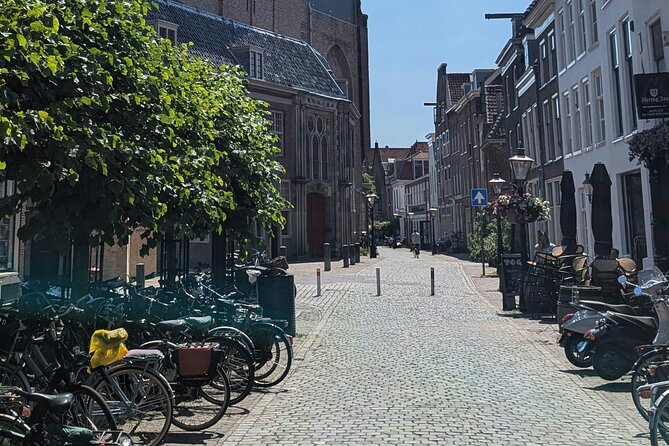
- Ten puzzles guide the walk: Each stop has a clue or riddle linked to its setting and Rembrandt’s early life.
- The route takes about 1.5 hours: It is long enough to feel like an activity, but short enough to fit into a day of sightseeing.
- You explore as a private group: There is no live guide, so your group controls the pace and conversation.
- The game suits families: Children around primary-school age and older can take part, with parents helping when needed.
- You see more than the famous sights: The route includes canals, gates, squares, churches, university buildings, and former working areas.
- The price is modest: At $6 per person, it costs less than many guided activities, though the value depends on how much you enjoy puzzle games.
Starting at Park de Put beside the old defenses
The quest begins at Morspoort Kazerne, beside Park de Put at Park de Put 11. This is a smart starting point because you are not dropped straight into a crowded shopping street. Instead, you begin beside a canal, a windmill, and a patch of green space with a military past.
Park de Put once formed part of Leiden’s defenses. Today, the setting feels calm, but the old defensive role gives the first puzzle some useful context. You are not simply hunting for a pin on a map. You are looking at a place that helped protect the city and using its story to reach the next clue.
Allow a few minutes at the start to get the mobile access code working and read the instructions. The GPS-based map is built into the experience, and the game can be started, paused, and resumed. That matters if you want to stop for coffee, take photographs, or spend longer at one of the churches.
The opening section should appeal to families because the task is active without demanding specialist knowledge. You can let younger players search for clues while adults handle the phone and read the extra information.
More City Exploration Games in the Netherlands
- Discover Utrecht with a self-guided Outside Escape city game tour
★ 4.5 · 51 reviews - Rotterdam Highlights & Spies: Interactive City Game
★ 4.0 · 51 reviews - Discover Delft with a self-guided Outside Escape city game tour!
★ 5.0 · 32 reviews
Rembrandtplein and the first glimpse of young Rembrandt
The route then points toward Rembrandtplein, a square connected with the painter’s childhood neighborhood. It is not presented as a grand museum stop. Its value comes from imagining the young Rembrandt in the ordinary streets where he grew up.
This is where the storyline begins to connect the city to a person rather than treating Leiden as a list of monuments. The puzzle draws attention to Rembrandt’s youth and gives you a reason to look closely at a place you might otherwise cross without stopping.
Do not expect a large exhibit or a formal explanation at this point. The experience uses the street itself as the setting, with the phone supplying the narrative and challenge. If you prefer paintings, galleries, and long historical talks, this section may feel light. If you enjoy learning through movement, it keeps the pace lively.
Doelenpoort, a city gate with civic-guard symbolism
Doelenpoort is one of the route’s more visually distinctive stops. The 17th-century gateway once led to a shooting range used by Leiden’s civic guards. Its decorated façade gives the puzzle a strong sense of place, with symbols connected to duty, protection, and civic power.
This stop shows how the quest works at its best. You arrive at a real piece of city fabric, study the details around you, and then use the clue to notice something specific. The game asks you to read the street rather than simply walk past it.
The gate is also a good reminder that Rembrandt grew up in a working city shaped by guilds, guards, schools, churches, and trade. You will not receive a full lecture on Leiden’s political life, but the setting adds useful background to the young artist’s world.
The Latin School and Rembrandt’s early education
The Young Rembrandt School, formerly the Latin School, shifts the story from streets to study. This was where Rembrandt took early academic steps and encountered the classical education that helped shape his thinking.
The puzzle here is linked to his school days. That makes this more than a stop for a photograph. You get a small piece of the intellectual setting around him, including the role of Latin schooling in the Netherlands of his time.
I would give this stop a little attention, even if the clue seems easy. It helps explain that Rembrandt’s development was not only about drawing and painting. His early world included language, classical ideas, religion, and formal learning.
The challenge level is generally mild. That is good for mixed-age groups, but puzzle fans who want a hard escape-room test may find the questions too simple. The purpose is to keep you moving through Leiden, not to trap you at one location for half an hour.
Same place, a different puzzle:
- Amsterdam Treasure Hunt: The Mystery of a Secret Sender
★ 5.0 · 149 reviews - e-Scavenger hunt Maastricht: Explore the city at your own pace
★ 4.5 · 110 reviews - Amsterdam: Treasure Hunt Walking Tour “A Secret Sender”
★ 4.7 · 71 reviews - Utrecht Old Town: Medieval Monster Hunt & Walking Tour
★ 4.0 · 62 reviews
Leiden University and the city’s intellectual side
Universiteit Leiden was founded in 1575 and is the oldest university in the Netherlands. The quest uses it to show the scholarly side of the city, a useful contrast with the mills, canals, gates, and commercial streets elsewhere on the route.
You may see references to major thinkers associated with the university, including Einstein and Descartes. The game links that wider academic tradition to the world Rembrandt knew as a young man.
This stop works well because it broadens the portrait of Leiden. The city was not simply a backdrop for an artist. It was also a place of study and debate, and the university helped give it an intellectual character.
The university puzzle is designed as a brain teaser, but you do not need university-level knowledge to solve it. The route’s feedback suggests that the questions are manageable for families and friends. If you are playing with children, let them attempt the answer before adults step in.
Pieterskerk and the family connections
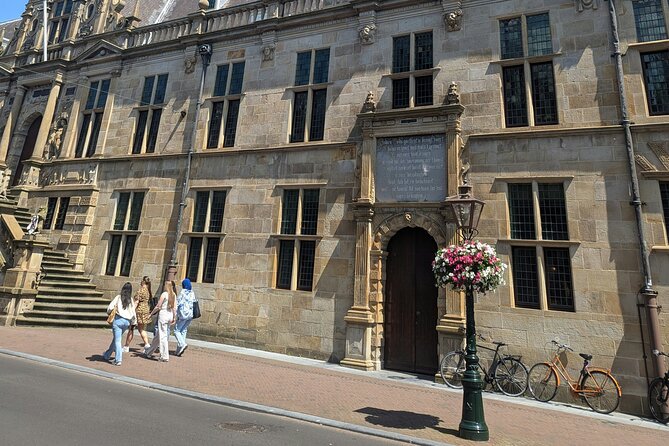
Pieterskerk brings you to one of Leiden’s major Gothic landmarks. The church has long associations with scholars and pilgrims, but the quest also points toward Rembrandt’s family story. His father worked nearby as a miller, connecting the grand church and the surrounding city to the practical world of the family.
This is one of the stronger historical links on the route. It helps explain why canals, mills, waterways, and working neighborhoods matter to the Rembrandt story. His early surroundings were not abstract scenery. They were the places where his family lived and worked.
The church itself gives the walk a change of scale. After smaller streets and gateways, you reach a building with real visual weight. Even if you are not deeply interested in church architecture, the setting makes a natural pause.
The experience does not include admission to a live guided visit or a separate lecture inside. The puzzle and phone-based material do the teaching. Check the surroundings rather than assuming the game is an indoor church tour.
Young Rembrandt Studio and the training of an artist
The Young Rembrandt Studio is the most direct art stop on the route. It occupies the house where Rembrandt trained under the painter Jacob van Swanenburgh. Here, the story turns from childhood surroundings to practical instruction.
The quest refers to the young artist learning about pigments, perspective, and imagination. Those details give the puzzle a clear purpose. You are not just being told that Rembrandt was talented. You are being shown the kind of basic work and discipline that helped shape his later career.
This stop should matter most to visitors who want the Rembrandt theme to feel central. It is also a good place to slow down and read the extra information rather than racing immediately to the answer.
The limitation is that the experience remains a self-guided outdoor game. If you want a full museum visit, original works, or a curator-led explanation of techniques, this quest will not replace that. It works better as a lively introduction to the setting of his apprenticeship.
Hooglandse Kerkgracht and the quieter Golden Age streets
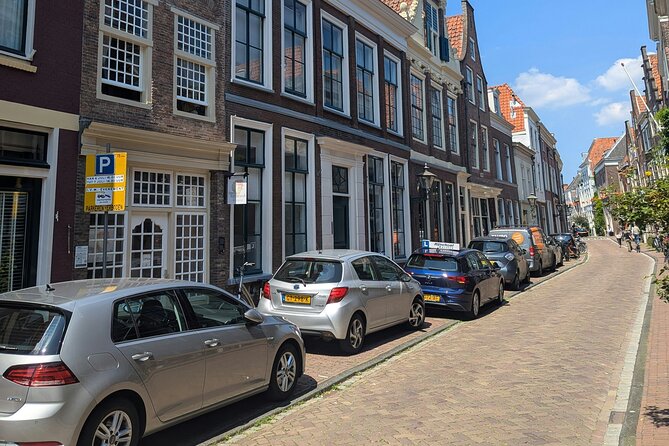
Hooglandse Kerkgracht is one of the prettiest sections of the walk. The street has elegant 17th-century houses, mature trees, and a close connection to Hooglandse Kerk. It gives you a quieter view of Leiden than the large public landmarks.
The route uses the street’s past as the basis for another riddle. In Rembrandt’s era, this area was tied to merchants, artists, and scholars. That makes it a useful place to picture daily life in the city rather than focusing only on famous names.
This is also one of the stops where the route’s leisurely pace pays off. You can look at façades, pause beneath the trees, and let the game lead you without hurrying. The activity is flexible, so you are not forced to keep up with a group or wait for a guide.
You should still keep an eye on the map and your surroundings. Because the quest is played on city streets, the phone is a tool rather than the whole activity. The best moments come when you look up from the screen.
Stille Rijn and the everyday canal view
The Stille Rijn gives the route one of its most relaxed stretches. This canal runs through the center of Leiden and is tied to the story of Rembrandt’s early life, including the places where he lived and sketched.
The clue here encourages you to notice the relationship between water and city life. Canals were working routes, social spaces, and everyday views. For a young artist, they offered changing scenes and ordinary people to observe.
This stop may appeal to photographers and anyone who likes a slower city walk. It is less about a single grand monument and more about seeing how Leiden’s waterways connect different parts of the old center.
The game’s light puzzle format also helps prevent the canal section from becoming just a scenic pause. You have a reason to examine the location, then continue once your group has solved the question.
Kort Galgewater and the final view by the windmill
The route ends at Kort Galgewater 20, where the water, windmill, and old industrial setting create a strong final scene. This area once supported trade and industry, and it also connects to Rembrandt’s family because his father’s mill stood nearby.
Ending here makes sense. The quest begins with a windmill and defensive history at Park de Put, then finishes with another waterside setting tied to milling and Rembrandt’s family life. The final puzzle brings the family story back into focus.
Kort Galgewater is also a good place to pause after the game. You have moved through schools, university grounds, churches, gates, squares, canals, and former working areas. The last stop gives those pieces a practical setting rather than ending at an anonymous street corner.
The experience does not promise a dramatic prize or a large final reveal. Its reward is the route itself, along with a better sense of how Rembrandt’s early surroundings fit together.
How the puzzles and app shape the experience
You receive mobile access to the quest, ten themed puzzle challenges, a GPS-based map, and an ongoing story about Rembrandt’s youth. There is no live guide, which gives you privacy and control but also means your group must read the instructions and solve problems on its own.
The flexibility is a major advantage. The stated hours run from 8:00 a.m. to 9:00 p.m., Monday through Sunday, for the listed operating period. You can choose a time that fits your day, then pause if you want lunch or a longer look at a sight.
The puzzles are generally easy to moderate. Families with children aged 11 and 13 have found the format workable, and primary-school children can join in with parental help. Adults without children can enjoy it too, especially as a low-pressure afternoon activity with friends.
One piece of criticism is worth taking seriously. At least one participant felt that the game sometimes required generating numbers from walking paths in a particular order, rather than using more interesting historical information. That suggests the experience is strongest when you treat it as a city game with Rembrandt content, not as a full art-history tour.
Price, group size, and practical value
At $6 per person, the quest is inexpensive by sightseeing standards. For a group of four, the total is $24 before any applicable group discount, which is a reasonable price for an hour and a half of structured activity in central Leiden.
The value improves if you are traveling with children or friends who like puzzles. You get a route, a story, navigation, and ten challenges without paying for a private guide. Since only your group participates, you can solve clues at your own speed.
The value is weaker if you mainly want expert commentary or museum-quality Rembrandt interpretation. The price buys a game, not a traditional guided walk. Group discounts are available, and free cancellation is allowed up to 24 hours before the start time, which reduces the risk of booking ahead.
The meeting point is near public transportation, and most people can take part. Service animals are allowed. Since the activity takes place outdoors and uses a phone, bring a charged device and be ready to walk through the old city, though the exact distance is not provided.
Who should choose the Rembrandt Quest?
I would choose this for families with school-age children, couples who want a playful city walk, and groups of friends looking for something more active than a standard sightseeing route. It also suits people who have visited Leiden before and want a fresh reason to explore streets they may have missed.
You should be comfortable with self-guided activities. There is no guide to explain a difficult clue, add local anecdotes, or adjust the story to your interests. If your group gets stuck, the solution depends on the game’s built-in help and your own teamwork.
The route is also a good fit if you want a short activity between larger plans. At roughly 90 minutes, it should not consume an entire day. You can start in the morning or evening within the stated opening hours and pause when needed.
Should you book it?
Book the Leiden Rembrandt Quest if you like easy puzzles, outdoor walks, and learning through places rather than long lectures. The route’s best qualities are its manageable length, private format, family-friendly questions, and connections between Rembrandt’s youth and Leiden’s canals, schools, mills, churches, and streets.
Skip it if you want a serious art-history tour, a live guide, or difficult escape-room puzzles. For $6 per person, it is a fair and cheerful way to see more of Leiden, provided you accept that the game sometimes puts the puzzle ahead of the painter.
FAQ
How long does the Leiden Rembrandt Quest take?
The quest takes approximately 1 hour and 30 minutes.
How much does the experience cost?
The listed price is $6 per person. Group discounts are available.
Is a live tour guide included?
No. The activity is self-guided and includes mobile access, a GPS-based map, and the puzzle storyline.
Where does the quest start and finish?
It starts at Morspoort Kazerne, Park de Put 11, 2312 BM Leiden. It ends at Kort Galgewater 20, 2312 BR Leiden.
Is the quest suitable for children?
Yes. The puzzles are suitable for older children, and the experience has worked for families with children aged 11 and 13. Primary-school children can also participate with parents.
Can I cancel the booking?
Yes. You can cancel for a full refund up to 24 hours before the experience start time. Changes or cancellations made less than 24 hours before the start are not accepted for a refund.
Just added around the Netherlands
- Discover Utrecht’s Zocherpark in this Outside Escape game tour!★ 5.0 · 2 reviews
- Utrecht Scavenger Hunt and Highlights Self Guided Audio Tour★ 4.0 · 10 reviews
- e-Scavenger hunt The Hague: Explore the city at your own pace★ 3.5 · 10 reviews
- The Hague Scavenger Hunt and Highlights Self Guided Audio Tour★ 3.5 · 8 reviews
- Delft Self Guided Sherlock Holmes Murder Mystery Game★ 4.5 · 2 reviews
- The Blue’s Clues in Delft Exploration Game and Tour★ 3.5 · 10 reviews
- 90 minutes Self Guided Walking Tour with puzzles in Den Haag★ 4.5 · 7 reviews
- e-Scavenger hunt Schiedam: Explore the city at your own pace★ 4.5 · 4 reviews
City Exploration Games, compared.

Romantic Montmartre: Paris Lost Lovers Exploration Game and Tour
Read our review →
Sibiu Old Town Exploration Game and Self-Guided Tour
Read our review →
Glasgow Ghost Hunt: The Soul That Got Away Exploration Game
Read our review →
Rotterdam Highlights & Spies: Interactive City Game
Read our review →
Discover Utrecht with a self-guided Outside Escape city game tour
Read our review →
Bristol Street Art: Banksy Exploration Game and Tour
Read our review →Browse the lists this game appears in