

Review · DUBLIN
The Dublin Incident: Alien, Whiskey & Clues Exploration Game
Dublin becomes your puzzle board. This self-guided game sends you through the city by clue, connecting places such as St. Patrick’s Cathedral, the Guinness Storehouse, Teeling Distillery, and the Irish Museum of Modern Art. You use your phone, solve each puzzle, then follow the directions to the next stop.
I like the freedom to start anytime, pause for lunch, and continue later. I also like the low price of $10.46 per person, especially for families, since children play free. The main drawback is the purchase process, which one customer found confusing and time-consuming. If your Dublin visit is short, a slow start with the app could eat into valuable sightseeing time.
Key points at a glance

- Nine clue-based stops: Each stage takes you to a place, asks you to solve a puzzle, and then reveals how to continue.
- A strong route through Dublin 8: The game begins at 12 Newmarket in The Liberties and ends at Kilmainham Gaol.
- Major sights along the way: The experience highlights St. Patrick’s Cathedral, Guinness Storehouse, Teeling Distillery, and the Irish Museum of Modern Art.
- Your own timetable: It runs every day, around the clock, with no fixed departure time or physical guide.
- Offline play: You do not need an internet connection once you begin the game.
- Good family value: Children can participate free, and group discounts are available.
A city walk with a puzzle in the middle

This is not a standard walking tour with a guide leading from one Dublin landmark to another. It is a private activity for your own group, built around a sequence of clues. Your phone gives you the puzzle, you work out the answer, and the solution directs you onward.
That format changes the pace. You are not simply looking at a church, distillery, or museum from the outside while someone gives a speech. You need to inspect your surroundings and connect the information in front of you to the next clue. For families, couples, and friends, that extra task can make a familiar sightseeing route feel more playful.
The experience is advertised as lasting about one to two hours. Treat that as the game time rather than a complete Dublin sightseeing schedule. You may stop to take photographs, look around a landmark, eat, or pause the game, so your actual time in the area can be longer.
I would not choose this as your only introduction to Dublin history. There is no physical guide, and the information is delivered through the game. But it can work well as a light, flexible way to connect several important places in the city.
More City Exploration Games in the world:
- Malaga city game: Operation Mindfall
★ 5.0 · 111 reviews - Romantic Montmartre: Paris Lost Lovers Exploration Game and Tour
★ 4.5 · 107 reviews - Sibiu Old Town Exploration Game and Self-Guided Tour
★ 4.5 · 82 reviews
Starting at 12 Newmarket in The Liberties
The game starts at 12 Newmarket, The Liberties, Dublin 8. This gives you a practical base in one of Dublin’s older inner-city areas and places you close to several of the named sights on the route.
Your first task is to follow a clue and solve a puzzle. The exact wording of the puzzles is not provided, so you should expect the game to reveal its own instructions after you begin rather than receiving a full route map in advance. Once you reach the first location, the game explains how to continue.
This beginning suits people who like a little uncertainty. You are not being marched through a fixed script. On the other hand, anyone who prefers clear directions and a known sightseeing order may find the format less comfortable, particularly if the app or purchase instructions take time to understand.
Because the game is self-guided, you should allow a few spare minutes at the start to open the activity and get oriented. That is especially sensible if you have timed tickets elsewhere in Dublin.
Stop one: finding the first landmark
The opening stop sets the tone for the whole experience. You follow the first clue, reach a location, and solve the puzzle there. The reward is not only the answer. The game also gives you information about the place you have found.
This structure makes the walking itself part of the entertainment. You are not told every detail before you arrive. Instead, the city gives you the setting, and the clue gives you a reason to pay attention.
The practical benefit is that you can move at your group’s speed. If the puzzle is easy, you continue. If children want to work it out together, you can wait. If you want to stop for a snack, you can pause and resume later.
Stop two: St. Patrick’s Cathedral and Dublin’s old center
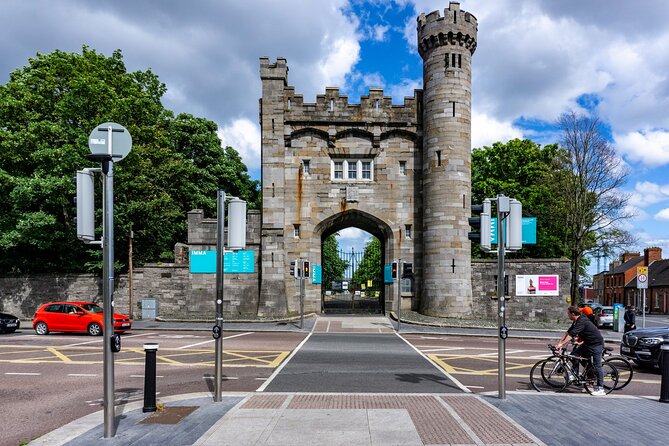
St. Patrick’s Cathedral is one of the key Dublin landmarks connected with the game. It gives the route a sense of age and place, and it is the sort of building that rewards a closer look even if you are not taking a full cathedral tour.
The game does not present this as a long guided visit. Instead, you arrive by solving the previous clue, learn something about the site, and receive the next indication. That distinction matters. Your experience of the cathedral will depend on how much time you choose to spend there and what access is available when you arrive.
I like this stop as part of a puzzle route because it turns a famous sight into a working piece of the game. The drawback is that a clue-based visit may not provide the depth you would get from a dedicated historical tour or an official cathedral visit.
More Escape Games in the world:
- Sofia Escape Room – Teorema Rooms
★ 5.0 · 895 reviews - Saw2 vs Squid Game – Escape Game Montpellier
★ 5.0 · 752 reviews - Prague Wizard Experience Magic School Escape Game
★ 5.0 · 746 reviews - The Escape Game Orlando: Epic 60-Minute Adventures on I-Drive
★ 5.0 · 730 reviews
Stop three: Guinness Storehouse

The Guinness Storehouse is another major point connected with the route. It is one of Dublin’s best-known visitor attractions, so including it gives the game an instantly recognizable target.
The activity appears to use the area as part of the clue trail rather than including admission to the Storehouse. The supplied details do not say that entry tickets are included, so you should not assume that solving the clue gives you access inside. If you want to visit the attraction properly, plan and pay for that separately.
This is a useful place to combine activities. You could play the game around the stop, then decide if you want a longer Guinness visit. Just watch your timing. The game itself is short, but a full attraction visit can take much longer than the one to two hours listed for the activity.
Stop four: Teeling Distillery and the whiskey theme
Teeling Distillery gives the experience its whiskey connection. Its appearance also fits the title of the game, which mixes an alien story with clues and Dublin drinks culture.
Again, the supplied information does not include a distillery tasting or admission. Think of Teeling as a landmark on the route, not an included whiskey tour. If you want to go inside, confirm the separate opening and ticket details before building your day around it.
This stop should appeal to adults who enjoy having a local theme woven into a city walk. It also gives the route a more distinct Dublin character than a generic puzzle game would have. Families can still take part in the clue activity, but the whiskey references will naturally be more interesting for grown-ups.
Stop five: the Irish Museum of Modern Art
The Irish Museum of Modern Art is named as another highlight. Its inclusion broadens the route beyond churches, breweries, and distilleries. You get a cultural stop in the mix, even though the game does not promise museum admission or a full art visit.
That makes this part especially useful for people who want a varied day. You may pass from historic architecture to food and drink heritage, then to modern art. The game gives each stop a practical purpose, since every place is also part of the next puzzle.
Do not expect the game to replace time inside the museum. If art is a priority, set aside separate time for the galleries. The clue may bring you to the museum, but the self-guided activity remains focused on solving and moving forward.
Stops six through eight: keeping the clues moving

The next three stages continue the same basic pattern. You solve a clue, reach the indicated location, learn about what you have found, and receive the next direction. The available details do not name each of these stops, so I would avoid planning your day around three specific unnamed attractions.
That lack of a full public stop list is both a strength and a weakness. It preserves some surprise, which is useful when you want the route to feel like a treasure hunt. It also means you cannot judge every walking distance or decide in advance which locations deserve extra time.
These middle stages are likely to be where the group dynamic matters most. One person may spot a visual detail. Another may work out the word puzzle. A child may notice the clue first. Since only your group takes part, you do not need to keep pace with strangers or worry about giving an answer in front of a larger crowd.
The game is private, but not guided. You get privacy without receiving personal commentary from a local expert. That trade-off is central to deciding if this is right for you.
Stop nine: finishing at Kilmainham Gaol
The listed end point is Kilmainham Gaol, Inchicore Road, Kilmainham, Dublin 8. This gives the route a clear finish rather than sending you back to the starting point.
Kilmainham Gaol is a powerful final location for a Dublin route because it carries major historical importance. However, the activity details do not include a prison tour or admission ticket. You should treat the game ending as arrival at the location, not as entry into the gaol.
The one-way design affects your plans. If you leave a car near Newmarket, you will need to arrange your return. Public transport is nearby according to the activity details, but no specific bus or tram instructions are supplied. If you plan to continue sightseeing after the game, ending in Kilmainham can be useful because you are already on the western side of central Dublin.
How the phone-based format works
You need a mobile device to play, but you do not need an internet connection during the game. That offline feature is one of the strongest practical points. It reduces concern about mobile data, patchy service, or unexpected roaming charges.
You still need to complete the purchase and access the game before setting off. Since one customer reported that buying the activity became a headache, I would handle that part before reaching the starting point. Save the confirmation and make sure everyone in your group knows which phone will run the game.
The app format also means you should keep your phone charged. A low battery would be a poor way to end a treasure hunt, even though the activity does not state how much battery it uses.
The lack of a physical guide gives you freedom, but it also puts the responsibility for navigation and problem-solving on your group. If you get stuck, there is no guide standing nearby to give a hint. The operator provides a customer-care email, [email protected], for assistance with problems.
Price, flexibility, and family value
At $10.46 per person, this is inexpensive for a private activity that can occupy one to two hours. The value becomes better if several people share the fun and children play free. Group discounts are also available, although the exact discount is not specified.
I would compare the price with what you want from the experience. You are paying for a self-guided game, not a full walking tour, attraction admission, tasting, or private historian. If you want entertainment and a reason to walk between Dublin landmarks, the cost is fair. If you want detailed commentary or entry to every named site, you will need to spend more elsewhere.
The flexible schedule is worth real money for many visitors. You can begin at any hour, stop whenever you like, and continue later. The activity is available every day, 24 hours a day, so it can fit around meals, museum visits, weather, and other bookings.
Free cancellation is available if you cancel at least 24 hours before the start time. Inside that window, you do not receive a refund, and changes are not accepted. The cut-off follows Dublin local time.
Who should book this Dublin game?
I would recommend it for families with older children, couples who enjoy puzzles, and friends who want a simple group activity between major Dublin attractions. It is also a good option if your schedules do not line up with a fixed tour departure.
The game suits independent visitors who like deciding when to start and how long to linger. The private format is useful for a small group that wants to solve clues without strangers joining in.
I would hesitate to recommend it to someone seeking a detailed account of Dublin’s past. You may learn about each place, but the format is designed around clues and movement rather than long explanations. It is also less suitable if you need a fully planned route with exact stop names and walking times before you leave.
Should you book The Dublin Incident?
Book it if you want a low-cost, flexible way to connect several Dublin landmarks and your group enjoys solving problems together. The offline access, free child participation, private format, and pause-anytime schedule make it easy to fit into a busy city break.
Skip it if you want a live guide, included attraction tickets, a whiskey tasting, or a detailed historical tour. Also take the purchase process seriously. Set it up before you arrive, keep the confirmation handy, and allow enough time to reach the starting point in The Liberties.
For the right group, this is a playful city walk with a useful route and a clear finish at Kilmainham Gaol. It works best as an added layer to Dublin sightseeing, not as a replacement for the city’s major paid attractions.
FAQ
How long does The Dublin Incident take?
The experience takes approximately one to two hours.
Where does the game start?
It starts at 12 Newmarket, The Liberties, Dublin 8, D08 P3Y2, Ireland.
Where does the game finish?
It ends at Kilmainham Gaol, Inchicore Road, Kilmainham, Dublin 8, D08 RK28, Ireland.
Is the activity guided by a person?
No. It is a self-guided activity played on your mobile device, and no physical tour guide is included.
Do I need an internet connection?
No. The game can be played offline, so you do not need an internet connection while taking part.
Can I choose my starting time?
Yes. The game is available every day, around the clock, and you can start at any hour.
Can I pause the game?
Yes. You can take a break at any time and resume later.
Are children charged?
Children can play free.
Is this a private activity?
Yes. Only your group takes part.
What is the cancellation policy?
You can cancel for a full refund if you cancel at least 24 hours before the scheduled start time. Cancellations or changes made less than 24 hours before the start time are not accepted for a refund.
Just added around the world
- Vienna: Freud, Mozart & Beethoven Exploration Game★ 4.0 · 14 reviews
- Mobile puzzle rally tour at the Vienna Central Cemetery★ 4.5 · 3 reviews
- Vienna Scavenger Hunt and Highlights Self Guided Audio Tour★ 4.5 · 13 reviews
- e-Scavenger hunt Vienna: Explore the city at your own pace★ 3.5 · 2 reviews
- Vienna Highlights Self guided scavenger hunt and Walking Tour★ 4.0 · 5 reviews
- Digital puzzle tour with Marcus Aurelius’ order★ 5.0 · 5 reviews
- True Crime mobile puzzle rally Vienna★ 4.0 · 3 reviews
- The Vienna Augmented Reality Puzzle Rally★ 5.0 · 7 reviews
City Exploration Games, compared.

Romantic Montmartre: Paris Lost Lovers Exploration Game and Tour
Read our review →
Sibiu Old Town Exploration Game and Self-Guided Tour
Read our review →
Glasgow Ghost Hunt: The Soul That Got Away Exploration Game
Read our review →

Rotterdam Highlights & Spies: Interactive City Game
Read our review →
Discover Utrecht with a self-guided Outside Escape city game tour
Read our review →
Bristol Street Art: Banksy Exploration Game and Tour
Read our review →Browse the lists this game appears in