
Review · CHICAGO
Eastside Chicago The Heist Exploration Game and Tour
Chicago turns public art into a city-sized puzzle. This self-guided game leads you through Millennium Park and Grant Park, using challenges to reveal stories about famous sculptures, fountains, museums, and buildings. I like the low $7.20 price and the freedom to start at any hour, pause whenever you want, and continue later. I also like that the game works offline, which removes one common phone-tour headache.
The main caution is that this is a walking game, not a guided tour. You must follow directions, find answers, and deal with real city conditions such as construction, crowds, and location-based phone prompts. If you want polished storytelling from a person, this may feel thin. If you enjoy solving clues with family or friends, it offers a playful way to see central Chicago.
Key points to know before you book
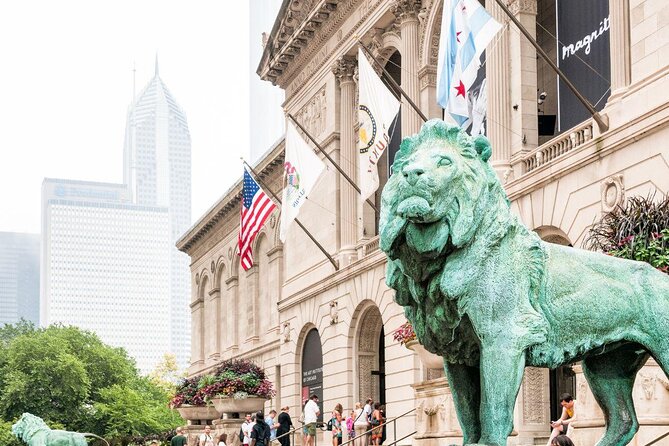
- The route covers major Chicago sights: Expect stops at the Art Institute, Cloud Gate, Crown Fountain, Lurie Garden, Buckingham Fountain, and other public artworks.
- The game lasts about 1 hour 35 minutes: Your actual time can vary because you can pause, take breaks, and resume later.
- You play on your own phone: There is no physical guide, and the activity is private for your group.
- The price is unusually low: At $7.20 per person, it costs far less than most guided city walks, though you trade personal commentary for puzzles.
- Comfortable shoes matter: The route covers a lot of ground through downtown parks and museum areas.
- Construction and GPS range can affect play: You may need hints or an expanded radius if a location is blocked or your phone does not register your position.
How the Chicago heist game works
The experience begins at 111 South Michigan Avenue, near the Art Institute of Chicago. From there, you use a smartphone app to move between locations and solve a challenge at each stop. The game then gives you information about the place before directing you onward.
I like this format for a first look at the Loop because it gives you a reason to stop and study details you might otherwise pass. A sculpture is no longer just something to photograph. You need to inspect it, look for a clue, and connect it to a bit of Chicago history.
The private format is useful for families, couples, and small groups that do not want to match the pace of strangers. You can start at midnight or midday because the activity is listed as available 24 hours a day, every day. That flexibility is especially handy if you are fitting the walk around museum hours, meals, or a changing Chicago forecast.
The tradeoff is simple. You are responsible for keeping the group moving and handling the app. There is no guide to point out a missed detail, explain a confusing question, or reroute you around a blocked path.
More City Exploration Games in the USA
- Haunted Chicago Exploration Game and Tour
★ 4.0 · 6 reviews - San Francisco Haight Ashbury Hippie Exploration Game
★ 4.5 · 13 reviews - San Diego: Balboa Park Botanical Exploration Game
★ 4.5 · 12 reviews
Starting at the Art Institute of Chicago
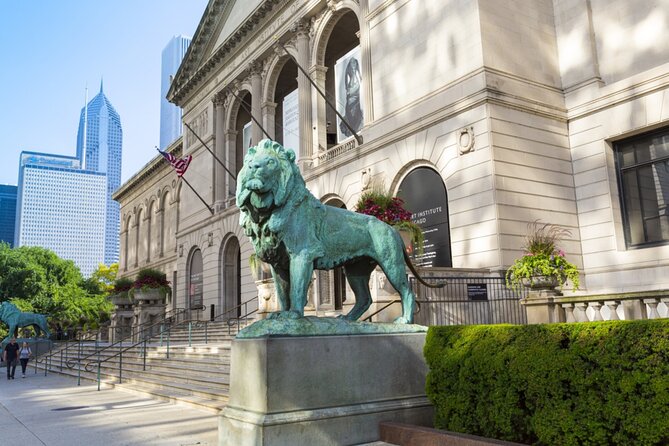
The opening stop is the Art Institute of Chicago, founded in 1879 as both a museum and an art school. That date matters because Chicago was rebuilding after the Great Fire of 1871, and civic groups were working to give the rapidly growing city cultural institutions as well as commercial ones.
The challenge asks you to look around for an answer before the game advances. This is a good opening idea. You begin with a major landmark, but the task encourages close attention rather than a quick selfie and departure.
You should not expect entry to the museum to be part of the activity. The route uses the area around the institution, and the experience does not include a physical guide or museum admission. If you want to visit the galleries, treat that as a separate plan and allow additional time.
Nearby, the Chicago Stock Exchange Arch adds another layer of architectural history. It is one of the few surviving pieces of the 1893 Chicago Stock Exchange building. Seeing an isolated architectural fragment can be more thought-provoking than seeing an intact building because it makes you consider how much of Chicago has been rebuilt, moved, or lost.
Calder’s Flying Dragon and the language of public art
One stop features Alexander Calder’s Flying Dragon, a stainless steel sculpture coated in his familiar red-orange color. Calder used a similar color on Flamingo, his large sculpture in Chicago’s Federal Center Plaza.
The game gives you a reason to inspect the work closely and learn about Calder’s career, which spanned roughly 50 years. You do not need to be an art specialist to enjoy this part. The challenge turns shape, color, and setting into clues.
This stop also shows the strength of the format. A guide might give you a polished explanation, but the app asks you to observe first. That small pause can make public art feel less like background decoration.
The limitation is that the explanation is likely brief and task-focused. If Calder is a major interest, you will want a longer museum or architecture tour elsewhere. Here, the sculpture is one part of a broader route.
Crown Fountain and Cloud Gate in Millennium Park

Crown Fountain is one of Millennium Park’s best-known public artworks. Designed by Spanish artist Jaume Plensa and executed by Krueck and Sexton Architects, it opened in July 2004. It combines video imagery, sculpture, water, and public space.
This is a strong game stop because the artwork rewards looking. You may need to examine the fountain area to answer the challenge, while the app supplies the basic story behind the design. The stop works well for families because it connects art with movement and visual discovery rather than asking you to read a long panel.
Cloud Gate follows, the polished stainless steel sculpture better known by its nickname, The Bean. British artist Anish Kapoor created it as his first public outdoor work in the United States. The 110-ton form is made from a seamless series of highly polished stainless steel plates, reflecting the skyline, clouds, and people around it.
The challenge here gives you a reason to study the sculpture from more than one angle. Cloud Gate is often treated as a quick photo stop, but its changing reflections make it worth a slower look.
Millennium Park can be crowded, and the app relies on your phone recognizing your position. One participant had trouble getting the game to register near a fountain and had to expand the location radius. That is an important practical warning: do not assume every prompt will work perfectly at the exact moment you reach a sight.
More Heist and Spy Games in Chicago:
- Bank Heist Escape Room Game for Private Group
★ 5.0 · 519 reviews - Undercover City Games: Gdansk
★ 5.0 · 198 reviews - Malaga city game: Operation Mindfall
★ 5.0 · 111 reviews - Undercover City Games: Poznan
★ 5.0 · 88 reviews
Wrigley Square and the old Grant Park shoreline
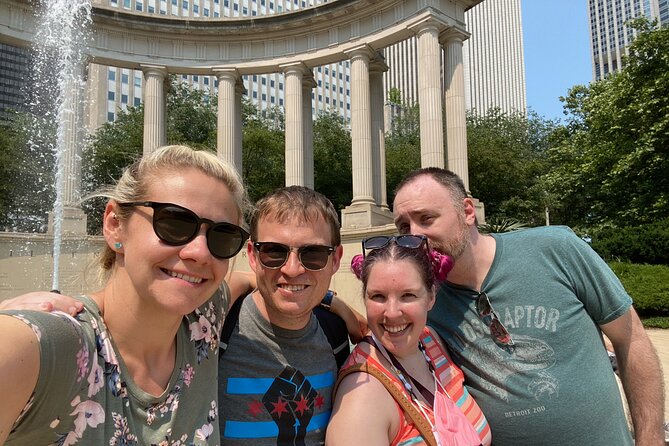
Wrigley Square contains the Millennium Monument, a nearly full-size copy of a semicircle of paired Roman Doric columns. The original peristyle occupied this general part of Grant Park from 1917 to 1953, near Michigan Avenue and Randolph Street.
The square also includes a lawn and public fountain. This is a quieter change of pace after the crowds around Cloud Gate. The game uses the setting to connect present-day park design with earlier versions of the city.
I like this kind of stop because it shows that Chicago’s public spaces are not fixed. Columns, lawns, fountains, and monuments have been arranged and rearranged as the city changed. You are not simply checking off famous attractions. You are seeing how Chicago has presented itself over time.
The route can feel less direct here if you are expecting every location to be obvious. Pay attention to the app’s directions, and keep the group together. The route involves enough walking that a wrong turn can cost both time and patience.
Lurie Garden and the city beneath your feet

Lurie Garden occupies a site that once held water and was later filled, largely with rubble from the Great Fire. The garden was then built at its current height on top of a parking garage.
That backstory gives the stop unusual depth. A modern garden can look carefully planned and permanent, but this site carries several layers of Chicago’s past: water, fire debris, parking infrastructure, and public planting.
The game asks you to look around for an answer before moving on. This encourages you to notice the garden as a designed place rather than simply passing through it between larger attractions.
Because the activity is outdoors, the experience depends on conditions you cannot control. Construction barriers or temporary closures may block a clue or make the directions harder to follow. If the app offers a hint, use it when needed rather than letting one blocked detail spoil the entire walk.
Buckingham Fountain and the Great Lakes sculpture
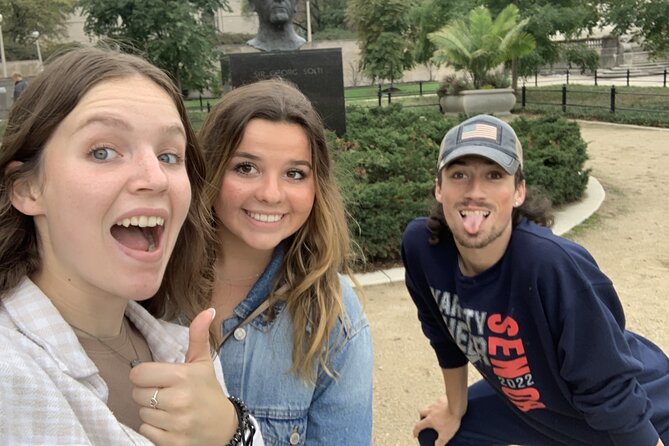
Buckingham Fountain sits in the center of Grant Park and between Queen’s Landing and Congress Parkway. Dedicated in 1927, it is one of the largest fountains in the world and a major visual stop on the route.
The fountain gives the game a grander scale after the close-up attention required by sculptures such as Cloud Gate. You can study the design, look for the answer, and take a breather before continuing.
The experience also includes a stop connected with a seated sculpture of Abraham Lincoln, shown in a contemplative pose as he looks down into the distance. The exact title is not supplied, so you should rely on the app for the full identification and context.
Another stop concerns a sculpture moved to Grant Park and rededicated in October 2006 in the Sir Georg Solti Garden, near Symphony Center, home of the Chicago Symphony Orchestra. This adds performing arts to the route’s mix of museums, architecture, monuments, and gardens.
The final location is Taft’s Fountain of the Great Lakes, completed in 1913. It was the first commission funded by the Benjamin F. Ferguson Fund, created to support statuary and monuments along Chicago’s boulevards and public places.
The stated endpoint is Fountain of the Great Lakes on East Jackson Boulevard. That gives the activity a clear finish, though you should expect a long urban walk rather than a compact circle around one park.
The military library and art school connections

The Pritzker Military Museum and Library on Michigan Avenue adds a different subject to the route. Founded in 2003, it is a nonprofit museum and research library focused on military history. Its collections include material connected with Winston Churchill and war-related sheet music.
The stop broadens the route beyond the usual art-and-architecture checklist. You are reminded that Michigan Avenue is not only a shopping and sightseeing corridor. It also holds specialist institutions with serious research collections.
The route also includes the School of the Art Institute of Chicago. It began in 1866 with 35 artists under the name Chicago Academy of Design. After early success, the school opened a dedicated building on November 22, 1870.
Together, these stops help explain why the area has such a strong connection to art education. The game does not replace a proper visit to the school or library, but it gives you a quick introduction as you move through the district.
What the $7.20 price really buys
At $7.20 per person, this is one of the cheaper ways to add structure to a Chicago walk. For a couple or family, the total cost remains modest, and group discounts may improve the value further.
You are paying for a private, app-based puzzle route with historical notes, not for a person’s time. That distinction matters. A human guide can adapt to your interests, answer questions, handle street changes, and tell stories in a natural order. This game cannot do those things.
Still, the flexibility has real value. You can stop for lunch, enter another attraction, take photographs, or quit for the day and resume later. The game is also designed to work offline, so you do not need a constant internet connection once it is ready to play.
I see the best value for people who already plan to walk around Millennium Park and Grant Park. The game gives that walk a purpose at a cost lower than a standard guided activity.
Walking, directions, and phone problems
Wear comfortable shoes. The route covers a lot of downtown ground, and the activity lasts about 95 minutes even before long photo stops, pauses, or wrong turns.
The most serious practical issue is navigation. Directions have been difficult to follow at some points, and construction has blocked access to locations. A clue or hint can keep you moving, but it may reduce the satisfaction of solving everything on your own.
Location tracking can also be fussy. If one member of your group loses the connection or falls outside the permitted radius, that person may have trouble returning to the previous location. Stay close together, keep phones charged, and treat the game as a flexible sightseeing aid rather than a test you must complete perfectly.
The app allows expanded radius options, but using them may cost points or bypass part of the challenge. If your group cares about getting every answer correct, these technical problems can become frustrating.
Who should book this Chicago activity?
I would recommend it to families with older children, couples who like puzzles, and friends who want a private activity with no fixed departure time. It also suits repeat visitors who have seen Millennium Park before but want a new reason to examine its art and public spaces.
It is less suitable if you want a calm, expert-led explanation of Chicago. It is also a poor fit for anyone who dislikes phone navigation, walking between scattered sights, or puzzle questions that can feel lightweight.
The activity is private, service animals are allowed, and most people can participate. It is near public transportation, which helps you reach the start and leave from the endpoint. No physical guide is included.
Free cancellation is available if you cancel at least 24 hours before the scheduled start time. Cancellations inside that window are not refunded, and changes are not accepted within 24 hours.
Should you book Eastside Chicago The Heist?
Book it if you want a cheap, flexible way to connect Chicago’s public art, museums, monuments, and parks. The offline play, private format, and pause-anytime design are genuinely useful, especially for families and small groups.
Skip it if you want flawless directions, rich personal commentary, or a tightly managed route. Construction and location tracking can interfere with the fun, and some questions may feel silly rather than clever.
For $7.20, I think it is worth considering as an add-on to a day around the Loop. Keep your expectations practical, wear good shoes, stay together, and enjoy the sights even if the final answer does not register perfectly.
FAQ
How long does Eastside Chicago The Heist take?
The activity lasts approximately 1 hour and 35 minutes. You can take breaks and resume later, so your total outing may be longer.
Where does the game start?
It starts at 111 South Michigan Avenue, Chicago, Illinois 60603, near the Art Institute of Chicago.
Where does the game end?
The listed endpoint is Fountain of the Great Lakes on East Jackson Boulevard in Chicago.
Is a physical tour guide included?
No. This is a self-guided smartphone game, and no physical guide is included.
Do I need an internet connection to play?
The game is designed to work offline, so you do not need an internet connection to play.
Can I pause and restart the activity?
Yes. You can start at any hour, take a break at any time, and resume later.
Can I cancel for a full refund?
Yes, if you cancel at least 24 hours before the experience start time. Cancellations made less than 24 hours before the start time are not refunded.
More City Exploration Games in Chicago
- Romantic Montmartre: Paris Lost Lovers Exploration Game and Tour
★ 4.5 · 107 reviews - Sibiu Old Town Exploration Game and Self-Guided Tour
★ 4.5 · 82 reviews - Glasgow Ghost Hunt: The Soul That Got Away Exploration Game
★ 4.0 · 71 reviews - Vienna: The Great Plague Exploration Game
★ 4.5 · 60 reviews
Just added around Chicago
- Adventurous Scavenger Hunt in Chicago by Zombie Scavengers★ 5.0 · 2 reviews
- Lincoln Park Zoo Adventure★ 3.5 · 2 reviews
- Chicago Scavenger Hunt Adventure★ 5.0 · 5 reviews
- Secrets of Lincoln Square: Self-Guided Puzzle Quest in Chicago★ 4.5 · 2 reviews
- Chicago Chocolate Tour★ 3.5 · 5 reviews
- Haunted Chicago Exploration Game and Tour★ 4.0 · 6 reviews
- Chicago Scavenger Hunt Adventure★ 3.0 · 2 reviews
- Chicago Scavenger Hunt and Highlights Self Guided Audio Tour★ 5.0 · 2 reviews
Heist and Spy Games, compared.






Chattanooga “Secret Agent” Escape Room Admission Ticket
Read our review →Browse the lists this game appears in